
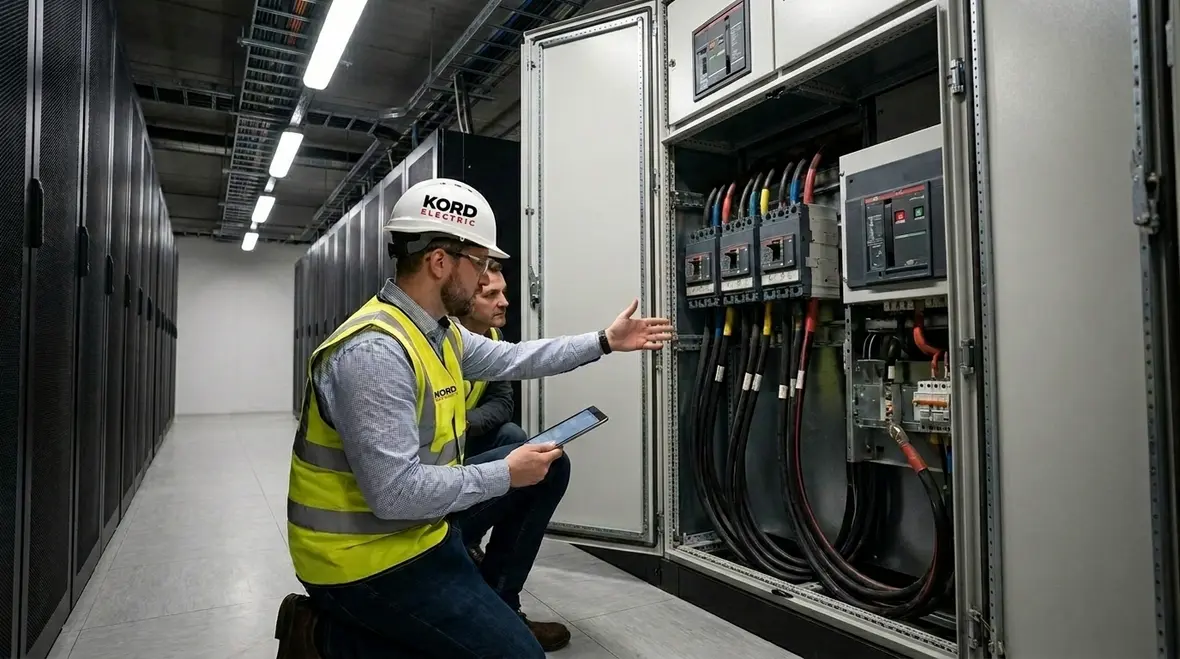
Data Center Power Distribution Modernization
At Kord Electric, we help commercial and industrial facilities upgrade their data center power distribution so growing loads stay stable, safe, and predictable. We plan for the real world: partial outages, changing tenants, new racks, and the kind of timelines that feel like they were written by someone who has never met a breaker. And yes, we still treat power like a serious topic, not like a sitcom prop.
As a result, our approach focuses on capacity planning, clean design, and field execution that keeps operations running. Meanwhile, our technicians and expert service staff explain each step in plain language, because nobody wants to wonder what went wrong after the lights came back on.
Modernizing data center power distribution without breaking the uptime covenant
Modernizing data center power distribution is not just a technical checkbox. It is an uptime covenant with every person, process, and system that depends on your facility staying online. When you update the electrical backbone, you are not only upgrading hardware. You are upgrading trust: trust that equipment will start when it needs to, that loads will stay balanced, and that “surprise outages” will not become a recurring character in your operations story.
For most commercial and industrial properties, this covenant has to stretch across different tenants, changing IT strategies, and evolving codes. That is why we look beyond a single project window and treat each modernization as part of a longer narrative. The goal is a system that can support realistic growth, straightforward maintenance, and clear responses when something unexpected happens.
Planning capacity like the building is going to evolve (because it will)
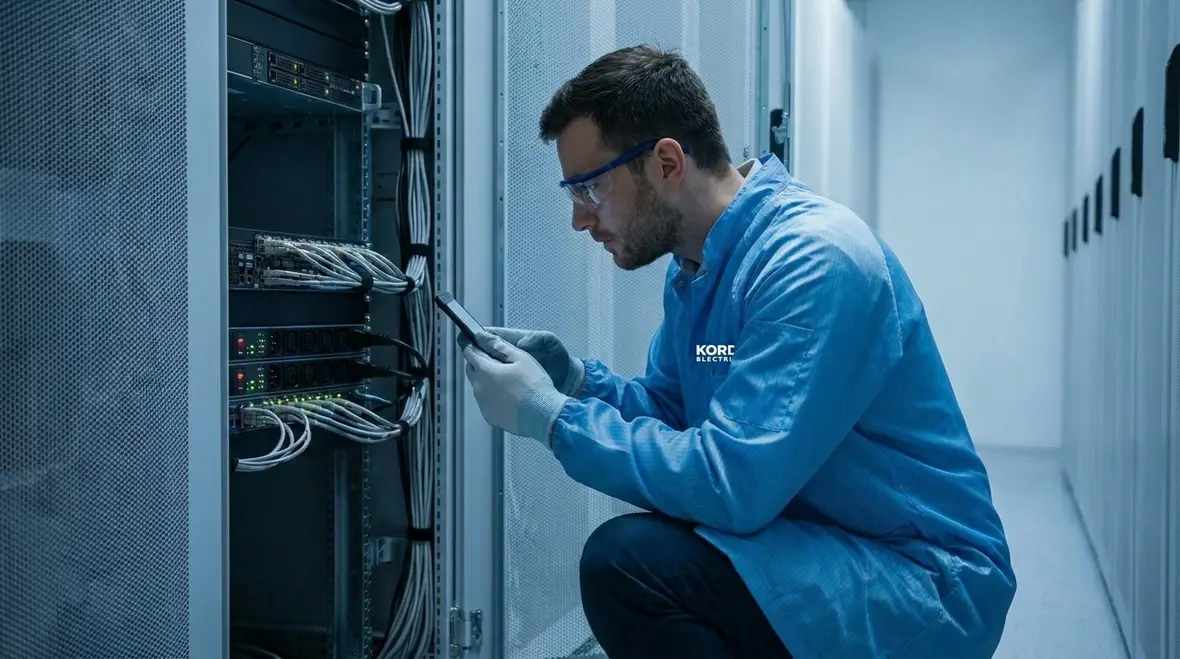
When a data center grows, it rarely grows politely. One quarter it adds cabinets, and the next quarter it adds power hungry processing that quietly makes the old design look like a tiny straw. Therefore, we start by mapping current loads, future phases, and the paths power takes from utility entry to critical equipment. We do not just ask, “How many kilowatts today?” We also ask, “What happens when you add more tomorrow, and how do you keep that power distribution efficient?”
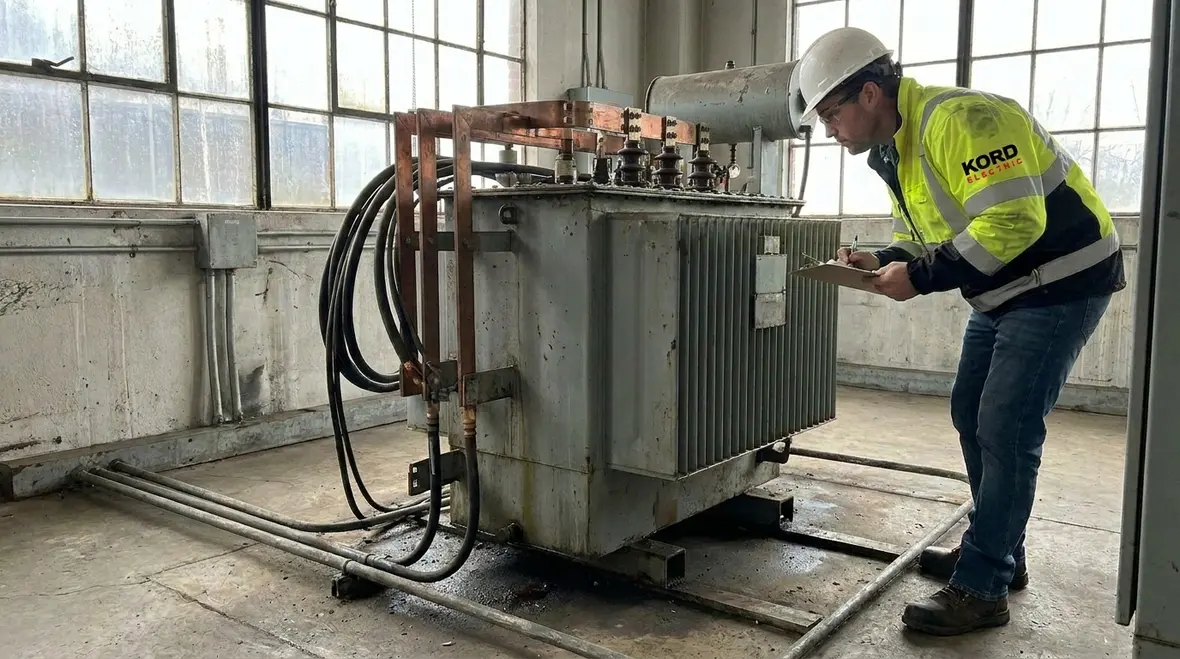
Next, our team looks at transformer sizing, busbar capacity, switchgear rating, and distribution topology. Then we verify whether the system can handle peak demand without overheating, excessive voltage drop, or nuisance alarms. Voltage drop is one of those issues that sounds boring until it becomes a real reliability problem. And it always shows up right when leadership is asking for more capacity yesterday.
Finally, we model phased expansion so upgrades happen in a way that supports uptime goals. In other words, we reduce demolition and rework while we increase usable capacity. This matters most for commercial and industrial buildings where downtime costs real money, not just theoretical inconvenience.
As part of that mapping, we tie modernization back to broader infrastructure strategy. If your facility team is working through the bigger picture of electrical distribution layout, an in depth resource like Kord Electric’s guide on data center electrical distribution design for reliability can provide additional context on topology, redundancy, and protective device coordination across the entire system.
Designing around realistic growth, not wishful thinking
Realistic growth planning means we build in room for new circuits, future feeders, and evolving data center power distribution patterns without forcing a full rebuild every time the IT roadmap shifts. That can include spare capacity in busways, smart panel layouts that leave space for future breakers, and distribution paths that do not paint you into a corner after the next refresh cycle.
Designing for reliability, not for paperwork
Modern power distribution design should make failures less likely and, when they do happen, keep critical loads alive. For that reason, our expert service staff helps teams choose architectures that match risk tolerance and operating requirements. We evaluate options such as redundant paths, selective coordination, and switching schemes that reduce the chance of a single incident taking down the whole operation.
Additionally, we look at fault protection and how protective devices behave under stress. Selective coordination sounds technical, but it simply means the system trips the right breaker, not the whole neighborhood. We also pay attention to arc flash risk and safe clearing times, because safety is not a “later” item. It is the foundation of any serious electrical strategy.
Meanwhile, our technicians explain what each component is designed to do, so the client team understands the tradeoffs. When others can follow the logic, maintenance becomes easier, troubleshooting becomes faster, and projects move with fewer surprises.
Connecting reliability to code, maintenance, and everyday decisions
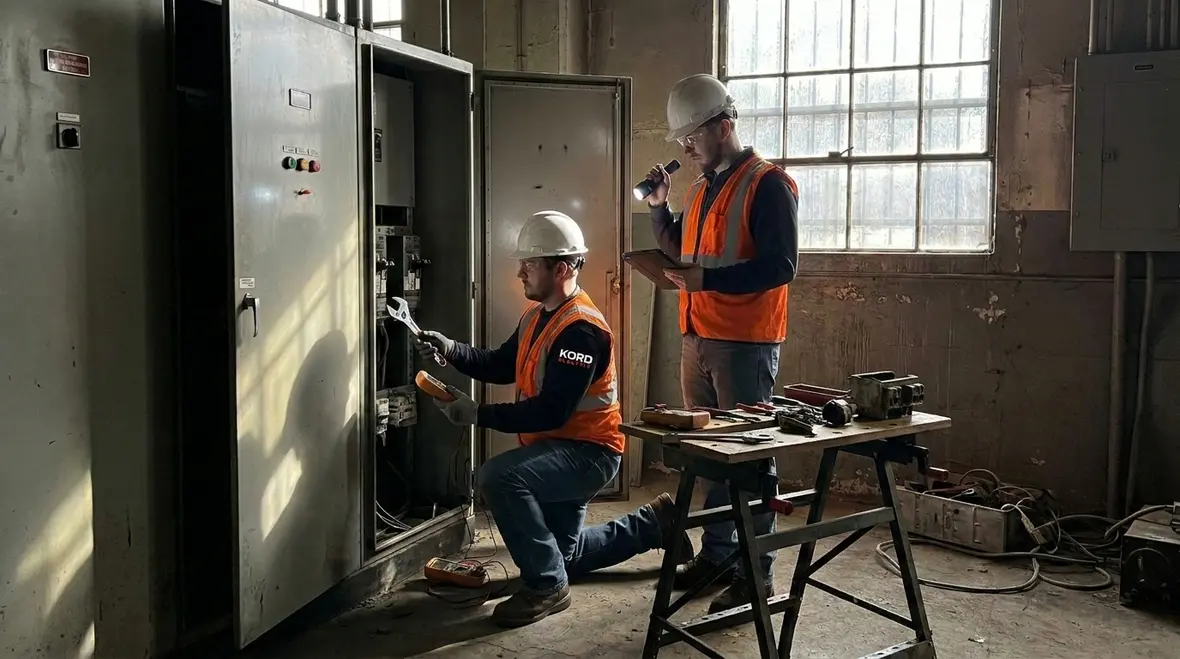
Reliability does not live only in one drawing set. It comes from choices about protective device settings, how panels are labeled, and how maintenance teams interact with the system over years of operation. That is why we align modernization work with practical resources like NFPA 70 guidance, panel labeling best practices, and real world maintenance checklists. The goal is simple: when something goes wrong, the right person can find the right breaker, understand the design intent, and restore service safely.
Switchgear upgrades that reduce downtime risk
Switchgear is where good intentions meet real current. So when systems age, we recommend upgrades that align with the facility’s growth plan. Typically, older switchgear may not support modern load profiles or may require more frequent maintenance. Therefore, we assess condition, verify ratings, and determine whether a replacement, retrofit, or modernization is the best path.
During modernization, the challenge is obvious. Equipment must keep serving the load while the upgrade happens. So we coordinate work windows, sequence energized and de energized steps carefully, and use procedures that protect both people and equipment. That is also why our technicians document steps, label systems clearly, and confirm performance before turning back to full service.
In some cases, we help teams add capacity by expanding sections and adding bus work in a controlled way. In other cases, we refactor distribution paths so the system stays balanced. And yes, we sometimes hear the same joke from site managers: “Can we just swap it like a phone battery?” We always answer the same way: you can, but the building will not thank you for it.
Pairing switchgear modernization with long term electrical strategy
Switchgear upgrades often unlock broader improvements. When we modernize, we also look at where new feeders, improved metering, or refined distribution paths can support data center power distribution and the rest of the campus. For facilities working through broader rewiring cost calculations or planning multi year upgrades, this is the moment to align budgets, capacity, and risk reduction in one coordinated roadmap.
Power quality: where performance hides in plain sight
Many building teams focus on capacity first, then feel blindsided by power quality issues like harmonics, transient events, and poor grounding. However, if you want your data center operations to stay consistent, you need stable power. Hence, we evaluate voltage regulation, harmonic distortion, and grounding and bonding practices as part of modernization.
Next, we install and verify monitoring so the facility can see what is happening before problems become outages. Monitoring does not just help after the fact. It helps during design validation, commissioning, and ongoing optimization.
At Kord Electric, we also coordinate with facility operations teams so the monitoring points match how engineers and technicians actually work day to day. Then our expert service staff walks stakeholders through the readings and what they mean. No mysterious charts left behind like an unanswered text message.
Linking power quality to uptime, safety, and energy use
Good power quality is not just about protecting servers. It also reduces nuisance alarms, protects motors, and improves the performance of building systems that share the same infrastructure. For facilities that have already dealt with instability, targeted support around voltage fluctuations in commercial and industrial buildings can be combined with data center power distribution upgrades to create a more resilient baseline across the entire site.
Efficiency improvements that protect both load and budget
Modernizing power distribution also means modernizing how efficiently the system delivers usable energy. Waste shows up as heat, losses in conductors, and unnecessary conversion steps. Therefore, we look for ways to reduce losses without compromising reliability. That can include conductor optimization, busbar design improvements, and distribution refinements that support stable operation.
Additionally, we consider how to support future demand with smart layout decisions. A well planned distribution upgrade avoids the “rebuild later” trap that turns budgets into a stress test. We also plan for operational efficiency so maintenance crews can access equipment safely and quickly.
And while power efficiency matters, we keep the conversation grounded. We do not chase efficiency for marketing slogans. We chase it because commercial and industrial facilities operate under real constraints: energy costs, compliance expectations, and the need for predictable service.
Connecting efficiency to long term operating costs
When efficiency work is planned alongside reliability improvements, the return shows up in multiple line items: fewer surprise failures, steadier equipment performance, and lower wasted energy. For facilities reviewing broader electrical investments, resources such as rewiring cost guides and electrician cost breakdowns for commercial and industrial facilities can help link technical decisions to budget planning in a way that makes sense to leadership teams.
Field execution and commissioning: the part everyone forgets until it fails
A modern design only performs if the field execution matches the plan. That means we coordinate installation quality, torque verification, phase checks, insulation resistance testing, and functional checks. Then we commission the system so it meets design intent and operating requirements.
Importantly, we do not leave clients with a black box. Our technicians and expert service staff explain how systems are tested and how protective devices should behave. They also show what to watch during the early weeks of operation, because the first phase after an upgrade is when teams need the most clarity.
As work wraps up, we provide documentation that supports maintenance and future expansion. We also make sure labels, schematics, and panel schedules match reality, not the “someone assumed” version that appears in too many older facilities.
Building a bridge to ongoing maintenance and troubleshooting
Commissioning is also the handoff moment. We align modernization work with practical tools like data center electrical maintenance checklists and electrical system troubleshooting guides, so in house teams know how to keep systems healthy. For facilities across the region, pairing that approach with dedicated Los Angeles County electrical services gives operations staff a direct line to technicians who understand local conditions, regional codes, and industrial timelines.
FAQ: modernizing power distribution for commercial and industrial data centers
Ready to modernize? Let’s map the upgrade plan
If your facility is growing and your electrical infrastructure feels tight, Kord Electric can help you modernize with a clear plan and careful execution. We support commercial and industrial buildings with reliability focused power distribution upgrades, testing, commissioning, and ongoing service guidance. Contact us to schedule an assessment and get a phased roadmap that fits your uptime goals. We’ll explain the path in plain language, so your team knows what you are changing and why it will work.
For facilities in and around Los Angeles, that roadmap can also connect directly to dedicated Los Angeles County electrical services that understand local conditions, regional timelines, and the realities of keeping commercial and industrial operations powered every day. Whether you are planning a targeted data center power distribution upgrade or a broader electrical modernization, we help you turn “we should fix that someday” into a concrete, sequenced project plan.


