
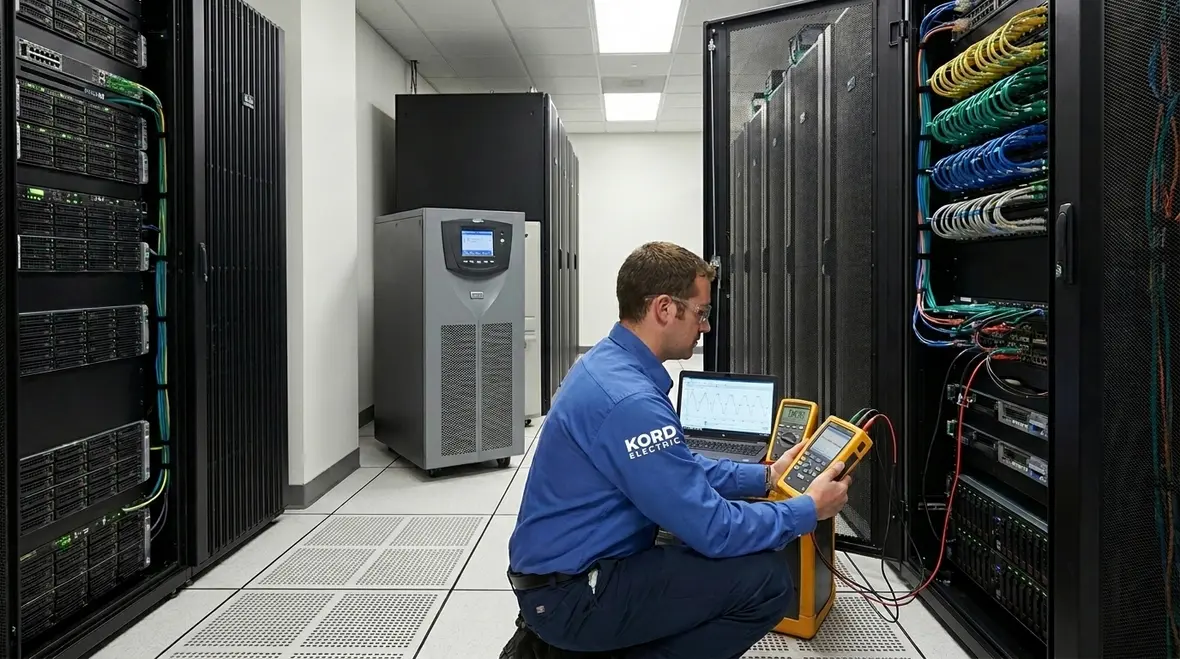
Data Center Power Quality for Reliable Uptime
How Kord Electric improves Data center power quality for uptime you can trust
When a facility runs mission critical data, the power must behave like a disciplined employee: on time, predictable, and never “winging it.” That is where Data center power quality matters. At Kord Electric, we help commercial and industrial sites keep servers alive by reducing voltage dips, protecting against harmonics, and keeping critical loads stable. Meanwhile, our technicians and expert service staff take the time to explain what they find, why it matters, and what we do next. And yes, we do it without acting like power is magic. It is engineering, and it is controllable. Still, if you ever heard “the lights flickered, so maybe it is fine,” we understand the urge to shrug. But in a data center, “maybe” can cost real money.
Power quality issues start small, then get expensive fast
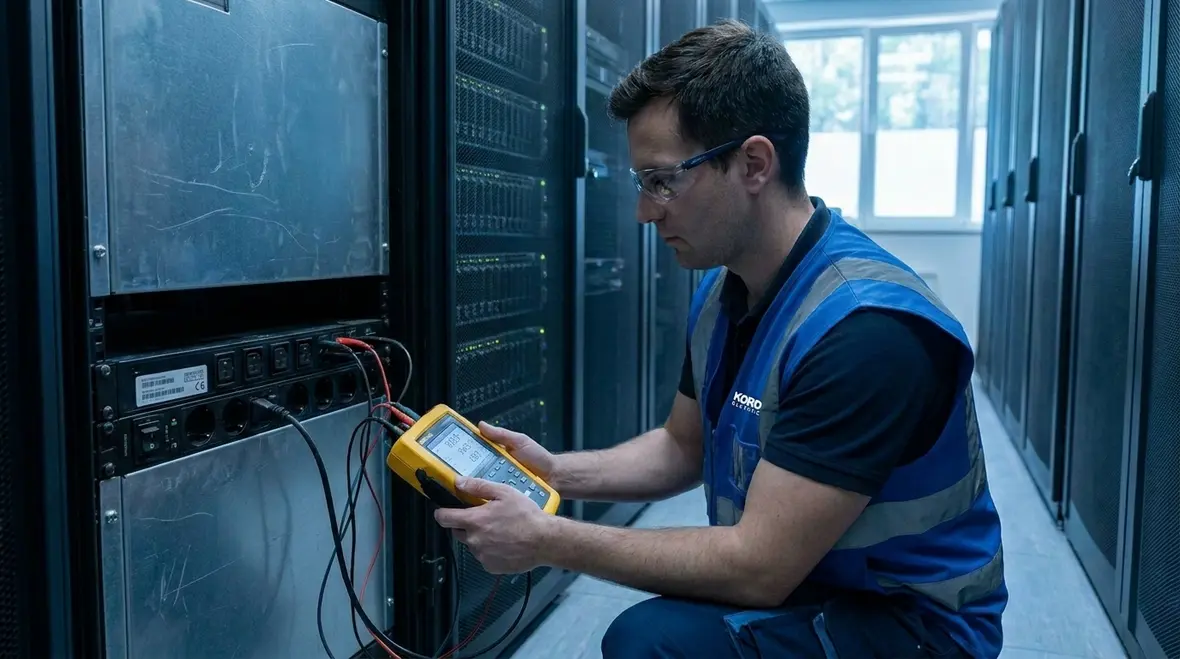
Most power problems do not announce themselves with a dramatic movie soundtrack. Instead, they show up as smaller symptoms that quietly steal performance. For example, a voltage sag might last only a moment, yet some power supplies treat it like a full shutdown. Kord Electric often sees the pattern: the site notices random restarts, then workload slowdowns, then strange alarm history that never seems to end.
As our service team reviews the system, we look for the usual culprits that erode Data center power quality and uptime. Then we connect the dots to real operations. Harmonics distort the waveform and can overheat transformers and neutral conductors. Electrical noise can stress sensitive equipment. Poor grounding can turn normal faults into larger events. And when the facility has poor coordination between upstream devices and downstream loads, protection can act too late, or too early. Either way, the result is downtime risk.
To be clear, we do not just “measure and leave.” We interpret readings in the context of how the data hall actually runs. That is how we stay useful after the report is printed.
Design choices that protect mission critical loads
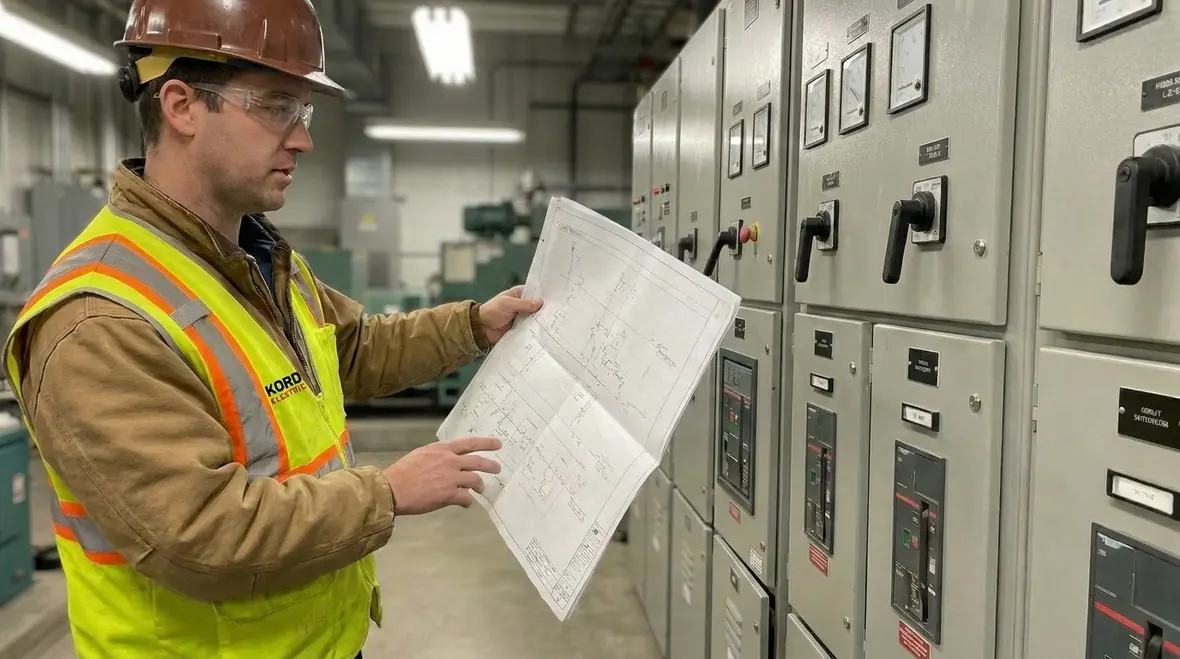
Our approach goes beyond replacing parts. We help commercial and industrial facilities build reliable electrical paths from utility input to critical cabinets. That means the system must handle disturbances without letting them spread.
First, we focus on distribution design. Proper sizing of conductors, well planned feeder routes, and correct load balancing reduce stress points. Then we help align protective devices so they clear faults without cutting power to areas that should stay up. Next, we evaluate transformer behavior, including impedance and tap settings, because these influence voltage stability under load changes.
We also pay close attention to grounding and bonding practices. A good grounding system limits voltage rise during faults and supports stable reference points for electronics. In fact, for many major property buildings and multi-tenant environments, grounding quality becomes the hidden foundation of stable operation.
Finally, we work with the power chain: UPS systems, static transfer switches, switchgear, and generators. Each component must cooperate with the next. If one piece “guesses” during abnormal conditions, the whole system can stumble.
How UPS and transfer systems affect reliability during events
When the grid hiccups, the UPS and transfer system must respond like a calm conductor, not a panicked DJ. Our technicians review how the UPS transfers between modes, how it handles load transients, and how the bypass path behaves. We care about more than whether the UPS runs. We care about how it behaves during the messy moments.
For example, during a utility disturbance, a UPS can ride through for a short time. Yet if load steps occur at the same time, the inverter output and control strategy must remain stable. Additionally, transfer switch timing and synchronization can matter. If synchronization is off, you can see stress or interruption where you expected continuity.
And because people love simple answers, we will offer one playful truth: if the UPS is the “life vest,” the transfer system is the “how you get out of the water without splashing everyone.” You want smooth, controlled motion. We help clients achieve that through testing, review, and targeted improvements.
Our service team also checks for practical issues like cabling integrity, breaker maintenance status, and control settings that drift over time. Over the years, even well planned systems need an attentive eye.
Control harmonics and electrical noise before they heat up problems
Not all power quality problems come from the utility. Some come from the loads themselves. Data centers often use variable speed drives, power supplies, and other switching equipment that can create harmonics. These harmonics distort voltage and current and can cause overheating in equipment that was not designed for the harmonic levels that actually appear in the building.
In turn, distorted waveforms can reduce the efficiency of transformers and stress UPS in ways operators might not connect to alarms. Therefore, Data center power quality work must include both measurement and mitigation planning.
Kord Electric helps commercial and industrial facilities reduce harmonic impact through a mix of approaches. We review system configurations, check for missing or incorrect filters, and evaluate whether the distribution supports current harmonics safely. Then, if needed, we help implement solutions like filtering, correct transformer sizing, or design updates that lower distortion at the source.
We also address electrical noise and grounding noise. That might sound like the stuff of sci fi, but it shows up as erratic signals, nuisance alarms, or equipment sensitivity issues. Our experts explain the cause in plain language, because teams perform better when they understand the why, not just the work order.
Testing, monitoring, and explained recommendations
We do not treat testing as a checkbox. We treat it as a story that the electrical system tells. Our technicians start with a baseline. Then we collect power quality data during typical operations and during transitions like load growth, equipment changes, or generator testing.
From there, we compare what we see against what the facility requires for uptime. If the site has strict uptime goals, we focus on the events that most often trigger operational risk. Then we recommend actions that match the reality of the schedule and the risk tolerance.
Because our service staff cares about clarity, we explain each finding in a way operators can use. We translate terms like sag, swell, and distortion into what those conditions mean for servers, cooling systems, and monitoring gear. And if someone on the team says, “Can we fix it without shutting anything down?” we answer honestly. Sometimes we can. Sometimes we stage work. Either way, we build a plan.
As a reference point, our team aligns practical electrical requirements with the uptime needs outlined in our Kord Electric blog on data center electrical requirements for uptime. That guidance supports how we evaluate critical systems and how we help clients reduce interruptions.
Risk management for commercial and industrial data environments
Mission critical facilities face threats that go beyond power disturbances. Water damage, improper maintenance intervals, or inconsistent work practices can all turn a good design into a weak link. Therefore, we support risk management through clear maintenance recommendations and structured upgrade paths.
For example, our technicians help clients understand which components typically drift out of spec first. Then we plan inspections and tests around the equipment’s real wear patterns, not a generic calendar. We also help with documentation so that operational teams can track changes and troubleshoot faster.
And if you operate across multiple floors or tenants, we consider coordination. Power quality problems can cross boundaries. When one area introduces harmonics or creates unstable grounding, other areas can feel it. So we take a facility wide view, not a narrow “only my room” approach.
Even for major property buildings with complex schedules, we keep work practical. We schedule tasks with downtime windows in mind and we verify performance after changes. Because the goal is simple: stable power, fewer alarms, and fewer “why did that happen” meetings.
Dual column insight: what we check for Data center power quality outcomes
Our power quality checks
- Voltage sags and short interruptions
- Voltage stability under load steps
- Harmonic distortion and neutral stress
- Grounding and bonding effectiveness
- UPS transfer behavior and stability
- Generator and bypass coordination
What this protects
- Server uptime during disturbances
- Stable operation of critical controls
- Reduced overheating and equipment wear
- Lower nuisance alarms and resets
- Fewer interruptions during switching
- Faster troubleshooting and better records
FAQ: Data center power quality for uptime and stable operations
Our conclusion: let Kord Electric protect your uptime goals
In a mission critical data center, power quality is not a nice to have. It is a foundation for uptime, safe equipment operation, and calm incident response. Kord Electric works with commercial and industrial facilities to test real electrical behavior, explain findings in plain terms, and implement practical improvements. If you want fewer alarms, fewer unexpected interruptions, and better confidence during switching events, contact us today. Our expert service staff will review your site and propose next steps that fit your schedule.
For organizations across the region, exploring a structured approach to reliability often starts with the right partner. If your facility is located in Southern California and you need a team that understands commercial and industrial uptime, review our dedicated Los Angeles County electrical services to see how we support complex properties and mission critical operations.
When you are ready to turn Data center power quality from a worry into an asset, Kord Electric is prepared to help you design, test, and maintain the electrical backbone your uptime goals deserve.


