
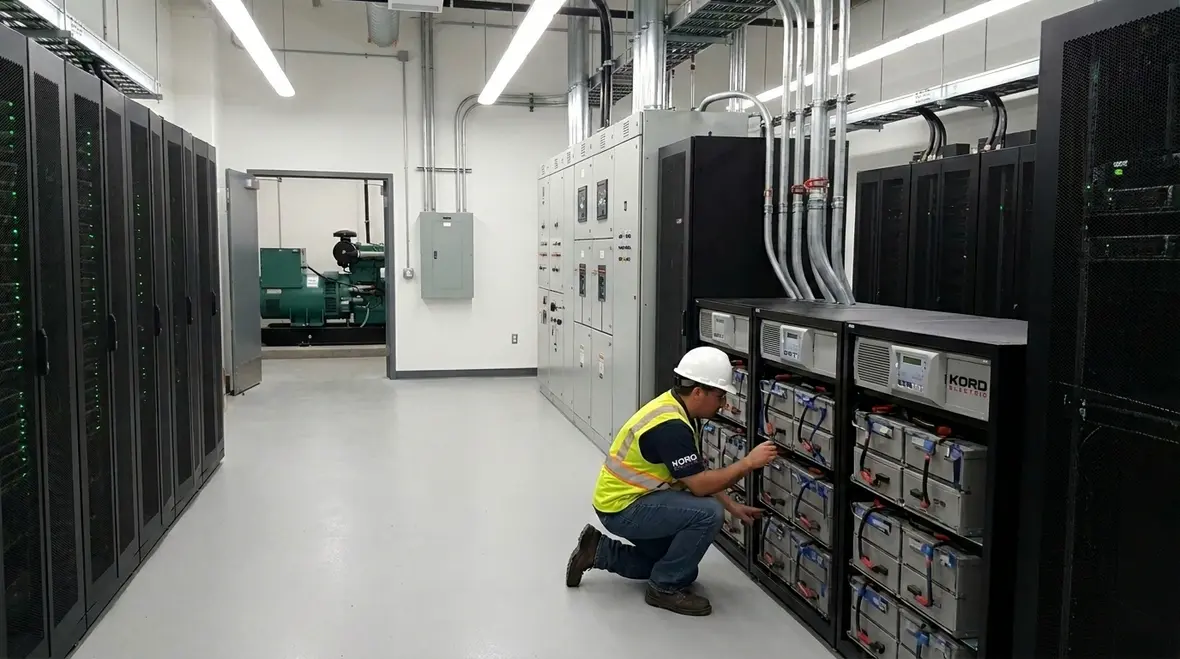
Data Center Power Redundancy for Maximum Uptime
Uptime first: data center power redundancy strategies that keep the lights on
At Kord Electric, we plan for uptime like it is a promise we intend to keep. Others treat power as a background detail, but we treat it as the lifeline of a commercial or industrial facility, especially for data centers where downtime turns into real money loss. For that reason, our approach blends data center power redundancy strategies, clear load planning, and disciplined testing. We also coordinate with experienced service technicians who explain the system in plain language, so building teams know what will happen before it happens. And yes, we say it like it is: backup power is not magic, it is engineering, maintenance, and verification. If you want “set it and forget it,” power systems usually respond with “nice try.”
Understanding the risk: where power failure actually comes from

When people think of outages, they picture a single dramatic moment. However, our technicians typically see a chain of smaller failures that add up. First, utilities can experience brief sags, interruptions, or frequency changes. Next, on site equipment can misbehave due to poor settings, aging components, or lack of load management. Finally, switching and transfer events can introduce trouble if the transfer path is not designed for the real operating mode.
So, we map the entire power path from utility intake through protection devices, switchgear, UPS systems, and distribution. Then we connect that map to the site reality: which loads are sensitive, which are tolerant, and which should never be touched. As part of this work, we also look at voltage stability challenges, because commercial and industrial properties often face power quality issues that create stress even when the lights never fully go out. In fact, our team often references the same patterns described in our guidance on voltage fluctuations in commercial and industrial facilities, because the root cause of many “mystery” shutdowns begins as a quality problem, not a total outage.
Designing redundancy that matches your load profile
Redundancy is not one-size-fits-all. In many commercial and industrial buildings, a full duplicate system for every device wastes money and adds complexity. Meanwhile, in data centers, under protecting critical loads costs far more. That is why we build redundancy around the load profile, not around wishful thinking.
Here is how we guide the planning conversation in real projects. We separate loads into tiers based on criticality and ride through needs, then we design the system to support those tiers during defined events. For example, a network core might need near instant continuity, while certain support equipment can tolerate longer transfer. As a result, our redundancy strategy may include different paths for different loads, including separate distribution runs, separate protective devices, and controlled transfer logic.
And because we prefer facts over slogans, our technicians validate the design with load studies and switching behavior. Also, we document who owns what. When a facility team understands the intent of each redundancy layer, response time improves when something abnormal occurs. Think of it as training for power, but without the awkward awkwardness of guessing during an alarm.
Redundancy layers: utility, UPS, generators, and switchgear
To achieve stable uptime, Kord Electric typically builds redundancy across multiple layers. Utility redundancy can include dual feeds, diverse routing, or utility contract approaches that reduce the chance of simultaneous loss. Next, UPS systems provide ride through for short events and bridge the gap to generator start. Then generators pick up for longer interruptions. Finally, switchgear and transfer systems move the load between sources in a controlled and repeatable way.
Importantly, redundancy fails when designers assume equipment will always behave like a new textbook diagram. Our expert service staff checks the operational mode, including maintenance states. For example, bypass arrangements, maintenance bypass capability, and the behavior of parallel UPS modules matter during real service work. Moreover, we verify protection coordination so the system clears faults safely without causing unnecessary downtime.
In addition, we consider how voltage and frequency disturbances can impact sensitive electronics. Voltage fluctuations and power quality issues can cause equipment to drop out even without a full outage. Therefore, the redundancy plan also includes stabilization and protection elements that keep critical equipment within acceptable operating windows.
Voltage stability matters: handling sags, swells, and transients
Sometimes teams ask us for “more redundancy” when the real problem is power quality. A voltage sag can reset a server. A transient can stress a power supply. A frequency issue can disturb control equipment. So we treat voltage stability as part of the uptime plan, not as an afterthought.
Our technicians review historical utility data when available, and we evaluate site conditions that can amplify disturbances, such as motor starts, large HVAC cycling, or process equipment. Then we determine whether corrective measures belong in the upstream infrastructure, the UPS configuration, or the distribution layer. In many commercial and industrial facilities, addressing voltage fluctuation reduces nuisance trips and improves overall availability, even before the topic of full backup power comes up.
We also explain the practical part. If a system uses certain protective settings, then a voltage disturbance can look like a fault to the equipment. That is why we tune protection and power electronics to match the actual environment. In short, the best redundancy strategy is not just about keeping power present, it is about keeping power usable. Power that is “on paper” is still useless if it makes equipment reboot like it is stuck in a rerun.
Test, maintain, and prove it: the part people skip
Most downtime stories include the same twist. The system existed, it was wired correctly, and the plans were there. However, no one proved the system under realistic conditions. Kord Electric pushes a testing culture because redundancy that never gets tested is like a fire drill conducted by memory alone.
We support maintenance planning that covers UPS self tests, battery health checks, generator exercise, load bank testing when appropriate, and switchgear inspections. We also confirm interlocks, alarms, and control logic. Just as important, we verify that the facility team understands the maintenance mode paths, including what happens to critical loads during service.
Our technicians keep the process business friendly. They explain what they will test, why it matters, and what failure modes they expect to prevent. Then they document outcomes in a way that the building manager can use. When a facility team has clear records, they can plan repairs earlier, budget better, and avoid the “surprise fix” that always feels like a bad plot twist.
For facilities that operate around the clock, these same practices often tie directly into broader reliability efforts, from resolving voltage fluctuations in commercial and industrial buildings to building structured electrical preventive maintenance programs that keep uptime front and center.
Operational playbooks: coordination and response during events
Even the best data center power redundancy strategies do not help if the response plan is unclear. So we help teams build operational playbooks for events like utility loss, UPS alarms, generator start, and transfer delays. We also clarify decision making roles so the facility does not improvise under pressure.
In our experience, the biggest risk is confusion during the first ten minutes. Therefore, we recommend simple, written steps that match the system behavior. For instance, if a UPS reports a specific condition, the playbook should define what actions reduce risk without accidentally increasing downtime. If a generator fails to start, the playbook should guide safe troubleshooting and load management.
And yes, we add a little humor during training because stress makes people forget instructions. We will say, in a calm voice, that alarms are not personal attacks. They are signals. Then we show the team exactly how to interpret those signals for a commercial or industrial major property building, where the stakes are too high for guesswork.
FAQ
Conclusion: get a redundancy plan you can trust
If your organization runs mission critical operations, waiting for an outage is not a strategy, it is a gamble. Kord Electric helps commercial and industrial facilities build uptime focused power systems with redundancy that fits the real load, real switching behavior, and real power quality conditions. We also back the work with experienced service technicians who explain the system clearly and test it so you can trust it. Contact us now to review your current setup and build a practical uptime plan.
When you are ready to go deeper than a basic backup conversation, our team can align data center power redundancy strategies with broader reliability upgrades, from resolving voltage instability issues to building structured electrical preventive maintenance plans that keep your entire facility ahead of problems. For organizations planning larger infrastructure changes, our commercial and industrial services extend from detailed assessments through installation, testing, and long-term maintenance support.
If your facility is already navigating aging infrastructure, recurring power quality complaints, or upcoming expansions, this is the right time to align redundancy, maintenance, and corrective work. Our licensed electricians can coordinate a comprehensive path forward so power supports your strategy instead of standing in its way.
To explore a structured maintenance and reliability path beyond a single project, visit our dedicated page on electrical preventive maintenance for commercial and industrial facilities and see how a long-term service program can keep your redundancy investment performing at its best.


