EV Fleet Charging Infrastructure Planning Guide
When a business decides to scale up, EV readiness cannot be an afterthought. In the first place, EV fleet charging infrastructure planning must connect to real operations: where vehicles park, how employees and drivers move, what power can support the site, and how fast growth will happen. Kord Electric helps commercial and industrial facilities and major property buildings build charging that works today and still makes sense next year. In other words, we plan for uptime, not wishful thinking.
And yes, it is possible to avoid the “we will figure it out later” approach, which is a lot like saying you will learn to swim by reading a manual while still in the deep end. That is not a plan. That is a podcast idea. Our job is to do it properly, with clear steps and expert guidance.
Build a fleet charging plan that matches real business growth
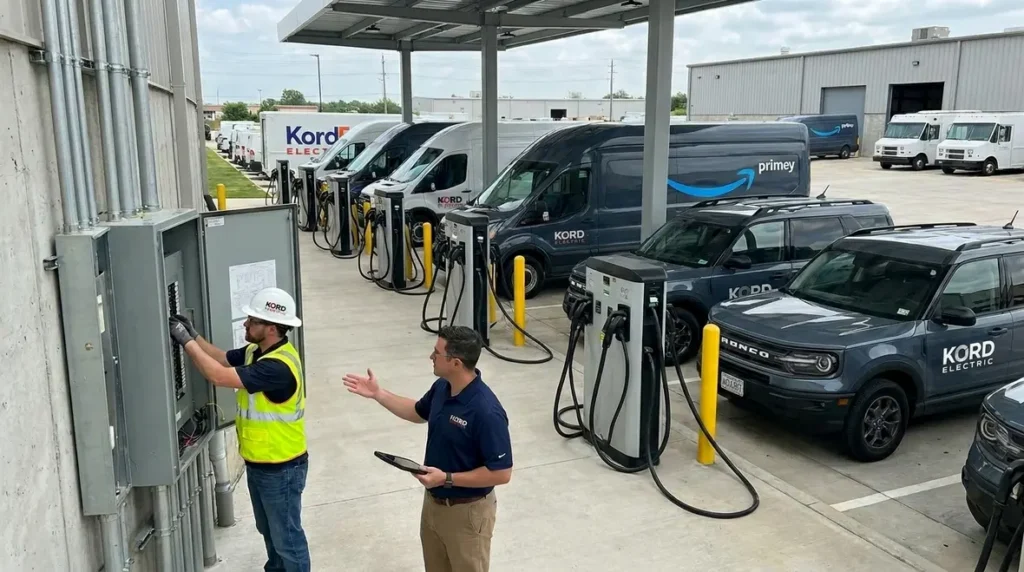
In our experience, the best plans start with business drivers, not just charger specs. For example, Kord Electric technicians and our expert service staff review fleet size, shift schedules, vehicle types, and charging windows. Then they map those needs to how your facility actually operates. Because charging is not only electrical, it also becomes a workflow issue. A charger in the wrong place can cause traffic slowdowns, safety risks, and long idle time.
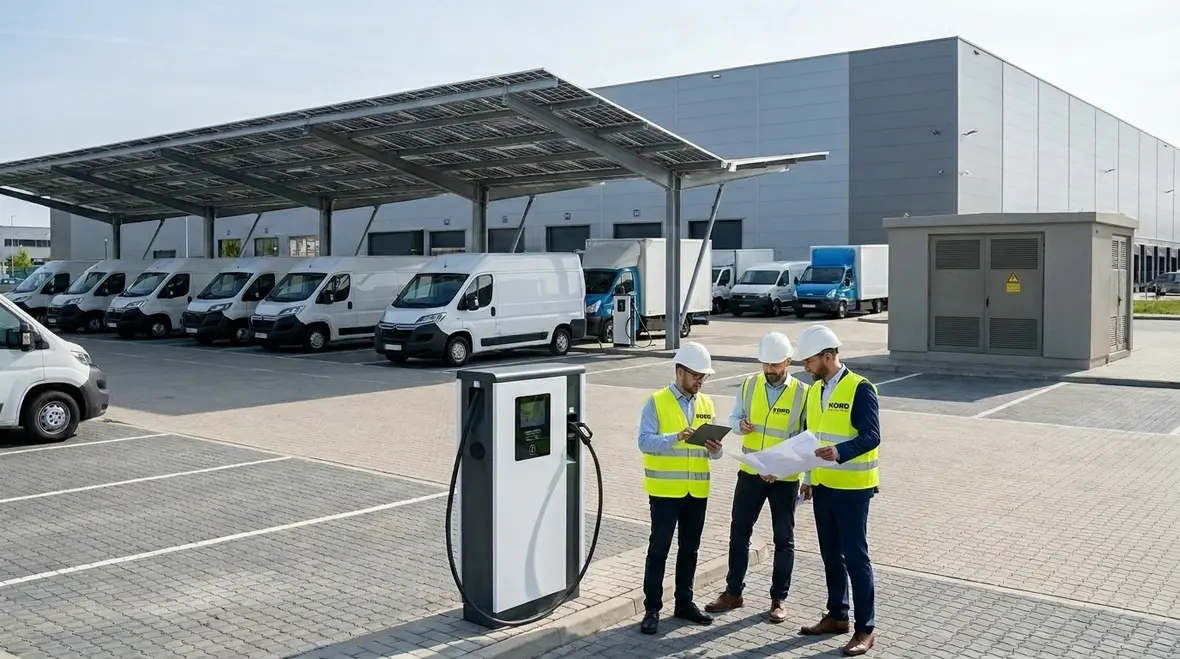
Next, we help clients define a growth timeline. If a company adds ten vehicles in six months, the plan must account for that now or add capacity without major disruption later. Therefore, we model phases: what gets installed first, what gets added in phase two, and how the electrical system will evolve without forcing a full replacement.
To keep the process calm and controlled, we also document the plan so stakeholders can align quickly. Facility managers, fleet leaders, and leadership all need the same picture. That reduces indecision and prevents “surprise” costs that feel like they came from a magician’s hat, not an electrical estimate.
Assess site power, parking layout, and grid constraints
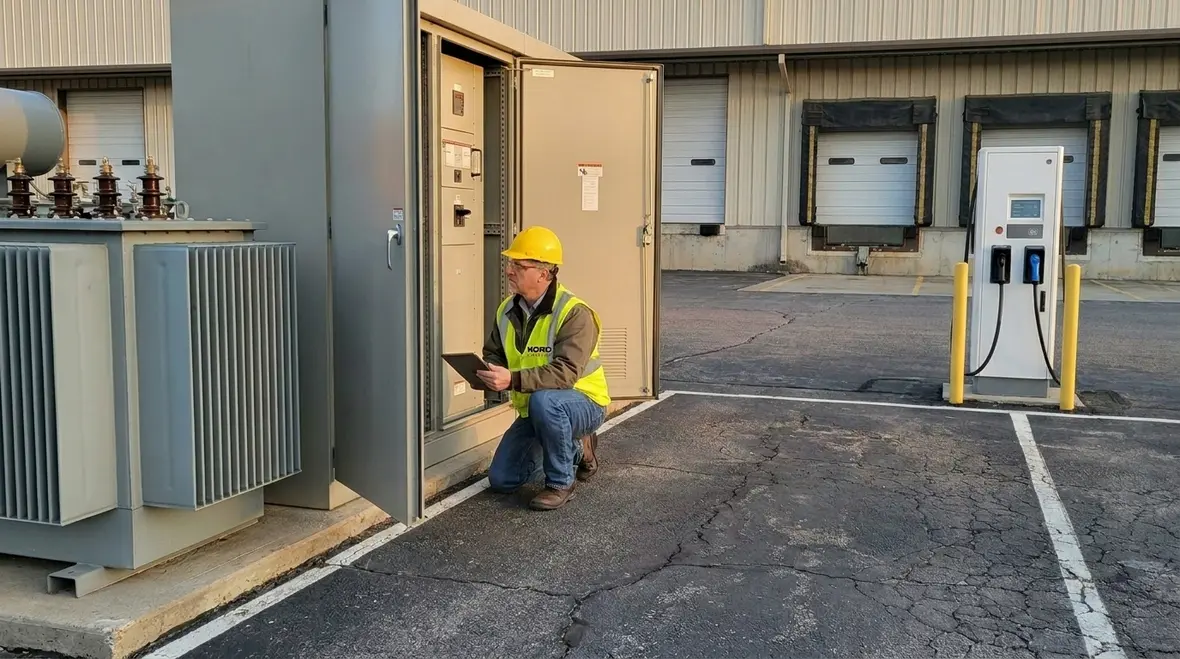
Before installing anything, we evaluate the site like it is a puzzle with a strict budget. First, our team checks utility capacity, demand loads, and any existing electrical limits. Then we review panel schedules, transformers, service size, and available pathways for conduit and cable. If the facility is already at or near capacity, we do not hide that. We plan around it.
Next, we look at parking and movement patterns. Charging locations must consider driver routes, pedestrian safety, and the way maintenance staff access vehicles. In addition, we check for surface conditions, weather exposure, and any constraints from existing structures.
As part of our approach, Kord Electric aligns the design with real grid constraints. That means we can size charging equipment and electrical upgrades in a way that supports expected load without creating constant peak stress. Consequently, facilities reduce the chance of power issues that lead to delayed charging or expensive emergency fixes.
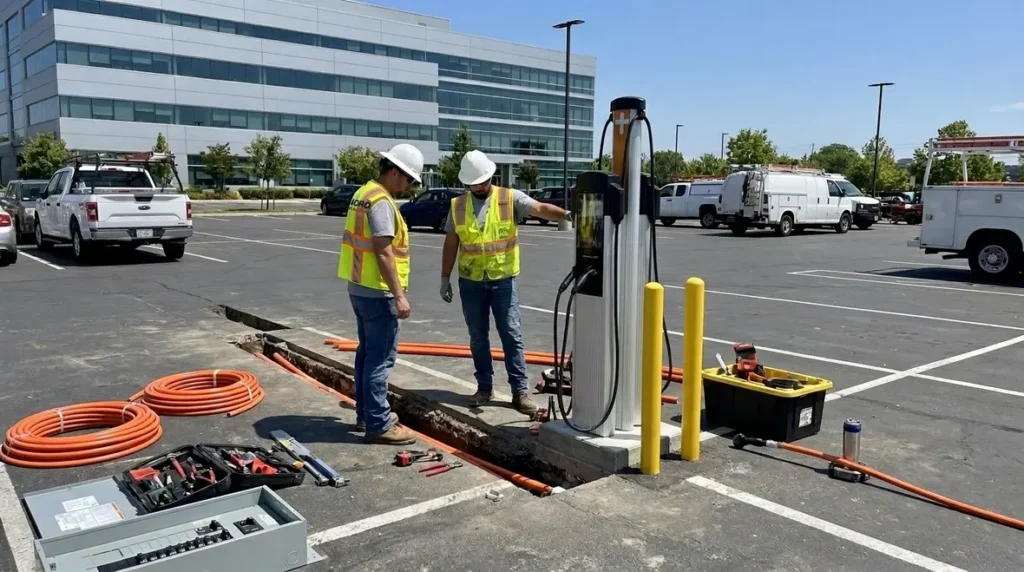
At this stage, our technicians also think about installation practicality. We favor designs that install cleanly, support reliable wiring runs, and allow future work without turning the site into a long-term construction zone.
Size chargers and circuits for the right charging profile
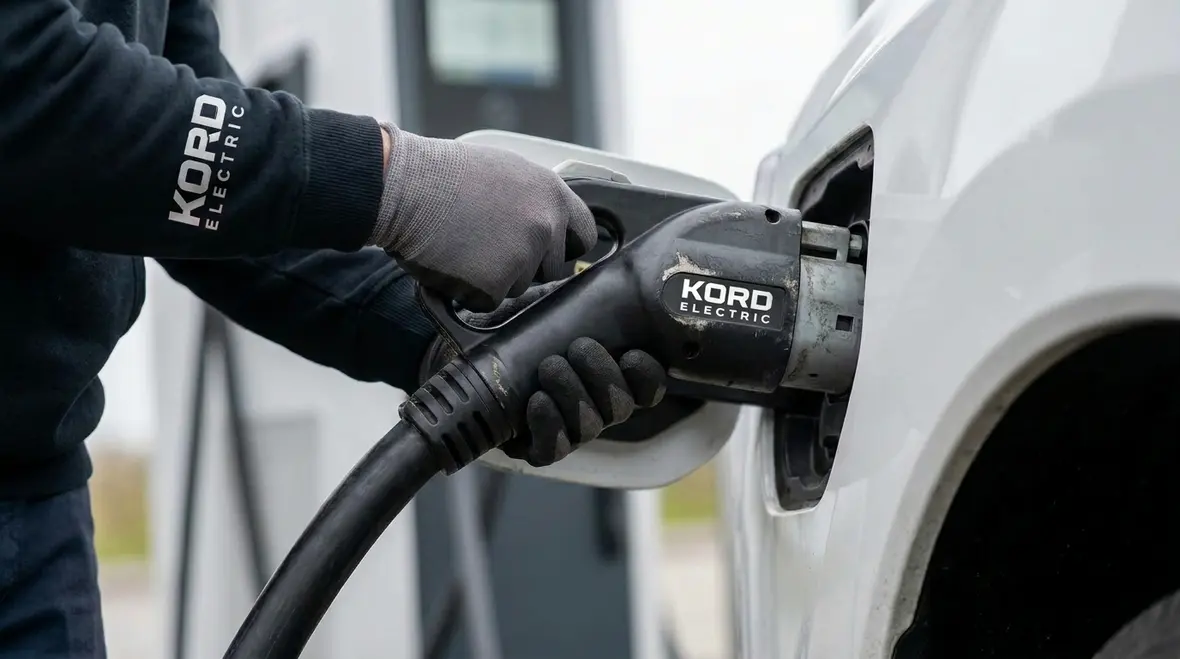
Now we get specific. Scaling up requires charger selection that matches how your fleet charges. For instance, some fleets need longer overnight charging, while others depend on shorter top ups during the workday. Therefore, the electrical design must reflect the charging profile, not just the number of ports.
Kord Electric helps clients decide on power levels and how to group chargers across circuits. We also plan load management so chargers do not all draw maximum power at the same time. This is where smart design protects both performance and costs. In many commercial and industrial settings, good load management can mean fewer upgrades to service equipment.
Moreover, we consider cable sizing, overcurrent protection, and voltage drop. Those details sound boring, but they directly affect uptime. If the system is undersized or poorly protected, it will not fail in a dramatic way. It will fail in the most annoying way: one charger at a time, right when a vehicle needs it.
Finally, we document circuit labeling and equipment schedules. That simple step makes ongoing service and troubleshooting far faster. And when we support multiple buildings or large property campuses, fast service matters.
Plan safety, compliance, and resilient operations for commercial sites
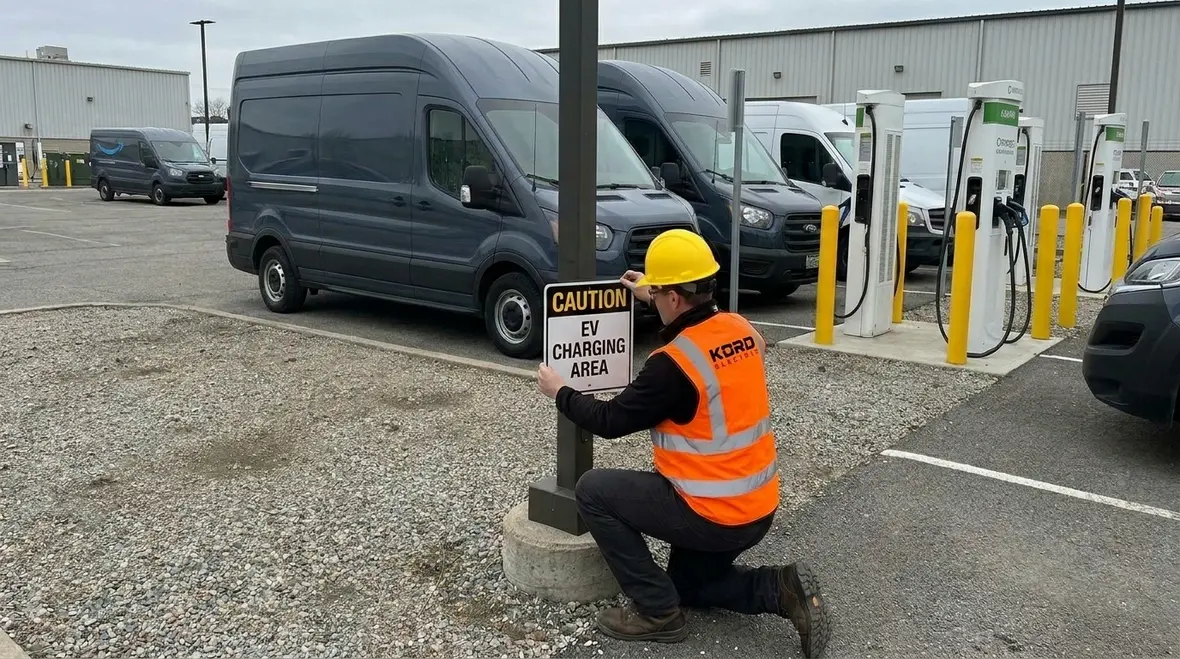
Commercial and industrial facilities need charging systems that behave under real conditions. That means we plan grounding and bonding, protect against weather exposure, and ensure proper clearance for safe use. We also design for correct signage, accessibility, and safe routing to reduce trip risks and vehicle conflicts.
In addition, we think about resilience. Charging downtime hurts operations. So we build in protection for critical components, and we design the system so service work can happen with minimal disruption. This is especially important for major property buildings where tenants or residents depend on dependable access.
Compliance matters too. Our team works through the requirements that apply to the site, permits, and inspection needs. While this can feel like paperwork, it is actually a safety net. It helps keep the installation reliable and reduces delays that can stall a rollout.
To keep everything moving, our expert service staff coordinates practical steps for inspections and documentation. In other words, we do not just design the electrical system. We guide the path from plan to operational reality.
Use phased installation to reduce downtime and control costs
Scaling up does not have to mean shutting down. We often recommend a phased approach because it protects operations. First, phase one builds the charging capacity needed for immediate demand. Then, phase two expands the system based on measured results and growth targets. This helps facilities avoid paying for power they do not yet use.
At the same time, phased design still requires careful thinking. If phase one leaves the electrical system in a state that makes future expansion hard, you pay twice. So we plan spare capacity where it makes sense, we plan conduit routes in advance, and we coordinate equipment placement so future additions fit cleanly.
We also manage rollout scheduling. For many clients, electrical work must happen around tenant schedules, logistics operations, or peak business hours. Therefore, our technicians plan installation windows that reduce disruptions while keeping the site safe and controlled.
And yes, a good rollout can feel like a slow movie where the plot finally arrives. Unlike a lot of pop culture chaos, the charging system should not arrive late and unprepared. Our work aims to deliver on time and operate from day one.
Maintain reliability with smart electrical service and maintenance plans
Once charging is live, reliability becomes the real test. That is why Kord Electric ties EV charging support to ongoing commercial and industrial electrical maintenance planning. If the system runs on a schedule and gets checked like other critical building infrastructure, uptime improves and minor issues do not turn into costly repairs.
In our maintenance planning, we focus on inspections, testing, and preventive work that protects equipment. For commercial and industrial electrical maintenance plans, you can review the way we structure support here: commercial and industrial electrical maintenance plans by Kord Electric. We use that same mindset for EV charging systems: clear tasks, scheduled attention, and documented results.
Our expert service staff also helps clients create service response expectations. They define how fast support should arrive, what information technicians need on site, and how to handle parts and troubleshooting. That reduces downtime when something unexpected happens, which it always does, because Murphy’s Law has a firm grip on the universe.
Additionally, maintenance supports long-term costs. We check connections, monitor key components, and confirm the system remains safe and functional. As a result, facilities spend less time dealing with failed ports and more time running their business.
Dual column rollout checklist for EV infrastructure planning
To keep the process easy to manage, Kord Electric can guide teams through a structured rollout checklist. Here is a practical way to organize decisions across design, electrical work, and operations.
Planning and design
- Review fleet size, routes, and charging windows
- Check utility capacity, service size, and panel limits
- Map charger locations to parking flow and safety
- Select charger power and load management approach
- Create a phased growth plan
Delivery and ongoing reliability
- Plan conduit and cable runs for clean expansion
- Coordinate permits, inspections, and documentation
- Test and commission the system for safe startup
- Schedule maintenance and preventive checks
- Set support response expectations for uptime
FAQ: EV fleet charging infrastructure planning for commercial buildings
As organizations move from a few chargers to full-scale EV fleet charging infrastructure planning, a few questions come up again and again. Here are some of the most common topics we walk through with commercial and industrial teams.
Connect EV fleet charging to your broader electrical strategy
EV fleet charging does not exist in a vacuum. It pulls from the same electrical backbone that supports lighting, HVAC, production equipment, and the rest of your operation. That is why EV fleet charging infrastructure planning works best when it is aligned with a broader reliability strategy, from preventive maintenance to voltage stability work.
Kord Electric already supports many facilities with structured electrical maintenance and targeted upgrades. When we design charging for a commercial campus, logistics hub, or industrial plant, we look for ways to coordinate schedules, share trenching and conduit work with other projects, and tighten up long-term reliability planning. That can include pairing EV charging rollout with lighting upgrades or voltage fluctuation corrections when the timing makes sense.
If your property is ready to turn plans into reality, our dedicated EV charger installation services can carry the design all the way through installation, commissioning, and ongoing support. The goal is simple: one partner who understands your facility, your fleet, and the electrical details that keep everything running.
Conclusion: get a charging plan that scales without surprises
Scaling up EV charging should feel steady, not like a late season plot twist. Kord Electric helps commercial and industrial facilities and major property buildings plan EV fleet charging infrastructure planning with clear phases, accurate electrical sizing, and reliable long-term support. Our technicians and expert service staff walk your team through power review, layout decisions, and maintenance readiness. If you want a site design that grows with your fleet and stays dependable, reach out to Kord Electric to start your next rollout with confidence.
Whether you are building your first dedicated EV yard or upgrading an existing site, we can help you align charging, maintenance, and broader electrical improvements into one practical roadmap. From early planning conversations to final commissioning and future add-ons, the goal is the same: dependable infrastructure that keeps vehicles moving and operations on schedule.