Electrical System End of Life Guide for Managers
Is Your Building’s Electrical System Reaching End-of-Life? A Manager’s Guide
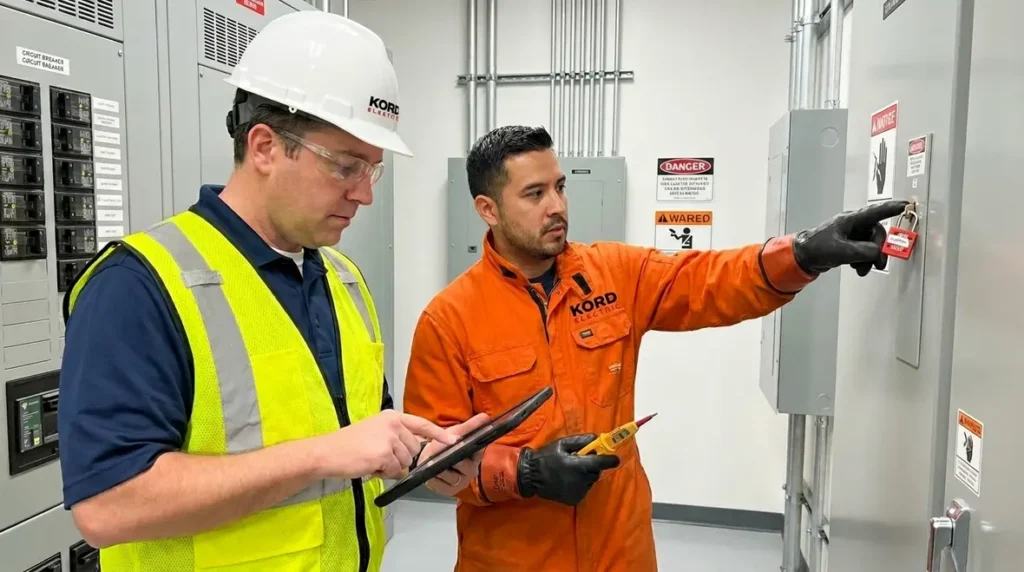
In the first few minutes, Kord Electric runs a clear electrical service lifecycle assessment that helps managers understand what is aging, what is still healthy, and what is quietly setting the stage for expensive downtime. We do not guess, and we do not hand you vague charts that look like they belong in a magic show. Instead, our expert service staff uses on site checks, panel reviews, and field observations to map condition, risk, and remaining useful life. Then, we translate the findings into language that operations teams can act on, not just admire.
Now, if your facility is acting like it is running on “mystery power” like a haunted warehouse in a late night movie, it is time to pay attention. Electrical systems usually do not fail dramatically at first. They degrade slowly, and that is where managers can win. With a practical plan, you can reduce surprises, control costs, and keep production or tenant services steady.
How electrical aging shows up before a failure
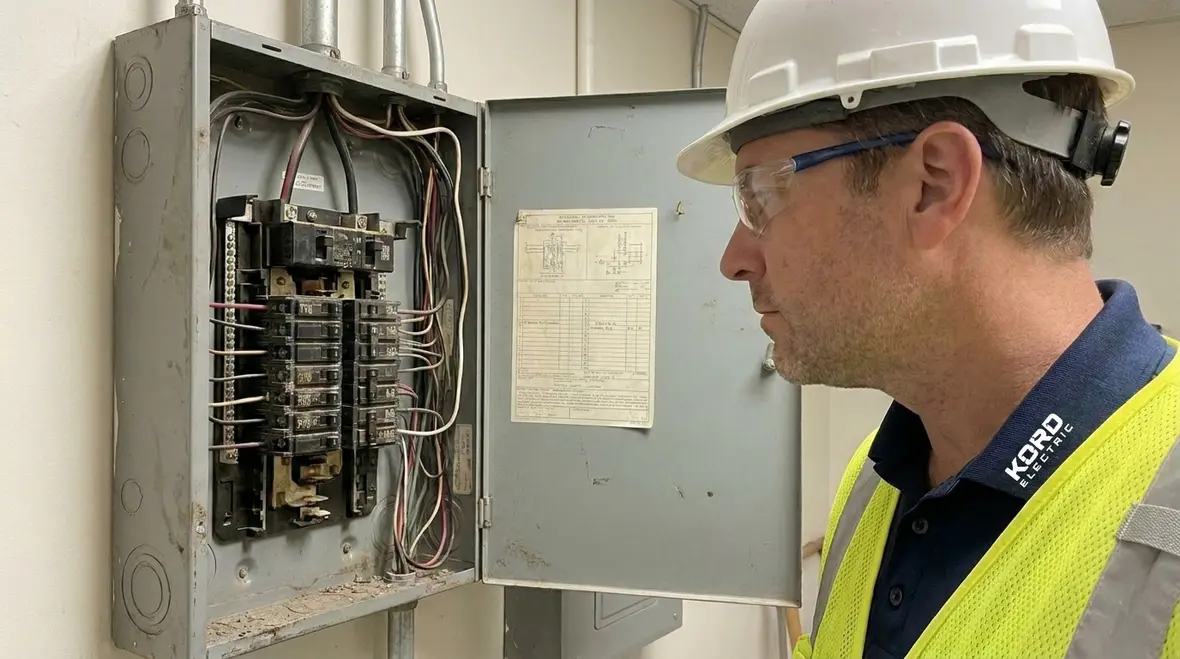
Many building managers only react when lights flicker or equipment trips. However, electrical end of life shows itself in patterns long before a full outage. First, you may notice more nuisance alarms from breakers, especially during routine load changes. Next, maintenance calls can increase for issues that should not be recurring, like overheating at terminations or unusual vibration near switchgear. Also, your power quality can drift, and the impact appears as equipment derating, damaged drives, or inconsistent process performance.
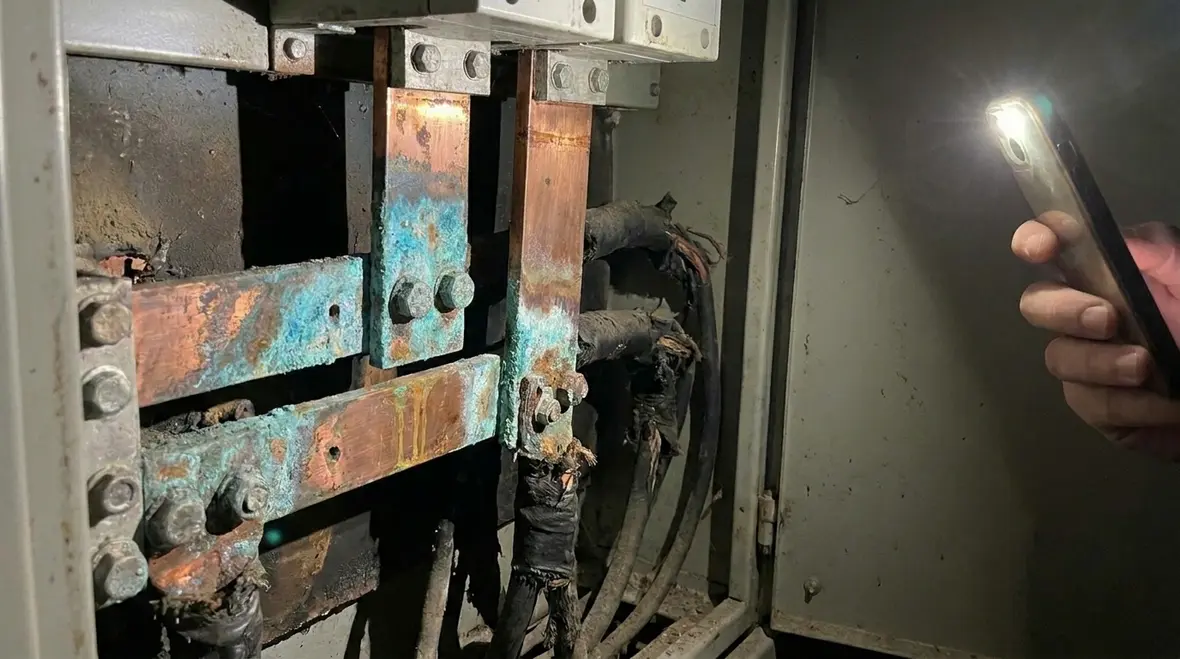
Even when everything “still works,” the system can lose efficiency. Corrosion forms where moisture or airborne dust settles. Connections loosen after thermal cycling. Insulation hardens over years of heat and electrical stress. Over time, bus bars, lugs, and switchgear components can become less reliable. And eventually, the protection system struggles to detect real faults fast enough. That is when a small problem grows into a major event, and nobody wants that phone call.
The signals managers should log during weekly rounds
To help your team notice the right details, we encourage a short, consistent log. Kord Electric technicians often see value when facilities capture observations like these, because trends matter more than one odd day. If your building is commercial or industrial, this matters even more since uptime drives revenue.
- Repeated breaker trips on similar circuits, especially after power factor correction or HVAC cycles
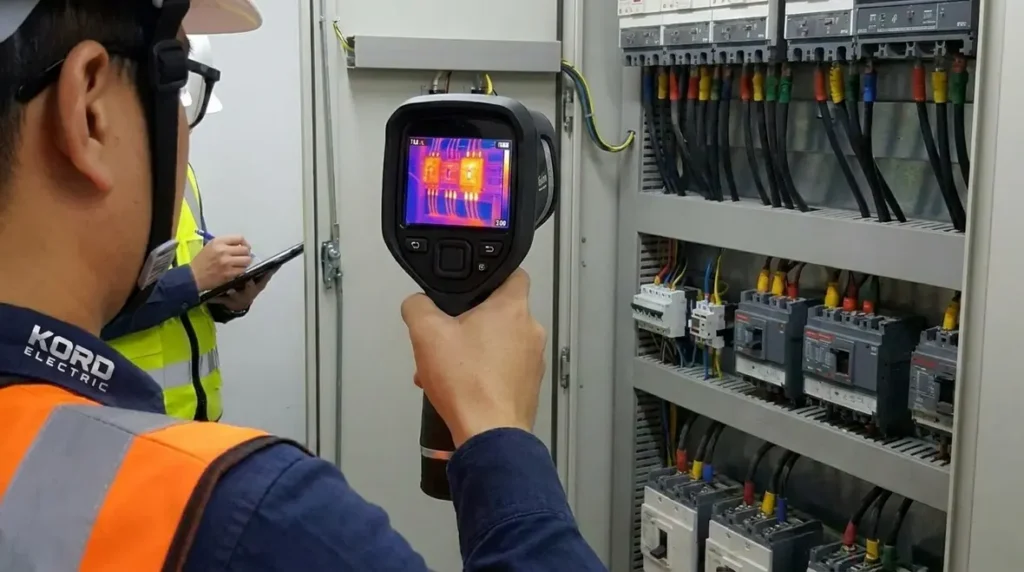
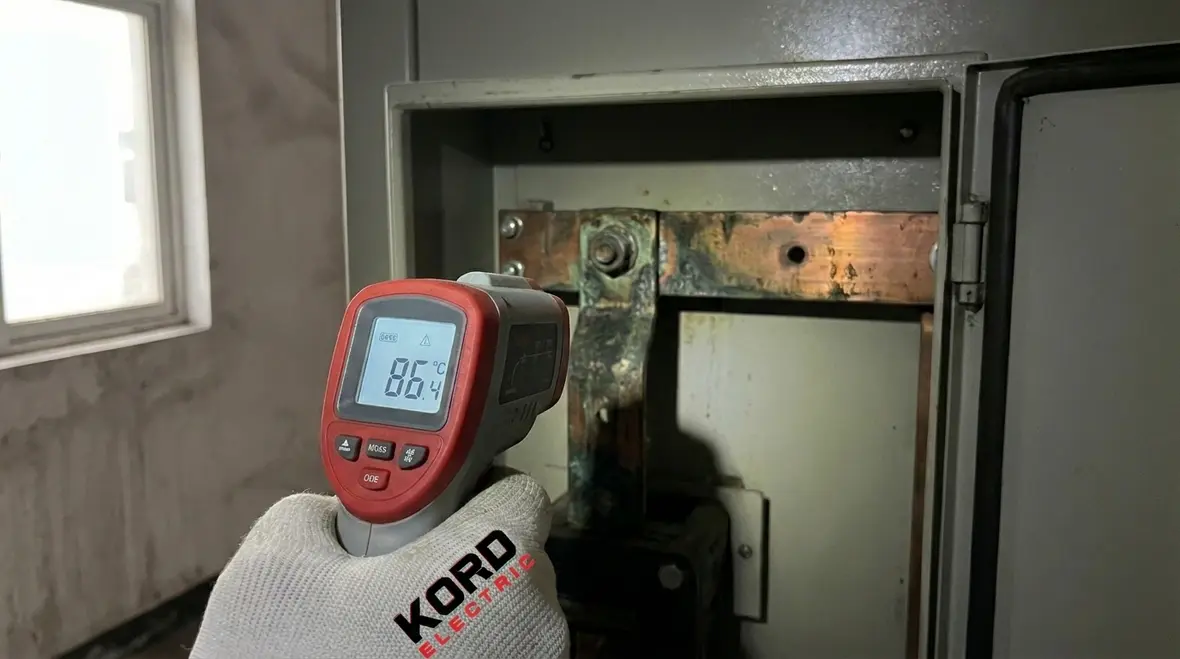
- Warm spots on panels or switchgear, confirmed with safe temperature checks
- Noticeable discoloration at terminations, which suggests overheating or arcing history
- Frequent failures of surge protection devices, like MOV modules, in the same areas
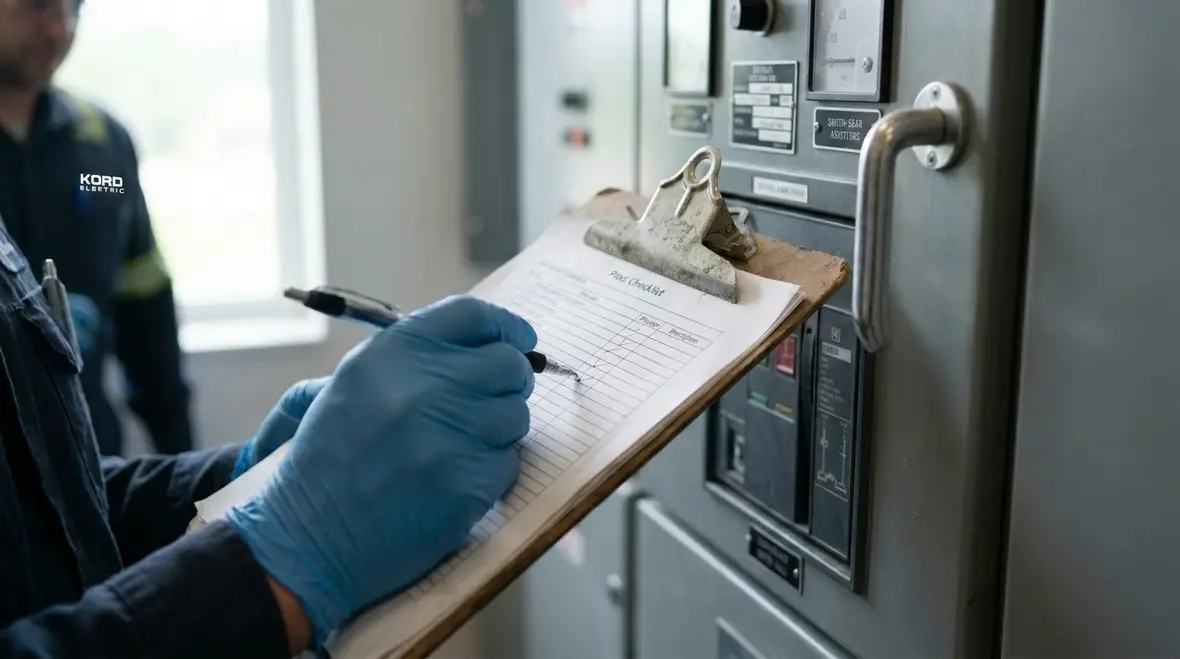
- Loose labels, outdated single line diagrams, or missing as built documentation
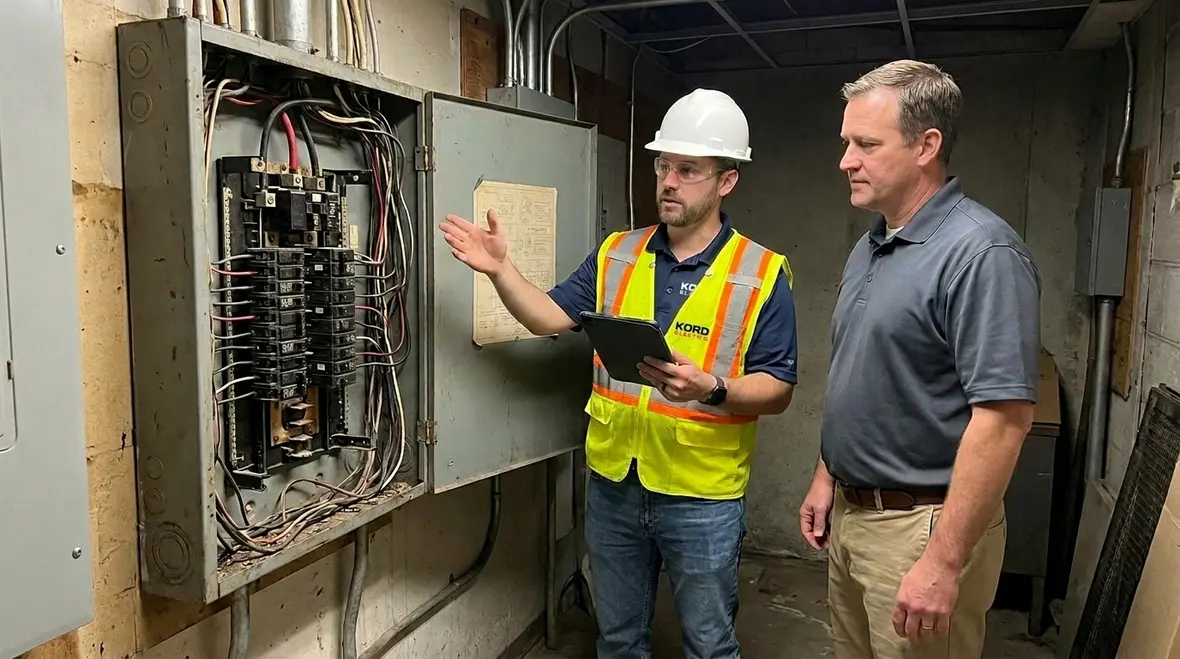
Additionally, managers should track the age of major components. Switchgear, transformers, ATS systems, UPS modules, and motor control centers all age at different rates. Therefore, a full system outlook requires more than a single year stamp. We often compare what drawings say to what the field shows. Our technicians do this calmly and carefully, because a mismatch between plans and reality is common, and it changes the risk picture.
And yes, a lot of facilities treat electrical one line diagrams like ancient scrolls. They exist, but nobody reads them until the fire drill starts. We read them early, so you do not have to.
Common end-of-life risks in commercial and industrial facilities
When electrical systems reach end of life, the risk rarely stays contained to one box or one panel. Instead, failures can cascade through the distribution path. For example, degraded medium voltage components can stress downstream equipment. In turn, protection coordination can weaken because protective devices lose accuracy. That can lead to nuisance trips or, worse, improper clearing during real faults.
Here are risk areas we see often in facilities like manufacturing plants, warehouses, data heavy operations, hospitals, office campuses, and large multi tenant properties. Others may call it “old infrastructure.” We call it “an avoidable outage waiting for a busy day.”
- Insulation breakdown in switchgear and panel boards that increases arcing risk
- Worn mechanical interlocks in safety critical equipment
- Transformer efficiency loss due to aging windings and oil condition changes
- Motor control center degradation, including overheating contactors
- UPS or battery aging that reduces ride through during power events
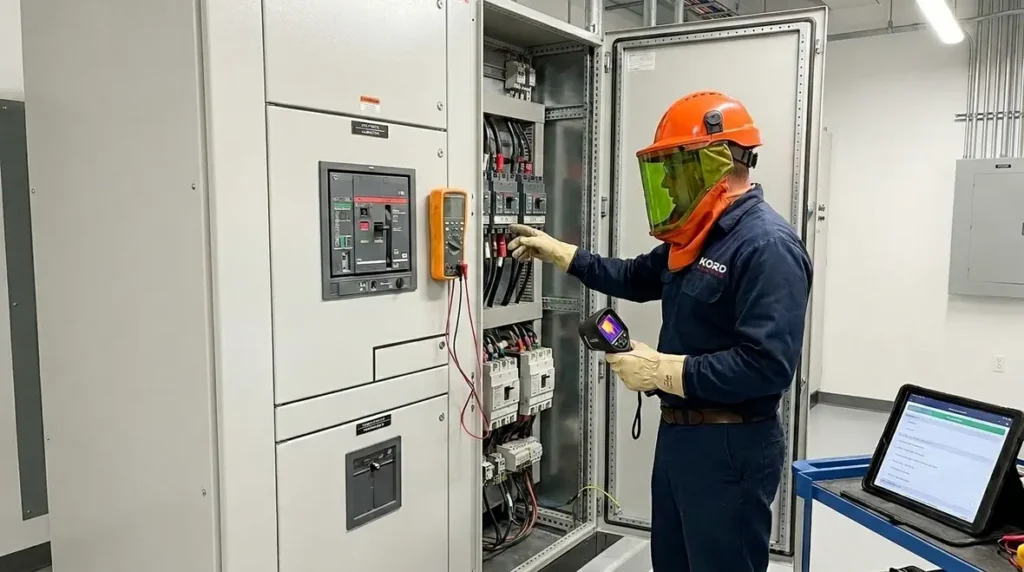
Moreover, end of life systems usually increase safety hazards. Fault currents can behave differently when components degrade. That means workers face higher arc flash risk, and incident investigation becomes harder when documentation is outdated. Consequently, managers need a clear plan to reduce risk while keeping operations running. Kord Electric helps teams schedule work, coordinate shutdown windows, and prioritize the highest impact upgrades first. For facilities looking to move from “hoping nothing fails” to a structured plan, pairing this approach with a dedicated electrical preventive maintenance program brings additional stability and control.
What a manager needs from a lifecycle assessment
Our electrical service lifecycle assessment delivers more than a report. It gives a roadmap tied to your realities, like production schedules and tenant needs. First, our technicians review the electrical distribution chain, from incoming gear to critical loads. Then, we evaluate component condition, protection device behavior, and signs of stress that indicate reduced life expectancy. After that, we organize findings into a practical action plan with priorities, estimated impacts, and timing guidance.
To keep it actionable, we also address things managers often struggle with. For example, how do you budget without guessing? How do you justify upgrades to leadership? How do you plan around occupancy? Our expert service staff explains options in a straightforward way, so your team can make decisions with confidence. We do not bury you in jargon. We do not talk like a textbook. We talk like a team that understands the building is your business.
Additionally, we flag documentation gaps because they often drive project delays. If as built drawings are missing or wrong, installation and commissioning cost more and take longer. Therefore, we include recommendations to close those gaps before work starts. That keeps your project from turning into a real life “choose your own adventure,” except none of the choices are cheap.
Finally, we help you align the assessment to risk tolerance. Some facilities can accept shorter interruptions with notice. Others need near zero downtime for critical processes. We shape recommendations around that, so the upgrade path fits the facility, not the other way around.
Planning upgrades without disrupting operations
Once Kord Electric identifies end of life components, managers need a phased approach. In the real world, you rarely replace the entire electrical system in one clean weekend. Instead, we plan improvements around critical loads, peak demand windows, and staffing availability. This reduces downtime risk and helps keep budgets under control.
Here is how we typically support phasing decisions, while keeping operations smooth for commercial and industrial buildings.
- We start with high risk items first, such as components with clear overheating patterns
- We coordinate testing and commissioning so protection settings match the new configuration
- We plan shutdown scopes that minimize service interruptions to departments that cannot pause
- We help align vendor timelines and material lead times early, before schedules break
- We recommend documentation updates so future maintenance stays accurate and fast
Also, managers benefit when our team explains tradeoffs. For example, sometimes a targeted replacement reduces failure risk right away. Other times, an upgrade must be coordinated with power quality improvements to get the expected results. Our technicians and expert service staff walk through these options clearly, so your team understands what changes, what stays, and why.
And yes, sometimes a building tries to “power through.” That works until it does not. We aim to keep your facility powering through on purpose, not by luck. Like a good plot twist, it should be planned, not random.
Quick FAQ for building managers
Take the next step with Kord Electric
If your facility runs like a well tuned engine, protect it like one. If it feels like it is running on borrowed time, confirm it. Kord Electric helps managers take control with an electrical service lifecycle assessment that turns risk into a practical upgrade plan. Our technicians and expert service staff explain what matters, what can wait, and what needs action now. For organizations that want ongoing reliability beyond a single project, you can connect this assessment with services like electrical preventive maintenance and other commercial electrical support, so your system aging, upgrades, and routine care all follow one coordinated strategy.
Whether you manage a manufacturing plant, a logistics hub, a healthcare facility, or a multi tenant property, the goal is the same: fewer surprises, more control, and a clear path forward. Our team helps you phase upgrades, align shutdowns with real operations, and keep leadership informed with data instead of guesswork. If you are ready to turn “we hope it holds” into “we know what is next,” it is time to bring in a team that lives in this world every day.
Contact us to schedule a site review and build a phased plan that keeps your commercial and industrial operations moving. From the first walkthrough to the final signoff, Kord Electric focuses on practical steps, clear communication, and long term system health so your electrical infrastructure supports the business you are actually running, not the one that was designed on paper twenty years ago.
If your facility is already juggling nuisance trips, aging gear, or expansion plans, connecting an electrical service lifecycle assessment with services like ongoing electrical preventive maintenance and broader commercial electrical maintenance support helps you move from reacting to planning. The right partner turns end of life surprises into scheduled projects, and scheduled projects into long term reliability.