Preventing Electrical Fires in Commercial Kitchens
Preventing electrical fires in commercial kitchens starts before the first fryer turns on
Kord Electric helps commercial and industrial facilities keep their kitchen electrical systems steady, safe, and ready for real use. We focus on preventing electrical fires in commercial kitchens by addressing risks that often hide in plain sight: loose connections, overloaded circuits, worn insulation, and bad planning during upgrades. And yes, we have seen a breaker “work fine” right up until it did not. It is like trusting a flimsy spatula to flip a 20 pound steak. It might survive… until it absolutely does not.
In the next sections, our expert service staff walks through the hazards we see most often, what causes them, and how commercial kitchens can reduce the odds of downtime, damage, and safety events.
Overloaded circuits and why kitchens love them too much
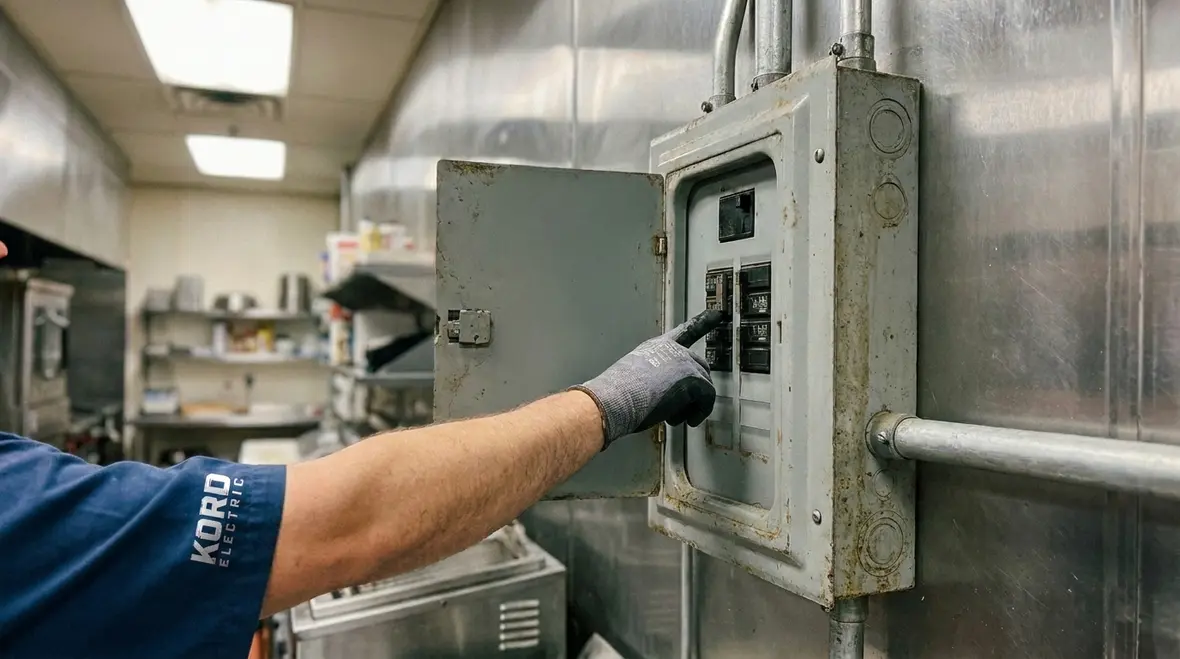
In commercial kitchens, demand spikes fast. One minute it is prep mode, the next minute it is grills, ventilation, dishwashing, and warming all running at once. Therefore, circuits that seemed adequate during design start to struggle over time. In addition, “temporary” plug-in loads tend to become permanent, which quietly pushes systems beyond their safe rating.
Our technicians explain that overload problems usually show up as heat at connections, nuisance tripping, or breakers that feel warm to the touch. However, you should not rely on “it still runs” as a risk test. Heat builds, insulation ages, and contact points carbonize. Over time, carbonized joints act like a switch that turns on the wrong outcome.
To prevent electrical fires in commercial kitchens, Kord Electric often recommends a load review before changes happen. We verify branch circuit capacity, consider panel spacing, and look at how kitchen equipment cycles throughout service. Then we map these findings to what the facility actually does on a typical day, not a spreadsheet fantasy. For deeper remodel planning, property teams often pair this evaluation with a full commercial kitchen electrical upgrades and wiring review so new layouts do not overload existing infrastructure.
Loose wiring, damaged receptacles, and the hidden heat trail
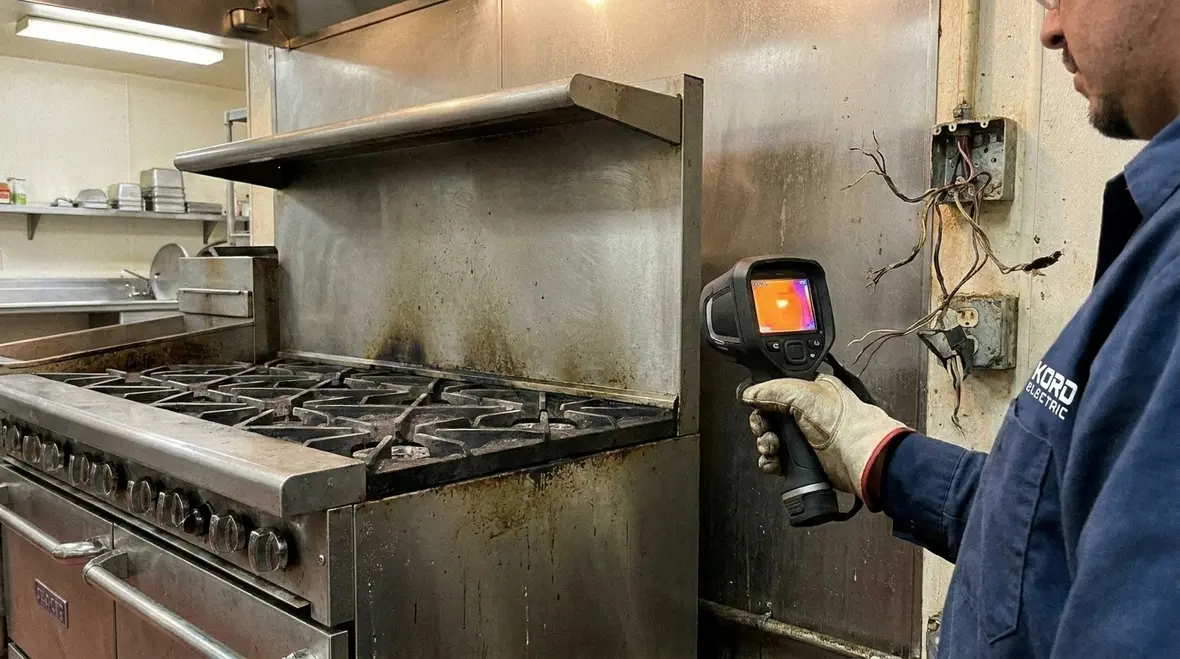
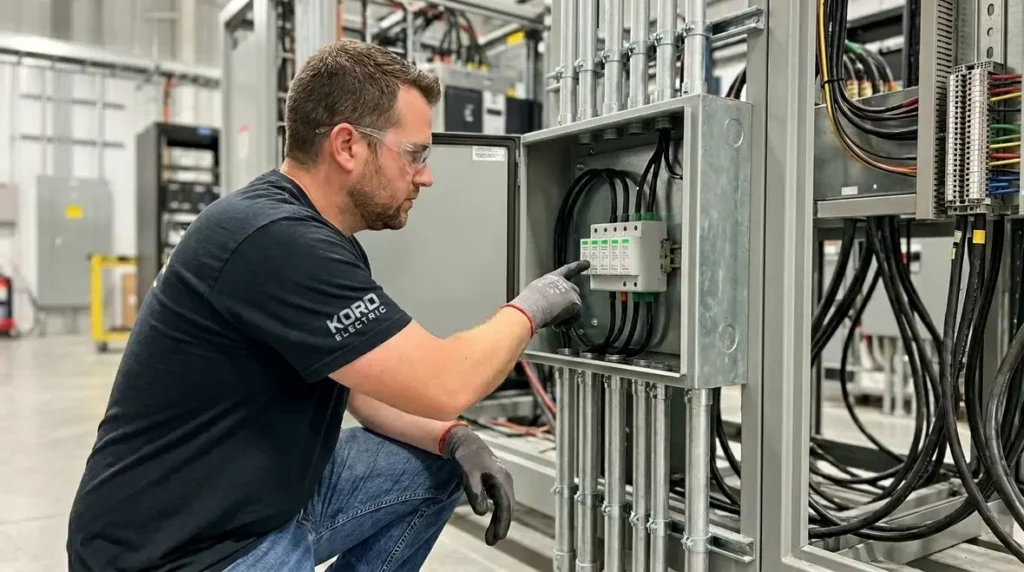
Loose wiring is one of those hazards that acts calm until it does not. First, a connection loosens due to vibration from nearby equipment, repeated plug cycles, or poor torque during installation. Then electrical resistance rises, which creates localized hot spots. Finally, heat can reach insulation, wire trays, or nearby materials.
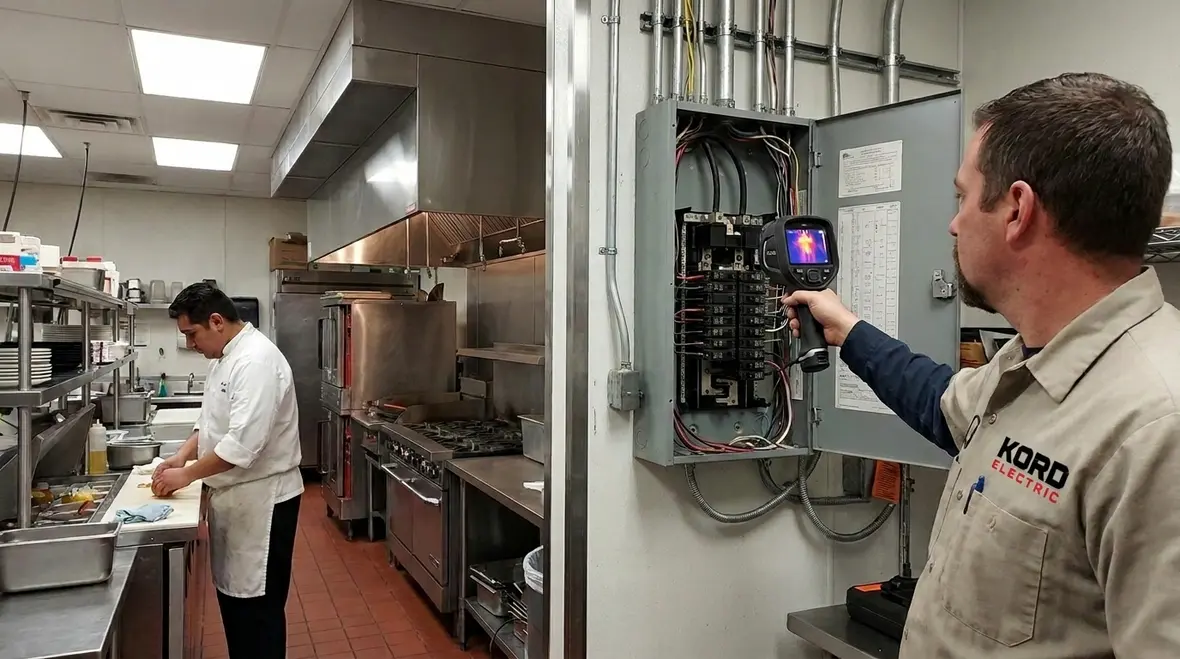
Our expert service staff does not just check for “visible damage.” We use a process that looks for early warning signs, like discoloration around terminal points, cracked device faces, and elevated temps where cables land on equipment. Also, we review how kitchens handle cord management. If cords get pinched behind equipment or dragged under carts, the damage often starts at the jacket long before anyone notices.
In many commercial operations, maintenance teams do great work, yet they may not have the tools to find thermal issues. That is where Kord Electric steps in, with inspections designed for commercial and industrial facilities. We make it clear what we find, we explain why it matters, and we outline what should be repaired first to reduce immediate risk. Many facilities tie this into a broader electrical preventive maintenance program so loose connections and worn devices get caught on a schedule instead of during a crisis.
Water, grease, and moisture intrusion you cannot “hope away”
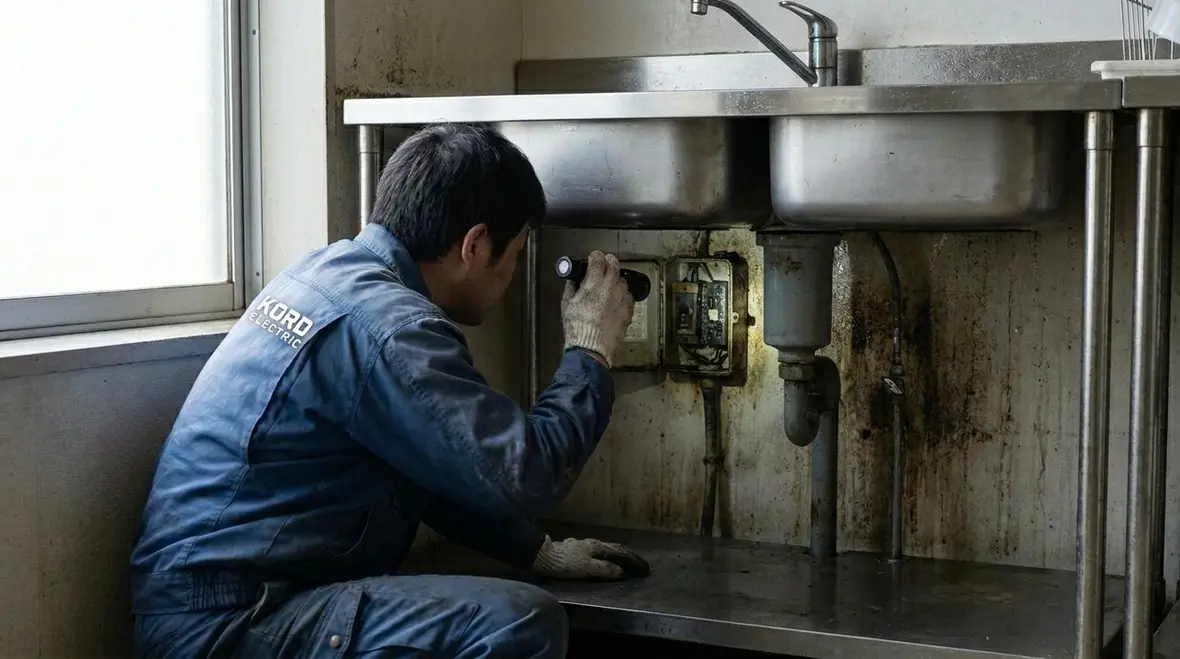
Kitchens live in a wet and messy world. Steam, condensation, splashes, and cleaning chemicals create a constant moisture challenge. Meanwhile, grease builds up like a stubborn guest who never leaves. When moisture meets electrical systems, it can reduce insulation resistance and create tracking across surfaces.
Grease is especially tricky because it can attract moisture and form paths where arcing can occur. Then, if a device or connection sits in a spot that gets cleaned aggressively, the issue can worsen. Even a well labeled panel can hide corrosion inside a conduit or behind a cover that was never opened since installation.
Therefore, preventing electrical fires in commercial kitchens requires the right protection approach, not just better housekeeping. Kord Electric helps facilities confirm that enclosures stay sealed, that conduit is routed correctly, and that wet locations get the proper devices and ratings. We also check how ventilation and washdown practices affect wiring paths and junction areas. When kitchens coordinate electrical protection with dedicated fire suppression solutions like the systems described in these essential fire prevention strategies for commercial kitchens, they create layered defense against both flame and fault.
Faulty ground connections and stray current in real kitchens
Grounding protects people and equipment. Yet, many kitchens unknowingly suffer from weak grounding, missing bonds, or corroded connections. Over time, ground paths can loosen, especially where metal parts are exposed to heat, cleaning chemicals, and vibration.
Our technicians tell customers the simplest grounding failures can look like “weird behavior.” For example: intermittent equipment resets, unexpected GFCI trips, or outlets that do not behave consistently. Then, when an electrical fault happens, the system may not clear the way it should. That increases risk, including the chance of fire if fault current cannot travel safely to the source.
To address this, Kord Electric verifies bonding and grounding continuity, checks that devices match the circuit type, and confirms that protective paths stay intact during ongoing operations. We also coordinate with facility managers when equipment upgrades occur, so grounding remains correct even as the kitchen changes. In facilities that have already seen flickering lights and unexplained equipment glitches, our work often pairs with resolving voltage fluctuations in commercial and industrial facilities to restore electrical stability from the panel down to the cookline.
Arc flash, short circuits, and thermal damage behind the panel
Short circuits and arc flash events usually start small, then escalate quickly. A damaged conductor, a dropped tool, or aging insulation can create a fault. Once current surges, heat rises, components expand, and damage spreads.
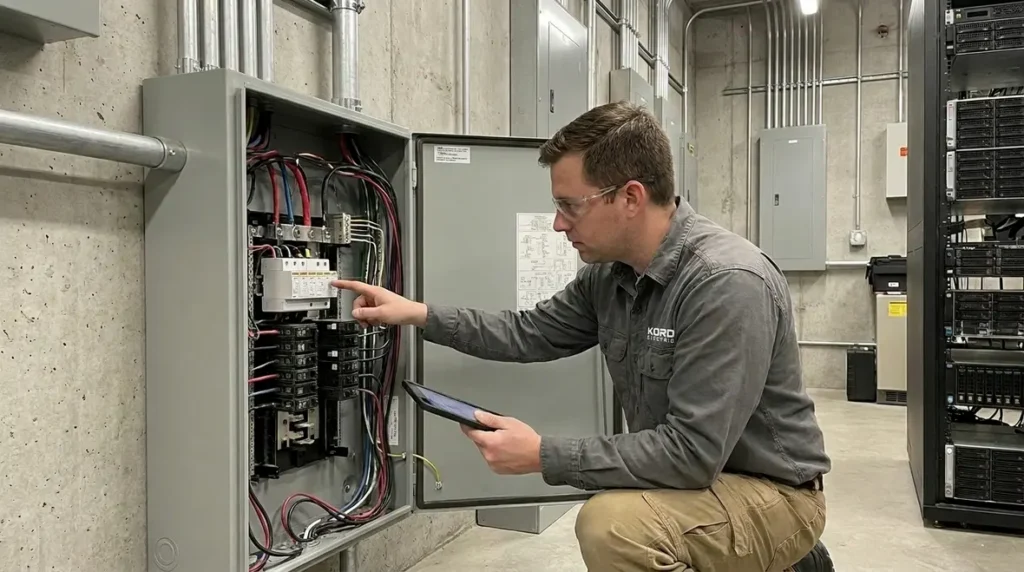
In many facilities, panel interiors get ignored until something fails. However, commercial environments deserve more discipline. We inspect for signs of thermal wear, loose breaker connections, and aging components. We also review protective device settings and coordination so the right protective action clears the fault without turning the whole system into a smoke machine.
Yes, we know. People hear “arc flash” and think of a dramatic movie scene. In real life, it is quieter, then suddenly it is not. That is why our team focuses on prevention: correct ratings, clean terminations, safe routing, and clear documentation for ongoing service. When kitchens invest in these steps as part of a structured maintenance and upgrade plan, they support the same fire safety goals covered in resources like commercial kitchen fire suppression systems explained, but from the electrical side of the equation.
Code compliance, inspections, and safe upgrades without downtime pain
Many kitchen owners want speed. They also want upgrades yesterday. Yet, a rush can lead to wiring changes that skip key steps: proper conductor sizing, correct device selection, correct labeling, and safe routing in trays and conduits.
Kord Electric supports commercial and industrial facilities with inspections and upgrade planning that reduce risk while protecting operational uptime. Our expert service staff explains the “why” in plain language, so the facility team understands what changes matter and what can wait. That clarity helps managers plan work during off peak hours and avoid surprise shutdowns.
Additionally, we help property teams coordinate electrical safety requirements across multiple equipment zones. This matters because kitchens are not one system. They are a network of loads: cooking equipment, HVAC controls, refrigeration, dishwashing, and lighting. When one part changes, the rest deserves attention too. For large renovations, our commercial clients often connect this work with full rewiring cost planning for commercial electrical systems so kitchen upgrades align with long term facility strategy rather than quick patches.
Electrical safety audit checklist for commercial kitchens
If a team wants a practical way to start, we recommend walking through these points during scheduled maintenance. Then, when needed, Kord Electric can perform a deeper inspection for commercial and industrial facilities.
Visual and physical checks
- Panel exterior and labeling for accuracy and clear circuit identification
- Receptacles and cords for looseness, cracks, scorching, and pinched sections
- Conduit and junction locations for moisture intrusion and corrosion
- GFCI protection on appropriate circuits and test records
Electrical checks
- Load review that matches real kitchen duty cycles
- Connection integrity including proper torque and termination condition
- Grounding and bonding verification for continuity and corrosion
- Protective device coordination to clear faults safely
Two outcomes from a well-run electrical program
Kitchens run on reliability. When electrical hazards are handled early, facilities gain more than peace of mind. They gain stability and fewer emergencies. Meanwhile, teams protect the people who work long shifts, lifting pans and watching timers.
Outcome for the facility
Fewer fire risk events, less unplanned downtime, better equipment lifespan.
Outcome for the team
Safer work conditions, fewer disruptive shutdowns, clearer maintenance priorities.
FAQ: Common questions about electrical hazards in commercial kitchens
Call Kord Electric for kitchen electrical safety that holds up under pressure
When you run a commercial kitchen, electricity is not background noise. It is a core system that must stay safe during peak service. Kord Electric helps commercial and industrial facilities reduce risk through detailed inspections, clear explanations, and upgrades built for real-world loads. If you want preventing electrical fires in commercial kitchens to be more than a slogan, contact us to schedule an assessment. We will show you what matters, what is urgent, and what keeps your kitchen running without drama. For facilities building out new lines or renovating existing spaces, it is also worth exploring our dedicated commercial kitchen electrical upgrades and wiring services so safety, capacity, and future growth all move in step.
If your kitchen is part of a larger campus, warehouse, or production environment, our team can also support complementary projects such as code-compliant recessed lighting installation and broader preventive maintenance programs. Coordinating these efforts keeps your electrical system aligned from the cookline to the loading dock, cutting the odds that a hidden issue in one area will surprise you in another.