Commercial Electrical Surge Protection by Kord Electric
Commercial Electrical Surge Protection Benefits: Why Kord Electric Starts Here
Kord Electric helps commercial and industrial facilities reduce downtime risk with practical, site ready commercial electrical surge protection. In the first 100 to 150 words, here is the point we make again and again: sensitive equipment does not fail because it is unlucky, it fails because surges sneak in from lightning, utility switching, and even everyday motors starting up. Then, when the damage shows, it looks expensive, slow, and avoidable.
Our technicians and expert service staff walk customers through surge risks before they touch a panel. And yes, we do explain things in plain language, because nobody wants to hear jargon more often than they hear a fire drill alarm. With Kord Electric, we install with care, test with intent, and help facilities stay protected without turning maintenance into a full time hobby.
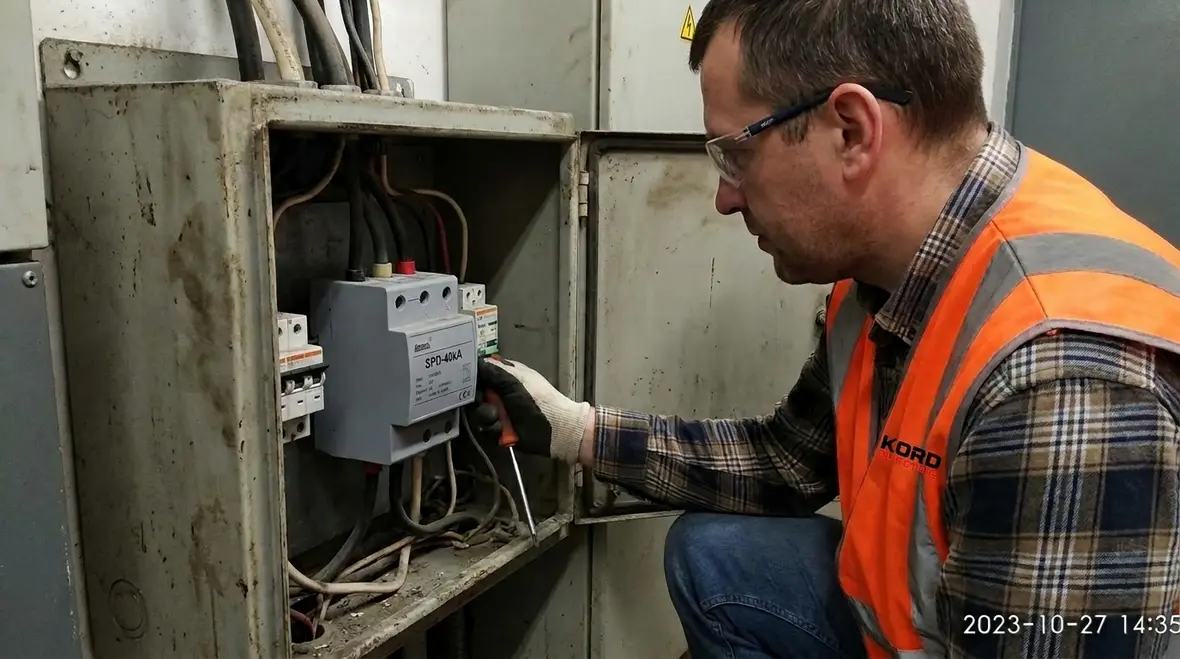
When we talk about commercial electrical surge protection benefits, we are talking about more than just saving a few circuit boards. We are talking about protecting entire production runs, occupied office towers, hospital systems, and essential building services from failures that start in milliseconds and end with hours or days of downtime. Surge protection is often the quiet backbone of an uptime strategy, and the payback shows up every time a storm rolls through or a utility switching event comes and goes without tripping your critical equipment.
That is why Kord Electric treats surge planning as early-stage infrastructure discussion, not a punch-list item. During design or retrofit conversations, we walk through where surges are likely to appear, which equipment is most vulnerable, and how a layered strategy can keep your facility running. That dialogue gives facility managers, engineers, and owners an honest view of risk before any gear is installed. It also gives them a roadmap for upgrades that can be scheduled, budgeted, and justified with clear commercial electrical surge protection benefits instead of guesswork.
Industrial Surges Aren’t Mythology, They Are Physics
Industrial sites live with power that is dynamic. Therefore, voltage events happen more often than most teams expect. A surge can ride in on the line, jump through connected wiring, or couple into equipment through nearby systems. Even if power quality looks “normal” most of the time, a brief spike can hit drives, PLCs, servers, HVAC controls, and metering gear like a lightning bolt in miniature.
Meanwhile, switching events inside the facility can create disturbances. When a large compressor starts, when a transformer shifts load, or when a circuit is reconfigured, the electrical system can generate transient overvoltage. Most of the time it is quiet. However, the quiet minutes do not cancel the occasional loud hit.
Our team at Kord Electric treats surge protection as a system design problem, not a box you hang on a wall. We look at how power enters the building, how it distributes, and what equipment sits downstream. That approach matters because surges get worse the closer they travel to sensitive electronics without a proper path to ground.
In many commercial and industrial buildings, the physics behind surges stays invisible until something fails. The reality is that even well designed distribution systems experience switching transients, harmonics, and momentary overvoltage. When those events line up with vulnerable equipment, that is when power supplies weaken, control boards degrade, and nuisance shutdowns start popping up on shift reports. By recognizing that surges are a predictable physical behavior of real systems, not random acts of fate, facility teams can move from reacting to failures to actively engineering them out.
That is also why we spend time on education while we are on site. When operators and maintenance staff understand that a drive trip or a PLC lockup may be the symptom of an upstream surge event, they start connecting the dots differently. Instead of only swapping parts, they ask whether the power architecture and surge protection layers are aligned. That shift in thinking is one of the commercial electrical surge protection benefits that rarely shows up on a spec sheet, but it pays dividends over the life of the facility.
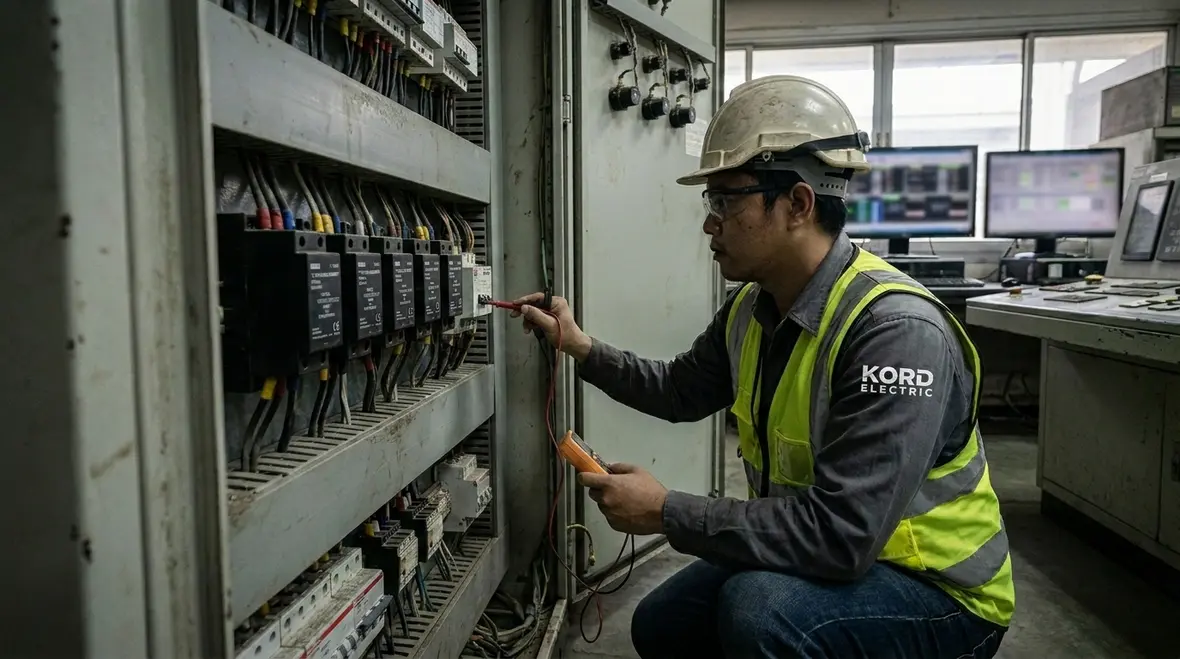
What Industrial Equipment Needs From Surge Protection
Sensitive equipment usually fails in patterns, and those patterns guide our design choices. For example, semiconductor components and control electronics often get damaged by high frequency spikes. In contrast, power supplies and motor drive input stages may suffer from repeated stress that shortens their life. Then the “mystery” repairs begin, and the downtime calendar fills up like a weekend sports league.
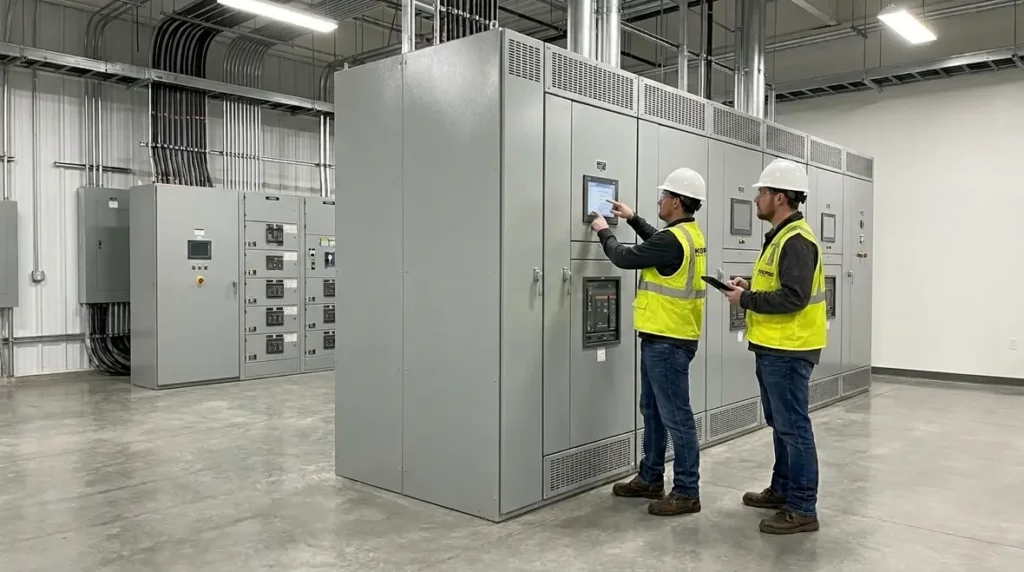
To protect properly, we do more than install protective devices. We align protection stages with the facility layout and the voltage levels. We also consider earthing and bonding, because surges need a controlled route. If grounding is weak, the protection device cannot control the energy. Then it may clamp, but the system still finds another path, usually through the wrong equipment.
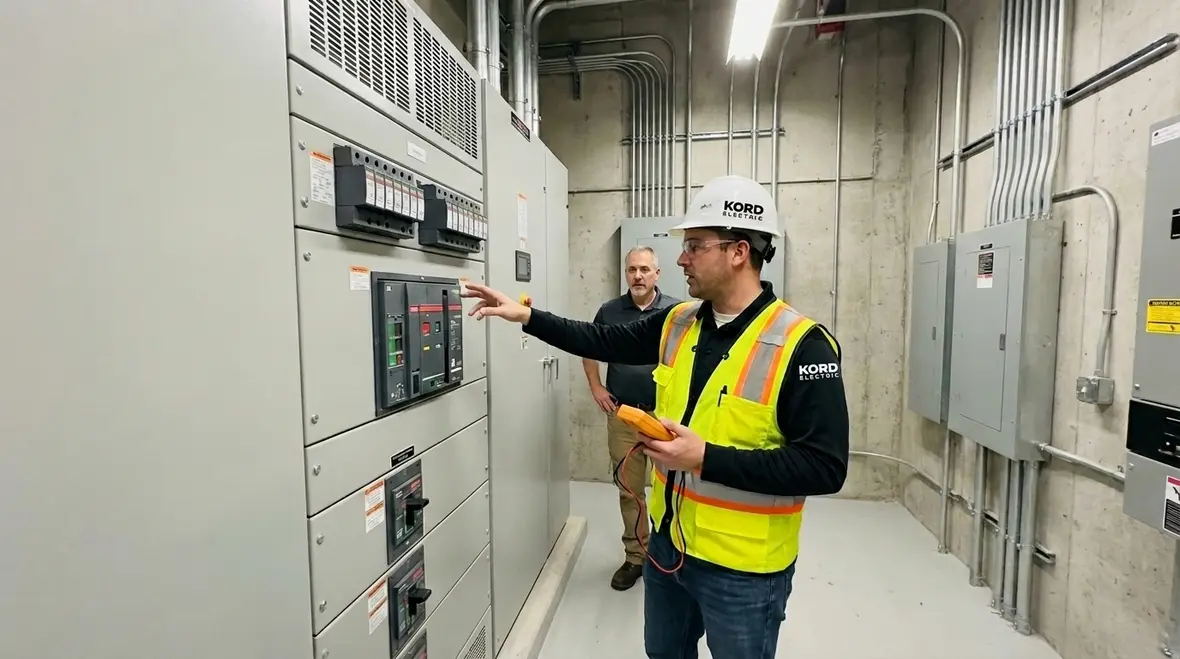
Our technicians explain this clearly during onsite reviews. They show how energy travels, where faults start, and how proper coordination reduces stress on downstream gear. We also help teams understand that no single device solves every surge scenario by itself. We design for the entire chain.
Different equipment classes call for different protection priorities. Data centers and server rooms need tight control over even modest transients, while industrial drives and large motors need robust devices that can handle higher energy events without premature wear. Building automation controllers, lighting control systems, and tenant-facing technology add another layer of vulnerability. By mapping out these needs zone by zone, Kord Electric builds a surge protection strategy that supports everything from critical process control to basic building comfort.
Those tailored strategies turn into measurable commercial electrical surge protection benefits over time: fewer unexplained failures, longer equipment life, more predictable maintenance budgets, and better confidence in your ability to add new technology without overwhelming an already stressed electrical backbone. When the power architecture and the protection architecture are speaking the same language, the equipment simply lives a calmer life.
How Surge Protection Fits Into a Real Power Strategy
Some people treat surge protection like a last minute insurance policy. With industrial and commercial facilities, we treat it like a managed layer of protection. First, we assess risk factors. Then we match protection types to those risks. Finally, we coordinate with existing electrical design so nothing conflicts.
At Kord Electric, we typically include protection at service entrance points, and we extend it where sensitive loads receive power. We also pay attention to data and signal paths, because modern facilities run on control networks, building automation systems, and communications wiring. Surges do not only travel on the power conductors. They also couple into low voltage lines and bring chaos into the “safe” side of the building.
Then we add operational value. We help facility teams plan maintenance and inspections so protection stays reliable. In other words, we make sure the protection keeps doing its job after the install, not just during the first week when everyone is impressed by the nice labels.
A real power strategy also has to account for how electrical systems interact with fire and life safety systems. That is why Kord Electric coordinates closely with trusted fire protection partners like Kord Fire’s full fire protection services, ensuring that surge protection and life safety equipment support each other instead of working at cross purposes. When your electrical gear and your fire sprinkler, alarm, and suppression systems are designed as a unified defense, you get both resilience and safety without last-minute compromises.
We also connect surge planning with backup power, power monitoring, and future resiliency upgrades. If your facility is exploring advanced metering, building analytics, or integrated energy management, a solid surge protection foundation keeps that investment safe. Adding layers of intelligence to a building without stabilizing the underlying power environment is like upgrading the dashboard on a car while ignoring the tires and brakes. We make sure your strategy starts from the fundamentals and builds upward.

Common Surge Sources on Commercial and Industrial Sites
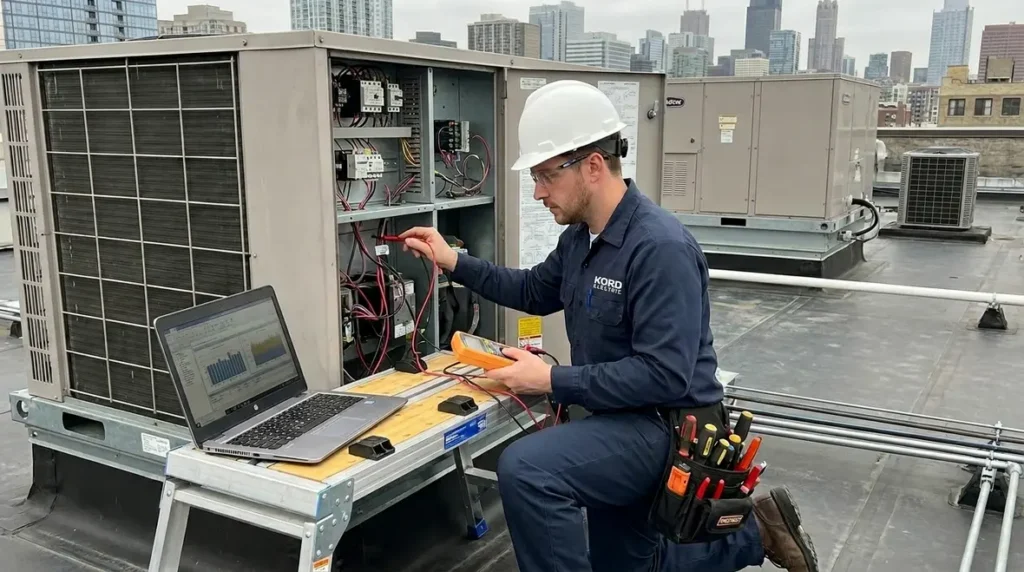
Surges come from predictable sources, even if the timing feels random. Lightning exposure remains a top driver, especially for tall structures, rooftop equipment, and sites with exposed conductors. However, internal events can be just as disruptive for sensitive devices.
When utility companies switch loads, transfer circuits, or experience transient events, facilities can receive brief overvoltage. Inside the building, motor starting and stopping can create disturbances. Large HVAC systems, pumps, compressors, and elevator drives can all contribute. Additionally, power factor correction banks and capacitor switching can generate transient activity that stresses electronics.
Our expert service staff helps customers map these sources to their equipment list. Therefore, we tailor surge protection to what is actually in the field, not what someone guessed during a site walk. We also coordinate with electricians and facility managers so installation work does not create new operational risk. Because nobody wins when the cure causes the outage.
Beyond the obvious culprits, many facilities face surge exposure from distributed generation, EV charging infrastructure, and expanding mechanical systems. Each new inverter, VFD, or high-efficiency motor can introduce additional switching activity. Without a coordinated plan, those upgrades slowly stack more stress onto already busy panels. One of the quiet commercial electrical surge protection benefits is that a well designed system gives you a known margin for future projects instead of crossing your fingers with every new addition.
We also encourage facility teams to connect surge analysis with broader risk reviews they perform alongside fire and life safety professionals. When you review sprinkler coverage, alarm performance, or suppression system status with a company like Kord Fire, it is the perfect time to ask how your electrical and life safety layers interact. That integrated thinking keeps your building safer from both electrical disruption and fire events, instead of treating them as separate checkboxes.

Dual Approach: Protection, Coordination, and Grounding That Actually Work
Because surges spread through systems, Kord Electric uses a dual approach that focuses on both hardware and how it behaves in the real world. We coordinate device ratings, install locations, and grounding design so the energy path stays controlled. This helps prevent partial protection where only one stage “sees” the surge.
We also verify that protective components align with the facility’s power distribution strategy. That means we review service configurations and distribution panels, then we confirm that protection devices work together rather than fight each other. If devices do not coordinate, you can get nuisance responses or ineffective clamping under real surge conditions.
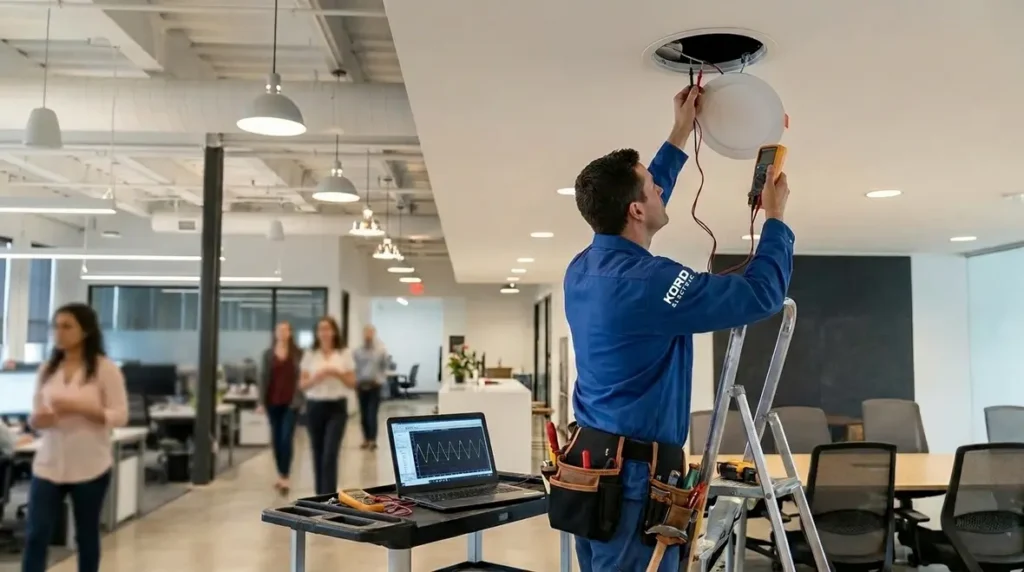
Our field technicians conduct careful verification steps during and after installation. They ensure terminations are solid and that grounding and bonding meet the project needs. Then the system protects without adding new weak points.
This dual approach connects directly to the commercial electrical surge protection benefits that matter most to owners and operators: stability and predictability. Coordinated devices reduce the likelihood of unexpected trips and unexplained failures, while solid grounding and bonding keep surge energy flowing along engineered paths instead of through your most expensive assets. The result is a quieter electrical system that simply does its job shift after shift.
We also document our coordination work so future electricians and engineers can see exactly what was installed and why. That documentation makes it easier to expand panels, add new equipment, or integrate advanced monitoring later. By designing surge protection as a visible, understandable system, we prevent the kind of mystery wiring and improvised fixes that quietly erode protection over time.
How Kord Electric’s Dual Approach Shows Up in Your Facility
Feature
How Kord Electric Helps
Staged protection ensures entrance protection supports downstream sensitive loads so the entire chain stays calmer during a spike.
Coordination helps devices work together so energy gets managed instead of redirected into equipment.
Grounding and bonding checks give protection a reliable route, because surges cannot be “shooed away” without a path.
Expert technician verification confirms installs are correct and performance stays stable after the workday ends.
Signs Your Facility Needs Industrial Surge Protection Improvements
Some facilities wait for failure. Then, after a control module burns or a network switch reboots repeatedly, they call. We understand the frustration. Still, there are signs that often show up earlier.
Facilities commonly report unexplained equipment resets, intermittent communication errors, or repeated faults on drives and power supplies. If electricians notice that protection devices have been replaced in the past or that there were recent panel changes, that can also point to a protection gap. Additionally, new equipment upgrades without a surge review can create new vulnerabilities.
Another clue appears after storms or utility events. If teams see unusual behavior following lightning activity or even after utility switching days, they should investigate surge exposure. We help customers confirm whether the symptoms match surge patterns, then we recommend improvements that fit the facility and the risk level.
Sometimes the clues are financial rather than technical. When repair logs start showing the same type of failure across multiple pieces of equipment, or when replacement boards become a recurring line item in the budget, surge exposure may be quietly eroding your assets. One of the practical commercial electrical surge protection benefits is that a thoughtfully upgraded system can flatten that curve, turning a cycle of repetitive failures into a stable, predictable maintenance plan.
We also encourage facility managers to coordinate surge reviews with broader safety and reliability initiatives. When you schedule fire system inspections, alarm testing, or sprinkler maintenance with providers like Kord Fire, it is an ideal time to add an electrical protection discussion. A short combined walk-through can often reveal both life safety and power quality improvements that can be implemented together, with less disruption and better overall payback.
FAQ for Facility Managers and Electrical Decision Makers
Why Kord Electric and Expert Service Matter for Major Buildings
Large facilities carry more than electrical load. They carry production schedules, tenant expectations, safety requirements, and uptime targets. Therefore, surge protection must be engineered and installed with the discipline of a long term plan, not the hope of a lucky day.
Our technicians and expert service staff bring practical experience across commercial and industrial electrical systems. We take time to explain what we find, why it matters, and how the solution supports the facility’s goals. Then we install and verify so the protection works when it counts. Because when a surge hits, you do not get a second chance to “fix it later.” The equipment usually votes once, and it votes with smoke.
For owners and managers responsible for life safety as well as uptime, we recognize that electrical performance is deeply connected to fire protection. That is why we align our surge protection work with the kind of comprehensive coverage offered by Kord Fire’s comprehensive fire protection services. When detection, suppression, alarms, and electrical resilience are all part of the same reliability conversation, major buildings gain a more robust defense against both sudden surges and serious fire events.
In practice, that expertise shows up in small but important details: clean terminations, disciplined labeling, clear documentation packages, and realistic maintenance recommendations. It also shows up in how we help you phase work to match budgets and operating schedules. We understand that shutting down production lines or tenant spaces for electrical work is never trivial, so we plan surge upgrades, panel modifications, and verification steps with minimal disruption in mind.
Ready for a Surge Protection Plan That Protects Uptime?
Let Kord Electric help your commercial or industrial facility reduce surge damage risk with properly designed and coordinated industrial surge protection. Our technicians review site conditions, explain options in plain language, and install solutions built for major buildings and sensitive systems. If you want dependable power protection that supports uptime instead of surprises, contact Kord Electric today. We will schedule a practical assessment and outline next steps you can act on quickly.
When you are ready to look at your building’s full risk picture, including both electrical reliability and life safety, you can also coordinate with the specialists at Kord Fire Protection. Their fire sprinkler, alarm, and extinguisher services complement Kord Electric’s surge protection and power quality work, giving you a complete path to compliance, safety, and uptime in one integrated plan.
Whether you oversee a manufacturing plant, a high-rise, a logistics hub, or a campus environment, the combination of robust surge protection and trusted fire protection support gives your facility a stronger foundation. With Kord Electric handling the electrical resilience side and Kord Fire providing full fire protection services, you can move from reacting to emergencies toward quietly preventing them, one well engineered system at a time.