
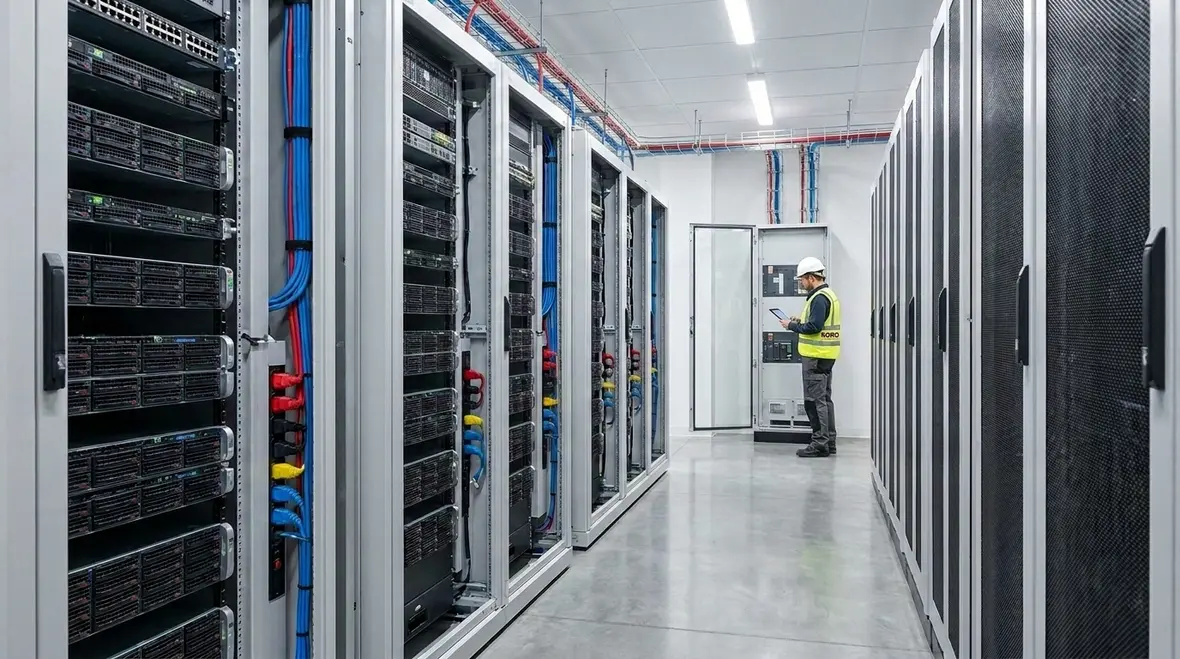
Data Center Power Redundancy Strategies Guide
Essential Data Center Power Redundancy Strategies Explained
In a commercial or industrial data hall, downtime does not just cost money. It costs trust. That is why data center power redundancy must be designed, proven, and maintained with the same care you give to a safety plan you never want to use. At Kord Electric, we help facility teams build layered power protection so critical systems keep running when something fails, because something always fails eventually. And when it does, we want the lights, cooling, and racks to keep their cool too.
Others often treat redundancy like a checklist item. We do not. Instead, we take a practical, field-tested approach with our technicians and expert service staff, then we document it in plain language so your team knows what happens during every phase. Yes, we even explain it like you are busy, because most people are.
How redundancy reduces risk in mission critical spaces
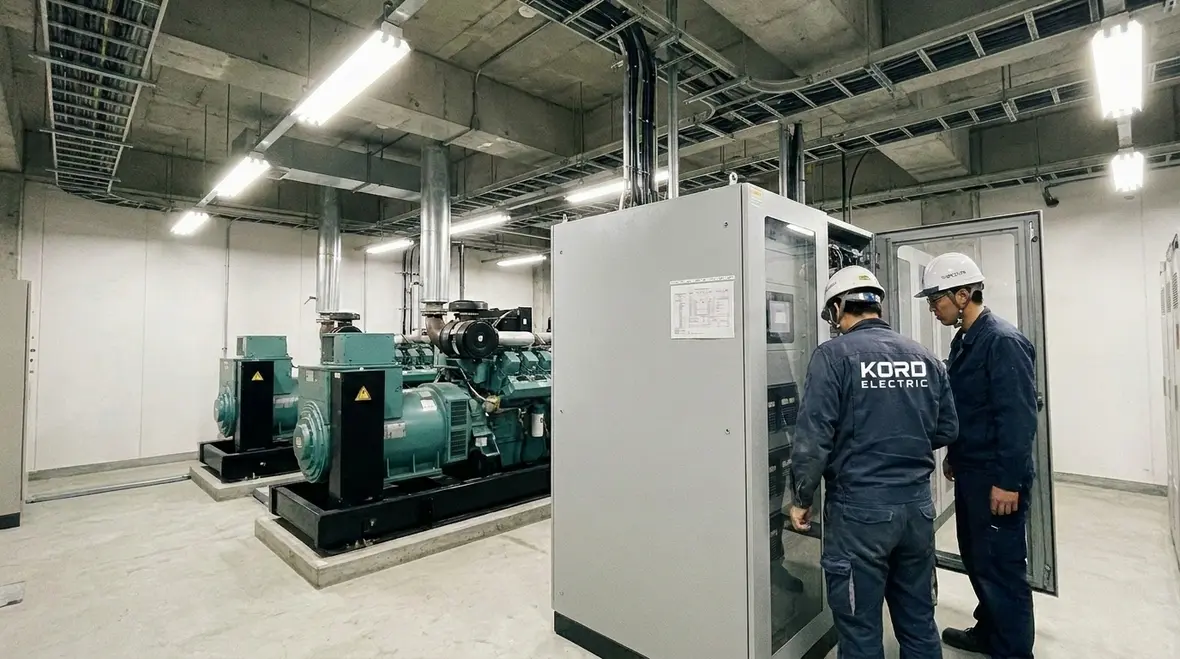
Data centers run like tight orchestras: power, cooling, network, and controls must stay in sync. When a single note breaks, the whole song wobbles. Therefore, we help teams reduce risk by adding layers that cover different failure types. First, we address the utility side, where outages and sags can start the trouble. Next, we cover onsite generation, where fuel or transfer issues can interrupt service. Finally, we focus on distribution, because even a strong source can fail if the wrong part of the path has a weak link.
Our expert service staff typically starts by mapping how power moves from utility to critical loads. Then, we identify where failures are most likely and which systems must ride through. As a result, redundancy stops being a slogan and becomes a plan with real boundaries, real tests, and real ownership.
For deeper design context, many facility teams also review how redundancy ties into broader uptime requirements using guides such as Kord Electric’s insights on data center electrical distribution design for reliability and data center electrical requirements for uptime. These kinds of references help connect your redundancy choices with real-world load behavior, power quality, and maintenance planning across the full electrical chain.
Designing with N+1, 2N, and modular layouts that work
In commercial and industrial facilities, the right architecture depends on load size, operating needs, and how fast you must recover. For that reason, teams often use data center power redundancy models such as N+1, 2N, or modular builds. Each approach has benefits, and each has tradeoffs that matter in the real world.
- N+1 adds one extra unit so one failure does not stop the system
- 2N keeps two independent power paths so critical loads have full separation
- Modular adds capacity in blocks so you can scale without rebuilding everything
To make this practical, our technicians look at actual equipment and transfer behavior. We confirm the switchgear, breakers, bus ties, and control logic match the level of separation you want. Then, we coordinate the physical layout so maintenance does not accidentally become an outage plan. Because, honestly, nobody wants to “service during business hours” and discover those hours were a myth.
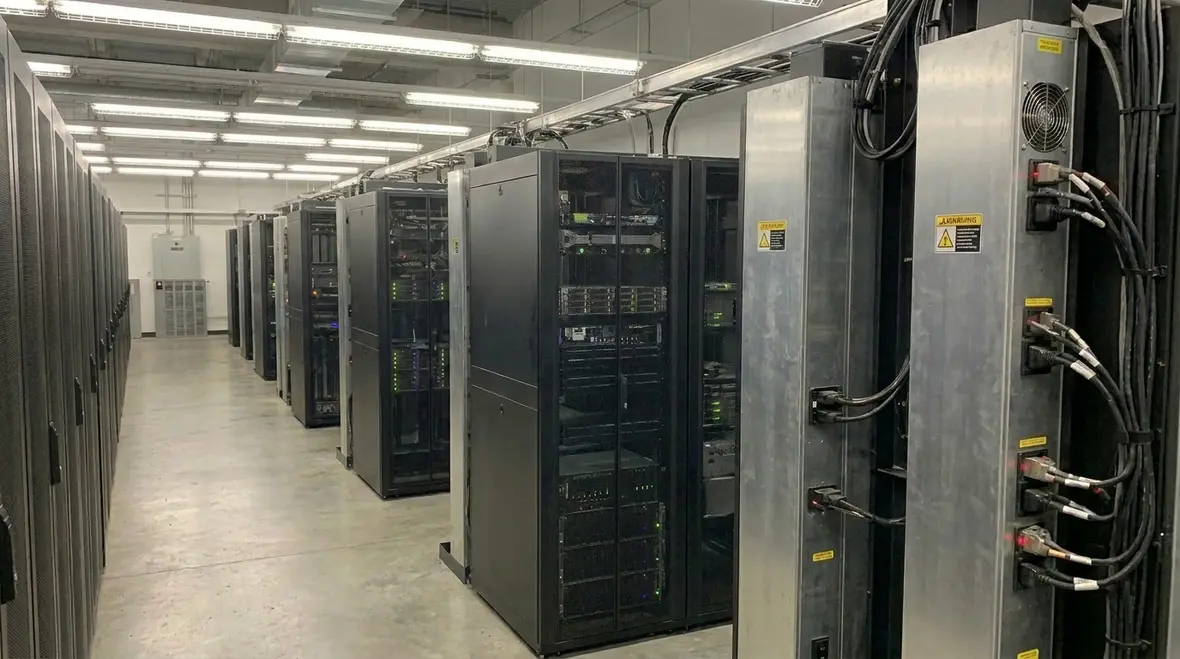
When we design or review these architectures, we also think ahead to growth. Data center power redundancy must adapt as racks multiply and new technologies come online. Borrowing ideas from modular electrical infrastructure essentials, we help you build room for expansion in both physical space and electrical capacity so future upgrades do not force you back to the drawing board.
Utility feeds and transfer schemes: where failures start
Even when generation and UPS systems exist, the path before them still matters. Utility feeds can sag, drift out of tolerance, or fail completely. So, our teams focus on the transfer scheme first. We check whether you have single or dual feeds, how they enter the building, and what happens during a utility loss or repair.
Next, we examine switching logic, including make before break behavior where applicable, and we verify control settings. After that, we review interlocks so operators cannot combine states that create a risk. As a result, you get smoother ride-through and fewer surprise moments.
When our expert service staff talks through this with property leadership, we keep it grounded. We explain what an operator will see, what alarms will trigger, and what a “normal” transfer cycle sounds like. If a process does not have a clear story, it will fail to match reality under stress. And stress has a way of turning calm people into frantic people.
In many major property buildings, the transfer scheme must also coordinate with other distribution design elements such as selective coordination, fault clearing order, and grounding. When these pieces align, your data center power redundancy strategy supports not only ride-through, but also stable recovery and predictable behavior during complex events.
UPS, generators, and batteries: matching runtime to your loads
Redundancy does not only mean having more equipment. It means having the right type of backup for the right duration. UPS systems handle short events, and generators cover longer outages. However, the transition between them matters. If the load is sensitive, or if the UPS runtime is too short, your uptime plan starts to leak.
At Kord Electric, we help teams align UPS sizing, battery health, and generator start and stabilization timelines. We also pay close attention to load types. Cooling and controls behave differently than IT loads, and motors have their own appetite for power. Therefore, our technicians review load profiles and confirm that the backup can support real startup conditions, not just steady-state numbers.
Then we verify that critical circuits are separated correctly. For example, certain PDU groups, cooling fans, and management systems should not compete for power during an emergency. When the plan is balanced, the transition feels like a controlled handoff, not a cliff jump.
When we talk runtime, we are really talking about priorities. Which loads absolutely must stay online? Which can be shed if fuel gets tight or an outage runs long? True data center power redundancy plans define those priorities clearly, then match UPS, generator, and battery strategies to the reality of your facility’s operations.
Power distribution and protection: keeping faults from spreading
Once power exists, distribution and protection decide whether redundancy becomes reliability. Faults can spread through shared buses, misconfigured settings, or poorly coordinated protection. That is why we focus on selective coordination and correct ratings at each stage.
We review switchgear and panel layouts, then we verify that circuit protection devices clear faults in the expected order. After that, we confirm labeling and documentation, because in an emergency, nobody wants to play “find the mystery breaker.” Our expert service staff helps facilities maintain clear schematics and updated schedules so response times improve.
We also pay attention to grounding and bonding. When grounding is wrong, equipment can behave unpredictably, and troubleshooting becomes a guessing game. However, when grounding and protection match the design, faults stay contained and your critical load stays powered.
In many ways, this is where data center power redundancy meets day-to-day reliability. A well-designed distribution system prevents small faults from turning into major outages. It also supports long-term system health by managing harmonics, heat, and loading so your infrastructure does not age faster than it should.
Maintenance and testing plans that prove the system works
Redundancy is only real after it has been tested. If it has never been exercised, it becomes hope. That is why Kord Electric supports commercial and industrial facilities with electrical maintenance plans that emphasize verification and documentation. As we outline in our commercial and industrial electrical maintenance plans, we help teams build scheduled service activities that align with how the system operates.
We typically structure maintenance around key milestones such as inspections, functional tests, monitoring of components, and verification of protective settings. Then, we track results so trends surface early. In other words, we try to catch issues before they become a “surprise event.” And if you are thinking, “We will test later,” we hear you. Later is a famous place where problems grow legs.
During service, our technicians follow safety-first methods and they verify that emergency transfer behavior matches the design. They also coordinate access so maintenance does not disrupt other building operations, which matters a lot for major property buildings where trades work in parallel.
For facilities that want to formalize this discipline, pairing a redundancy review with an electrical preventive maintenance program creates a framework where testing, documentation, and continuous improvement all support one goal: reliable uptime you can trust during real-world events.
FAQ: Data center backup power redundancy
Ready for fewer surprises in critical power?
If your facility depends on uptime, Kord Electric helps you plan, maintain, and verify redundancy for commercial and industrial buildings. Our technicians and expert service staff review your power paths, align UPS and generator behavior to real loads, and support ongoing maintenance that proves the system works. If you want a calm, authoritative power plan instead of a hope-and-pray approach, contact us today. We will help you reduce risk, protect critical assets, and keep your operations steady when the unexpected shows up.
For teams working on long-term reliability, pairing these strategies with a structured commercial and industrial electrical maintenance plan and dedicated electrical preventive maintenance services gives you clear documentation, testing cycles, and response playbooks that support data center power redundancy for the long run.
If you are planning upgrades to electrical distribution, coordinating new UPS or generator capacity, or aligning data center power redundancy with broader campus needs, Kord Electric’s service teams can help you translate design concepts into field-ready solutions that match your commercial and industrial operations.


