Warehouse LED Lighting ROI Faster Payback
Maximizing ROI with Warehouse LED Lighting Upgrades: a clear path to faster payback
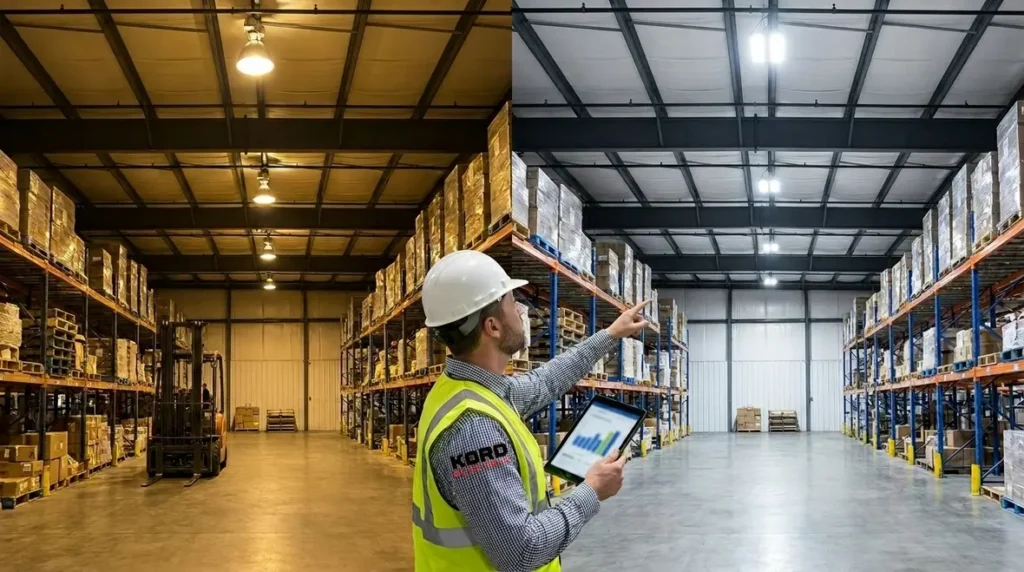
In commercial and industrial warehouses, the warehouse led lighting ROI often shows up sooner than teams expect, because energy costs, maintenance work, and downtime all move in the same direction when lighting gets upgraded. At Kord Electric, we see the best results when a facility treats this like an upgrade to the whole operation, not just a few fixtures. Of course, the old lights rarely ask for permission before they start failing one by one. Still, we help property leaders plan the change so savings arrive on schedule, audits stay accurate, and workers get better light where it matters most.
Meanwhile, our technicians explain each step in plain language. So, instead of guessing, others can make decisions with confidence, backed by measurements, not vibes.
How warehouses calculate true ROI, not wishful thinking
When others talk about ROI, they usually jump straight to the electricity bill. Yet, in real warehouse settings, the bigger picture includes every cost around lighting. For example, when lamps fail or drivers overheat, the issue does not stay in one corner. It can slow receiving, reduce safe movement, and force emergency calls after hours.
First, we help facilities estimate energy use based on current wattage, operating hours, and dimming controls. Then we confirm the lighting layout so the new system actually covers aisles, dock areas, and stacking zones. After that, we build the maintenance side into the math, including labor time and ladder or lift usage. Finally, we include risk reduction. This part matters more than most teams admit, because poor illumination can lead to near misses that never show up in invoices.
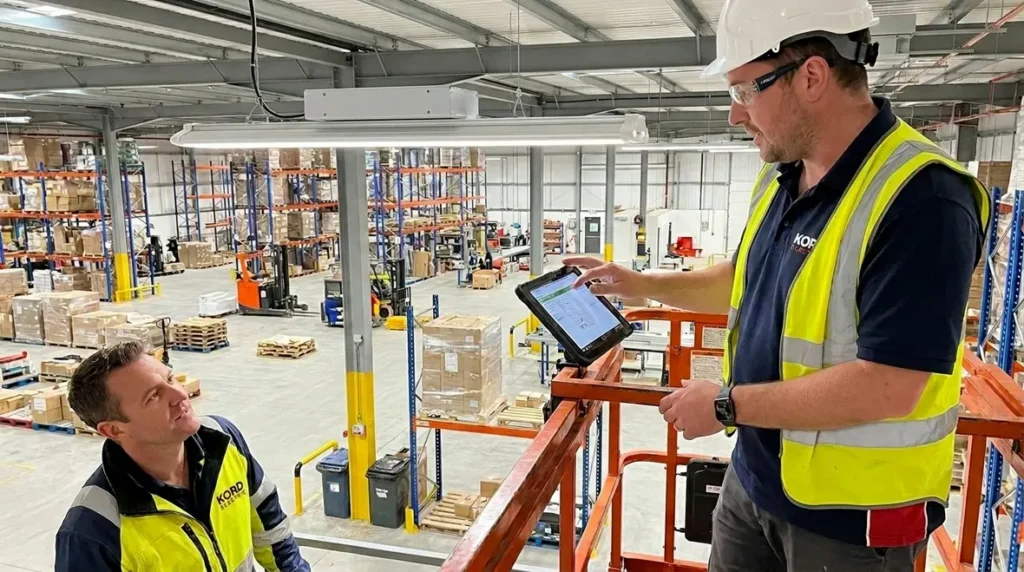
To keep everything grounded, our team takes real readings and maps the fixtures to the work areas. In other words, we do not sell “maybe savings.” We produce a plan that supports a clean ROI story for commercial and industrial properties. For teams comparing options, resources like Kord Electric’s California Title 24 lighting retrofit ROI guide and the commercial lighting upgrade cost guide help frame the numbers before anyone commits to a full project.
Hidden electrical risks that quietly drain budgets and uptime

Even the best LED fixtures cannot fix wiring problems, loose connections, or heat stress that already exist. This is where Kord Electric helps commercial and industrial facilities protect value before the upgrade starts. We often review the same issues we detail in our blog on hidden electrical risks in commercial buildings.
For instance, outdated panels and worn terminations can increase resistance and cause hot spots. Over time, that heat shortens equipment life and forces repairs sooner than planned. Also, some warehouses run lighting circuits in ways that were designed for older load profiles. As a result, breakers may cycle, drivers can experience stress, and controls can behave unpredictably.
In addition, we look for signs of moisture intrusion, especially near docks, loading zones, and exterior entries. Moisture does not announce itself with a dramatic movie villain moment. It just creeps in, then it causes corrosion that raises failure risk.
So before any retrofit, our expert service staff checks the electrical path, verifies compatibility with controls, and confirms the system supports safe, stable operation. That way, the warehouse led lighting ROI stays intact because you avoid “savings” that disappear into repeat service calls. When the inspection points to deeper infrastructure issues, guides like Kord Electric’s rewiring cost guide for commercial electrical systems help teams plan the upgrades without guesswork.
Controls, dimming, and smart scheduling: where savings usually hide
Energy savings from LEDs feel obvious. Controls add the part that feels like a cheat code. Yet, many warehouses keep lights on full power longer than they need, because the schedule gets simplified over time. Then someone says, “Well, it’s brighter, so it must be better.” That logic can work in pop culture, but it rarely works in business.
Instead, we recommend controls matched to the real workday. For example, motion sensing in less used aisles can reduce runtime. Meanwhile, daylight harvesting near skylights can lower usage without making areas look dim. Also, scheduled dimming can step down lights during slower periods, such as between shifts or in off-peak storage.
Even better, proper zoning lets leaders avoid paying to light empty space. When zones align with workflow, the facility keeps visibility high where forklifts travel, then reduces power elsewhere. And if a warehouse has areas that change use, we plan for that flexibility during installation.
Our technicians explain the logic behind each control choice. Therefore, decision makers understand how the system will behave, not just what equipment will be installed. That clarity supports smoother commissioning and fewer surprises. For facilities navigating tight code requirements, resources like the California commercial lighting code guide for 2026 and the lighting installation code compliance guide add extra context around how smart controls support compliance as well as savings.
Design upgrades that improve safety, quality, and productivity
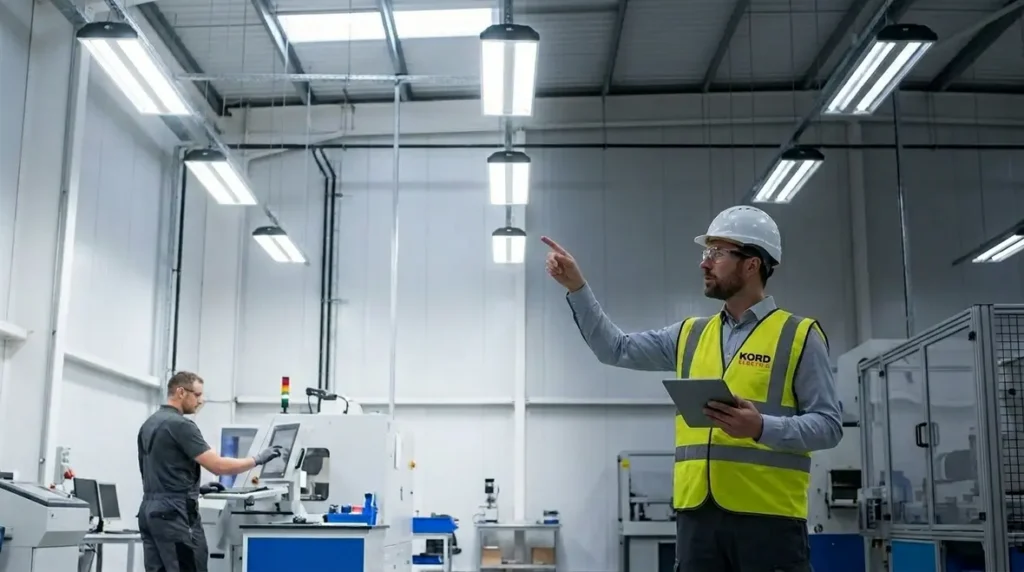
Warehouses rely on visibility for safe movement and accurate picking. So, we approach lighting design as a work tool. First, we ensure the new layout supports glare control and proper mounting height. Next, we focus on uniform coverage so workers can track packages and paths without visual “hot spots” or shadow breaks.
Then we address task areas. Receiving docks need reliable brightness for inspection and movement. Staging zones need consistent light so teams can read labels and spot defects. In picking and packing zones, good lighting supports faster, more accurate work, which reduces rework.
Additionally, color quality matters. LED systems with better color rendering help people see details, especially when quality checks require visual judgment. That means fewer misreads, fewer returns, and fewer “we didn’t notice it” moments. Articles like Kord Electric’s workplace lighting safety hazards that hurt productivity dig even deeper into how bad lighting quietly chips away at performance.
At Kord Electric, our expert service staff walks the facility through the layout decisions and explains how the final output supports warehouse operations. Because when teams understand the why, they trust the plan and keep adoption smooth.
Installation planning that avoids downtime and surprise costs
Upgrading warehouse lighting affects production schedules, so execution needs structure. We start by mapping the existing system, then verifying what is safe to keep. In some cases, old wiring needs attention before new fixtures go in. In other cases, we identify control updates that prevent later problems.
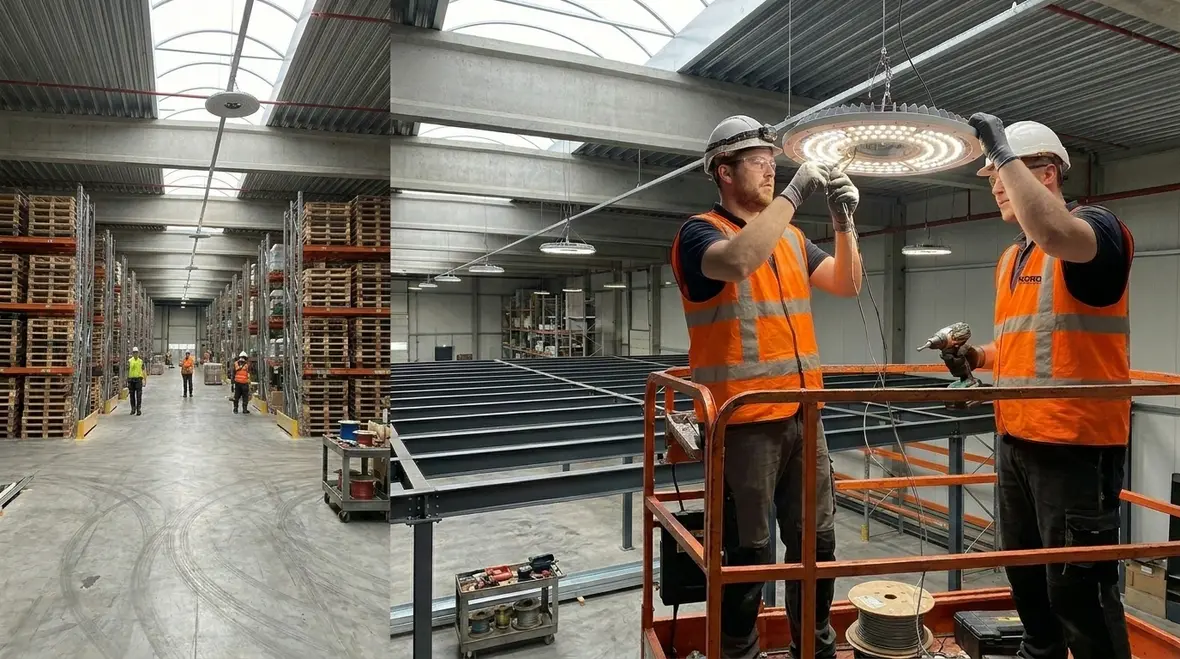
Next, we plan the work in phases so operations keep running. That might mean working per bay, per zone, or per shift window based on the facility’s workflow. Also, we stage materials and tools to reduce delays. Nobody wants to watch a crew take ten minutes to solve a problem that could have been prevented with proper preplanning. That is not a mystery, it is just good project management.
Finally, we test the system after installation. We verify output, control response, and safe operation. Then we document the changes so facility teams can track performance and maintenance needs.
This careful process protects the financial plan. After all, if the upgrade runs late, the ROI timeline stretches. If the electrical risks are ignored, failures can force rework. So we handle the details up front to protect both operations and budget. For larger portfolios and critical environments, Kord Electric’s broader perspective on NFPA 70A vs NEC for commercial electrical compliance keeps lighting projects aligned with inspection realities, not just theoretical plans.
What Kord Electric provides for commercial and industrial properties
We serve commercial and industrial facilities and major property buildings, and we keep our focus tight for a reason. Lighting upgrades in warehouses and industrial spaces demand accuracy, safety, and coordination. We do not treat this like a one-size-fits-all swap.
Our approach usually includes an initial site review, load and electrical checks, lighting layout planning, control strategy alignment, and phased installation to protect uptime. We also make sure the system connects correctly to existing infrastructure and that controls operate as intended.
Our technicians explain the process during each major step. As a result, decision makers gain a clear view of what happens, why it happens, and what it costs over time. So others can plan with confidence instead of waiting for a surprise invoice or a sudden outage. And for facilities that want a more complete view of electrical reliability beyond lighting alone, Kord Fire’s overview of Kord Electric reliable electrical services outlines how construction, maintenance, and emergency support connect into one consistent service path.
FAQ
Conclusion: let’s build a lighting plan that pays off
If you want savings you can count, do not treat a warehouse LED change like a random weekend project. At Kord Electric, we evaluate electrical conditions, design for real warehouse workflows, and install with phased planning to protect uptime. Then our technicians explain what we found and what we recommend, so your team makes decisions with calm confidence. If you are ready to strengthen safety, cut energy use, and improve your warehouse led lighting ROI, contact us today to schedule a site review for your commercial or industrial facility.
For property and facility teams who want to explore more of the underlying risk and cost factors before calling, the deep dive on hidden electrical risks in commercial buildings is a strong next read. When you are ready to turn those insights into a project plan, Kord Electric’s dedicated electrical services team is built to help commercial and industrial facilities move from “we should upgrade someday” to “we are capturing real ROI right now.”