

Data Center Power Reliability Audits Guide
At Kord Electric, we strengthen Data center power reliability audits by running them on a steady schedule, not just when something goes wrong. Because in data centers, “later” often becomes “expensive.” Our technicians and expert service staff review electrical systems, spot early warning signs, and help teams keep uptime steady. In this guide, we explain how routine audits reduce risk across commercial and industrial facilities, and major property buildings, where power quality and reliability decide whether your operation hums or stumbles.
Why data centers cannot treat power like a background service
Power in a data center does not behave like background music. It is more like the bass line in a song that never stops, and when it slips, you feel it immediately. Teams often focus on servers, cooling, and networking. Yet electrical issues quietly attack from the shadows: loose connections, rising resistance, weak grounding, or aging protective devices. These faults can worsen over time, even when tests look “good enough” to pass.
That is why our team performs Data center power reliability audits with a clear goal: find drift before it becomes downtime. We look beyond the surface and treat power as a system with relationships. For instance, a breaker may trip today, but the real story may start months ago in a thermal hotspot or a wiring change no one documented. And yes, humans have a way of “forgetting” those details. We see it. We document it. We help fix it.
To keep things calm and organized, we align audits with the same thinking used in our commercial and industrial electrical maintenance plan approach. You do not guess. You measure, trend, and act. For a deeper dive into that mindset, our commercial and industrial electrical maintenance plans overview explains how structured preventive work keeps facilities stable over time.
What a strong audit actually checks in the field
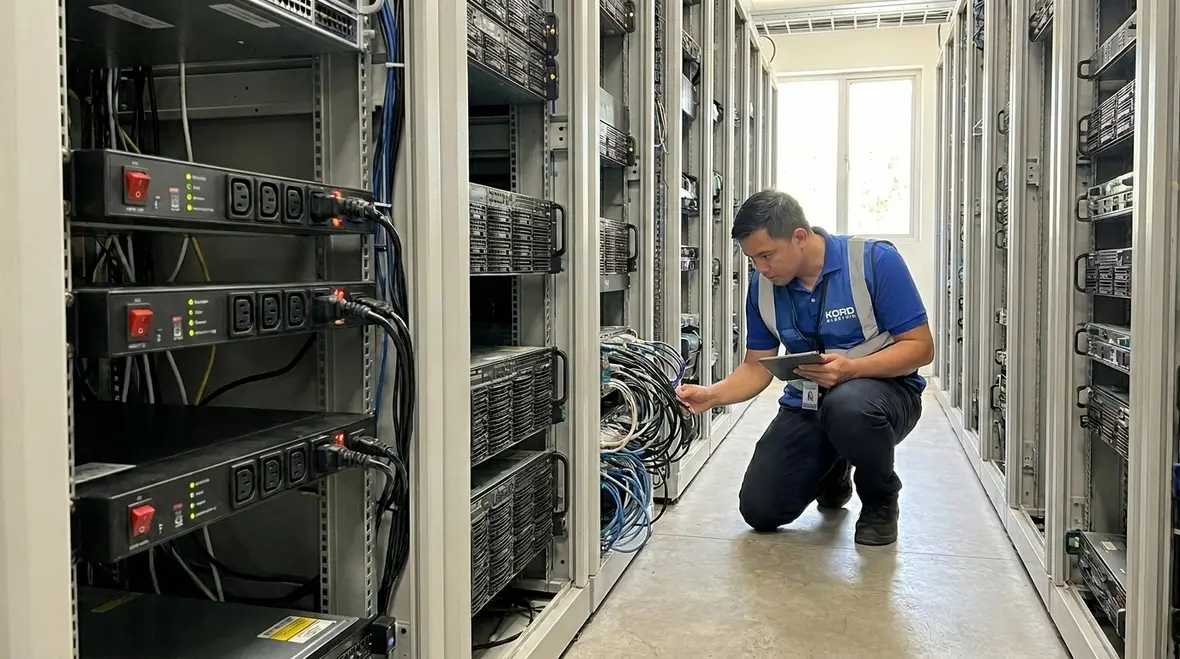
To answer what we measure, we keep it practical. When our technicians arrive, we treat the facility like a living system. Then we check the electrical chain from source to load. That includes incoming service equipment, distribution, panels, UPS interfaces, transfer pathways, and key feeders that support critical loads.
Next, we confirm performance under real conditions. Instead of a one off test, we gather evidence that helps others make decisions. For example, we look for signs that indicate heat, instability, or uneven load sharing. We also verify protection settings and coordination where it matters. That is important because a system can look stable at one moment and still fail under a brief event like a fault, inrush, or switching transfer.
Where audits become more valuable is in trend tracking. We do not just record numbers; we compare them over time. If a parameter shifts, we help teams connect the dots. Perhaps a recent construction change increased load. Perhaps a component aged. Perhaps maintenance missed a step. Either way, we translate electrical findings into clear next actions for commercial and industrial operations.
Connecting field checks to real uptime
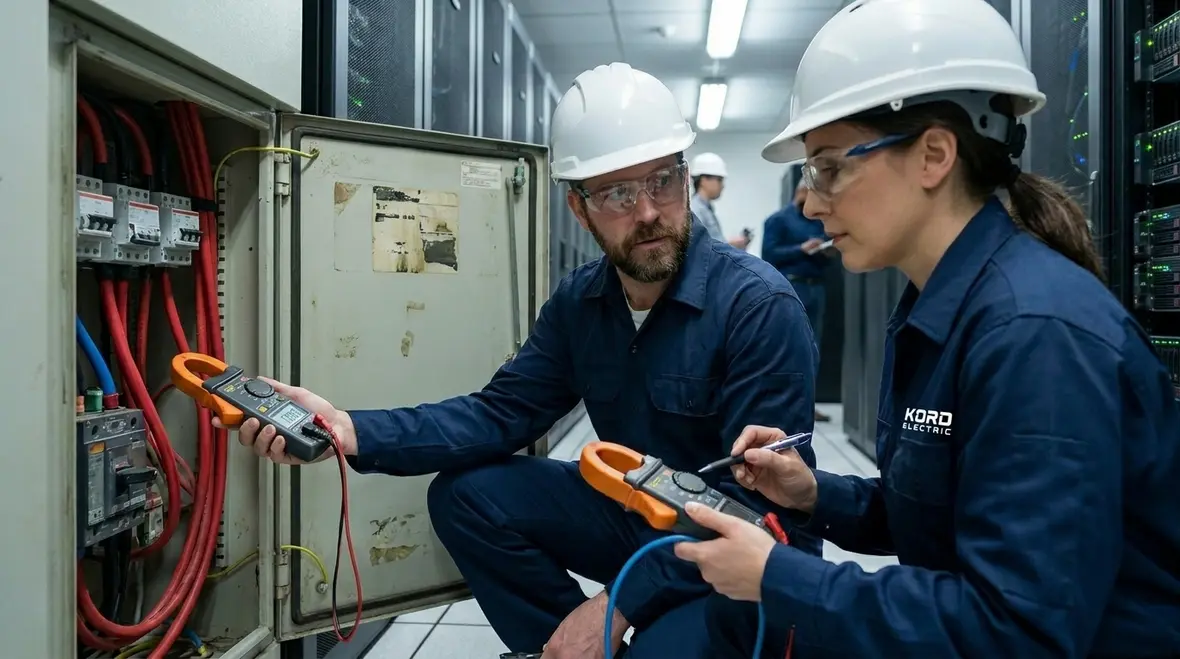
A field checklist is only useful if it connects to uptime and safety. That is why our Data center power reliability audits look at how each component behaves under stress, not just during a calm moment. From transfer switches and UPS interfaces to distribution panels that support high density racks, we verify that the electrical story makes sense from end to end.
How regular audits strengthen uptime and protect people
Reliability means more than keeping lights on. In a data center, downtime affects revenue, customer trust, and operational risk. However, there is a second layer that people sometimes forget: safety. Electrical failures can create shock hazards and fire risk. Additionally, unstable power can push equipment toward stress that shortens life.
By running Data center power reliability audits regularly, we reduce surprise failures. We help teams catch problems while they are still manageable. Then we support planned repairs instead of emergency responses that cost more and disrupt operations.
We also help reduce risk during busy periods. Many facilities schedule changes during maintenance windows, but power behavior can still change when new racks come online or when circuits shift. Our audit work supports smarter planning, so others do not roll the dice.
And if anyone says, “We have a UPS, so we are safe,” our technicians politely smile. A UPS helps, but it is not a magic shield. It has limits, and it still depends on upstream power quality and transfer reliability. The system is only as steady as its weakest link.
From hidden risks to clear, prioritized actions
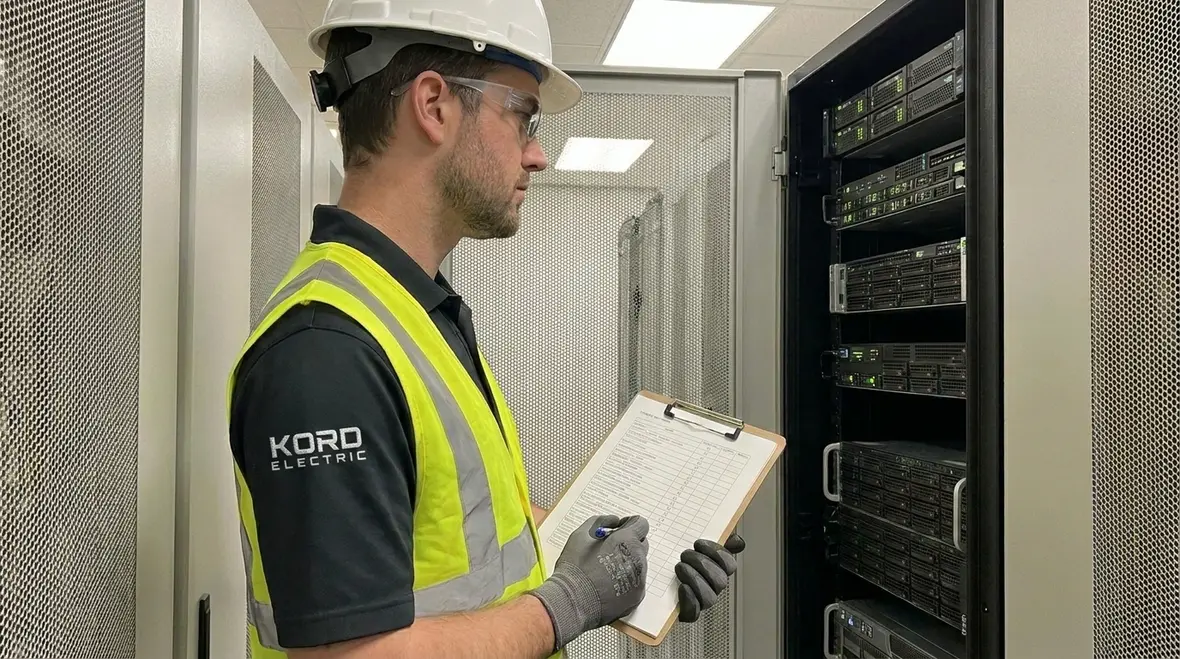
One of the biggest advantages of a structured audit program is clarity. Instead of a vague sense that “something might be wrong,” commercial and industrial teams receive prioritized findings: which issues can wait, which ones affect life safety, and which ones sit too close to critical power pathways to ignore. That focus helps leaders plan budgets, schedule work, and avoid those expensive “we should have fixed this sooner” moments.
Using maintenance plans to keep findings from aging
An audit can only help if it turns into action. That is why we connect assessment work to a maintenance plan structure. Our commercial and industrial electrical maintenance plan approach focuses on clear steps, defined checks, and regular review. In other words, we make sure the audit does not become a folder that nobody opens.
When our expert service staff explains results, they also outline practical next steps. That means we help teams understand what matters most, what can wait, and what needs immediate attention. We prioritize findings that affect critical loads and power stability. We also schedule follow up testing when it makes sense.
To keep work smooth, we document everything in a way that operations teams can use. We also coordinate with facility managers and other trades, because data centers run on teamwork. If maintenance happens at the wrong time, it can cause issues. Therefore, we plan around uptime requirements and safe access.
As a result, the facility gains a repeatable process. Then the process becomes part of how the building runs, not an occasional project. For organizations that want a formalized structure, the same disciplined thinking behind our commercial and industrial electrical maintenance plans helps keep audit findings current instead of letting them age out of relevance.
Closing the loop between audits and day to day operations
When Data center power reliability audits feed directly into documented maintenance plans, teams stop treating reliability as a one time event and start treating it as a continuous practice. That loop—audit, plan, action, review—keeps power systems aligned with how the building actually operates, year after year.
Power quality and reliability metrics teams can trend
When reliability depends on stable power, it helps to track the right signals. Our technicians use audit findings to support power quality checks and reliability measurements. We focus on issues that commonly affect equipment performance, including voltage stability, harmonic concerns, grounding integrity, and insulation health where relevant.
Additionally, we look for evidence of imbalance and abnormal behavior in distribution pathways. Uneven loading can stress components, and it can also mask bigger issues. When audit data shows drift, we recommend targeted investigation.
However, we do not stop at raw readings. We help others interpret what the numbers mean for real operations. For example, a small change in a thermal indicator might not sound dramatic, but it can point to a connection that will fail sooner than expected. In a data center, “sooner than expected” is not a comforting phrase.
Because teams need action, our service staff explains options in plain language. Then others can decide whether to adjust maintenance intervals, schedule parts replacement, or update configuration. That clarity helps reduce delays and helps avoid repeat issues.
Examples of metrics that support Data center power reliability audits
In many commercial and industrial sites, trending a handful of targeted indicators—like neutral to ground voltage, harmonic distortion levels on key feeders, breaker trip events, and thermal signatures on high current terminations—gives facility leaders early warning long before uptime is threatened. We use audits to define those metrics clearly, then align them with your monitoring tools so data center operators are not staring at noise; they are watching real signals that matter.
Scheduling audits for business continuity and safe access
Many facilities worry about how audits will affect operations. We understand that concern. Therefore, we plan audits to reduce downtime risk and to protect safety. Our approach supports business continuity by sequencing work around the facility’s operational needs.
First, we confirm the scope with the facility team. Then we coordinate access requirements and identify areas that require controlled handling. We also review recent changes, maintenance history, and any known issues. That context matters because we do not treat every data hall the same way. We tailor the work to the building.
Next, we schedule the most sensitive tasks with careful timing. For example, testing methods that require specific conditions should occur within windows that support safe operation. Similarly, inspection steps like panel checks and thermal observation happen in a way that respects uptime constraints.
Finally, we provide reporting that supports decision making after the team leaves. That follow through helps others keep projects moving instead of waiting for a vague “we will see” later.
Coordinating with broader electrical services
Because data center spaces often share infrastructure with other building systems, audit planning ties closely into broader commercial electrical work. Our team regularly supports multi site and campus style properties across Los Angeles County electrical services, so we understand how to stage work in live environments without creating new risks while solving old ones.
FAQ
Quick audit items often covered
Column A: What we review |
Column B: Why it matters |
|
Distribution pathways, critical feeders, protective devices Grounding and bonding checks Power quality indicators and electrical health signals |
Helps prevent trips, uneven stress, and equipment failures Supports safety and stable system behavior Reduces risk from instability and hidden degradation |
Conclusion: choose audits that keep uptime steady
When a data center runs on critical power, reliability cannot be a hope. Kord Electric helps commercial and industrial facilities and major property buildings strengthen performance through regular Data center power reliability audits and clear maintenance actions. Our technicians and expert service staff explain findings in plain language, then turn results into next steps that protect uptime and safety. If you want fewer surprises and more predictable operations, contact Kord Electric to schedule your next audit review and build a power plan you can trust.
If your facility is planning upgrades or needs broader electrical support around your audit program, our team can align reliability reviews with ongoing commercial projects and service work. Audit findings often pair well with follow up services delivered through our regional offerings, helping you move smoothly from assessment to implementation.
Whether you are tuning an existing data center, expanding into new space, or upgrading major property infrastructure, combining structured maintenance plans, targeted diagnostics, and disciplined Data center power reliability audits gives your organization a calmer, more predictable path forward.


