Smart Warehouse Lighting Control Integration
Warehouses are finally getting the kind of lighting brains they’ve always needed. Instead of running every high-bay and fixture at full tilt from open to close, smart lighting control integration turns lighting into an active part of how the building works. For commercial and industrial facilities that live on slim margins, that shift matters. Lights stop burning away cash in empty aisles, visibility improves where the real work happens, and energy use lines up with what’s actually going on under the ceiling.
At Kord Electric, we integrate Smart lighting control integration benefits into commercial and industrial warehouses so teams can work with steady light, safe zones, and less waste. Smart control systems help facilities reduce energy use, smooth out lighting levels where people actually work, and respond to motion and daylight. That means warehouses stop acting like they are stuck in “all on, all day” mode. We still keep safety front and center, because dim corners and blind spots never make anyone’s job easier. And yes, our customers tell us the best part is how quickly the space starts feeling like it finally makes sense.
In this article, our technicians and expert service staff will walk through how we plan, install, and maintain these systems for major property buildings and industrial operations. We will also show how smart controls tie into energy codes, warehouse workflows, preventive maintenance, and broader electrical strategies across large facilities.
Smart warehouse lighting that works harder, not longer
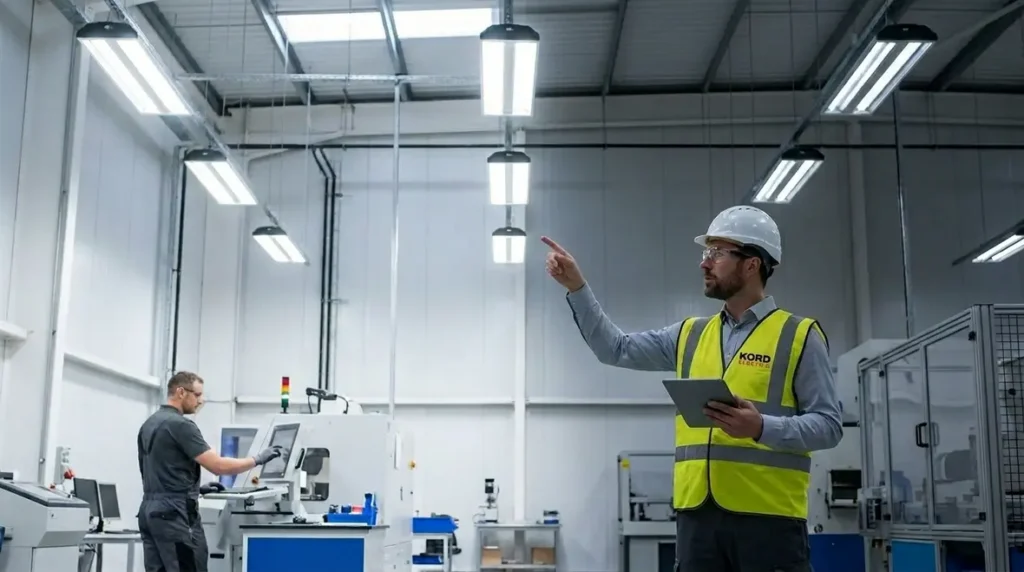
Smart warehouse lighting is not about flashy gadgets mounted on the ceiling. It is about making each fixture and sensor pull its weight so the entire space works better. When controls, sensors, and fixtures operate as a coordinated system, lighting stops being a silent energy leak and starts behaving like a tool for safety, throughput, and comfort. In a busy distribution center or manufacturing warehouse, that difference shows up in fewer complaints, fewer dark corners, and smoother inspections.
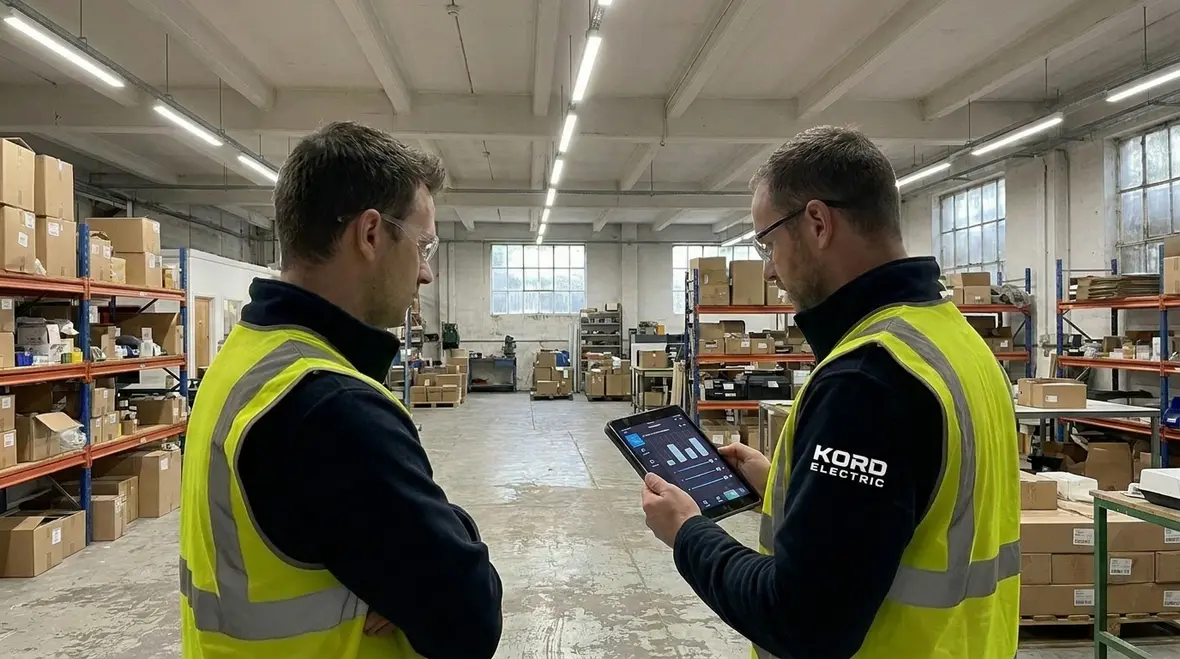
Because Kord Electric focuses on commercial and industrial work, our smart lighting projects sit inside a larger framework of code compliance, preventive maintenance, and performance expectations. The same teams that design and install code-compliant systems for warehouses and large facilities also configure smart controls so they support safety and energy regulations, not work against them. That means daylight sensors, occupancy controls, and dimming strategies are set up to satisfy both inspectors and operators, not just the latest gadget trend.
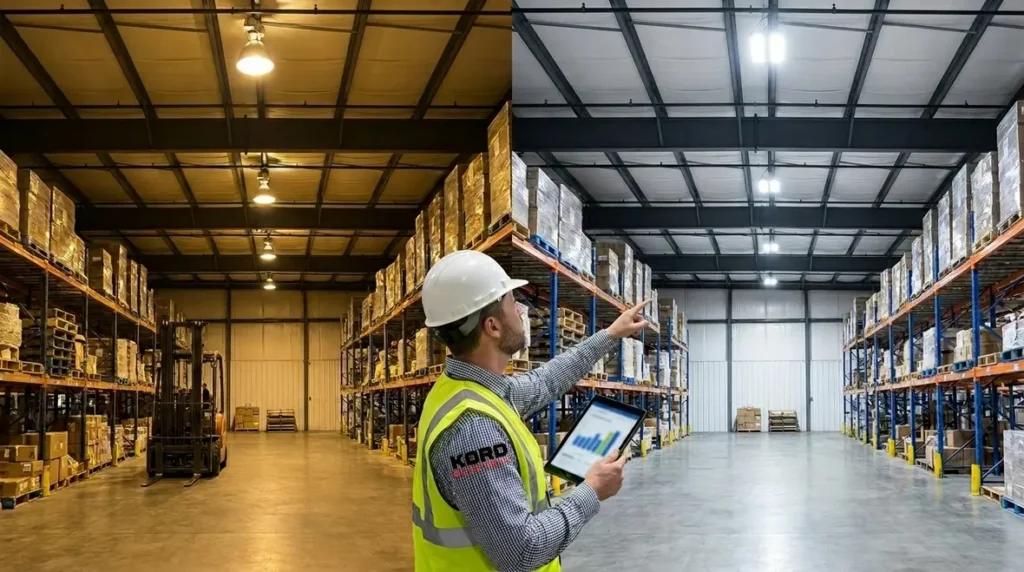
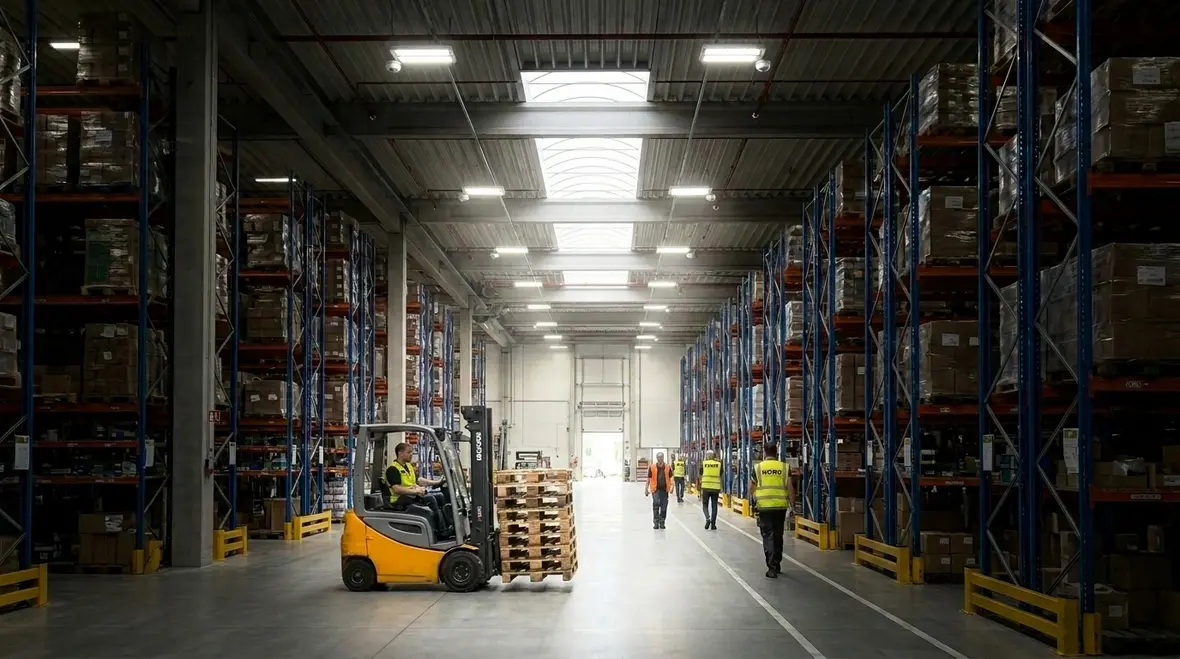
When you look at a smart warehouse lighting project from the floor, the most noticeable change is that the building finally feels like it is paying attention. Aisles light up when people enter them. Loading zones stay consistent while doors and skylights change the daylight. Common paths stay comfortably visible, not blinding in one section and gloomy in the next. And behind the scenes, control systems manage schedules, send alerts, and maintain target light levels without constant manual adjustments.
Why warehouses lose money in the dark corners
Warehouses do not fail all at once. Instead, inefficiency builds quietly. Lights stay on in empty aisles. Levels stay the same even when the sun does half the work. Motion is ignored until someone complains. Then, maintenance teams chase problems that repeat in patterns, like a sitcom that never ends.
We see three common issues in commercial and industrial facilities. First, lighting zones are too broad, so one sensor controls too much space. Second, schedules stay fixed even as staffing patterns change by shift or season. Third, controls do not communicate well with building systems, so the lighting cannot coordinate with ventilation, occupancy, or energy management.
Because of that, facilities often overpay for electricity and still end up with inconsistent visibility. When people move from loading bays to picking lanes, the lighting experience should stay reliable. Smart controls help correct that gap by matching illumination to real activity. They also help align warehouse operation with lighting codes and workplace safety expectations, so dark corners stop being both a safety risk and a cost sink.
For property teams managing large portfolios or Title 24 lighting compliance alongside daily operations, this “death by a thousand dark spots” problem is especially frustrating. A small mistake in sensor placement or zoning can affect hundreds of feet of racking and dozens of workers. Smart lighting control integration benefits become very real when those dark pockets disappear and lighting performance becomes consistent, predictable, and easy to document for inspections.
How we design control zones for real warehouse workflows
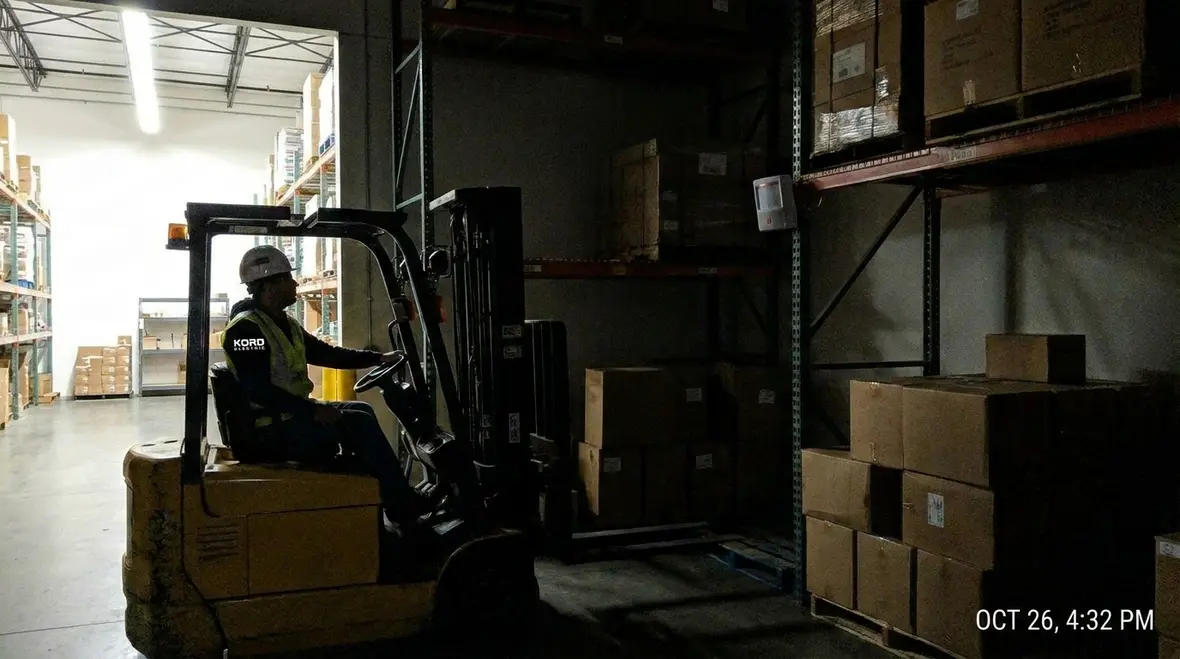
Smart performance starts before a single wire is terminated. At Kord Electric, we map warehouse movement, task areas, and risk zones. Then, we build lighting zones that match how people actually work. For example, receiving areas need stable light for inspection. Storage aisles need glare control and consistent coverage. Packing and labeling zones need accurate color and uniformity.
Next, we select control points that fit the space. Our technicians evaluate mounting heights, shelf geometry, door traffic patterns, and sensor placement to avoid false triggers. In addition, we factor in daylight from dock doors and skylights. As a result, the lighting adapts without making staff feel like they are working under a constantly changing stage light.
Finally, we set up fallback behavior. If a sensor fails, the system returns to a safe baseline rather than plunging the area into “mystery mode.” We do this because warehouses run on uptime, not on hope. When those zoning and control strategies are combined with a specialized commercial and industrial lighting installation service, facilities get not just smarter controls, but fixtures and wiring that are engineered to support them over the long term.

What smart sensors and dimming actually do on site
Many people hear “smart lighting” and assume it is just fancy dimmers. However, in the field, it behaves like a coordinated system. Occupancy sensors detect movement, then controls adjust output based on activity. Daylight harvesting reduces output near windows or skylights while maintaining the target brightness. When the aisle goes quiet, lights step down smoothly instead of switching off abruptly.
That matters for three reasons. First, it supports worker comfort and reduces eye strain. Second, it helps safety teams by keeping paths visible at the right level. Third, it reduces wear on components by avoiding constant full power cycles.
Also, with proper configuration, smart lighting control systems support shift schedules and activity plans. So, a warehouse that runs daytime receiving and evening picking can run different scenes without manual changes. Our expert service staff walks onsite and explains the logic in plain terms, because no one should have to reverse engineer a control panel like it is a movie plot twist. For facilities already planning a California Title 24 lighting retrofit or broader energy upgrade, combining these smart controls with code-focused design helps capture Smart lighting control integration benefits earlier in the project lifecycle.
Integrating with building systems for smoother energy management
When we integrate the lighting controls with other building systems, we get better results than isolated retrofits. For example, we can align lighting scenes with occupancy modes used by building automation systems. Then, when the building enters a lower power state, lighting adjusts appropriately instead of staying at peak output.
We also help teams coordinate alarms and operational alerts. If a critical area needs service or a fixture group underperforms, the system can flag it for maintenance. That prevents “silent failure,” where lights dim in one zone and no one notices until a manager walks the floor.
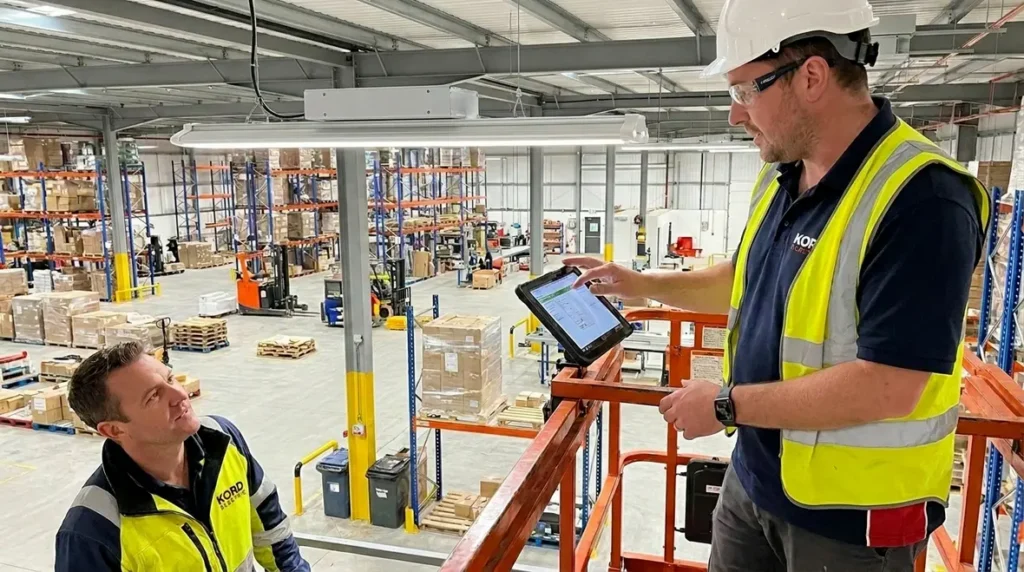
Because commercial and industrial facilities operate under strict expectations, we focus on dependable commissioning. Our technicians verify sensor coverage, confirm dimming response times, test daylight levels, and check that control commands route correctly. As a final step, we document the setup so facilities can maintain performance over time and fold it into broader electrical preventive maintenance programs. That way, smart controls are not just installed; they are continuously supported.
Commissioning and training so staff feel confident
Even the best equipment can feel complicated if people cannot understand it. Therefore, we do more than install hardware and walk away. Our teams commission the system step by step. They validate zoning maps, confirm control logic, and measure response in each task area.
Then we train the people who manage the building day to day. Our expert service staff explains how to adjust scenes, what normal sensor behavior looks like, and how to respond when a zone acts differently. We also show how to interpret alerts and basic maintenance steps. In other words, we help you operate the system with confidence, not with guesswork and a flashlight.
For major property buildings, training also includes how lighting controls interact with existing energy plans. Operations managers can align lighting behavior with budgets and compliance targets, connect scenes to production schedules, and document Smart lighting control integration benefits for leadership teams that care about both safety reports and utility bills.
Benefits you can measure, not just admire
Smart lighting control integration benefits show up quickly when measurement starts. We help clients target energy reduction, improved visibility, and lower maintenance effort. Energy savings happen because lighting output tracks occupancy and daylight instead of running at full power forever.
Visibility improves because controls maintain consistent brightness in active task areas. Instead of bright to dark swings, the system can ramp smoothly. That supports safer movement in aisles and clearer inspection areas in receiving and loading.
Maintenance effort drops because the system supports monitoring and alerts. So facilities can address issues earlier. Additionally, zoning reduces the blast radius of a problem. A failed component affects a smaller group, not an entire wing.
And yes, the jokes write themselves: warehouses should not run like a haunted house lighting schedule. With smart controls, they run like a well managed operation. When these strategies are paired with properly engineered fixtures and professional installation, they also support long-term reliability for facilities across Los Angeles County that depend on steady uptime.
Connecting smart lighting to wider electrical strategies
Smart warehouse lighting rarely lives alone. It ties into panel capacity, existing wiring, emergency egress requirements, and long-term capital plans. That is why Kord Electric approaches smart control projects as part of the broader electrical picture, not as a standalone gadget upgrade.
On one side, our lighting installation teams design layouts, select fixtures, and handle the practical work of hanging, wiring, and testing each run. On the other side, our preventive maintenance and compliance specialists look at how those same systems will behave over years of operation, inspections, and code updates. When smart controls join that equation, they become a bridge between day-to-day operations and long-term electrical strategy, not an isolated “tech toy.”
For facility managers and property teams responsible for multiple locations, this integrated approach also makes it easier to standardize. Similar scenes, naming conventions, and alert strategies can show up across different warehouses, which simplifies training and shortens the learning curve every time a new building comes online. And because Kord Electric serves Los Angeles County electrical services needs across many building types, we can adapt smart lighting strategies from one property to another without reinventing everything from scratch.
Smart control FAQ for commercial and industrial sites
Smart lighting questions tend to pop up the moment someone looks at a sensor or a control screen and wonders, “So what happens if…?” Below are some of the questions we hear most often from commercial and industrial teams planning or running smart warehouse lighting control integration.
Ready to upgrade warehouse lighting controls?
If Kord Electric comes on site, we start with your workflow, not a generic lighting plan. Then we design zones, install controls, commission performance, and train your team so the system runs the way your operation runs. For commercial and industrial facilities and major property buildings, this is how you improve visibility and cut wasted energy without guessing.
Whether you are planning a focused warehouse controls upgrade or a broader electrical improvement program across Los Angeles County, smart lighting belongs in the conversation. It is one of the most visible ways to reduce waste, support safety, and prove to everyone walking the floor that the building finally makes sense. Contact us to schedule a site assessment and get a clear plan for Smart lighting control integration that fits your building and your long-term strategy.
If you are managing multiple facilities or planning future upgrades beyond lighting, our Los Angeles County electrical services team can help coordinate smart warehouse lighting with panels, distribution equipment, emergency systems, and other critical infrastructure—so your whole electrical system works as intelligently as your new controls.