
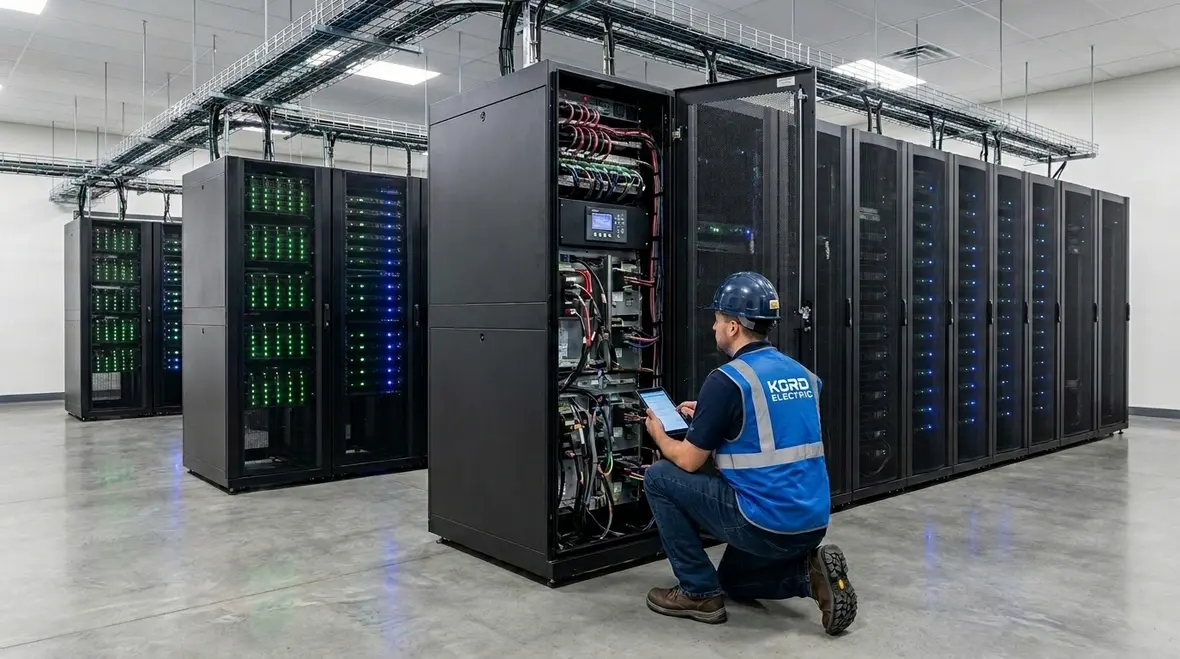
Data Center Power Reliability Solutions Guide
Mission-critical uptime starts with data center power reliability solutions
At Kord Electric, we help commercial and industrial facilities protect the one thing they cannot afford to lose: stable power. Our data center power reliability solutions focus on the real-world risks that knock systems offline, including utility disturbances, generator transition issues, and overloads that grow quietly until they become emergencies. Just like a Netflix show that never loads, power problems always happen at the worst possible time. And when your facility runs core business operations, “we will fix it later” is not a strategy, it is a scheduling conflict with disaster.
In this article, a reader will see how our technicians and expert service staff guide decisions from the first assessment to ongoing testing, so others can run confidently even during storms, maintenance windows, and unexpected events. We also explain it in plain language, because the best time to understand your power system is before it asks you for money with interest.
How power reliability failures happen in real life
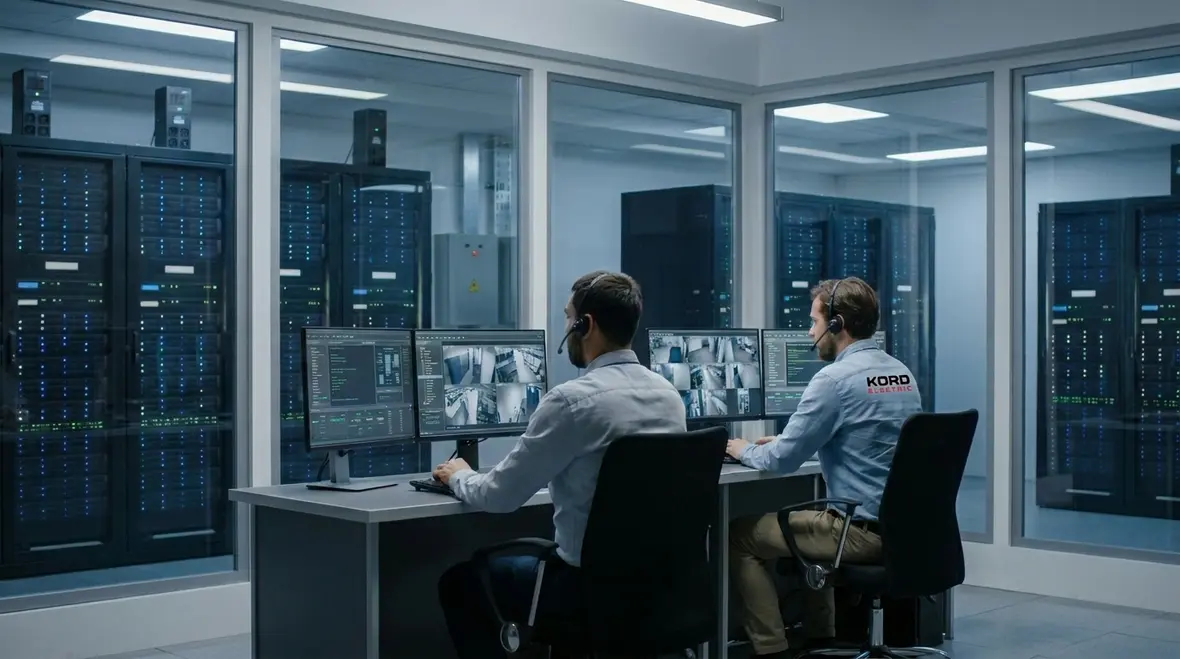
Most people think outages start with a complete loss of utility power. However, they often begin earlier, with smaller power quality events that systems can only tolerate for so long. Therefore, the path from “everything seems fine” to “why is the floor dark” can involve surges, sags, harmonics, and frequency drift. These disturbances stress sensitive loads like servers, storage, cooling controls, and network gear.
At the same time, a facility can have plenty of capacity on paper while still failing in practice. For example, load banks may not match actual operating profiles, transfer switches may not be tuned for your sequences, and protective devices can coordinate poorly across normal and emergency operation. In other words, the design might pass a review, but the field behavior may surprise the team.
When our technicians evaluate mission-critical environments, they also look at how the facility changes over time. Load growth, new racks, upgraded cooling, and even relocation of equipment can shift the stress points. Consequently, the system that once worked “good enough” becomes fragile. That is why we take a methodical approach rather than trusting assumptions.
Those subtle shifts show up first as nuisance alarms, odd voltage readings, and unexplained glitches instead of obvious blackouts. If those signs are ignored, minor instability snowballs into a full interruption that takes racks, cooling, and network devices down together. By the time it reaches that point, every minute of downtime feels expensive. That is why pairing design decisions with real-world monitoring and field feedback matters so much for mission-critical spaces.
We also see reliability erode when changes happen faster than documentation. New feeds are added “temporarily,” bypasses become permanent, and nobody has a single updated one-line diagram. When a disturbance hits, even a skilled team wastes precious minutes just trying to understand how the system is actually wired. That is not a grid problem. That is a clarity problem, and it is completely preventable with disciplined updates and structured reviews.
Design for stability before the lights ever go out
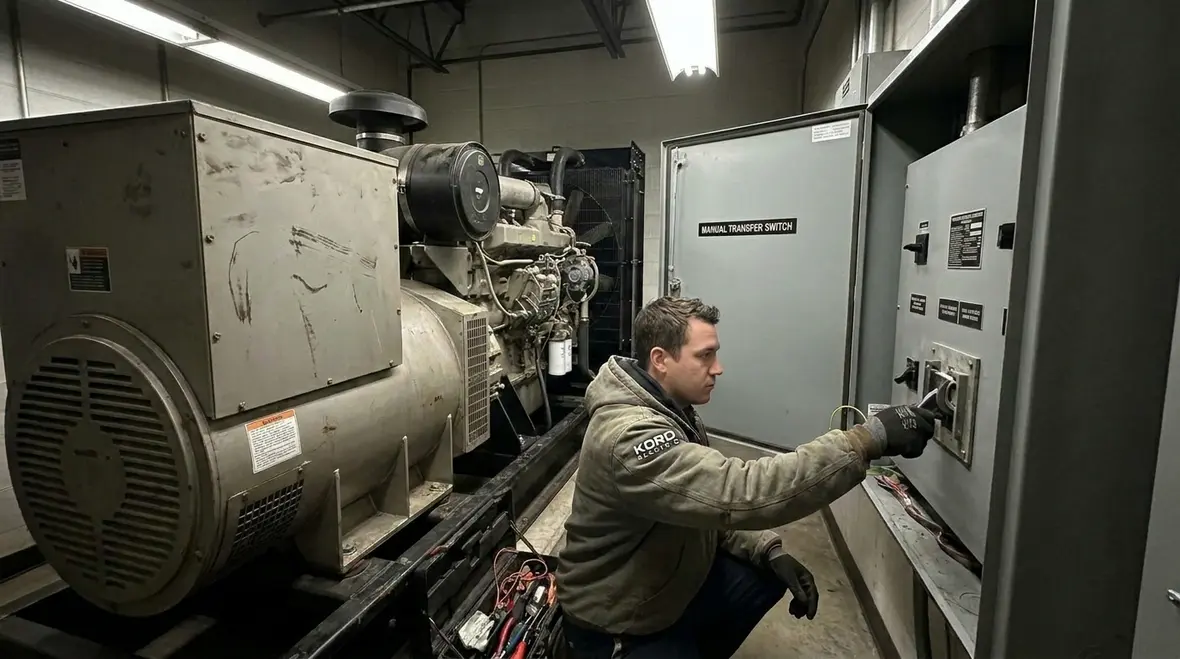
Once a reader understands how failures start, the next move is designing for stability. Kord Electric treats reliability as a system goal, not a single component. That means we consider the entire power chain, from utility interfaces through distribution, transfer logic, and backup sources.
First, we help define the facility’s critical loads clearly. Then we align capacity and redundancy to real operating needs, including startup surges and worst-case heat loads. Next, we verify that protective coordination and selective tripping prevent local faults from cascading into larger shutdowns. In addition, we pay attention to grounding and bonding because many “mystery” trips trace back to reference issues, not just equipment age.
Our expert service staff also explains tradeoffs in human terms. If someone chooses more redundancy, we explain how it affects maintenance and testing. If someone increases capacity, we explain how it changes fault current behavior and device settings. Therefore, others can make decisions with clear eyes instead of hopeful guesses.
Reliable design also includes planning for how people will actually operate the system on a busy weekday, not just during a perfectly controlled commissioning test. We ask questions like: Who has authority to initiate a transfer? How are alarms escalated? What happens if two “rare” events stack together, like a partial utility issue during scheduled maintenance? These scenarios shape breaker settings, transfer logic, and the way backup systems share the load.
When teams want deeper design insight, many of them review dedicated resources like Kord Electric’s data center electrical distribution design for reliability article, which explores topology choices, selective coordination, and how to build in resilience before the first server powers on. That kind of front-end planning makes later decisions on upgrades and maintenance faster, safer, and far less stressful.
Protect against utility disturbances and transfer surprises
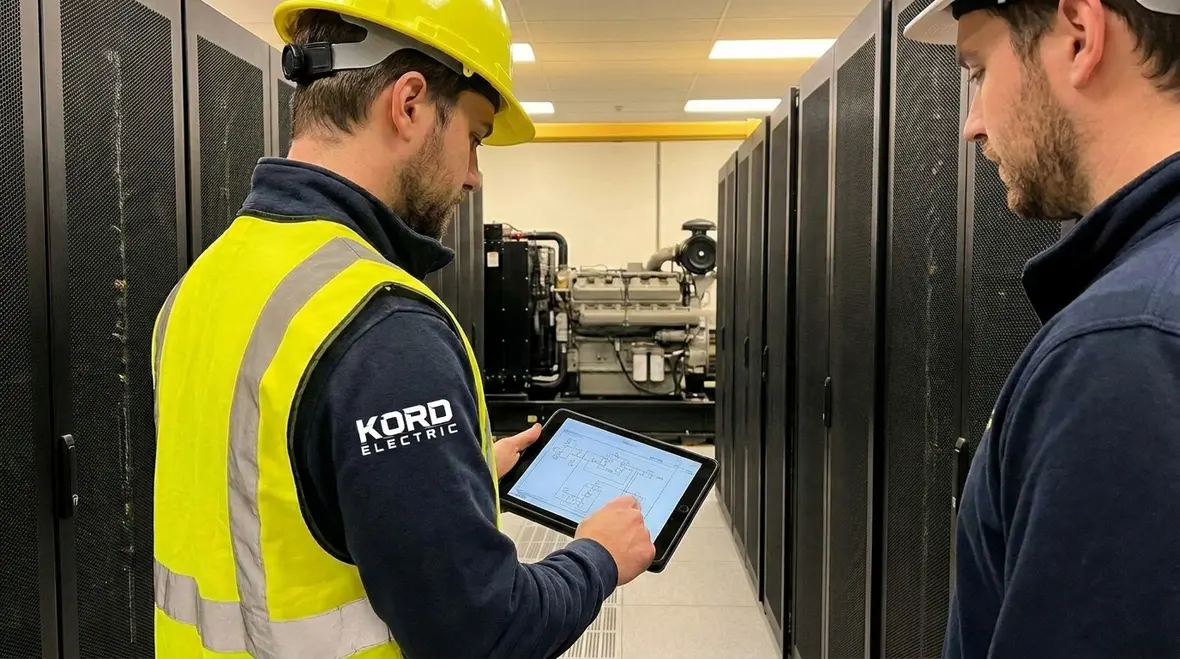
In mission-critical data center environments, utility power rarely arrives as a perfect sine wave every second of every day. Instead, it comes with noise and change. To address this, we support commercial and industrial facilities with strategies that ride through disturbances and prevent transfer events from creating downtime.
One common risk involves the transition from utility to generator. If timing, control logic, or voltage synchronization is off, the system can experience a brief upset that sensitive equipment treats like a shutdown. Consequently, we help facilities validate transfer schemes through test planning that reflects actual operating conditions.
We also help reduce the impact of sags and surges by improving power quality at the right points in the distribution. Additionally, we address harmonics where they originate, since distorted current can overheat conductors and nuisance trip protective devices. And yes, harmonics are real. They do not show up on a simple utility bill, but they show up in your maintenance logs.
Our technicians guide the process so the facility does not only “install and hope.” They verify settings, check sequence behavior, and document the results. That way, others can trust the system under stress, not just under quiet conditions.
Many transfer issues start as subtle voltage fluctuations long before a full outage shows up. If your facility already sees flickering lighting, unexplained trips, or unstable readings, exploring a focused resource on voltage fluctuations in commercial and industrial facilities can help connect the dots between what you are seeing and what is happening at the electrical level. That understanding makes it easier to decide where mitigation belongs in the distribution path.
Prevent runtime issues with smart monitoring and disciplined maintenance
Even the best design needs ongoing care. Therefore, we focus on monitoring and maintenance that catches problems before they become failures. A data center power reliability program should not be a once-a-year ritual. It should be steady, measurable, and aligned to the operating schedule.
We typically support teams with planning that includes inspection routes, component checks, and measured testing of critical systems. For example, battery health checks and IR testing help flag aging components. Meanwhile, load testing and transfer testing validate that emergency operation behaves as expected. Cooling power connections also matter because many reliability events start with an upstream trip that ripples into thermal limits.
Our expert service staff often explains what the numbers mean and what actions to take next. If a reading drifts, we do not just say “keep an eye on it.” We help define the threshold, the likely cause, and the fastest safe next step. That calm, deliberate approach reduces downtime and builds confidence with facility leadership.
And when someone asks, “Do we really need all this documentation?” we answer with a business mindset: documentation turns frantic troubleshooting into planned repair. Think of it as insurance that you can read at 2 a.m. without screaming.
For teams that want a more structured roadmap, resources like Kord Electric’s data center electrical maintenance checklist give facility managers a practical way to turn good intentions into repeatable tasks. Combined with on-site support from technicians who know how to interpret what they find, that checklist mindset turns maintenance days from “luck and vibes” into data-driven decision making.
Testing that matches your facility, not a generic checklist
Testing is where many reliability programs go wrong. Some teams follow a generic checklist that ignores their actual sequences and load characteristics. That is like using a map for a city you never visit. It may look correct, but it will not guide you through traffic.
Kord Electric structures testing around mission-critical operating profiles for commercial and industrial facilities and major property buildings. We help define what loads are essential, how they start, and how they behave during transitions. Then we schedule tests during windows that reduce risk, and we coordinate with facility operations so the day stays boring. Boring is good. Boring means the system holds steady and the team can go home on time.
Our technicians also focus on the details that prevent surprises. They verify control settings, confirm breaker and transfer behavior, check protective device coordination after any changes, and ensure that alarm thresholds match the real world. Additionally, they review results with the facility team so others understand what passed, what needs attention, and what timelines make sense.
Finally, we help keep test outcomes connected to maintenance plans. If testing shows a component trending toward failure, we recommend corrective action with clear justification. That reduces the odds of a “last-minute” emergency repair that everyone pretends not to fear.
When tests uncover deeper design gaps, it is often a sign that the original electrical requirements for uptime were never fully aligned with the real behavior of IT and cooling loads. In those cases, it helps to revisit the broader strategy through guidance such as Kord Electric’s data center electrical requirements for uptime, then update both the configuration and the testing plan so they work together instead of fighting each other.
Dual column reliability actions for building teams
| What to assess | How Kord Electric helps |
| Load growth and critical load definition | We review operating profiles and align design and capacity for mission-critical operations. |
| Transfer logic and emergency sequence behavior | Our technicians validate timing, synchronization behavior, and control settings before problems appear. |
| Power quality risks like sags, surges, and harmonics | We support mitigation strategies in the right parts of the distribution path to protect sensitive loads. |
| Monitoring, testing, and maintenance discipline | We help build a repeatable program with measured checks and clear thresholds for action. |
As building teams work through these assessments, they also gain a clearer picture of hidden risks that may already exist inside panels, busway, and feeders. Combining structured inspections with lessons from resources on hidden electrical risks in commercial buildings helps facilities expose issues before they become headline-making outages.
FAQ: Power reliability and data center systems
Conclusion: protect uptime with Kord Electric
When a facility depends on constant compute, storage, and connectivity, power reliability cannot be treated like an afterthought. Kord Electric builds and supports practical data center power reliability solutions that match your loads, your sequences, and your real operating calendar. Our technicians and expert service staff help you assess risks, validate emergency behavior, and run disciplined testing so others can act before failures. If you want fewer surprises and calmer nights, contact Kord Electric and let us review your system.
If your organization operates in Southern California and you need broad support beyond a single facility or project, explore Kord Electric’s Los Angeles County electrical services to see how emergency response, preventive maintenance, and upgrade work come together to support long-term uptime strategies.
And when unexpected events do occur despite careful planning, having a trusted partner ready with emergency electrical services means your response is measured instead of frantic. That combination of preparation, clear documentation, and calm, experienced support is what turns a stressful outage into a solvable problem rather than a long night of expensive guesswork.
Whether you are refining your electrical distribution, building a new data hall, or simply want a second set of eyes on your existing infrastructure, Kord Electric can help you move from “we hope it holds” to “we know what will happen.” That confidence is the real value behind a complete power reliability strategy.


