Electrical Maintenance for Manufacturing Safety
Electrical Maintenance That Protects Manufacturing Teams
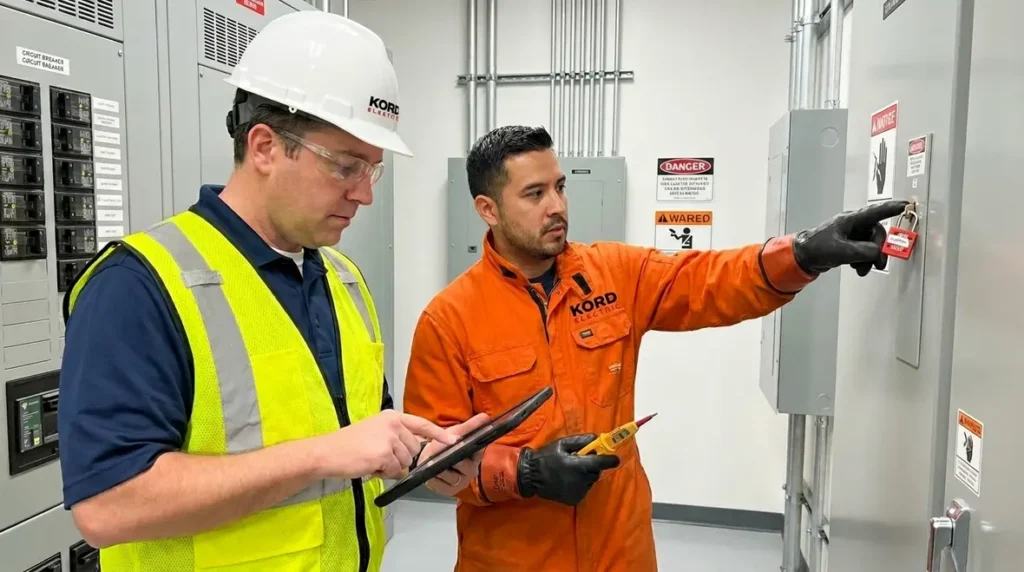
Kord Electric helps commercial and industrial facilities keep machines, people, and production lines safe through electrical maintenance for manufacturing safety. In our experience, the best time to prevent an electrical problem is before it shows up at the worst possible moment, like a power flicker during a critical shift change. Our trained technicians and expert service staff don’t just replace parts and move on. Instead, they inspect, test, document, and explain what they find in plain language so facility leaders can make confident decisions.
Now, others often treat maintenance like a yearly chore. We treat it like a system. And yes, that system runs on real-world details: motors, panels, breakers, grounding, and the invisible issues that build up over time.
Build a Maintenance Plan Facilities Can Actually Follow
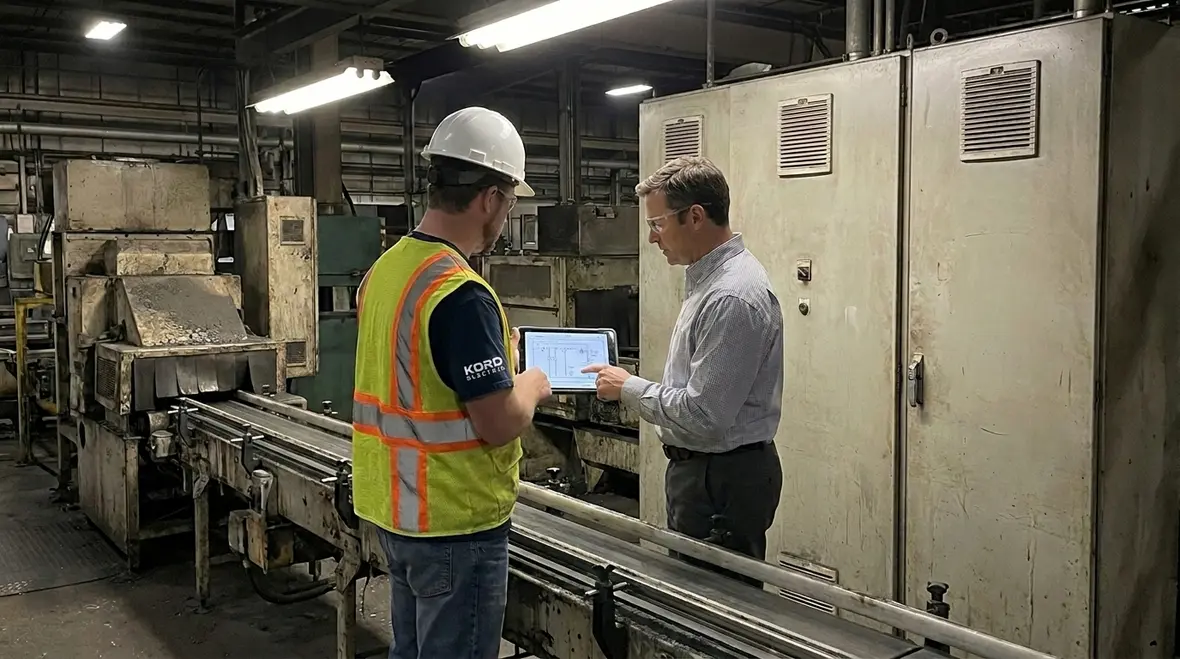
To keep reliability high, our approach starts with a clear plan that matches how each plant runs. Facilities do not operate the same way, so we do not use a one size fits all checklist. First, we review equipment type, operating hours, and downtime tolerance. Then we map critical loads such as production controls, conveyors, HVAC systems for process needs, and safety circuits.
Next, we set maintenance tasks by risk. For example, a motor control center serving a bottleneck line gets more attention than a rarely used standby circuit. Furthermore, we schedule work in a way that supports production. In other words, we reduce surprises, not just reduce failures.
Our technicians then explain the “why” behind each task. If a test shows insulation breakdown risk, we describe what it means, what typically causes it, and what options the facility has. That way, leaders are not guessing. They are deciding.
For commercial and industrial teams building formal programs, this strategy aligns naturally with structured preventive maintenance approaches that Kord Electric already delivers for complex properties. It keeps electrical maintenance for manufacturing safety tied to real production priorities instead of generic to-do lists.
Inspection and Testing That Finds Problems Early
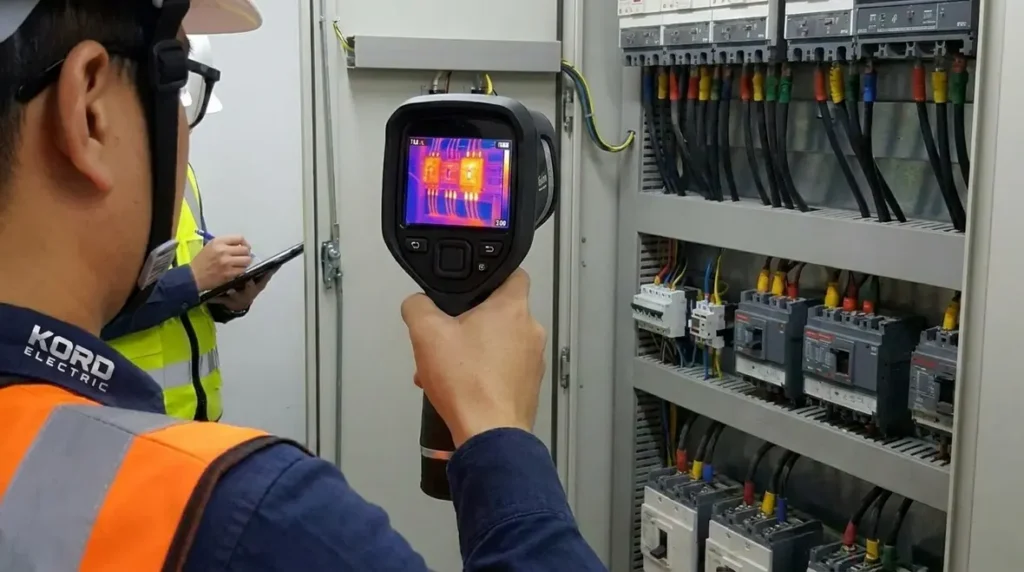
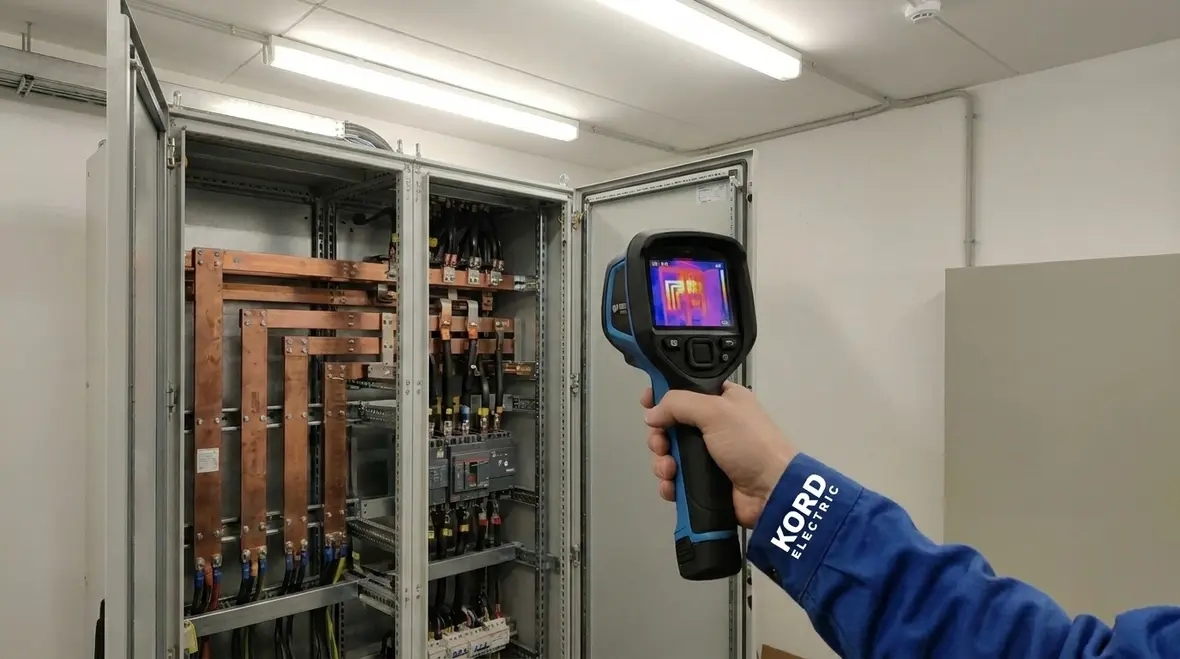
We know electrical issues love to hide. They often begin as small changes in heat, vibration, or insulation condition, and then they escalate. Therefore, our maintenance work includes routine inspection and targeted testing across the facility’s power distribution.
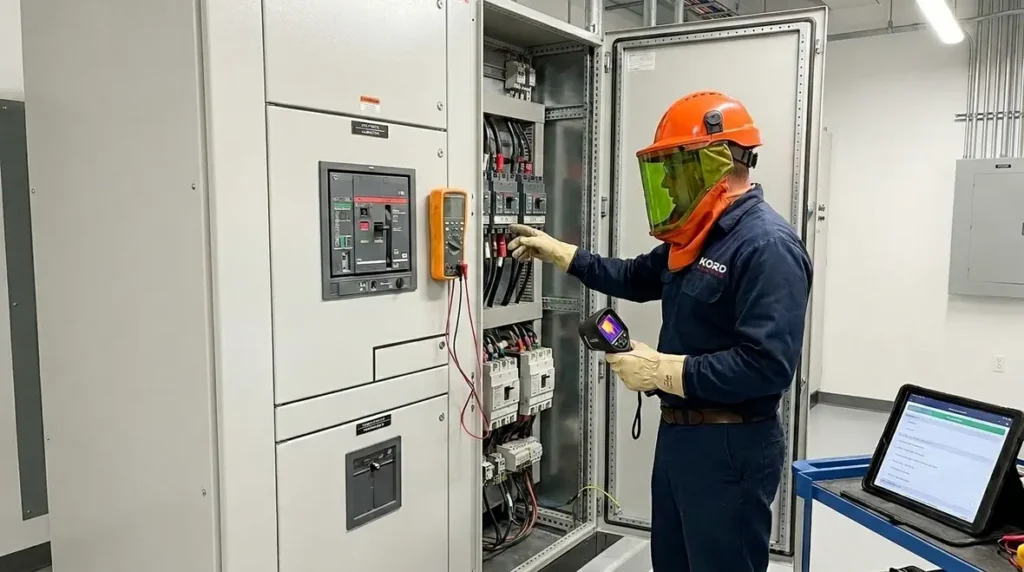
Typically, our service staff checks terminations, bus bars, and panel interiors. They also look at signs of overheating, loose connections, corrosion, and moisture intrusion. After that, they apply electrical tests that fit the asset. For many systems, that includes insulation resistance checks, breaker performance observations, and assessments of grounding and bonding integrity.
Additionally, we verify that protective devices behave like they should. If a protective device does not trip or clear correctly, the system might not shut down when it must. And when it does not shut down, that is when safety becomes a real problem.
Here is the calming truth: when you test and inspect on a schedule, you catch the “almost failed” stage. Otherwise, the facility catches it at the “smoking breaker” stage. We prefer the first one, even if the second one sounds like a plot twist from a workplace sitcom.
In many manufacturing environments, this early detection work ties directly into broader maintenance frameworks, including NFPA-guided practices for panels and switchgear. It is all about giving leadership clear, documented evidence so that repairs and upgrades happen before downtime writes the agenda.
How We Maintain Motors, Drives, and Controls Without Disrupting Production
Manufacturing facilities run on motors and drives. So, the maintenance strategy must respect how production depends on them. Our technicians focus on the areas where motor life is won or lost, including mechanical load factors, cooling paths, and electrical stress.
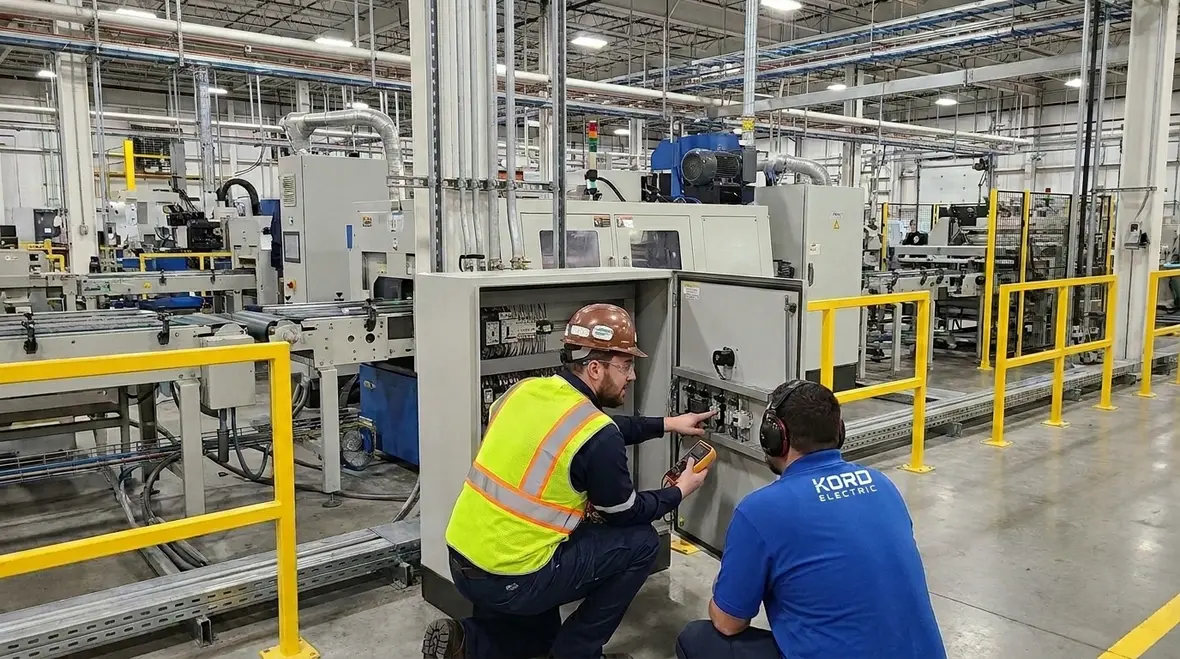
First, we inspect motor starters and contactors for wear and heat damage. Then we examine variable frequency drives and control panels for signs of component aging and loose wiring. We also confirm that control wiring stays secure and clean, because small failures in control circuits can cause big operational delays.
To reduce downtime, our team coordinates inspections with production windows. We also help facilities identify which systems need urgent attention and which tasks can be planned for the next maintenance cycle. Moreover, we keep documentation clear so others in the facility understand the current status, the history, and the recommended next step.
In practical terms, this means fewer unexpected stops, fewer emergency callouts, and more stable output. And if anyone claims maintenance always causes downtime, we remind them that surprise failures cause downtime too, just with less control and more excitement.
When needed, we coordinate this work with broader industrial electrical maintenance plans, so motors, drives, and process controls line up with the same safety, documentation, and planning standards used for panels, feeders, and distribution gear.
Electrical Safety Measures for Grounding, Bonding, and Panels
Safety does not come from luck. It comes from correct grounding, reliable bonding, and well maintained panels. When a facility’s grounding system slips out of spec, the risk increases for shock hazards, equipment damage, and nuisance trips that interrupt work.
Our technicians test grounding paths and verify connections where bonding matters. They also evaluate panel conditions such as torque consistency on terminations, corrosion levels, and signs of moisture that can form conductive paths. In addition, they check labeling and circuit identification so technicians can work safely without guesswork.
To support manufacturing safety in a way that lasts, we also look at how the facility handles aging equipment. If a panel or device shows repeated overheating patterns, we propose a plan that can include repair or replacement, not vague promises.
And yes, we explain it all. Others might say “it’s fine” and move along. We say what “fine” means, what we tested, and what changes we recommend for electrical maintenance for manufacturing safety programs that hold up during real conditions.
For many plants, this detailed grounding and panel work connects directly to standards-based guidance on switchgear and panelboard maintenance. The result is a calmer, more predictable electrical room, instead of one that only gets attention after a trip or a scorch mark.
Managing Power Quality to Reduce Downtime and Equipment Wear
Power quality issues rarely announce themselves with dramatic events. Instead, they appear as slow degradation, unexplained resets, degraded performance, and intermittent faults. Therefore, part of a strong program includes understanding what the facility experiences on its incoming power and inside distribution.
Our service staff evaluates patterns that can indicate voltage imbalance, harmonics, and transient events. They also review how sensitive loads behave, especially control systems, PLCs, sensors, and modern process electronics. When power quality drifts, it can stress insulation, drive components, and motor windings over time.
Then we help facilities decide on practical upgrades or adjustments. Sometimes the right step is improving grounding and bonding practices. Other times, it is adding corrective measures for harmonics or adjusting how protective devices interact with the load.
In our field experience, facilities that manage power quality often see fewer “mystery” outages. They also gain a more stable environment for production, which matters when customer timelines and quality targets do not care about excuses.
For sites across Los Angeles County and surrounding regions, managing power quality also supports broader goals like equipment longevity, energy efficiency, and a smoother path to future upgrades or retrofits when processes grow.
Keep Compliance, Documentation, and Training in the Same Folder
Even the best maintenance program fails if information gets lost. So, we prioritize documentation and clear records. For each visit, our team captures findings, test results, repair actions, and recommendations. This helps facilities track asset health across years, not just across one shutdown window.
Additionally, we support training for facility teams. Our technicians explain how staff should respond to early warning signs like abnormal smells, unusual breaker behavior, or recurring nuisance trips. We also help others understand safe work boundaries and how to plan maintenance with the right lockout and verification steps.
Here is what we often see in commercial and industrial facilities: someone gets the alarm, someone calls a contractor, and nobody can quickly answer what happened last time. Therefore, we build a cleaner process. When leadership asks for trends, the data is ready. When technicians need context, the record is there.
That is not just paperwork. It is operational control.
When documentation and training live alongside clearly defined electrical preventive maintenance procedures, manufacturing teams gain a repeatable playbook instead of starting from zero whenever something blinks or buzzes at the wrong time.
How Electrical Maintenance Supports Safer Manufacturing Floors
On a busy manufacturing floor, electrical maintenance shows up everywhere, even when people do not notice it. Stable panelboards keep conveying equipment moving. Healthy grounding keeps line operators safer when they interact with metal enclosures. Well tuned drives protect motors from repeated faults that would otherwise bring production cells to a halt.
By treating electrical maintenance for manufacturing safety as a core part of operations, plants turn “keep the lights on” thinking into a deliberate safety and reliability strategy. That means fewer near misses around damaged cords or overloaded circuits, fewer frantic calls about tripped breakers, and more time focusing on throughput, quality, and delivery.
It also creates clearer expectations between facility leadership and maintenance teams. Instead of wondering when the next inspection will happen, everyone understands the cadence, the scope, and the reporting that follows. That clarity makes it easier to align electrical work with other safety programs, including machine guarding, lockout/tagout, and process hazard analysis.
Integrating Electrical Maintenance With Broader Facility Strategies
Electrical maintenance does not operate in a vacuum. In modern manufacturing environments, power distribution interacts with lighting, automation, HVAC, and data systems. When Kord Electric helps plants build or refine maintenance plans, we look at how electrical work fits into broader operational goals.
For instance, a plant that recently upgraded its lighting controls or implemented automated control strategies may need adjustments to panel schedules, circuit labeling, or breaker settings. A facility planning a major equipment retrofit might benefit from load studies and condition assessments ahead of time, so that new machines do not overload legacy feeders or transformers.
When electrical maintenance connects to these bigger decisions, it becomes easier to justify budgets, plan shutdown windows, and coordinate with other contractors. Instead of treating maintenance as a disconnected line item, leadership can tie it directly to uptime, product quality, and long-term capital planning.
For facilities across the region, especially those coordinating multiple buildings or production areas, working with an experienced partner that understands industrial systems, code requirements, and local conditions turns maintenance from “something we should probably do” into a structured advantage.
FAQ: Quick Answers for Manufacturing Electrical Maintenance
Bring Stability to Your Electrical System With Kord Electric
When you manage electrical risks with a real plan, you protect people, extend equipment life, and reduce disruptive downtime. Kord Electric delivers inspection and testing, grounding and panel safety checks, power quality support, and clear documentation for commercial and industrial facilities. Our technicians and expert service staff explain findings step by step, so decisions stay grounded in evidence. If your plant is ready for steadier operations, contact us today to schedule an electrical maintenance review and build a safer roadmap for the next production cycle.
For facilities in and around Los Angeles County, our team can integrate electrical maintenance into broader service offerings, from troubleshooting and repairs to larger project work. When you need a partner that understands industrial power, safety, and uptime, leaning on a provider with dedicated Los Angeles County electrical services for commercial and industrial clients helps keep every shift running with fewer surprises.
Whether you are formalizing an electrical maintenance program for the first time or refining an existing strategy, the goal is the same: give your manufacturing teams a stable, predictable electrical backbone that supports safety and production instead of working against both.