

Data Center Redundancy Planning for Reliable Power
High-density data rooms do not forgive mistakes, and neither do critical commercial and industrial operations. Thoughtful data center redundancy planning separates a quiet, predictable outage response from a costly, late-night scramble. This guide walks through how Kord Electric approaches redundancy step by step across power paths, protection, controls, UPS, and testing, so facility teams can keep uptime where it belongs: in the “expected” column instead of the “we got lucky” column.
Throughout this article, we focus on real-world operations instead of theory slides. You will see how redundancy ties into maintenance, selective coordination, and even everyday decisions like panel labeling and power mapping. If your facility already relies on data center electrical infrastructure, or you are planning a new build or expansion, these concepts can help you pressure test your current design and identify weak links before they become headlines.
Electrical redundancy starts with data center redundancy planning
In the first phase, Kord Electric begins with data center redundancy planning because high-density rooms do not forgive mistakes. We map how power flows, where failures would happen, and what the backup system must do in the real world, not on a slide. Then we design a path that keeps critical loads fed during storms, switch failures, maintenance windows, and the occasional “surprise” component. We do this for commercial and industrial facilities, as well as major property buildings, where downtime costs real money. And yes, we also get it: nobody wants to hear about redundancy until something goes wrong. Still, we prefer calm, planned outcomes over frantic, last minute calls.
Our expert service staff and technicians explain the plan step by step. In plain terms, they tell others what works, what fails, and why the next decision protects the load. That way, building teams understand the system before it gets tested by Murphy’s Law.
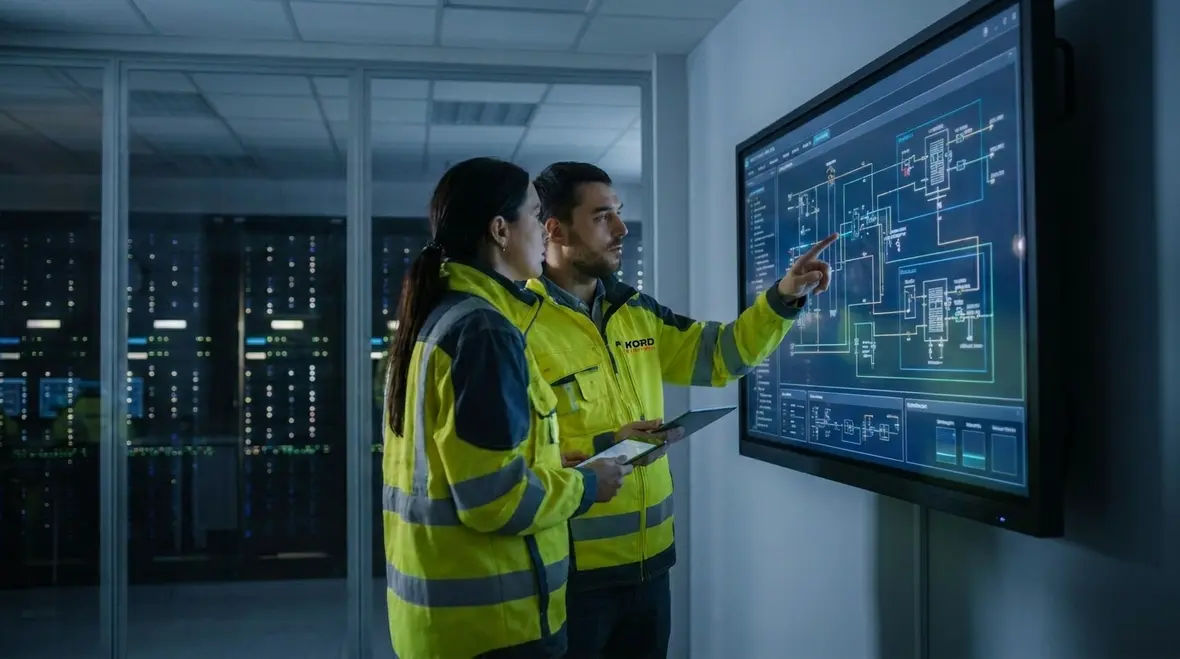
Kord Electric often connects redundancy planning with broader data center electrical infrastructure work, including power distribution and maintenance programs. If you already focus on electrical infrastructure for data centers, it is worth pairing redundancy planning with a structured electrical maintenance checklist so the system you design today continues to perform under stress years from now.
Plan power paths with clear load priorities
A solid design starts before equipment is selected. Kord Electric reviews the facility’s electrical single line and then confirms load categories based on uptime needs. For example, we treat IT loads differently from common area loads, even when the same rack density shows up in both. Next, we confirm which loads can ride through short outages and which must stay on without interruption. Then we size and route distribution so each critical path supports the required reliability.
At this stage, our technicians talk through practical outcomes. They show how power transfers from one segment to another and where the design avoids blind spots. Transition words matter here, so the conversation moves from “what you have” to “what you need” to “what you will do if a problem appears.”
We also check physical space and maintenance access. Redundancy does not help if the crew cannot reach parts safely. Therefore, we design for service work while power stays stable. In other words, we make sure the system is not only reliable, it is maintainable. Think of it like a good suit: it should look sharp, but it must also let you move.
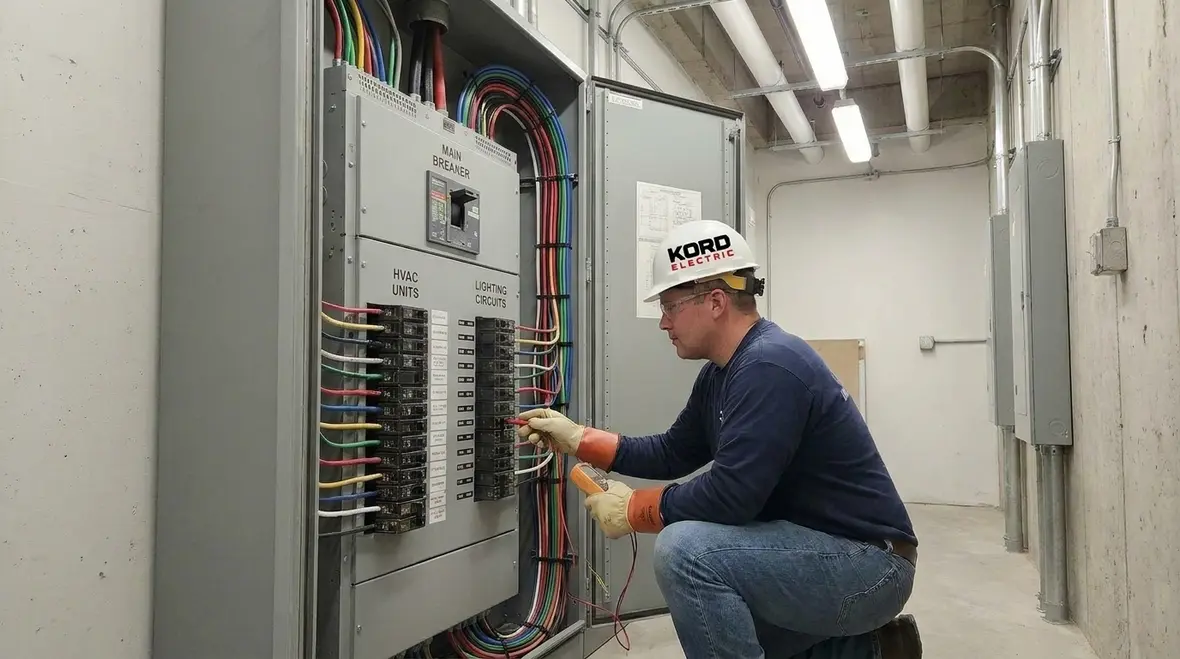
Clear priorities also help with everyday tasks such as electrical panel labeling. When critical circuits are labeled accurately and consistently, responders know which breakers feed which data rooms or essential services, reducing confusion when seconds matter.
Design for N and N plus one reliability
When redundancy is chosen correctly, it protects high-density data centers from both common and rare events. Kord Electric evaluates whether N, N plus one, or higher levels best match the risk profile. N means each required unit supports the load, and N plus one means an extra unit stands ready. In most commercial environments, N plus one offers a practical safety net without turning the project into a never ending budget thriller.
However, we do not stop at the math. We also design how units start, synchronize, and carry load during a failure. Then we confirm how the system handles partial faults, such as one module degraded or one feeder out of service. If a system only “works” when everything is perfect, it is not redundancy, it is wishful thinking.
Our expert service staff helps stakeholders understand the difference. They explain it like this: if one part stumbles, the system should not fall. Then, they review test plans so the transfer logic behaves the same way during normal operations and during real events. That matters because the best design in the world fails if it cannot be tested and maintained.
For facilities in Los Angeles County and surrounding regions, this level of reliability often connects directly with broader commercial and industrial electrical services, where redundancy, selective coordination, and code compliance all share the same blueprint.
Use selective coordination and fault isolation
High availability power depends on what happens when something goes wrong. Kord Electric builds the protection strategy around selective coordination and fast fault isolation. Instead of letting one event knock out more areas than needed, we design protective devices so the closest device clears first. Then upstream devices act only if downstream devices cannot.
This approach reduces the blast radius. For a data center, that means fewer racks and fewer critical systems lose power when a fault occurs. Moreover, selective coordination improves troubleshooting because the system points crews to the affected zone more clearly. Nobody enjoys hunting for the needle in the haystack, especially at 2 a.m.
We also coordinate grounding and bonding practices to support stable operation and correct fault behavior. Then we verify settings against actual equipment ratings, not just default recommendations. In addition, we validate that control power and signaling circuits operate as intended so interlocks and alarms work reliably.
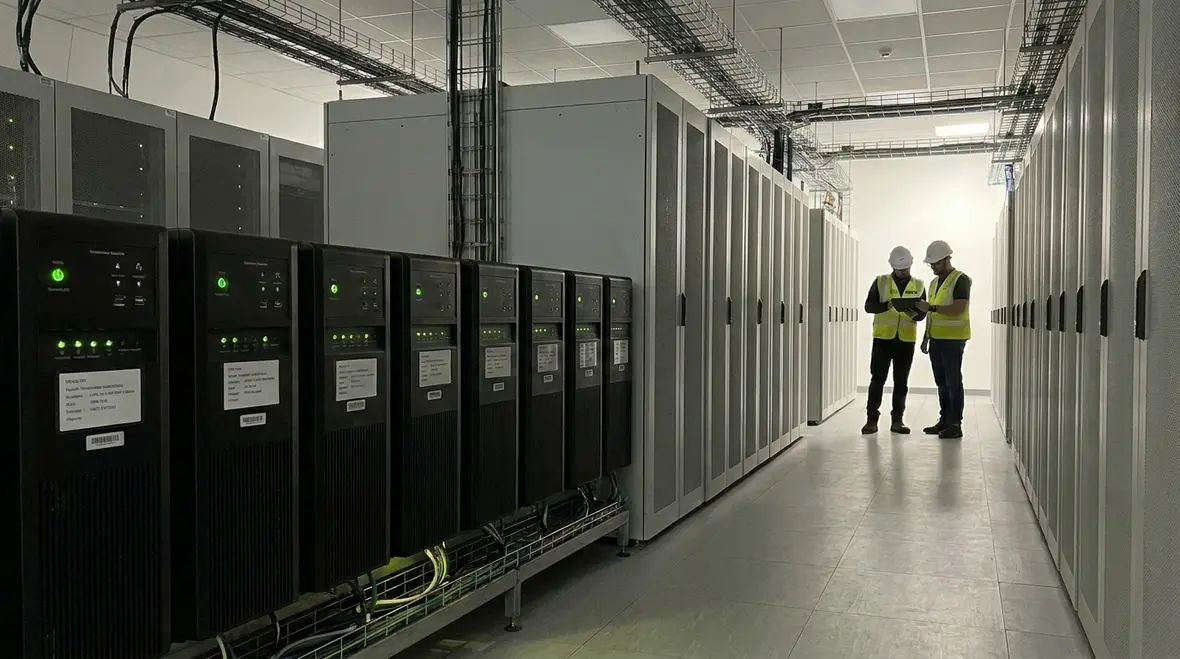
In many commercial and industrial facilities, this fault isolation strategy goes hand in hand with managing voltage fluctuations and hidden electrical risks behind the walls. When breakers, protection, and wiring are aligned, the facility stands a far better chance of turning small anomalies into routine work orders instead of disruptive outages.
Redundancy includes controls, not only generators
Many people hear “redundant power” and think about generators only. Kord Electric treats that as step one, not the whole plan. We design redundancy across control systems, transfer logic, communication paths, and monitoring. Then we ensure those systems stay available even if one controller, one network path, or one power supply fails.
To do this, our technicians and expert service staff verify that the right signals reach the right devices quickly. For instance, automatic transfer switches, paralleling gear, UPS systems, and switchgear controls need consistent timing and stable control power. If control logic resets during a transfer, a “redundant” design can still cause an outage.
Additionally, we design bypass and maintenance modes so crews can service equipment without risking unintended transfers. This reduces the chance that maintenance work becomes the problem. Transition words show up in our design documents too, because we want everyone to follow the sequence: first monitor, then isolate, then transfer, then confirm stable output.
From there, redundancy extends into monitoring and alarming. If a breaker trips, a UPS shifts mode, or a generator fails to start, the right people need to know fast. That visibility gives facility teams time to act while the redundant systems keep loads online.
UPS strategy: ride-through, efficiency, and battery health
UPS systems often serve as the bridge between utility power and backup sources. Kord Electric designs UPS setups based on load profile, runtime needs, and the facility’s operational style. We evaluate whether the facility benefits most from a particular topology, and we size the system to handle both steady load and dynamic changes from equipment startup.
However, the best UPS design also includes battery health management. Over time, batteries degrade, and this matters in a high density environment where outage consequences are severe. Therefore, we plan monitoring, test intervals, and replacement strategy early. Then we address how the UPS behaves during maintenance, including how the facility transitions loads without creating a gap.
Our expert service staff explains the operational side in a way teams can act on. They talk about alarms, runtime graphs, and what “good” looks like during tests. In other words, we move beyond “install it and hope” and toward “operate it with confidence.” The goal stays simple: keep critical loads stable, protect equipment, and reduce the odds that a battery issue surprises the team later.
Commissioning, testing, and documented maintenance
Design is only half the story. Kord Electric completes electrical redundancy work with commissioning, testing, and documented maintenance plans. We verify that transfer schemes perform correctly under real conditions, including simulated faults and staged outages. We also test alarm and monitoring signals so the right people receive the right information. If an alert fails to show up in the monitoring room, the system might as well be silent.
Moreover, we create maintenance steps that align with commercial and industrial operating schedules. That means fewer surprises, clearer responsibilities, and better coordination with facility teams. Our technicians work with others on shutdown windows, lockout and tagout steps, and safe access procedures.
To keep things practical, we also include training. We teach facility operators how to read key indicators and what actions to take during abnormal events. Consequently, the facility team does not rely solely on the vendor to interpret every alarm. That level of shared understanding helps maintain reliability long after installation day.
Kord Electric’s data center electrical maintenance checklist approach reinforces this commissioning work. When inspections, infrared scans, breaker testing, and cleaning all follow a documented plan, redundancy turns from a one-time project into an ongoing reliability habit.
Dual path operations: what happens during a transfer
Kord Electric designs dual path operations so the facility can handle abnormal conditions without chaotic behavior. In real operations, transfers involve timing, control states, load ramping, and confirmation of stable voltage and frequency. Therefore, we map each step in the sequence and confirm it with testing.
We also plan for scenarios such as one power path down, one feeder fault, and partial maintenance on one segment. In that way, data center redundancy planning does not stop at the concept of backup. It extends into how the system behaves when only parts of it are stressed.
To make this clearer, we often lay out the operation in two coordinated views for project teams. Here is the concept in a simple dual format:
| Normal mode | Event mode |
| Loads sit on their assigned path with stable controls | Protection isolates the fault and transfers only the needed segments |
| Monitoring tracks health of UPS, switchgear, and feeders | Alarms guide the team to the exact affected zone |
| Maintenance planning keeps critical paths reachable | Maintenance bypass modes prevent unintended transfers |
And just like pop culture heroes with backup plans, the system should not only survive the problem, it should also show the team exactly where the next action belongs. Because panic is not a control strategy, even if it feels like one in the moment.
Where data center redundancy planning fits into broader facility strategy
For many organizations, the data center is only one part of a larger electrical story. Production floors, office spaces, and common areas all share the same upstream infrastructure. Effective data center redundancy planning acknowledges this shared backbone and makes sure that protective devices, panel schedules, and maintenance windows do not accidentally undermine IT uptime.
That is why Kord Electric often ties redundancy projects to broader efforts like hidden risk assessments, rewiring plans, and voltage stability improvements. When panel labeling, breaker coordination, and maintenance practices all point in the same direction, the entire facility benefits from fewer surprises and simpler troubleshooting.
Ultimately, the same principles that protect server racks also protect elevators, life safety systems, and critical building services. When you invest in redundancy, you are really investing in a calmer, more predictable operating environment for the entire property.
FAQ: electrical redundancy for data centers
Ready to strengthen your power uptime?
Kord Electric helps commercial and industrial facilities build electrical redundancy that actually holds up under pressure. We start with data center redundancy planning, then design reliable power paths, protection coordination, and control logic that teams can operate confidently. Our technicians and expert service staff explain what we build, how it transfers, and how it stays maintainable over time. If you want fewer alarms, fewer outages, and a plan your team trusts, contact Kord Electric today for an assessment and next steps.
Whether you are upgrading an existing data hall, planning a new build, or aligning data center redundancy planning with a broader data center redundancy planning and maintenance program, the goal remains the same: keep critical loads steady, protect equipment, and give your team a clear, tested playbook when the unexpected shows up.


