Thermal Scanning for Switchgear Reduces Downtime
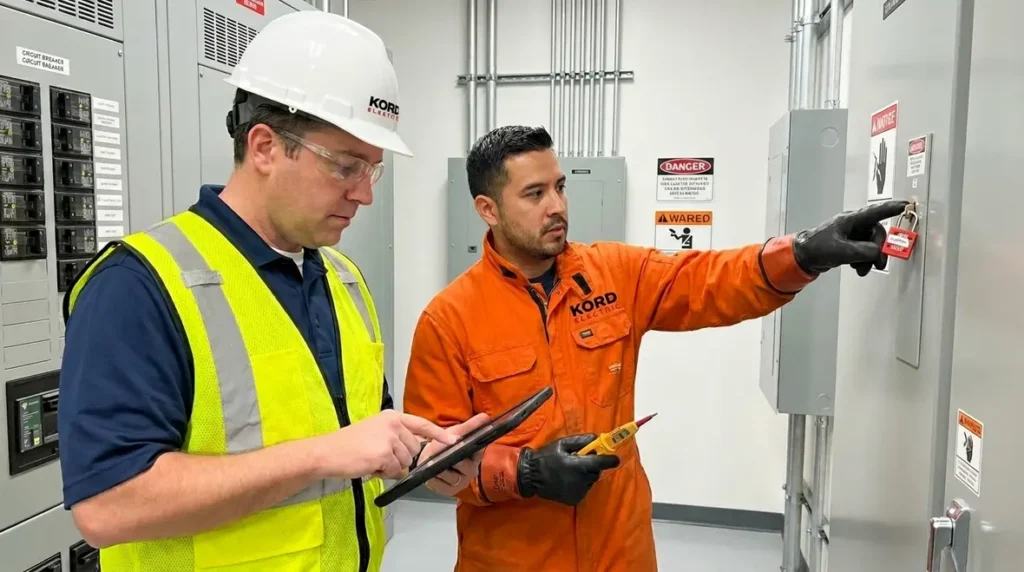
Thermal scanning for switchgear helps commercial and industrial facilities stop problems before they become outages. At Kord Electric, we use industrial thermal scanning benefits to spot heat patterns that normal inspections miss, which means fewer unexpected trips, steadier power, and less downtime that hits budgets and schedules. Instead of waiting for a failure like it is a plot twist, we look for early warning signs while equipment still has options. And yes, our expert service team explains what they see in plain language, so your site manager understands the why, not just the who. That is how we keep critical electrical systems calm, cool, and reliable.
What causes switchgear failures before the power goes out?
In commercial and industrial settings, switchgear does not fail in a single dramatic moment. It usually grows a problem over time. For example, a loose connection can create localized heating. Over weeks and months, that heat degrades insulation, increases contact resistance, and eventually forces protective devices to trip. Meanwhile, aging components, moisture intrusion, contamination, and incorrect maintenance can all add fuel to the situation.
When we talk with our clients, we often hear the same story: everything looked fine during the last visual check. Then operations get hit with a sudden outage. That pattern is exactly why our technicians approach switchgear like a patient health check, not a last minute emergency room visit.
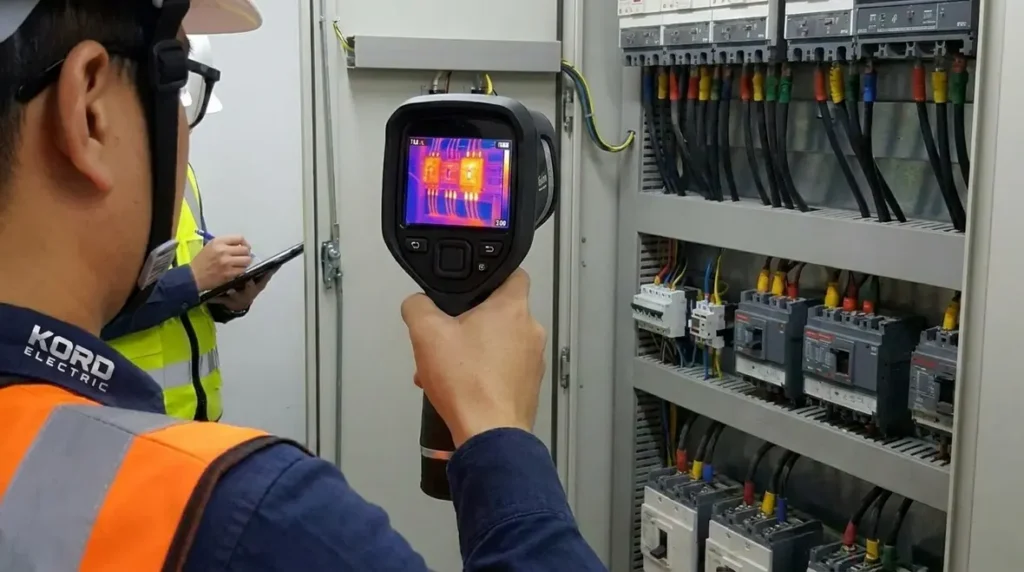
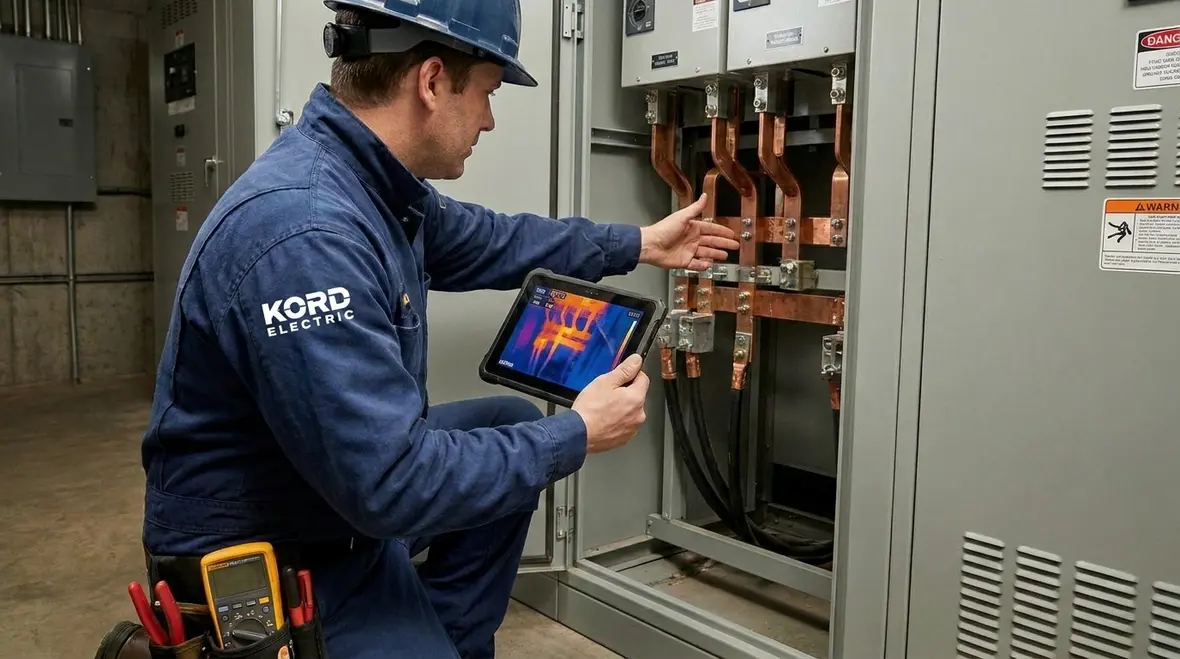
Thermal imaging gives us a view of temperature rise across key electrical points. So, instead of guessing based on symptoms after failure, we identify the early heat signatures that lead to downtime. And if you are thinking, “Can heat really travel that fast?” yes, it can. Electrical losses do not politely wait for your next scheduled shutdown.
How thermal scanning supports preventative maintenance
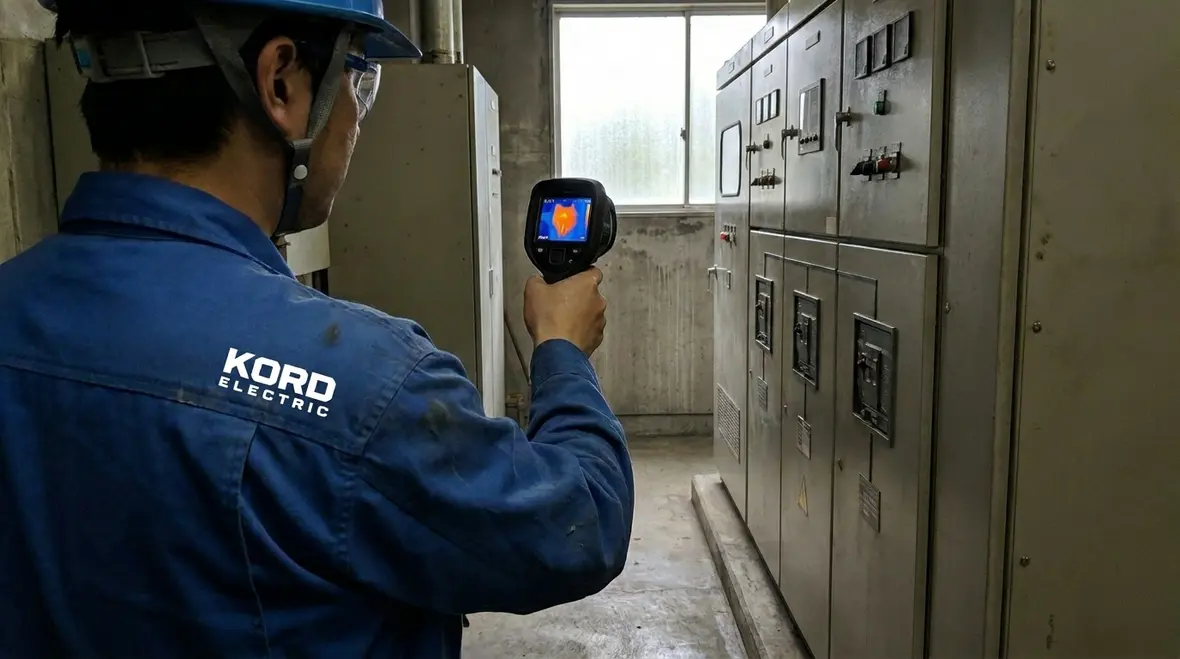
Preventative maintenance works best when it stays ahead of wear. Therefore, we build a routine that fits how commercial and industrial facilities operate, including buildings with high reliability requirements. Our expert service staff uses thermal scanning to establish a baseline for each switchgear lineup. Then, we compare readings over time to detect abnormal temperature differences.
Here is the practical part. We typically focus on connection points, bus bars, terminations, insulators, and any areas where heat can build. If a joint runs hotter than similar phases or nearby points, we treat it as an inspection priority. After that, our technicians recommend targeted follow up, such as cleaning, tightening to manufacturer specs, or component replacement.
In other words, we prevent downtime by narrowing the problem area. You do not have to take the entire system offline just to “see what might be wrong.” Instead, you act with clarity. It is like replacing a whole light fixture because one bulb flickers. Nobody enjoys that, and nobody should have to.
Preventing downtime: the benefits of thermal scanning for switchgear
Now we get to the core point. Thermal scanning for switchgear helps you reduce downtime by identifying abnormal heat before it becomes a failure event. That is not just a theoretical advantage. It directly affects how quickly facilities recover and how often they suffer unplanned outages.
First, we find issues early. Loose terminations and aging contacts often create heat well before insulation damage becomes irreversible. So, we can plan corrective actions during maintenance windows instead of during business-critical emergencies.
Second, we improve maintenance efficiency. When our technicians provide a clear heat map, your team does not waste time chasing ghosts. Then, your maintenance crew focuses on the specific points that show the highest risk. This approach lowers rework and reduces the chance of “tighten everything” guesswork.
Third, we support better reliability reporting. Many major property buildings and industrial sites need documentation for internal reviews, audits, and safety committees. Thermal scanning benefits include traceable inspection results that help show trends and justify maintenance decisions.
Finally, we strengthen safety. Overheating can lead to insulation breakdown, arcing risk, and damage to adjacent equipment. By addressing heat at the source, we help reduce hazards that can threaten people and operations. If safety were a pop quiz, thermal scanning helps you study the answers ahead of time.
What our expert team measures during an inspection
At Kord Electric, our expert service staff does more than take pictures. They interpret results in context. Temperature readings alone do not tell the whole story, so we consider load conditions, ambient conditions, equipment type, and recent operating changes.
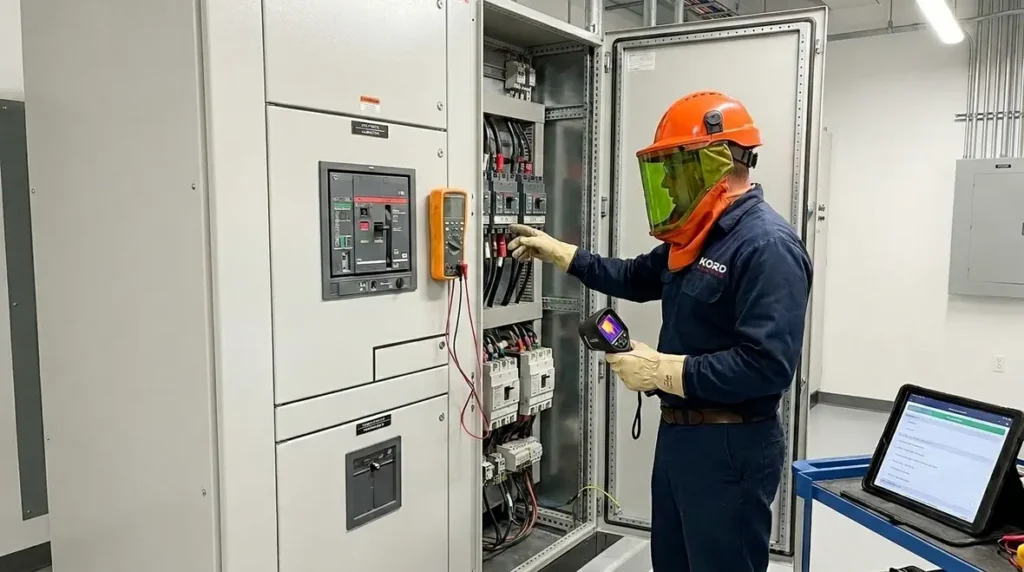
Our technicians typically record thermal images and visual observations at relevant points inside switchgear assemblies. We also note the operating status of the equipment, because a meaningful comparison depends on consistent conditions. For example, readings taken under steady load carry more value than readings captured during unusual draw.
Next, we evaluate the phase to phase differences. Abnormal temperature rise across one phase compared to the others often points to contact resistance or connection problems. We also look for hotspots near bus bar joints and terminations. Those locations commonly reveal early failures because electrical contact quality affects current flow and heat generation.
Then we produce a clear report that supports action. And yes, we explain the findings to your team. If someone on your staff asks, “Is this urgent?” we tell them plainly. Our goal is to help you decide, schedule, and fix with confidence, not to impress anyone with fancy jargon.
How we help commercial buildings and industrial sites plan repairs
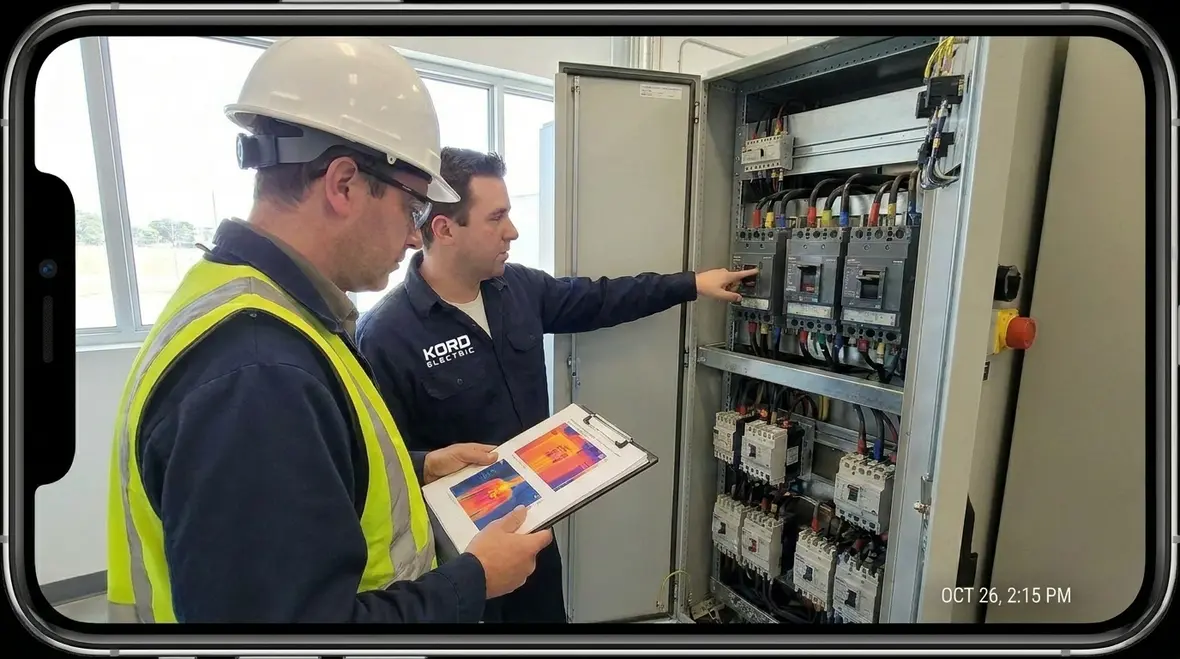
Because commercial and industrial facilities run on tight schedules, downtime planning matters as much as diagnosis. We work with facility managers and maintenance leaders to align corrective actions with operational needs. That means recommendations often include a priority level and a practical next step.
For instance, if we detect a hotspot at a specific termination with a strong thermal signature, we may recommend tightening, cleaning, or replacement during a planned maintenance window. If the reading indicates a higher risk condition, we may recommend earlier attention and more detailed follow up.
We also coordinate with other site stakeholders when needed. Some properties operate with strict access rules, and industrial sites may have production schedules that affect when work can happen. Our technicians plan around those realities and keep communication straightforward.
As a result, facilities reduce the probability of a surprise outage. And just as importantly, they avoid the waste of unnecessary shutdowns. In business, time is money, and in power systems, time can be even more expensive than money.
Best practices after thermal scanning results
Thermal scanning is not the finish line. It is the starting signal for smart action. After we deliver results, we help your team translate them into maintenance work that actually reduces future heat rise.
First, follow up promptly with corrective actions that match the risk level. Hotspots related to loose connections often improve once the connection quality is restored to spec. Meanwhile, deteriorated components may require replacement instead of repeated tightening.
Second, re inspect after repairs. We can schedule a follow up scan to confirm that the temperature profile returns to a normal range. That closes the loop and reduces guesswork.
Third, keep records and update baselines. Over time, loads change. So, we review trends across inspections and adjust expectations based on operating conditions. If a facility adds equipment or changes production patterns, thermal readings must reflect that reality.
Finally, train your team on what “normal” looks like for your specific switchgear lineup. Our expert service staff often shares practical guidance so your internal team can spot early signs between formal inspections. This layered approach prevents small issues from turning into “why did this happen now?” moments.
FAQ
Two ways Kord Electric supports your electrical reliability goals
Our approach stays practical for commercial and industrial facilities. We focus on what your team needs to act, not just what looks good in a report.
Inspection and diagnosis |
Action planning and follow up |
Thermal imaging, visual observations, and risk based findings from our technicians and expert service staff. |
Clear recommendations, scheduling support, and follow up scans to confirm repairs reduced heat rise. |
If your facility wants a broader reliability strategy, thermal inspections also pair naturally with electrical preventive maintenance programs that keep panels, distribution equipment, and switchgear on a consistent service rhythm.
For multi-building campuses and operations spread across Los Angeles County, you can also connect thermal scanning with comprehensive commercial and industrial electrical services that cover troubleshooting, upgrades, and long term planning.
Call Kord Electric to reduce downtime before it starts
If your facility operates around the clock, you cannot treat switchgear like it only needs attention when something breaks. Contact Kord Electric and let our technicians perform thermal scanning to identify early heat signatures and support planned corrective actions. We work with commercial buildings, industrial sites, and major property teams to reduce unplanned outages, improve safety, and keep reliability on track. Schedule an inspection today and move from reactive repairs to smart prevention. Your downtime budget will thank you.
When you are ready to extend those gains, our team can fold thermal inspections into structured preventive maintenance so critical equipment stays on a predictable, data-backed maintenance path instead of waiting for the next surprise.