Commercial Lighting Efficiency Audit for ROI
How Kord Electric Drives ROI With a Commercial Lighting Efficiency Audit
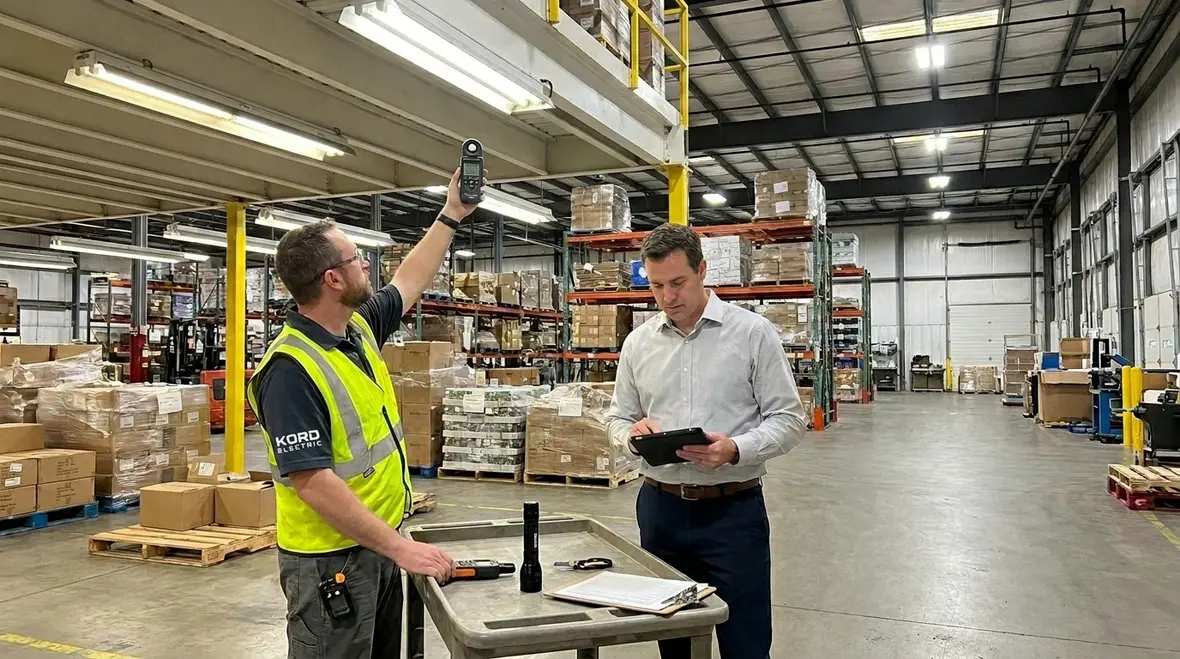
At Kord Electric, we start by running a commercial lighting efficiency audit that lays bare what your lighting system is doing today, and what it could do tomorrow. In the first visit, our team maps existing fixtures, measure light levels, and reviews electrical and control performance. Then, we explain the results in plain business language so facility leaders can make decisions with confidence. And yes, we promise not to talk like a thermostat that just got a new app update.
Next, we recommend upgrades that reduce energy spend while keeping safety and comfort where they belong. Because lighting is not just “pretty.” For commercial and industrial facilities, it is productivity, compliance readiness, and operating cost all in one package.
Why Lighting Waste Hits Your Operations First
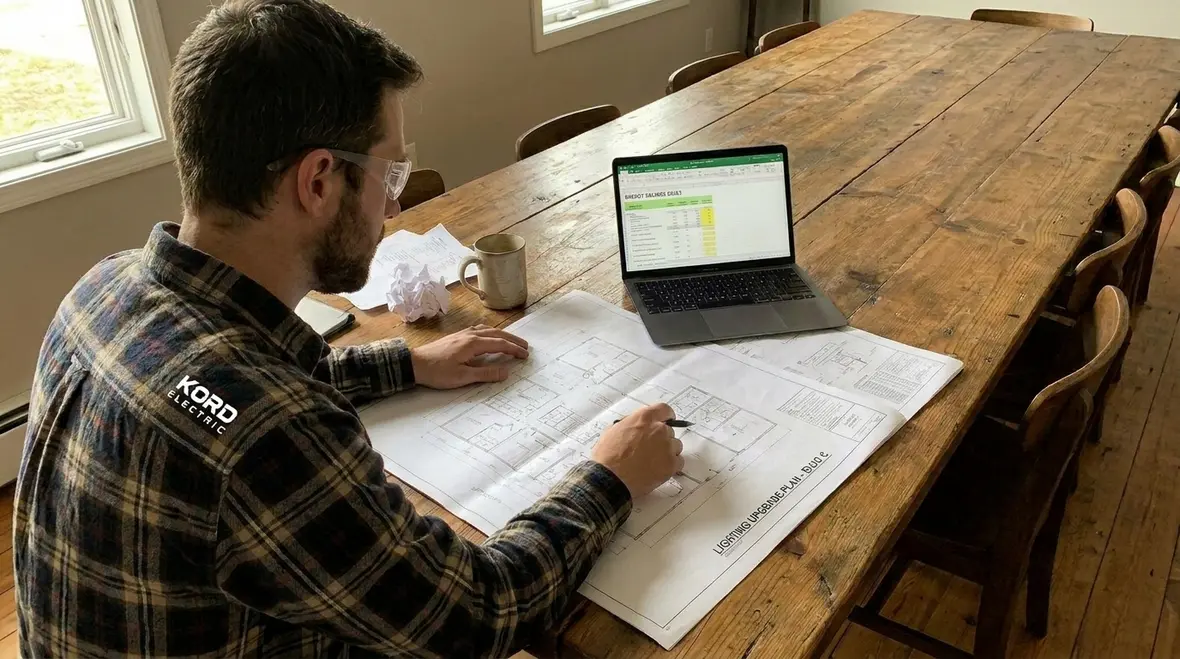
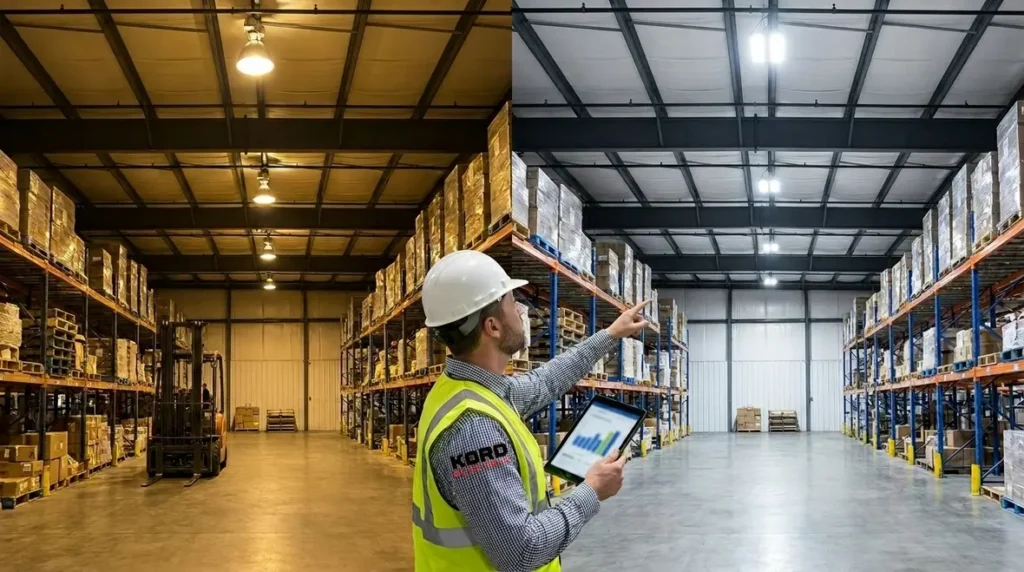
When lighting costs climb, many teams blame utility rates. That is fair, but it is not the full story. In practice, lighting waste shows up in a few predictable places, and our technicians spot them quickly. For example, older lamps and ballasts often operate less efficiently than modern LED systems. Even when fixtures still “work,” they may not deliver the light output you expect, which leads to higher usage time or complaints that force extra work.
Moreover, poor controls create a sneaky pattern. If lights stay on during breaks, after hours, or in low occupancy zones, the energy drain continues while teams sleep. Meanwhile, uneven illumination can push people to adjust behavior, move around more, or use spot lighting that adds complexity. And when you combine that with delayed maintenance, you end up paying twice: once in energy and again in labor.
So, rather than treating lighting like a yearly expense, we treat it like an equipment system with measurable returns.
How We Build Upgrade Plans That Pay Back
To maximize ROI, we do more than swap bulbs. We design upgrades around your building usage, your maintenance schedule, and your risk tolerance. First, we calculate baseline energy use using fixture inventory and operating schedules. Then, we estimate energy savings based on the actual technology being installed, including driver efficiency and lumen output.
Next, we look at controls and wiring conditions. For instance, dimming and occupancy or vacancy sensors can reduce run hours in areas that change throughout the day. Also, we review whether existing lighting circuits are set up to support targeted control zones. If not, we do the smart prep so controls deliver real results instead of “hope results.”
After that, we align the upgrade plan with business reality. Some facilities can shut down during off hours. Others need a phased approach to avoid disruption. We coordinate with site managers and keep the work focused on commercial and industrial spaces, including major propertie buildings. That way, upgrades improve operations without turning your day into a training video titled “How Not To Plan Downtime.”
What Our Technicians Check in the Field
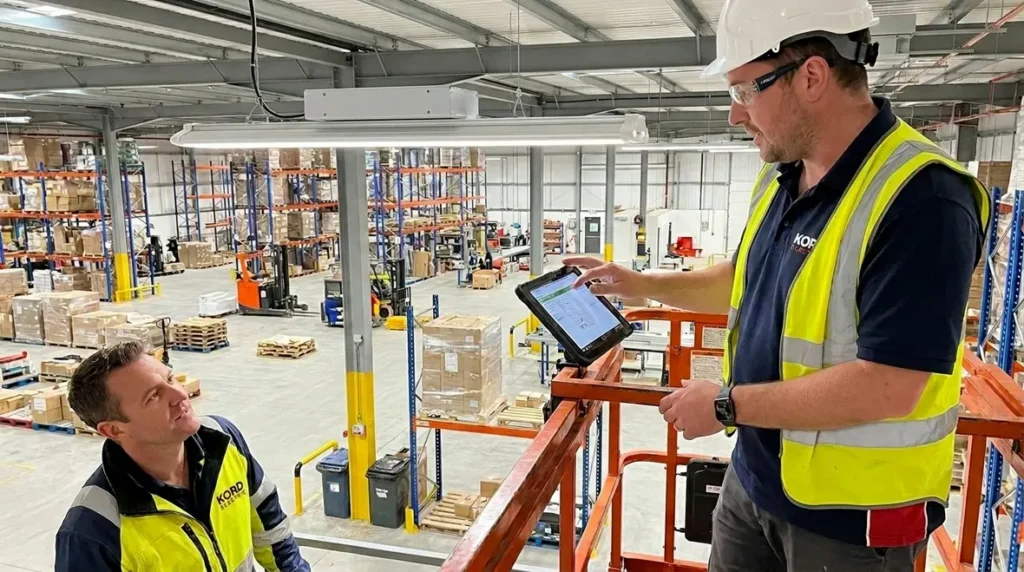
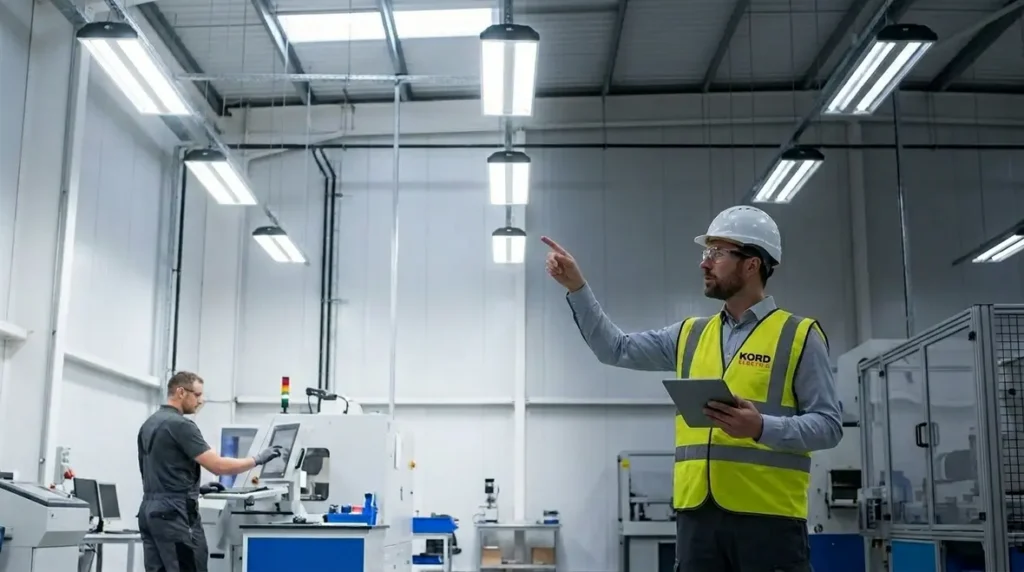
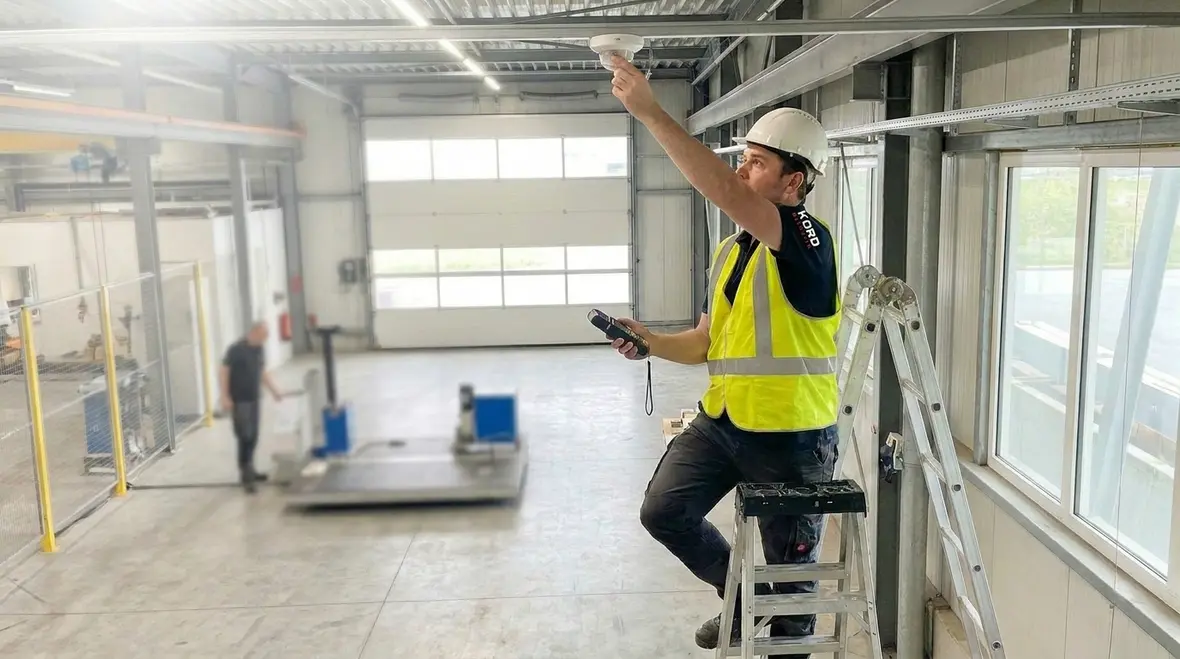
Our expert service staff follows a methodical process during the commercial lighting efficiency audit. We verify fixture condition, check distribution patterns, and confirm lighting levels across work areas like warehouses, corridors, offices, loading docks, and production floors. Then we evaluate how lighting interacts with your facility’s routines.
Specifically, our team looks at these items because each one affects performance and cost:
- Lamp, ballast, and fixture efficiency to confirm how much usable light you get per watt
- Light level uniformity so areas do not end up too dim or overly bright
- Control settings and schedules to ensure lights match occupancy and workflow
- Distribution and mounting height which impacts how light covers the space
- Maintenance history to avoid recurring failures and surprise downtime
At this stage, we do something that helps more than people expect: we explain what we see. Our technicians translate measurement into decisions, so your leadership team understands why a recommendation costs what it costs, and how it reduces risk.
Commercial Lighting Efficiency Audit Results: From Numbers to Action
Once the audit and site review finish, we deliver upgrade recommendations in a way that supports real capital planning. Instead of dumping a spreadsheet and hoping everyone reads it, we break the findings into practical categories: energy savings, performance gains, and maintenance impact.
For example, if you have areas with frequent after-hours operation, we may prioritize high efficiency fixtures with stable output and consider task tuning. If you have unused zones, we focus on control upgrades such as occupancy sensing and daylighting strategies. If your facility suffers from uneven illumination, we design layouts and fixture replacements that improve uniformity so employees can work with fewer workarounds.
Then, we connect the recommendations to costs and timelines. We also account for electrical implications, because it is easy to design a lighting upgrade that looks great on paper and causes panel capacity issues on site. We prevent that by coordinating with your electrical setup and planning for safe installation.
In addition, we align with maintenance planning for commercial and industrial systems. If you already operate under structured electrical maintenance plans, we integrate the lighting improvements into that rhythm so you reduce future surprises. You can also review our approach in our commercial and industrial electrical maintenance plans resource at Commercial and Industrial Electrical Maintenance Plans.
Make It a Program: Efficiency, Controls, and Maintenance Plans
ROI improves when lighting upgrades become a program rather than a one-time event. That is where we help facilities keep performance steady year after year. Our team supports scheduled inspections and maintenance guidance that match commercial and industrial operations, so fixtures do not slowly drift into poor performance.
We recommend ongoing checks for control behavior, sensor responsiveness, and any signs of fixture degradation. Even when LED systems last a long time, drivers and components still work best with routine attention. Also, we confirm that relamping or component changes do not create uneven outputs over time.
Because lighting is only one piece of the electrical ecosystem, we also consider how lighting interacts with power distribution and other systems. When facilities manage electrical health well, they avoid the “random downtime” problem that makes every manager roll their eyes and every technician wish for fewer fires.
And yes, if you ever hear someone say, “Let’s just wait until it fails,” we gently remind them that failing lighting does not stay quiet. It disrupts work, impacts safety, and often triggers emergency costs that wipe out the ROI you worked hard to build.
Where Dual-Column Clarity Helps: Upgrade Priorities That Match Your Building
Not every space needs the same path. To keep decisions simple, we often map upgrades by area and urgency. Below is how teams typically prioritize work once we complete the commercial lighting efficiency audit and confirm real usage patterns.
| Facility Area | Priority Upgrade Focus |
| Production floors and work zones | High efficiency fixtures, uniform light, and stable output for long shifts |
| Warehouses and storage | Targeted distribution, controls for idle hours, and maintenance alignment |
| Offices, break rooms, and corridors | Occupancy and scheduling optimization plus steady comfort levels |
| Loading docks and exterior entries | Durable fixtures, control timing, and safe coverage for operations |
FAQ: Commercial Lighting Efficiency Upgrades for Business Leaders
Turn Lighting Insights Into Next-Step Projects
A commercial lighting efficiency audit works best when it feeds directly into clear, buildable projects. For many facilities, the next move is a targeted lighting retrofit that blends new fixtures, smarter controls, and phased installation. If you want a deeper dive into how lighting investments are structured, you can explore Kord Electric’s Commercial Lighting Upgrade Cost Guide to see how materials, labor, and controls shape overall budgets for large buildings.
From there, your team can connect audit findings with real-world project scopes. That might mean upgrading high bay fixtures, reworking control zones, or pairing lighting improvements with broader electrical maintenance. Over time, this approach turns “we should probably fix the lights” into a structured roadmap backed by numbers instead of gut feelings.
When you are ready to move from planning into action, Kord Electric’s dedicated lighting installation services give you a direct path from audit results to installed, code-compliant upgrades that actually perform in the field.
Call Kord Electric: Turn Lighting Into Measurable ROI
If you want lighting upgrades that pay for themselves, start with a plan built for commercial and industrial realities. Kord Electric’s team can conduct a commercial lighting efficiency audit, explain the findings clearly, and recommend upgrades that fit your building schedule and electrical setup. Then we help you move forward with a practical path that reduces energy spend and supports safer, more consistent illumination. Reach out today to schedule an assessment and stop guessing. Your power bill deserves better.
For organizations managing large properties across the region, our Los Angeles County electrical services support everything from lighting to broader power distribution work, so your commercial lighting efficiency audit becomes one piece of a stronger, more reliable electrical strategy.
When you are ready to translate audit findings into real-world upgrades, our team can align lighting retrofits with your long-term maintenance and expansion goals, so each project improves safety, efficiency, and predictability instead of adding one more item to your “someday” list.