Electric Vehicle Charging Site Surveys Guide
Why Electric vehicle charging site surveys matter for commercial installs
For any business that plans to bring Electric vehicle charging site surveys into a real fleet, real customers, and real timelines, the first step should never be guesswork. At Kord Electric, we run these Electric vehicle charging site surveys to understand the site before we design, price, and install. In other words, we check the ground, the power, the access points, and the safety rules before the charging equipment ever shows up like an overconfident delivery driver.
Because we serve commercial and industrial facilities, and major property buildings, the stakes are higher. A late discovery about load capacity, conduit paths, or parking flow can turn a smooth rollout into a chaotic one. And nobody wants that, unless the goal is to recreate a sitcom episode where the power cuts out at the worst possible time.
What a site survey actually covers on real properties
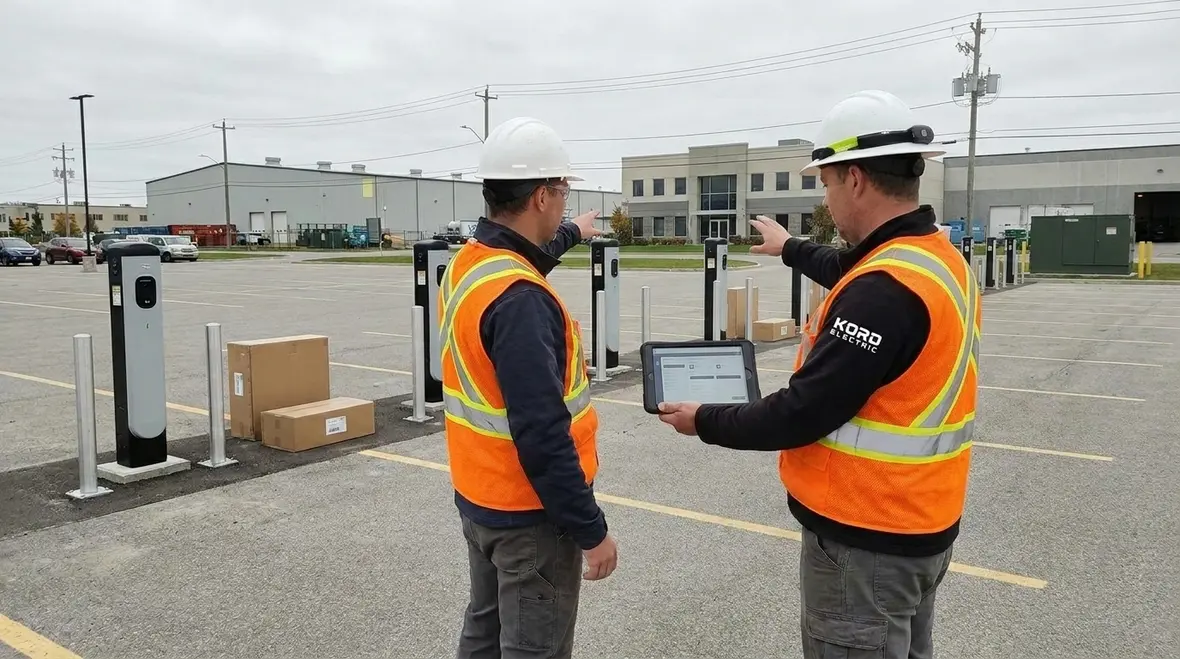
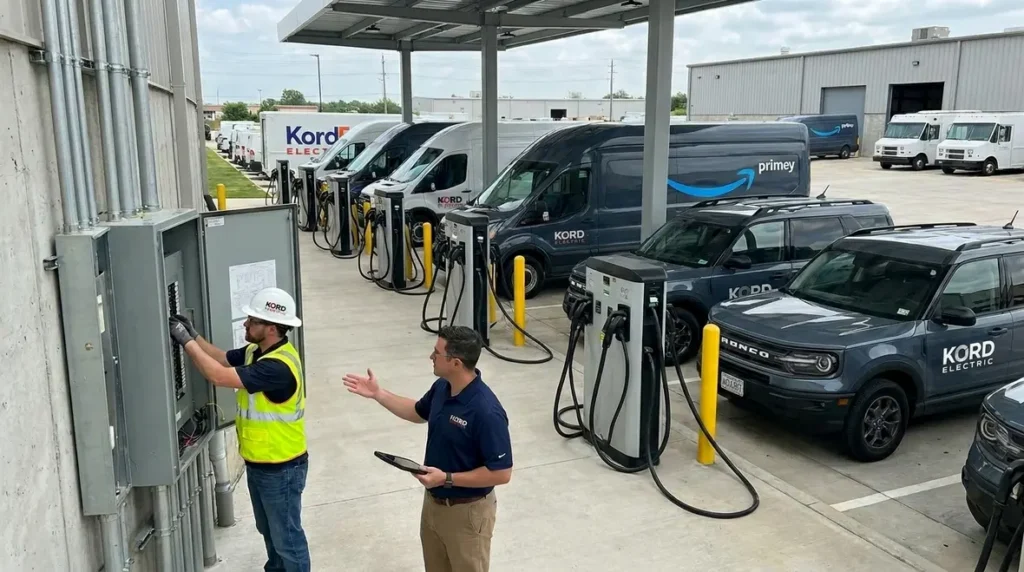
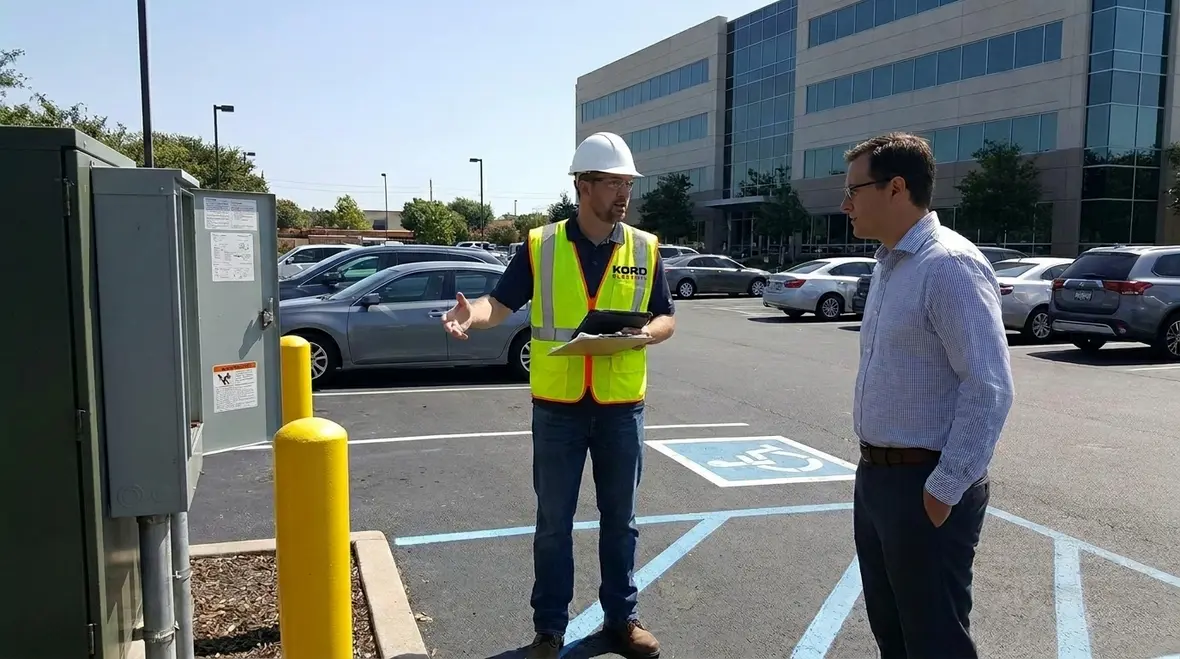
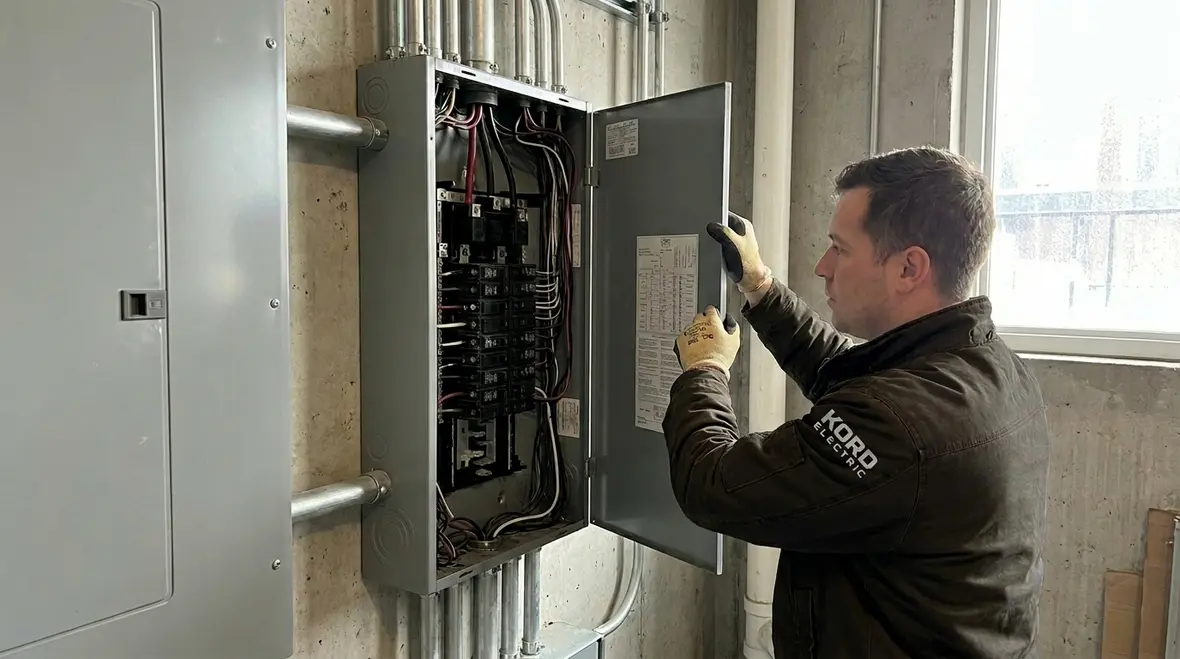
Our expert service staff does not “wing it.” Instead, they perform a structured review that maps the charging solution to the building and the site. First, we look at electrical infrastructure, including available capacity, panel details, service size, and existing loads from lighting, HVAC, kitchens, dock equipment, and more. Then we verify whether the utility connection can support the new demand without forcing expensive redesigns later.
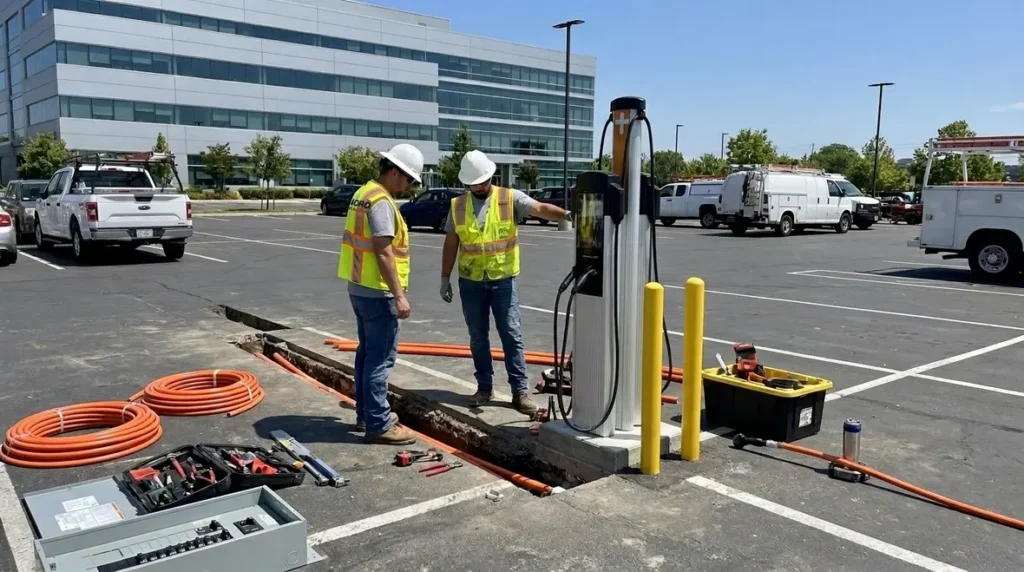
Next, we assess the physical layout. We confirm where chargers will sit, how vehicles will approach, and where trenches or conduit runs can happen safely and cleanly. We also document site constraints like landscaping, stormwater features, fire lanes, and the locations where equipment can be mounted without disrupting operations. This is where our technicians earn their keep, because they know what looks simple on paper usually hides a surprise under the surface.
Finally, we review operational needs. We ask how many vehicles will charge at once, what the peak usage window looks like, and whether the site needs flexible staging for future expansion. As a result, the final design matches the way people actually drive and park, not the way a diagram imagines they do.
Power availability, load planning, and why failures cost money
When businesses install charging, the biggest hidden risk is electrical capacity. Therefore, Electric vehicle charging site surveys focus heavily on load planning. We examine the present electrical demand, then we forecast the additional draw from chargers during busy hours. If we skip this step, a building may trip breakers, underperform, or require sudden upgrades that land after procurement and installation timelines have already been set.
In addition, we evaluate how chargers will share power. Modern systems can be configured for load sharing, demand response, and managed charging, which helps protect the building and the utility connection. Yet these features only work if the design matches the real site electrical limits. Our experts translate the numbers into a plan that works in the field, not just in a spreadsheet that never had to deal with construction dust.
We also consider grounding, bonding, and protection requirements to support safe operation. And because our work targets commercial and industrial facilities, we pay attention to code compliance and long-term service stability, not just short-term functionality. In a commercial setting, “it turns on” is not the finish line. The finish line is “it runs reliably while people keep doing their jobs.”
Designing cable runs, conduits, and access for daily operations
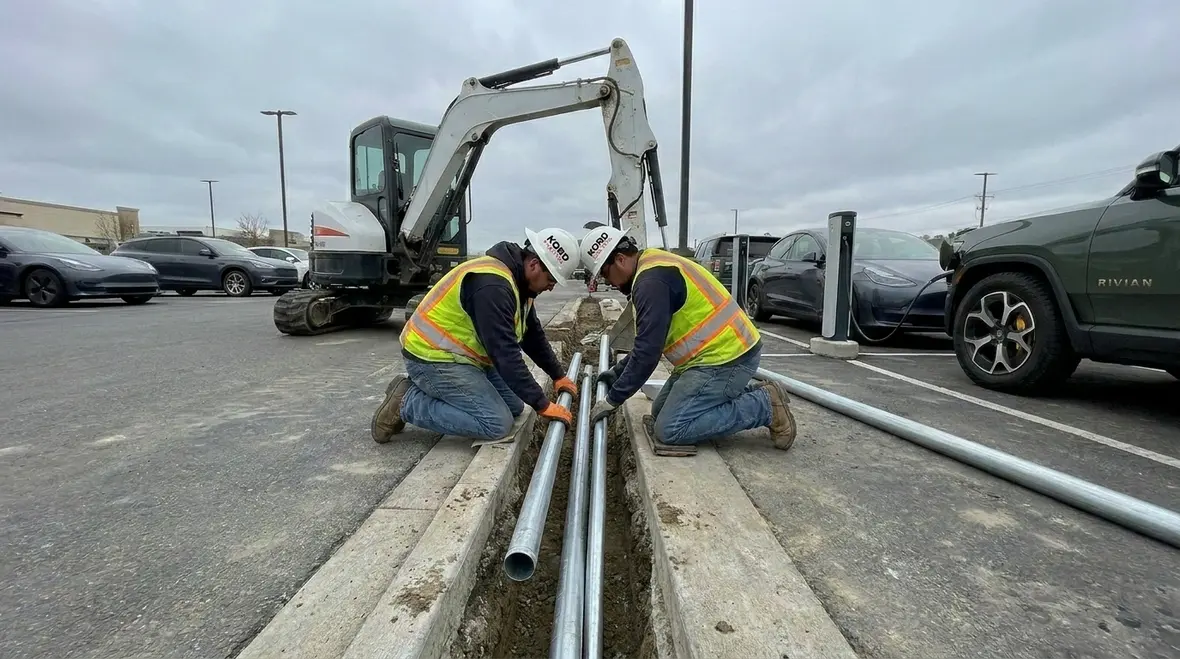
After power comes the practical side. Even the best electrical design can fail if the physical installation plan ignores traffic patterns, maintenance access, and site constraints. So we map the shortest safe routes for conduits and cable pathways, while also considering construction sequencing and how work affects parking and building access.
For example, some sites need chargers placed near entrances, while others must align with fleet staging, docks, or internal parking rules. We identify whether trenching is feasible, where sleeves or crossings are required, and how to protect lines from vehicle impact. We also note surface materials and weather exposure that influence mounting methods and enclosure selection.
At Kord Electric, our technicians walk the routes with the people who manage the property. Then they document a plan that respects daily operations. Otherwise, you get the classic problem: chargers installed beautifully, but nobody can reach them without detours, conflicts, or unnecessary downtime. That is not a design win. That is a “great idea, terrible execution” moment.
Safety, compliance, and planning for inspections
Commercial and industrial properties require discipline. Electric vehicle charging site surveys help ensure the final system aligns with safety expectations before installation begins. That includes understanding the mounting locations, clearance requirements, labeling needs, and how the site handles equipment protection against moisture, impact, and environmental wear.
We also plan for how the system will be inspected and verified. Consequently, our team prepares the information and documentation that allows inspectors and facility managers to understand what we are installing, where it will be installed, and how it will operate. When organizations skip this preparation, inspections can stall due to missing details, unclear layouts, or last-minute changes that create confusion.
Even when a facility has experience with electrical work, EV charging introduces new load profiles, new equipment types, and sometimes new user flow rules. Therefore, our expert service staff explains the plan in plain language during the survey phase. They do not just hand over a report and vanish. They make sure the decision makers understand what is changing and why. Think of it as project management with a calming voice and fewer surprises.
How we help businesses budget, schedule, and scale
Good site work saves money, but it also protects timelines. When we complete a thorough survey, we reduce redesigns, prevent rework, and improve the accuracy of procurement. Then teams can make cleaner decisions about charger count, charger type, and power levels based on realistic constraints.
Importantly, we plan for future scaling. Many businesses start with a few chargers and then expand as their fleet or tenant demand grows. However, scaling works only when the electrical backbone can handle growth and when conduit routes allow expansion without tearing up the same area twice.
So, during our service planning, we consider the long-term picture. We evaluate whether to add circuits now, leave space for future capacity, or prepare a pathway for additional equipment. As a result, businesses avoid the “phase one everything, phase two demolition” trap, which no one wants unless they are collecting trophies for chaos.
We also coordinate the installation approach with the site schedule. That might mean limiting work during peak operating hours, planning cable pulls in a way that fits maintenance windows, or sequencing equipment placement so vehicles and staff keep moving. In commercial spaces, downtime is expensive. Therefore, our approach aims to keep disruption low while installation quality stays high.
When your plans move from surveys into full construction, dedicated services like commercial EV charger installation and broader Los Angeles County electrical services for commercial facilities help carry that strategy through to safe, scalable infrastructure on the ground.
Featured FAQs for commercial charging site surveys
Ready to plan EV charging the right way
If a business wants Electric vehicle charging site surveys done with real-world accuracy, Kord Electric is ready. Our technicians and expert service staff review electrical capacity, layout constraints, and safety needs before design and installation start. That means fewer surprises, smoother scheduling, and a system that supports your operations instead of interrupting them. Contact us today for a commercial EV charging survey, and let’s build a plan you can trust from day one.
For facilities that are also planning long-term electrical reliability, structured programs such as electrical preventive maintenance and complementary power quality services can be aligned with Electric vehicle charging site surveys so your EV infrastructure grows on top of a strong, well-maintained backbone.
Whether you are mapping out the first chargers for a commercial fleet or expanding a multi-tenant property, pairing thoughtful surveys with experienced installation teams keeps the project calm, code compliant, and ready for future demand instead of scrambling to catch up later.