
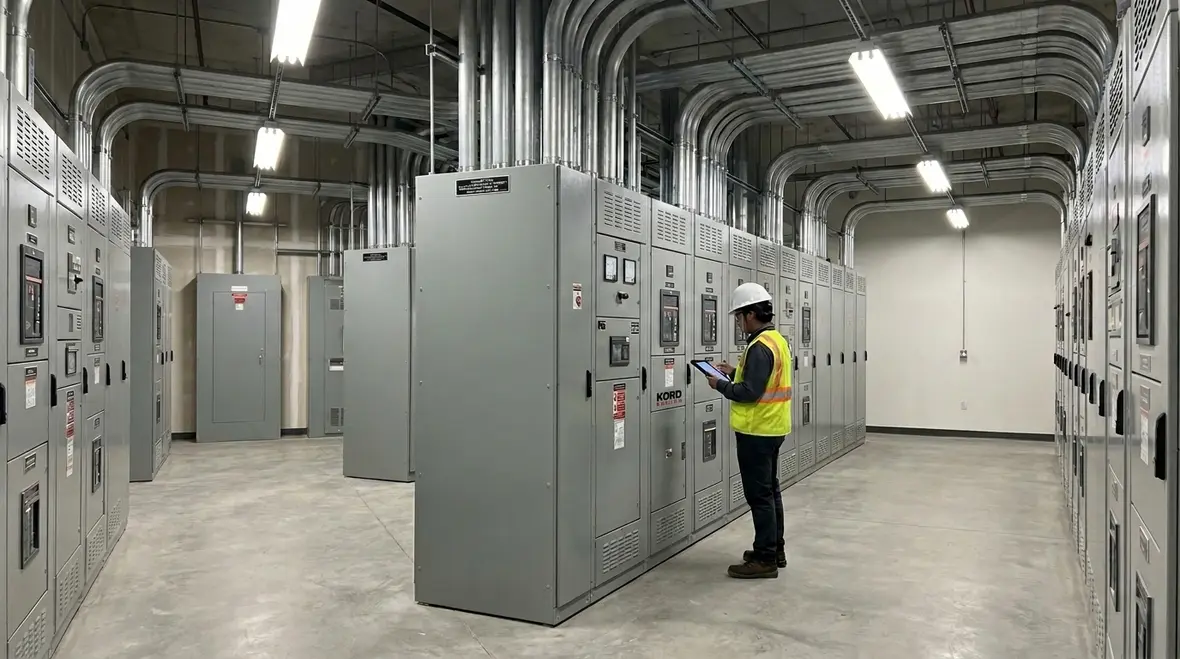
Electrical Architecture for Tall Buildings Stability
Kord Electric designs electrical architecture for tall buildings with the calm confidence of a system that knows it will be tested by time, heat, and human activity. In tall building projects, electrical design must stay steady when elevators surge, kitchens spike, and offices shift from day to night. Others might treat power as a single line item, but we treat it as a living network that needs planning, resilience, and clear maintenance routes. And yes, we also make sure the wiring does not turn into an invisible mess that future teams discover at the worst possible time. With our expert service staff and field technicians, we explain decisions in plain language and back them with disciplined engineering.
How tall building power systems stay stable under real load swings
In tall buildings, power demand does not rise in a neat, predictable pattern. Instead, loads shift with occupancy, HVAC cycles, loading docks, tenant fit outs, and emergency events. Therefore, Kord Electric focuses on electrical architecture that supports these changes without causing voltage drops, nuisance alarms, or equipment stress. We model load profiles, identify peak events, and coordinate protection settings so the system responds fast and correctly.
When we build these plans, our technicians do not just “install and move on.” They ask practical questions during commissioning and later during maintenance routes. For instance, if a tenant area loads heavily, we confirm that feeder sizing and busbar capacity keep performance within safe limits. Then we validate the control logic so protective devices trip only when they truly must. That means fewer surprise shutdowns and less downtime that hurts a commercial or industrial facility’s schedule.
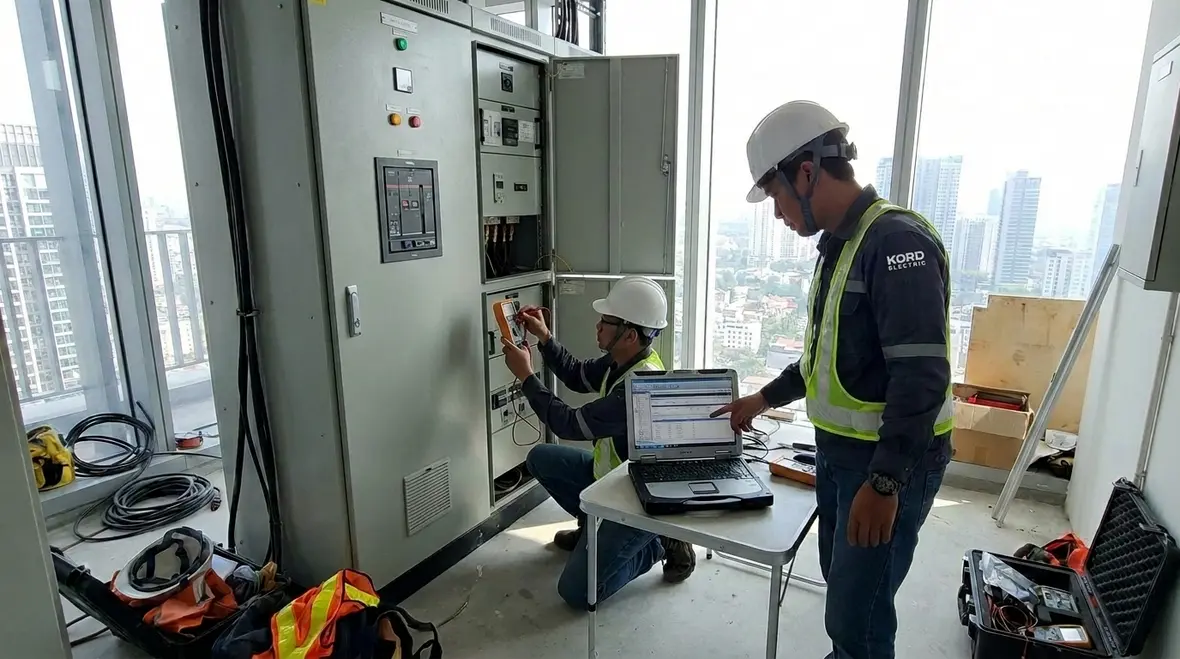
Redundancy that makes business continuity real, not just a brochure promise
Many project teams talk about redundancy. We make redundancy measurable. For major property buildings, Kord Electric develops architectures that keep critical services available even when a component fails. This approach often includes parallel feeders, selective coordination, and properly designed distribution paths so the system can transfer loads with minimal disruption.
Moreover, we do not treat redundancy as a pile of extra parts. We design it as a path, with clear decision logic and fault handling. Our expert service staff explains what happens during a transfer, what alarms should appear, and how operators should respond. When people understand the sequence, they react faster. And faster reaction can mean less loss of comfort for occupants and less financial damage for owners.
As a small joke that still carries truth, we tell clients: a redundant system that no one understands is like a backup generator locked in a closet. It exists, but it does not help. So we train teams early and keep the operational logic clear.
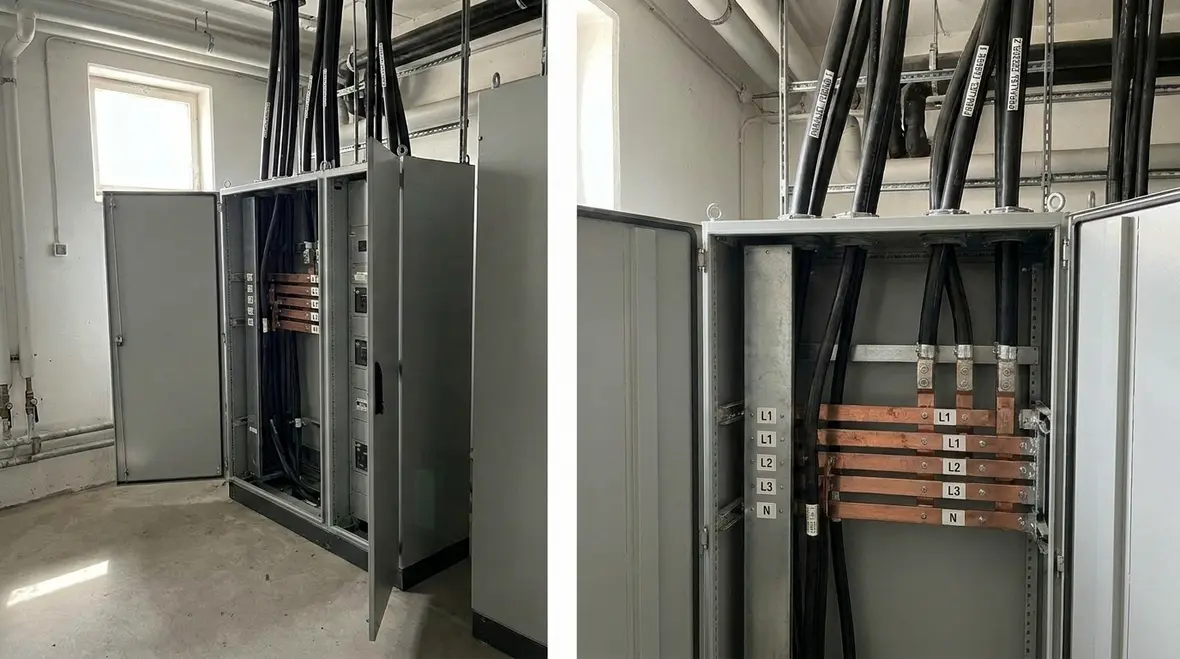
Electrical architecture for tall buildings: coordination, selective protection, and fault control
Selective protection means one thing in the real world: the system isolates a fault without shutting down the whole building. To achieve this, Kord Electric coordinates protective devices across voltage levels and distribution tiers. We verify settings, curves, and fault ratings so upstream devices do not trip for faults that downstream devices should clear.
In practice, this includes coordinating breakers, fuses, ground fault monitoring, and emergency power paths. Additionally, we plan how protective devices behave during maintenance activities, because servicing equipment should not create new risk. Therefore, our teams review labeling, identification, and test procedures so field technicians can carry out work safely and quickly.
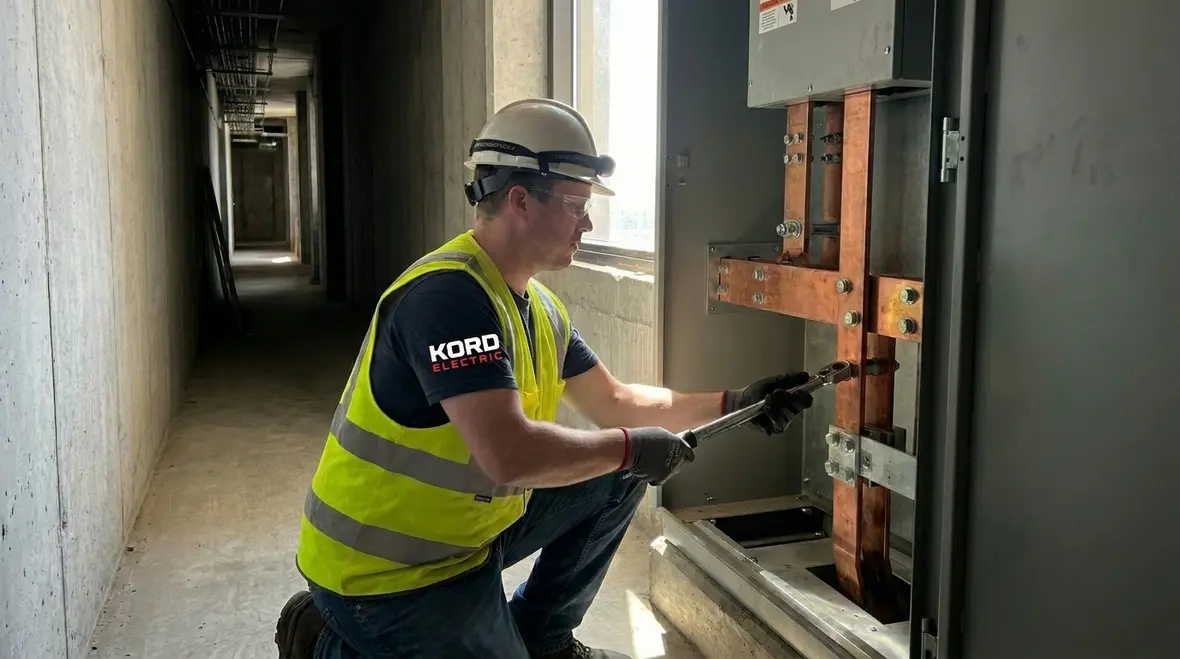
Our service staff also supports this with ongoing preventive work. When maintenance teams routinely inspect connections, verify torque, and test key protective functions, the system keeps its coordination behavior. In other words, the architecture does not just perform on day one. It keeps performing as components age.
Why preventive maintenance planning protects the design intent
Design intent fails when maintenance becomes random. Kord Electric supports owners and facility managers by linking preventive electrical care to the original architecture and operating goals. Our technicians follow structured preventive maintenance steps to reduce the chance of overheating, loose connections, insulation breakdown, and unexpected protective device behavior.
If you want a practical view of how this works, our team uses a preventive maintenance approach that includes inspection, testing, and documentation for electrical systems. The goal remains the same: keep performance stable in commercial and industrial settings, where downtime costs money. When preventive maintenance checks the right items in the right sequence, it keeps the electrical architecture for tall buildings aligned with the conditions it was engineered for. For a deeper dive into these programs, you can also review our dedicated service page on electrical preventive maintenance for commercial and industrial facilities.
To keep it simple, our service staff helps clients understand what gets checked, why it matters, and what outcomes to expect. Then they can make informed decisions on upgrades, repairs, or replacement cycles before failures force the issue.
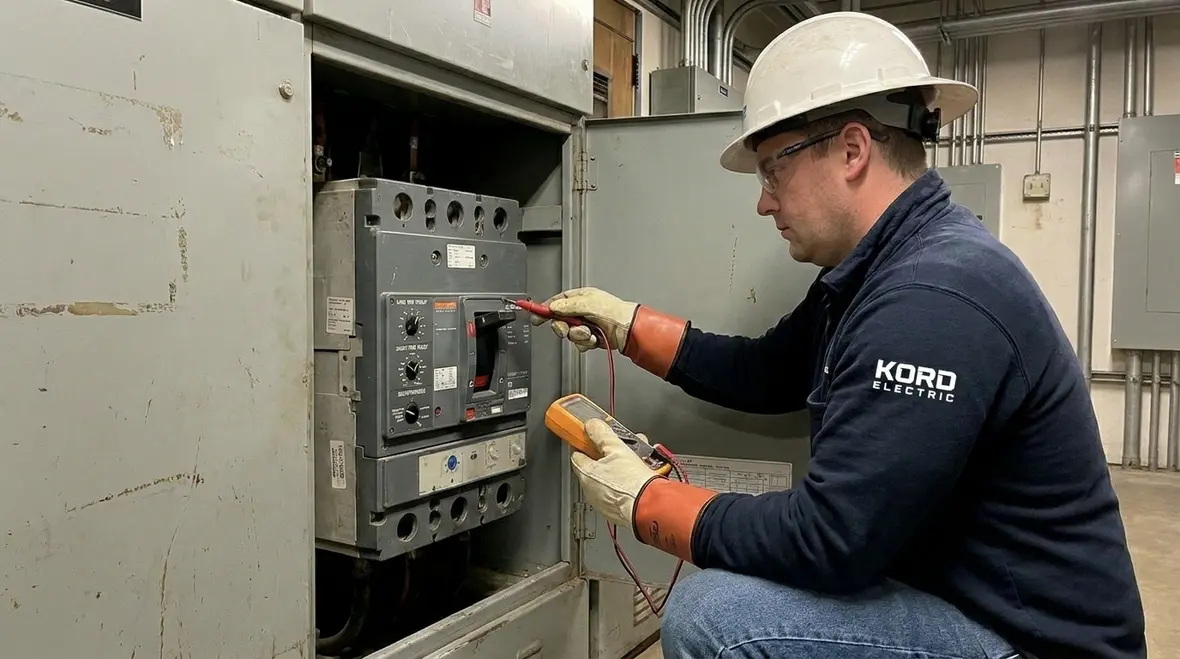
Building elevations, zones, and distribution pathways that reduce risk
Tall buildings require more than “power to the floors.” They need zoned distribution paths that support safe operation, maintenance access, and tenant-level flexibility. Kord Electric plans distribution with clear boundaries and rational routing so teams can isolate sections without affecting unrelated systems.
We also consider how space constraints shape installation methods. For example, routing through risers and service corridors must match access needs for future checks. Additionally, we plan for fire and life safety coordination, because pathways and separation rules can change across building levels. When designers ignore these realities, owners pay later in expensive modifications and long downtime windows.
Therefore, we help teams align electrical rooms, risers, and emergency distribution with the full building layout. Our field technicians also validate that routing decisions remain buildable on site and that labeling supports fast troubleshooting.
Emergency power and life safety loads: the part we do not gamble on
Emergency power systems protect people and critical operations. Kord Electric treats this work with extra attention because the stakes stay high when alarms, smoke events, or evacuations occur. We coordinate emergency distribution so life safety loads receive power in the right sequence and for the right duration.
Moreover, we plan testing and documentation so facilities can verify system readiness. Our expert service staff explains how test results connect to long term reliability. They also help operators understand what to look for during routine walkdowns so small issues do not grow into major failures.
And yes, we remind teams that an emergency system that fails during a real event becomes the most expensive “lesson learned” money can buy. So we make readiness a process, not an annual scramble.
Commissioning and training so operators can manage the system day to day
Commissioning proves the system works. Training proves people can run it. Kord Electric supports both, because electrical architecture only delivers value when operators and maintenance teams understand the behavior of the network.
Our technicians work with facility managers to review switchgear operation, transfer logic, protective device behavior, and alarm interpretation. Additionally, we ensure that documentation matches what exists in the field. Labels, one line diagrams, and test records should guide real work, not look good only during handoff day.
When teams receive clear training, they respond with confidence. They also maintain the system in a way that preserves the original coordination and safety goals. That is how a commercial or industrial facility keeps uptime while staying compliant with internal standards and practical operating needs.
Dual column insight: preventive maintenance that supports tall building reliability
What our teams check
Inspections of bus systems and feeders
Connection checks to reduce heat risk
Protective device testing and verification
Safety and labeling validation
Documentation tied to system behavior
How it protects uptime
Less nuisance trips and faults
Better coordination over time
Fewer emergency surprises
Faster troubleshooting during events
Clear records for decision making
FAQ
Conclusion: let Kord Electric protect your power from day one through real maintenance
For commercial and industrial facilities, tall building electrical design must stay reliable under stress. Kord Electric brings disciplined engineering, hands on field knowledge, and expert service staff support that keeps systems aligned with design intent. If your project needs stronger coordination, clearer emergency behavior, or a preventive plan that actually matches real equipment, contact us. We will review your current architecture, define practical next steps, and help protect uptime where it matters most.
If you are currently planning upgrades, it can also be helpful to explore related services like our dedicated electrical preventive maintenance programs for large facilities and our 24/7 emergency electrical services that support tall buildings when unexpected events occur. Together, these services turn a strong electrical architecture for tall buildings into a complete reliability strategy.


