Commercial LED Retrofit Planning Guide for Facility Managers
Commercial LED Retrofit Planning for Facility Managers, Explained in Real Life
When a facility team plans a commercial LED retrofit, the goal is simple: keep operations running, cut energy use, and protect the electrical system. And yet, many projects start like a comedy sketch, with big promises and zero prep. That is why we at Kord Electric focus on commercial LED retrofit upgrade planning that facility managers can actually run, not just admire in a slide deck.
In this guide, third person voices will walk through the essential steps, and our technicians will explain the “why” behind each move. More importantly, they will show how to avoid the common traps that turn a lighting upgrade into an unplanned outage. Because nobody wants a surprise downtime moment, not even the villains in action movies.
Understand the Site, Then Set the Rules of the Project

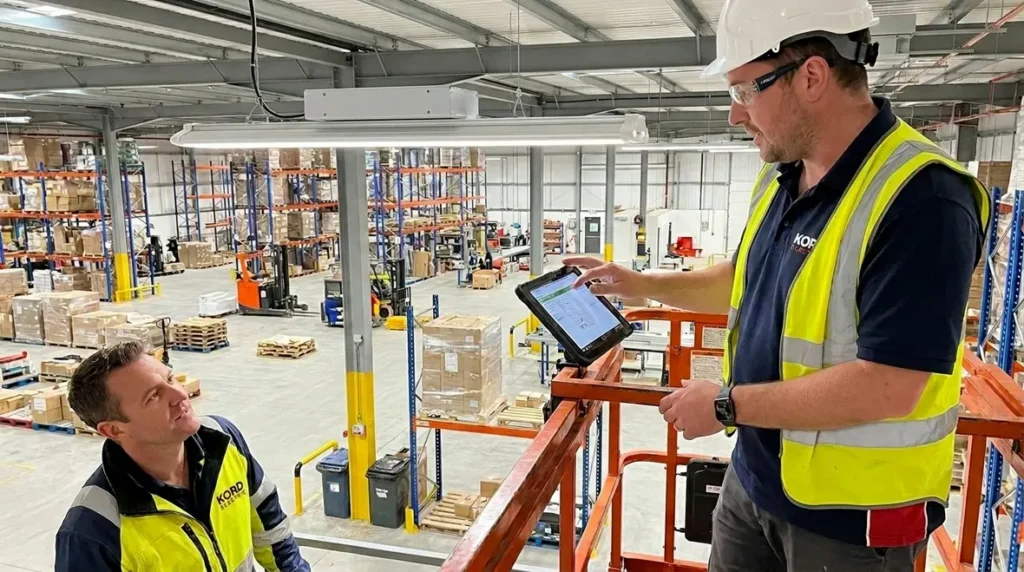
Before anyone touches a fixture, we have to understand the space. Facility managers should start by mapping where lighting loads sit, how spaces get used, and which areas can tolerate short interruptions. Next, the team gathers key site details such as existing fixture types, ballast or driver data, and the electrical panels feeding the lighting circuits. From there, the facility team can set clear rules for maintenance windows, access routes, and safety controls.
At Kord Electric, our expert service staff routinely helps teams treat this like an engineering job, not a quick swap. That matters because commercial and industrial buildings often have lighting tied into building controls, occupancy systems, and power monitoring. Therefore, the “simple” plan becomes a disciplined plan.
Also, we recommend that the team document current performance, not guesses. Measured light levels and current power readings beat assumptions every time. It is the difference between “it looks brighter” and “it meets the target for the task.”
When facilities include any data center or mission critical zones, many teams also review broader electrical design principles to prevent lighting work from colliding with sensitive loads. For example, facility managers planning major upgrades may pair this retrofit planning with insights from Kord Electric’s Data Center Electrical Infrastructure Essentials guide so lighting strategies stay aligned with overall power reliability expectations across the property.
Audit Electrical Loads and Controls Before Selecting LED Drivers
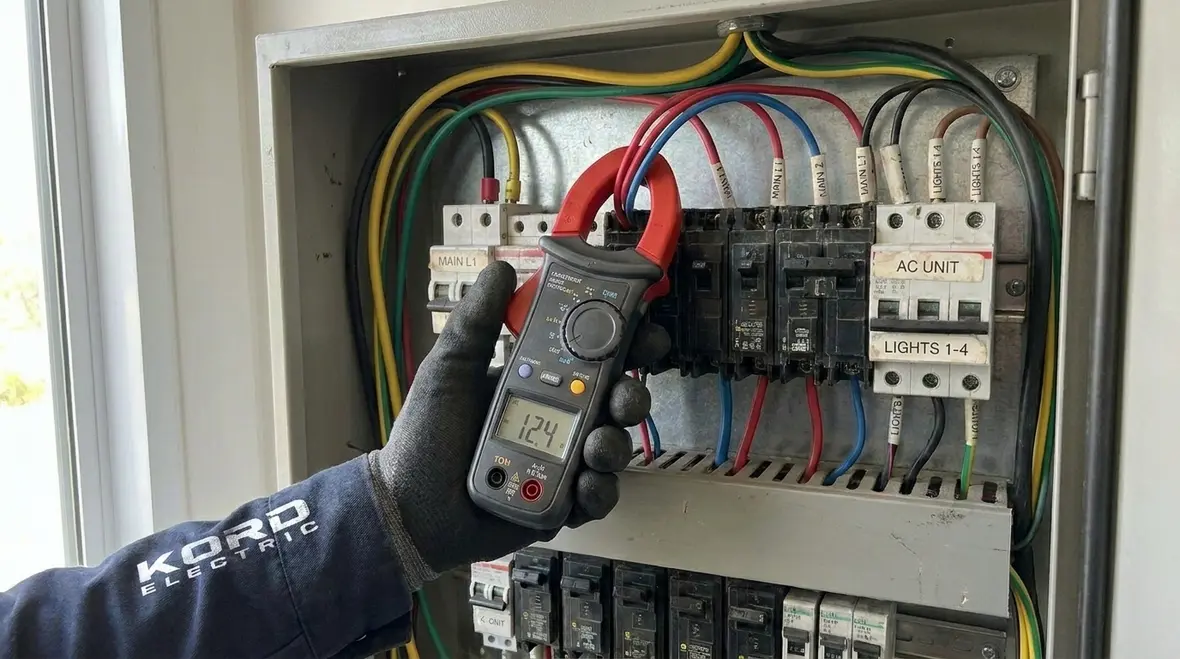
Then comes the electrical audit, and this is where many projects go off the rails. Even though LED systems typically use less power, the retrofit can change current behavior, dimming profiles, and control compatibility. So our technicians verify what feeds the lighting, how the circuits load, and whether dimming is 0 to 10 volts, DALI, or another method.
In addition, they review harmonics risk and grounding practices, especially for major property buildings with dense loads and sensitive equipment. If the facility has any data center or mission critical areas, we align the lighting plan with the overall electrical infrastructure strategy, so the upgrade does not cause ripple effects elsewhere. We also look at emergency lighting and egress requirements, because code compliance is not optional and it never takes “later” as an answer.
At this stage, Kord Electric also helps teams check whether the existing wiring supports the new drivers and whether the panels need any capacity adjustments. In short, we do not just pick a fixture, we confirm the electrical system can support it.
For facility managers under pressure to forecast costs, it often helps to connect this technical audit with budget guidance from Kord Electric’s Commercial Lighting Upgrade Cost Guide, which explains how fixture choices, controls, and electrical scope shape total investment over the life of the project.
Build a Retrofit Plan That Fits Real Operations

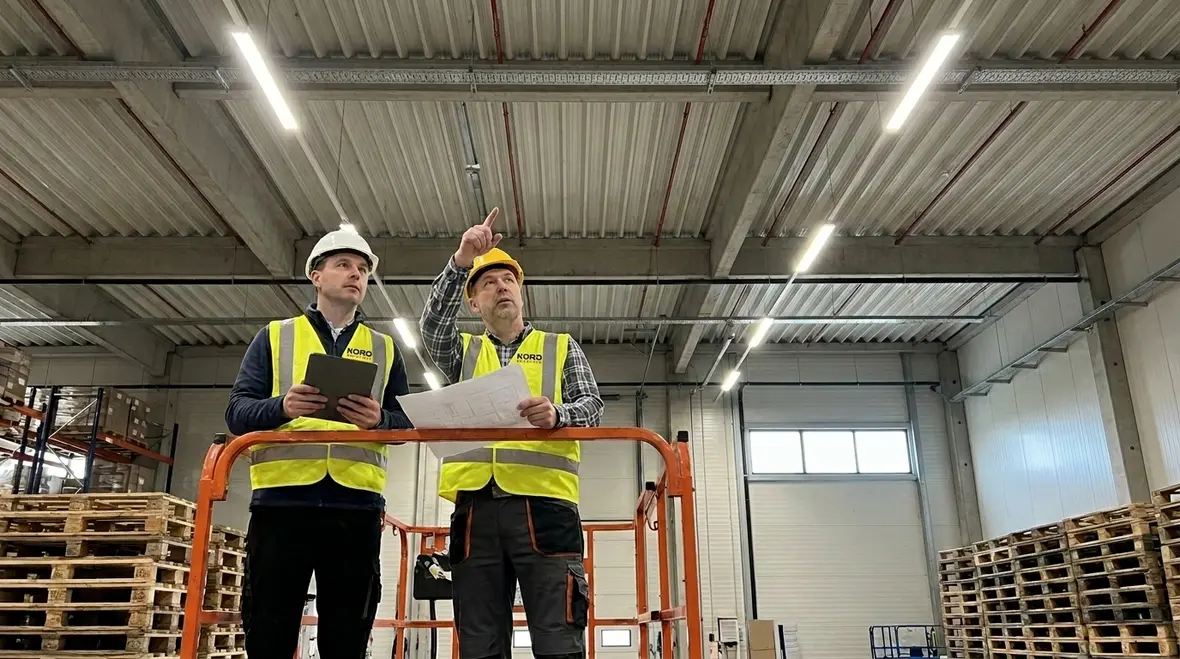
Once the audit completes, the team can build a retrofit plan that fits daily operations. This means choosing a phasing approach based on occupancy, production schedules, and risk levels. For example, we often recommend tackling low-risk zones first, then moving to high traffic areas after verification. That way, the facility learns the process before the project gets intense.
Furthermore, our expert service staff coordinates work methods that reduce downtime and limit disruption. They plan staging, material storage, access control, and labeling so the crew can replace fixtures without hunting for parts or interrupting other trades. If there are multiple floors or large campuses, we break the work into clear blocks with defined checkpoints.
In facilities like warehouses and manufacturing spaces, lighting changes can impact safety workflows. Therefore, the project plan must include safe shutdown steps, temporary lighting needs, and a walk-through of work areas. It is boring planning in the best way, like putting on your seatbelt before you drive. Nobody cheers, but everyone arrives.
Some facility teams also pair commercial LED retrofit upgrade planning with broader electrical maintenance strategies. Aligning lighting work with programs like Kord Electric’s Electrical Preventive Maintenance services can consolidate outages, reduce repeat disruptions, and keep critical equipment inspections on the same calendar as lighting improvements.
Design for Light Quality, Not Just Brightness
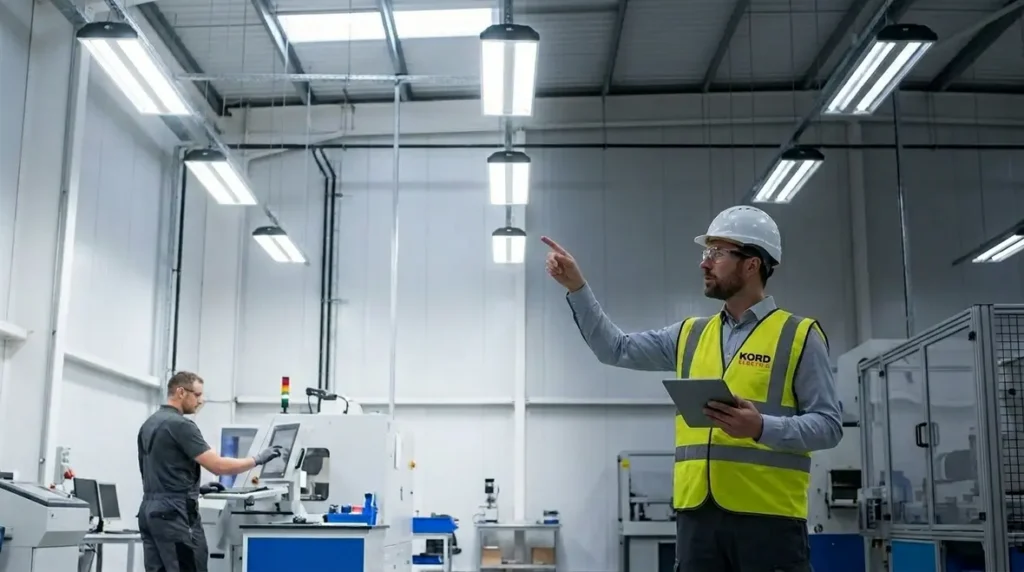
Next, the facility team should define the target light quality and not just the color and output. In commercial and industrial settings, lighting affects contrast, glare, task visibility, and compliance. So we help teams map lighting needs by zone, such as offices, corridors, training rooms, loading docks, and stairwells.
Also, LED selection should match the environment. High bay spaces require attention to mounting height and beam spread. Manufacturing floors may need better distribution to reduce shadows under equipment. Meanwhile, outdoor or perimeter lighting needs weather ratings and optics that control spill.
Our technicians also verify that color temperature and rendering meet the job. If a space supports inspection or detail work, the wrong spec can wash out surfaces and make tasks harder. Then nobody wants to hear, “We upgraded the lights, but the operators dislike them.” That is a avoidable outcome.
Finally, we align the lighting design with controls strategy. Occupancy sensors and daylight harvesting can lower energy use further, but only if the retrofit supports the control logic already in place or upgrades it cleanly. For facilities navigating new standards, Kord Electric’s Lighting Installation Code Compliance Guide is a helpful companion for staying aligned with inspection expectations while fine-tuning light quality.
Coordinate Commissioning and Documentation Like a Pro
After installation, the real work begins: commissioning. This is where the facility confirms the system performs as designed. Kord Electric recommends a structured approach that includes functional testing of switching and dimming, verifying emergency operations, and checking light levels against targets. Then we confirm that controls behave correctly across schedules, occupancy events, and any integration with building management systems.
Our expert service staff also emphasizes documentation. That includes labeling of circuits, fixture IDs, control settings, and as-built notes. When a facility later troubleshoots a zone, this paperwork saves hours. More importantly, it protects the team during audits, insurance events, or compliance checks.
Commissioning also includes electrical verification. We check that load behavior matches expectations and that the upgrade does not introduce issues for other systems. If the facility runs on strict power quality requirements, this step becomes even more important, because lighting is not the only load in the building.
Plan Maintenance and Training So Savings Stick
Finally, we plan for maintenance and staff training. LED upgrades can reduce lamp replacements, but the system still needs care. Drivers can fail, optics can collect dust, and controls can require updates. So the facility should set a maintenance schedule and define who responds to alarms or performance complaints.
Our technicians share practical guidance with facility staff on cleaning routines, safe replacement procedures, and how to interpret basic diagnostic indicators. Then, as the system ages, the facility can keep light output stable and maintain the promised energy reduction.
In other words, we do not treat the project as a finish line. We treat it as a new operating system for the building. And if that sounds serious, it is. Lighting affects safety, productivity, and comfort, especially in commercial and industrial facilities where downtime can cost real money.
For multi-site portfolios or facilities that want ongoing support after the retrofit is complete, pairing the lighting plan with Kord Electric’s structured Commercial and Industrial Electrical Maintenance Plans can help keep savings on track and ensure emergency lighting, panels, and controls are inspected on a predictable schedule.
FAQ: Commercial LED Retrofit Upgrade Planning for Facility Managers
Note: This guide targets commercial and industrial facilities and major property buildings. It does not cover other categories outside that scope.
Ready to Plan the Upgrade With Confidence?
If your facility team wants a clean, safe, and properly commissioned lighting improvement, Kord Electric is ready to help. We support commercial and industrial buildings with disciplined commercial LED retrofit upgrade planning, electrical audits, phased installation, commissioning, and documentation that holds up after the project ends. Reach out to schedule a site review, and let our technicians build a plan that protects operations, controls costs, and delivers better light. Don’t gamble with downtime. Choose the professionals and move with confidence.
For facilities planning broader lighting improvements along with new fixtures, controls, and ceiling work, Kord Electric’s dedicated Recessed Lighting Installation service page is a helpful next step. It outlines how our licensed electricians design and install efficient, code-compliant commercial lighting systems that align with the same disciplined planning approach described in this retrofit guide.