Emergency Electrical Services for Critical Infrastructure
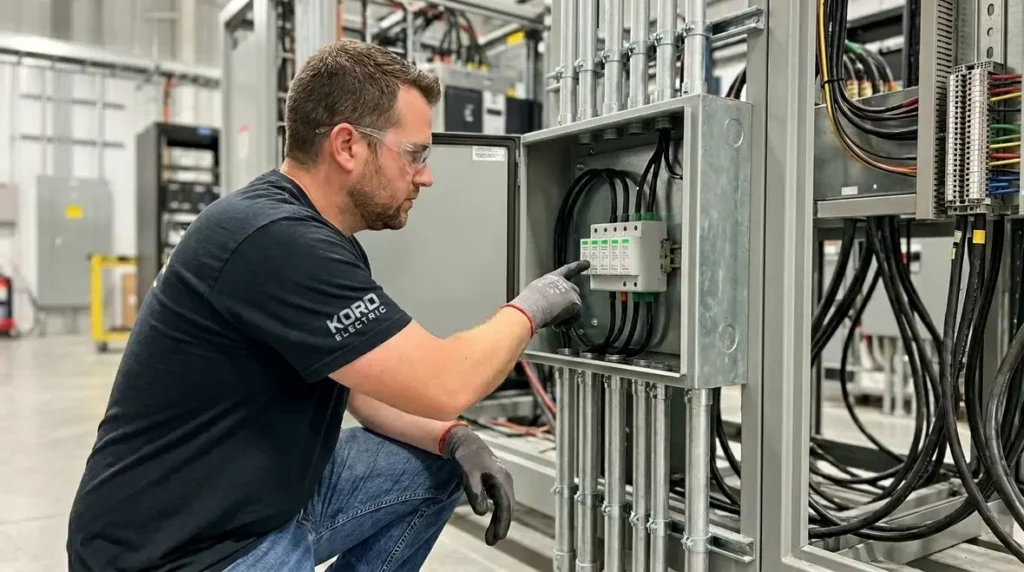
Kord Electric understands that when power fails, the problem is not just lights going out. Critical systems like fire protection, access control, HVAC for process safety, elevators, and life critical monitoring need steady electricity. That is why our emergency electrical services for critical infrastructure exist, and why they operate fast, methodically, and with expert judgment. In the real world, an outage can turn into a chain reaction in minutes, much like a bad group chat. Fortunately, our technicians and expert service staff approach each incident with calm control, clear communication, and practical steps to restore safe power.
Why critical infrastructure cannot wait for a “later” call
Commercial and industrial facilities live on time. They run production lines, store materials with strict temperature needs, and support people who cannot simply pause their work. As a result, the electrical system becomes part of the safety plan, not a background utility.
When power quality drops, equipment does not politely “end gracefully.” It may restart in a loop, overheat under load, fail to calibrate sensors, or trip protective devices repeatedly. At that point, the facility can face downtime, equipment damage, and compliance risk. Additionally, emergency response must consider the building’s layout, the equipment list, and the electrical one line diagram. Kord Electric does not treat these events like a generic service ticket.
Moreover, critical infrastructure often includes layers. There are utility feeds, switchgear, transformers, UPS systems, generators, and panelboards. If one layer fails, the others may carry the burden until they also drift out of safe operation. Therefore, our team focuses on identifying the failure point quickly, then stabilizing the system so operations return without creating a new risk.
How specialized emergency electrical services reduce damage during outages
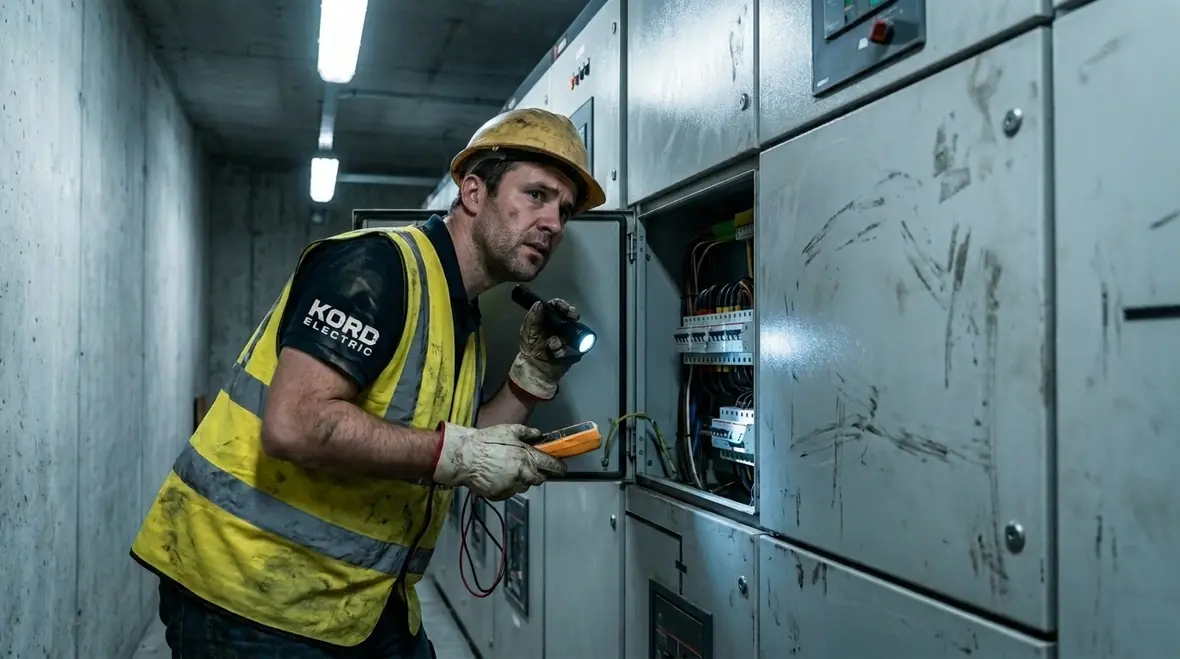
In many incidents, the first question is not “Can we restore power?” It is “How do we restore power without making the problem worse?” That is where specialized emergency electrical services for critical infrastructure matter.
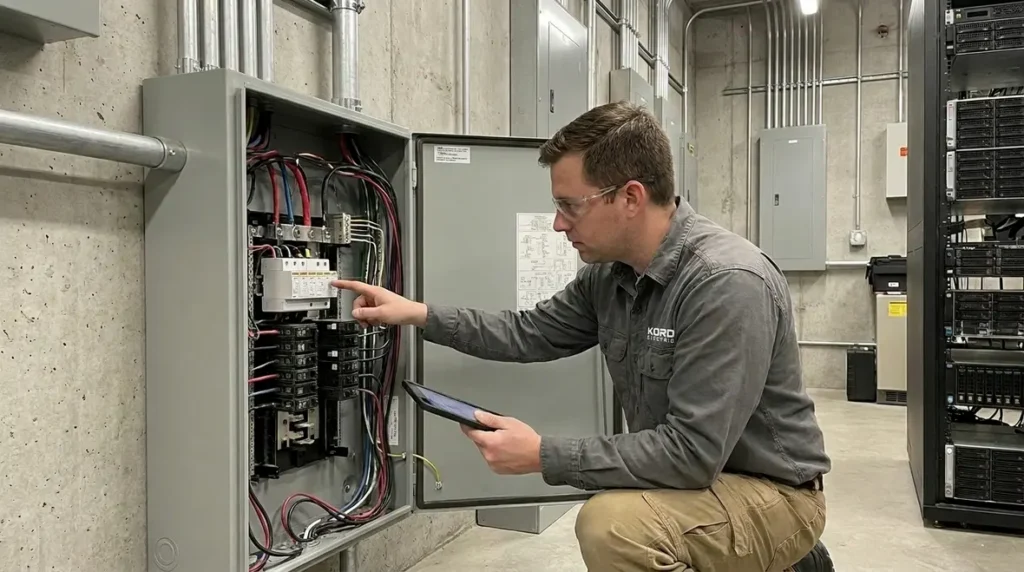
Our technicians work through a disciplined process. First, we assess safety conditions around the electrical room and critical loads. Next, we verify which components lost function and which protections operated as expected. Then, we confirm whether the failure is upstream, like a utility issue or a feed problem, or internal, like a bus fault, conductor issue, or switchgear malfunction.
Finally, we move to controlled restoration. We do not simply flip things back on and hope. Instead, we evaluate load impact, check sequencing, and ensure critical systems come back first. That approach reduces the chance of equipment stress during start up and prevents repeated trips.
And yes, we have heard the jokes. “Just reboot the whole building.” In a data center, that may sound like wisdom. In a manufacturing plant with safety interlocks, it is not wisdom. It is a gamble. We take the safer route.
After the immediate emergency is under control, we often recommend follow up steps that stabilize the system long term. That can include targeted repairs, testing of protective devices, or integrating the incident into a broader preventive strategy so the same fault does not return at the worst possible time.
Voltage fluctuations in commercial and industrial facilities: what they really do
Voltage fluctuations can look invisible until they break something expensive. When voltage rises and falls faster than equipment can adjust, motors, drives, controls, and power supplies experience stress. Over time, that stress can shorten equipment life, increase maintenance calls, and raise failure rates.
To understand it in plain terms, consider the loads that depend on clean power. Variable frequency drives need stable voltage. PLC systems rely on predictable inputs. Medical and scientific equipment needs tighter tolerances than most people realize. Likewise, elevators and life safety gear depend on stable supply and proper protective coordination.
Kord Electric has addressed these patterns in our guidance on voltage fluctuations in commercial and industrial facilities, and we apply the same practical thinking during emergencies. When an outage follows fluctuations, we do not assume the last problem caused everything. We verify whether the root event began with a utility disturbance, a transformer issue, a loose connection, or a failing protective device.
Additionally, we consider timing. Some failures appear right away. Others show up later as nuisance trips, overheated components, or intermittent faults. Therefore, our emergency team treats fluctuations like clues, not background noise. We connect those clues to measured power quality data, field observations, and equipment behavior so the corrective plan is grounded in more than guesswork.
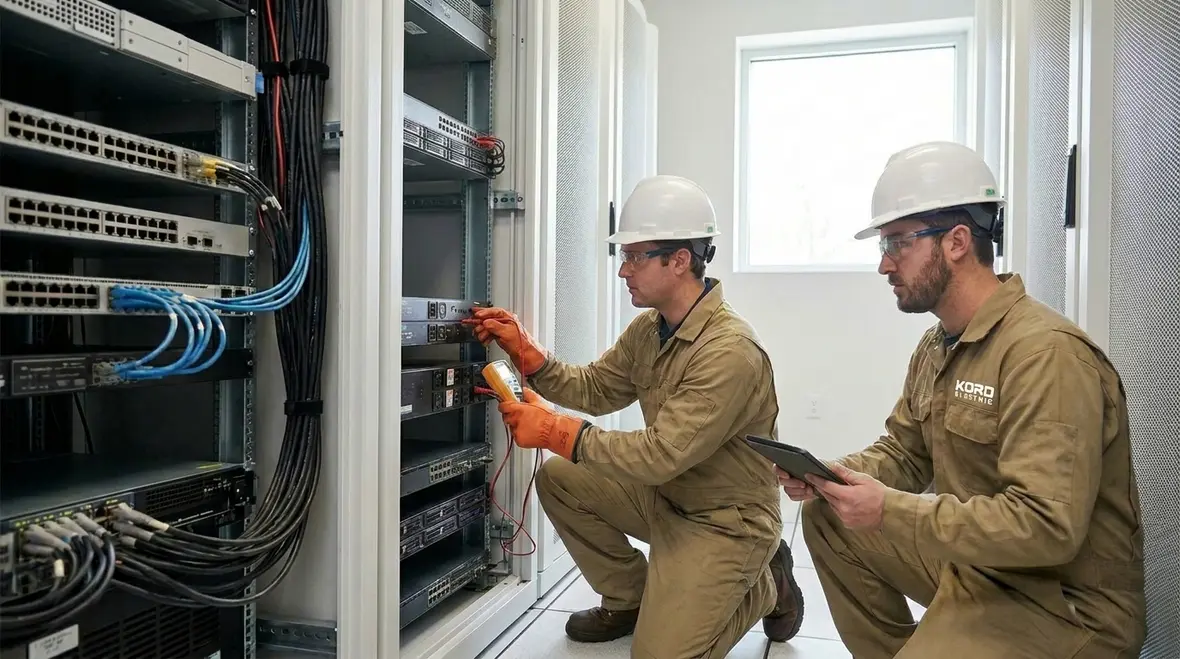
From voltage instability to actionable corrections
Once we trace instability to its source, we help facility teams move from firefighting to structured fixes. That may include equipment repair, system reconfiguration, or a longer term project that corrects underlying capacity or distribution issues. Because we work daily with commercial and industrial systems, we keep recommendations grounded in what can actually be implemented in a live facility rather than in a lab.
Technicians and expert service staff: how we handle fast decisions
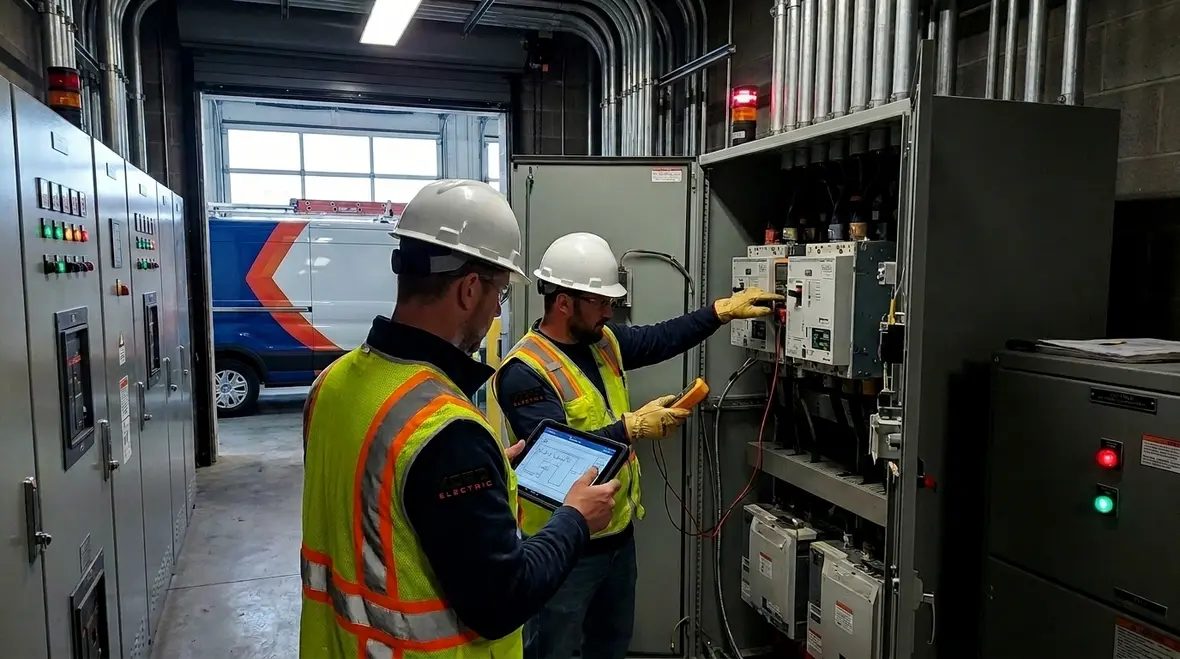
Our technicians and expert service staff bring two things that matter during emergencies: experience and communication. First, the experience helps them interpret what they see, whether the issue looks like a feeder problem, a bus disturbance, or a switching fault. Second, communication keeps facility leadership informed in a way that supports decisions.
During an emergency, owners and managers often need answers quickly. They need to know what is safe, what can wait, and what must return now. Therefore, we explain the situation clearly, point to the likely causes, and outline the next actions.
We also respect that commercial and industrial operations do not stop just because an electrical emergency happens. So, our technicians coordinate with site contacts to minimize disruption. If certain circuits must remain off to protect critical systems, we say so plainly. If a temporary strategy can stabilize power while repairs proceed, we propose it with the tradeoffs discussed.
And if the team wants a bit of reassurance, we offer that too. Not fluff, not buzzwords. Just a calm plan. The goal is to make the facility’s response feel less like chaos and more like controlled recovery.
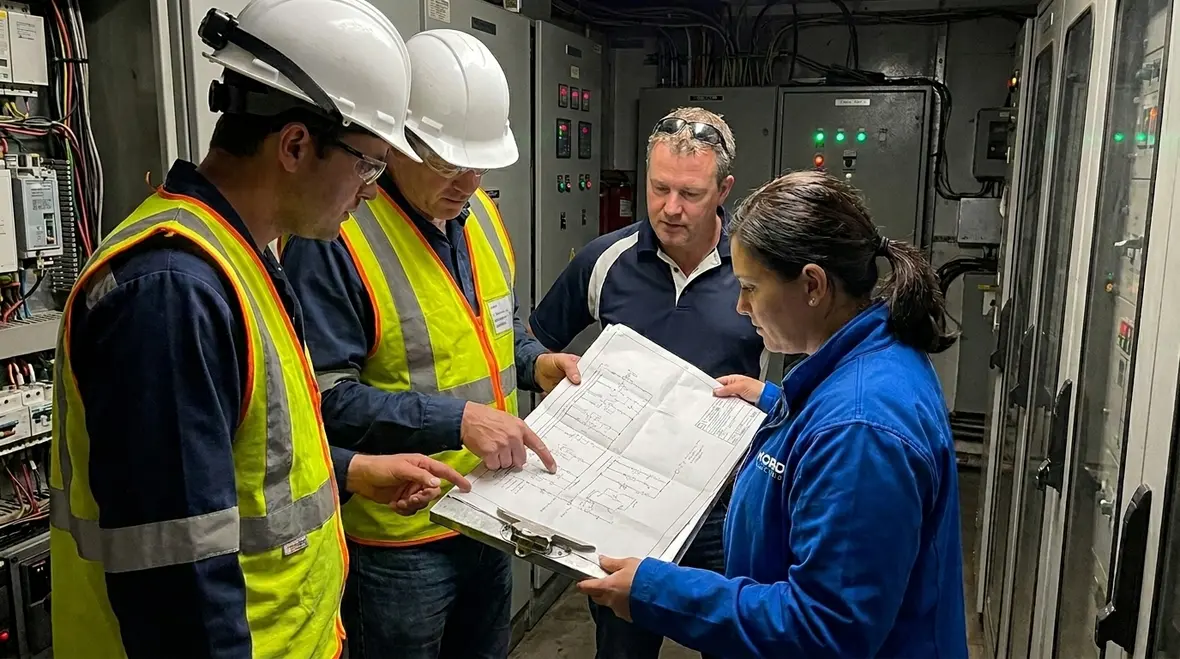
Turning emergency calls into structured responses
Behind the scenes, our dispatch and support team track each step of an emergency call. Who is on site, what systems are affected, which stakeholders need updates, and what constraints the facility is operating under. That structure helps translate “we need help now” into a step-by-step recovery path that protects people and assets instead of simply chasing alarms.
Planning for emergency response before the lights flicker
Emergency work goes faster when the facility prepares before the incident. Kord Electric works with commercial and industrial leaders to strengthen emergency readiness through practical electrical planning. We help define critical loads, confirm responsibilities, and clarify restoration priorities.
In addition, we encourage facilities to maintain updated documentation. That includes one line diagrams, protective device settings where appropriate, and equipment identification. When an incident occurs, that information reduces guesswork.
We also support the basics that many sites overlook. For example, ensuring access to electrical rooms, verifying labeling, and confirming that spare parts and key tools are available for common components. Then, when a real event hits, response teams spend less time searching and more time solving.

Linking emergency response and preventive maintenance
For many facilities, the fastest way to improve emergency outcomes is to pair readiness planning with a structured preventive program. Kord Electric’s electrical preventive maintenance services help identify risks before they turn into late night phone calls. When maintenance records, test results, and corrective actions are already in place, emergency electrical services for critical infrastructure become more precise, faster, and less disruptive.
Think of it like keeping a fire extinguisher. If it is hidden behind boxes, you do not get style points. You get a problem. Preparation matters, especially for high impact buildings.
Emergency electrical services for critical infrastructure: what our clients expect
When a commercial or industrial property needs urgent electrical help, leadership expects three outcomes: fast safety control, clear diagnosis, and stable restoration. We align our emergency electrical services with those needs.
Depending on the event, our experts may handle switchgear faults, generator and transfer issues, UPS power concerns, panel failures, and busbar or feeder disturbances. If the building experiences power quality instability, we also guide follow up actions so the same problem does not return in a few days wearing a different disguise.
Furthermore, we support continuity for major property buildings that host critical operations. That includes coordination with facility management and other contractors when the situation requires it.
In short, our goal is to protect people, protect equipment, and protect operations. Power is not just power. In these buildings, it is control.
When an emergency reveals a bigger electrical story
Sometimes, an emergency call exposes deeper questions about aging infrastructure, capacity limits, or long term reliability. When that happens, we help property teams look beyond the single event. That can mean scoping a phased upgrade, evaluating whether a rewiring project makes sense, or reviewing how existing equipment supports future expansion. For leaders weighing those next steps, resources like our commercial rewiring cost guidance and electrical maintenance planning articles provide additional perspective tailored to large facilities.
Connecting emergency response with ongoing services
Our emergency electrical services for critical infrastructure sit alongside a broader set of commercial and industrial solutions. From lighting projects to EV charging infrastructure, we design and maintain systems that support safe, dependable operations. When an emergency reveals an opportunity to upgrade, we can connect facility managers with related services such as lighting installation for large scale properties or preventive maintenance programs that keep future outages in check.
FAQ
Conclusion
When electrical trouble hits a commercial or industrial facility, the correct response cannot be slow, casual, or improvised. Kord Electric brings emergency electrical services for critical infrastructure with expert technicians, clear communication, and controlled restoration built for real operations. If your site faces an outage, suspected fault, or unsafe power quality, act early to reduce damage and downtime. Call Kord Electric now, and let our team stabilize your power while you protect your people and your business.
If you want to go a step further and reduce the odds of future disruptions, explore our related services such as electrical preventive maintenance for commercial and industrial facilities. Together with focused emergency response, these programs help keep critical infrastructure reliable, compliant, and ready for the unexpected.