
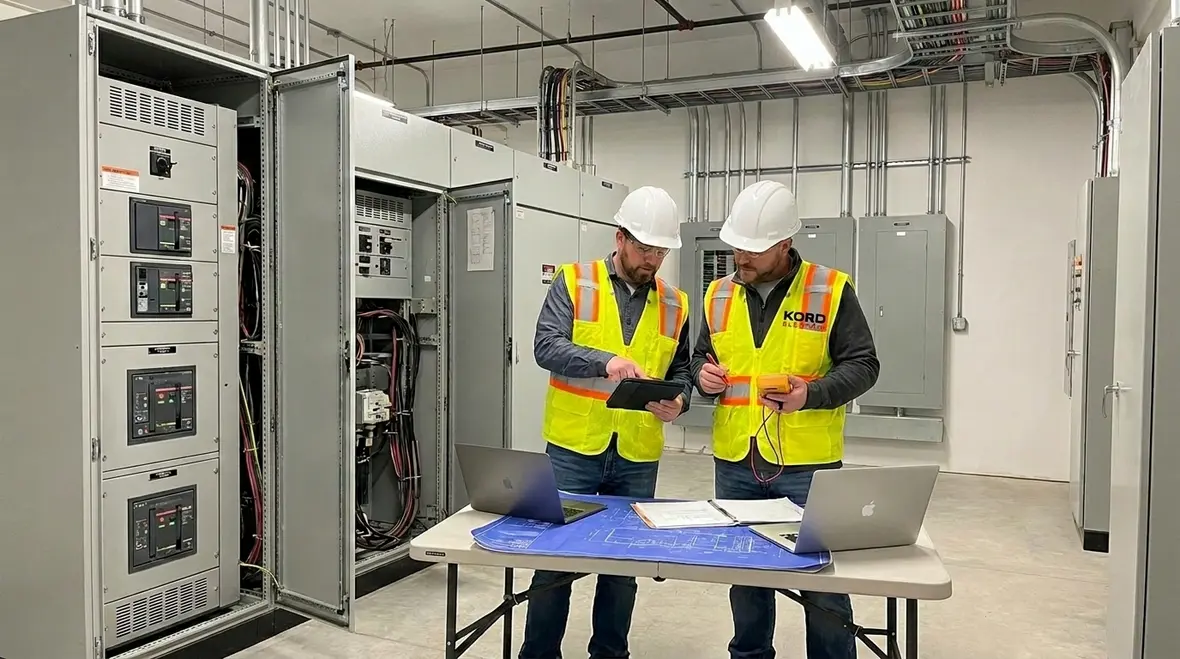
Electrical Infrastructure Upgrade Planning Guide
Electrical infrastructure upgrade planning for fast growing commercial buildings
In growing commercial facilities, Electrical infrastructure upgrade planning cannot be an afterthought. At Kord Electric, we help building owners and facility teams map what needs to change before the first lights flicker, before breakers trip, and before tenants start asking why the coffee machine needs its own electrical union contract. Others rush, patch, and hope. We plan, verify, and upgrade with discipline.
Here is how our team approaches upgrades in major commercial and industrial property buildings, step by step, with a calm process that still moves fast. And yes, our technicians explain things as they go, because nobody benefits from a plan they cannot understand.
What signals a need for electrical upgrades in commercial facilities

Most teams first notice problems during peak load. Then they blame the weather, the economy, or “bad luck.” However, electrical strain rarely acts random. Instead, it shows patterns. For example, Kord Electric commonly sees recurring nuisance tripping, voltage sags during HVAC startup, and hot spots on bus bars or terminations. Also, power quality issues often appear before catastrophic failures, which means early signals matter.
In addition, growth itself acts like a catalyst. When a facility adds office floors, new manufacturing lines, faster elevators, EV charging, or expanded data capacity, the building’s electrical system faces new demand. Even if the utility service stays the same, internal distribution may no longer keep up. Therefore, leaders should treat these signs as data, not drama.
We also encourage facility managers to look at near term and long term change. If lease renewals bring new tenants, or if operations expand to more shifts, the demand profile shifts. Consequently, Electrical infrastructure upgrade planning becomes a requirement, not a luxury.
Hidden issues often sit just out of sight while the facility grows around them. Aging panels, undocumented tie-ins, and overloaded distribution can quietly stack risk over time. For a deeper look at these behind-the-scenes problems, many commercial property teams also review related insight on hidden electrical risks in commercial buildings so that subtle warning signs do not get ignored until there is a major outage.
How we build a phased upgrade plan that fits real building schedules
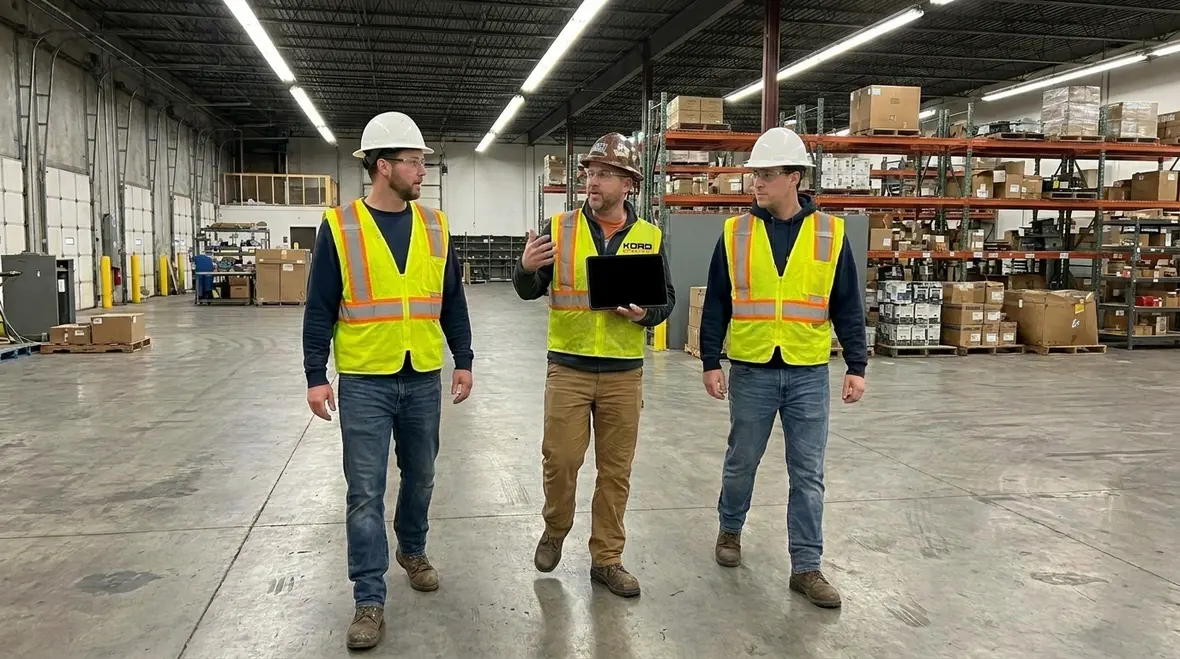
Commercial and industrial sites rarely shut down for “the whole week.” So Kord Electric designs upgrades in phases, with minimal downtime and clear work windows. First, our electrical team reviews the facility layout, existing one line diagrams, panel schedules, and historic load patterns. Next, we walk the site with our experienced technicians, who point out what drawings miss, like overloaded circuits, outdated labeling, and ad hoc wiring from past remodels.
Then we group work by risk and dependency. For example, service equipment work often requires more coordination than panel level changes. Likewise, switchgear modifications can demand higher levels of shutdown planning. After that, we align phases with tenant operations, maintenance calendars, and critical processes such as cold storage, production lines, and life safety loads.
Finally, we document each phase with a clear scope, estimated duration, and expected performance outcomes. We also explain the logic behind sequencing. Our staff uses plain language, because a good plan should feel like a roadmap, not a riddle.
And if you are thinking “Can’t we just do it all at once?” sure, you can. It is just that most commercial buildings prefer not to turn into a very expensive blackout simulator.
For facilities that want their Electrical infrastructure upgrade planning to align with long term reliability goals, pairing phased projects with structured commercial and industrial electrical maintenance plans can keep future work organized instead of chaotic. That way, each upgrade becomes part of a continuous improvement path rather than another one-off emergency fix.
Load studies, power quality, and system modeling that actually guide decisions
We do not treat load studies like paperwork. We treat them like a compass. At Kord Electric, we analyze demand using realistic operating scenarios, including startup surges from motors, variable frequency drives, and HVAC controls. Additionally, we account for diversity factors and expansion assumptions, because future loads rarely follow a neat spreadsheet.
From there, we focus on power distribution behavior. Voltage drops, harmonic distortion, and unbalanced phases can quietly reduce equipment life. Therefore, we evaluate power quality alongside capacity. We also look at the condition of existing components: terminations, insulation health, and the thermal stress history that comes from long term loading.
Next, modeling helps our team predict results from proposed changes. This includes how new feeders affect voltage at the farthest loads, how switchgear bus ratings interact with downstream panels, and how protective devices coordinate. As a result, the final design connects to real performance, not just theoretical calculations.
Then our technicians help leadership understand what the numbers mean. They explain where capacity sits today, where it will sit after upgrades, and which risks shift. That way, decision makers can move forward with confidence and without guessing.
If earlier inspections or operations have already revealed flickering lights, unstable equipment behavior, or nuisance tripping, those symptoms often connect back to voltage instability. In those cases, facilities may also explore targeted support focused on voltage fluctuations in commercial and industrial facilities so that corrective upgrades and new designs are both grounded in real data, not guesswork.
Coordinating with stakeholders for clean cutovers and fewer surprises
Even the best design fails if nobody can operate during it. That is why Kord Electric coordinates with facility leadership, building engineers, and tenants when applicable for major property buildings. We set expectations early and we schedule work so critical systems stay protected.
First, we confirm access routes, laydown areas, permits, and any restrictions on noise, dust, or after hours work. Then we coordinate service interruptions with clear timelines and backup plans. Also, we ensure that life safety systems and critical process circuits remain within required performance limits.
Next, we communicate at the right times. We provide progress updates and we explain what changed since the last meeting. Moreover, our staff uses straightforward language so stakeholders do not need an engineering degree to understand what is happening.
In practice, cutovers work best when the team rehearses key steps. Therefore, we develop a detailed plan for labeling, testing, verification, and energization. We also verify outcomes after work completes, not just “turn it on and pray.” That approach keeps operations steady and reduces backtracking.
For many organizations, this level of coordination is easiest when upgrade work connects directly with structured preventive programs. Tying Electrical infrastructure upgrade planning into broader electrical preventive maintenance helps keep future projects, inspections, and shutdowns predictable instead of disruptive.
Common upgrades for major commercial and industrial power systems
Many facility teams ask what upgrades usually come out of good Electrical infrastructure upgrade planning. The answer depends on the system, but patterns show up often in commercial and industrial property buildings. Here are the upgrades we plan and deliver most frequently.
Service and switchgear upgrades when available capacity and breaker coordination no longer support growth or power quality targets
New feeders and distribution panel enhancements to reduce overloaded circuits and improve voltage stability
Transformer upgrades or add ons to match load profile changes and improve efficiency
Arc flash and protective device improvements to meet safer operation goals and reduce risk during maintenance
UPS and critical load distribution revisions to protect data, controls, and life safety related loads
EV charging and specialty loads integration with demand management so chargers do not hijack capacity
Labeling, documentation, and testing to make the next upgrade easier and less chaotic
Additionally, we often address reliability gaps like aging terminations and unclear circuit maps. Because when the building changes hands or tenants change, the electrical system should not become a scavenger hunt. Our technicians ensure labeling reflects reality, not old assumptions.
And yes, we have seen situations where a “spare” breaker was not spare at all. It was powering something important that nobody remembered. That is the kind of surprise we remove through careful planning and verification.
For some properties, the upgrade list eventually includes more extensive work, such as large scale rewiring when legacy infrastructure simply cannot keep up with demand. In those cases, facility leaders often pair Electrical infrastructure upgrade planning with dedicated guidance from resources like a rewiring cost guide for commercial electrical systems so budgeting and scope stay aligned from the start.
Risk management and testing that protect operations during construction
Safety and reliability drive the testing approach. Kord Electric builds risk management into the project, not just into the paperwork. First, we assess hazards such as energized work risks, arc flash potential, and the impact of outages. Then we develop procedures for safe isolation, lockout and tagout support, and controlled energization.
Next, we test and verify installed systems. Typical verification includes insulation testing, continuity checks, polarity verification, phase rotation confirmation, and functional checks for protective devices. Also, we conduct power quality measurements when needed, especially if the facility runs variable speed equipment or sensitive electronics.
Moreover, commissioning steps help ensure the system performs as designed. For example, protective device coordination should match the planned selectivity. Voltage and load balancing should align with study results. Consequently, we confirm performance before the building returns fully to normal operations.
Finally, we update documentation so the facility team can maintain the system without guesswork. Our technicians provide clear explanations of test results and what they mean for future maintenance. That calm, transparent handoff keeps the project from ending at the final invoice.
For owners and operators who want those testing and risk management habits to become part of daily operations, formalizing Electrical infrastructure upgrade planning inside broader electrical preventive maintenance programs can align capital projects, recurring inspections, and compliance responsibilities into one unified roadmap instead of scattered tasks.
Frequently asked questions about electrical infrastructure upgrades
Ready to upgrade with a plan, not a guess
If a growing facility has electrical strain, Kord Electric helps leadership move with confidence. We build Electrical infrastructure upgrade planning that fits real schedules, supports future demand, and protects critical operations with testing and clear communication. Our technicians explain what they find, what we propose, and how each phase reduces risk. If you want a calm, authoritative process for commercial and industrial property buildings, contact Kord Electric today to discuss your site and next steps.
Whether you are preparing for a major renovation, resolving existing electrical issues, or planning phased improvements for a multi-building property, Kord Electric’s commercial and industrial specialists can help you prioritize upgrades, manage risk, and protect your investment. To see how these concepts apply across ongoing operations, explore how structured electrical preventive maintenance supports long term reliability in commercial and industrial electrical maintenance plans, then connect those insights directly to your upgrade roadmap.
If your facility is already dealing with unstable power or sensitive equipment concerns, aligning your Electrical infrastructure upgrade planning with specialized services that address voltage fluctuations in commercial and industrial facilities gives you a clearer path from “we know we have a problem” to “we have documented, tested solutions in place.” That pairing turns isolated projects into a coordinated strategy for safer, more resilient electrical systems.
When you are ready to move from “we should do something” to a defined plan, Kord Electric’s dedicated Electrical Preventive Maintenance services provide a natural next step. This related service builds recurring inspections, testing, and reporting around the same infrastructure you are upgrading, creating a feedback loop that protects your investment and supports future decision making.


