

Electrical Load Balancing for Commercial Facilities
Kord Electric helps large commercial facilities control demand, smooth peaks, and keep circuits from getting overloaded. In our work, Electrical power load balancing strategies start with a simple goal: spread power where it belongs, at the right time, across panels, feeders, and major loads. Then we verify results with smart measurements, coordinated settings, and a clear plan for growth. As a result, facilities run cooler, safer, and more stable during normal operation and during upgrades. And yes, we have seen load imbalance so bad it looked like someone rolled a dice for panel assignments. We do not roll dice. We bring control.
Electrical load balancing in large commercial buildings, what actually breaks first
In major property buildings, the first failure rarely comes from one single device. Instead, it often starts with how the facility’s loads share the system. Lighting, HVAC, pumps, refrigeration, EV charging, tenant plug loads, and life safety systems all draw power, but they do not all draw it at the same time. When those patterns land unevenly across phases and panels, you get hot spots, nuisance trips, and voltage dips that make equipment complain like an overworked intern.
Further, the breakdown can show up in subtle ways. You may notice one area of the building that warms up more than others, or you may see consistent breaker trips on specific circuits. Meanwhile, other circuits stay underused. Eventually, that imbalance stresses breakers, bus bars, and transformers. It also increases losses in conductors. Then, maintenance gets more frequent, and energy waste grows without anyone calling it waste. Kord Electric technicians track these symptoms in the field and connect them to power flow, so the fix targets the cause, not just the symptoms.
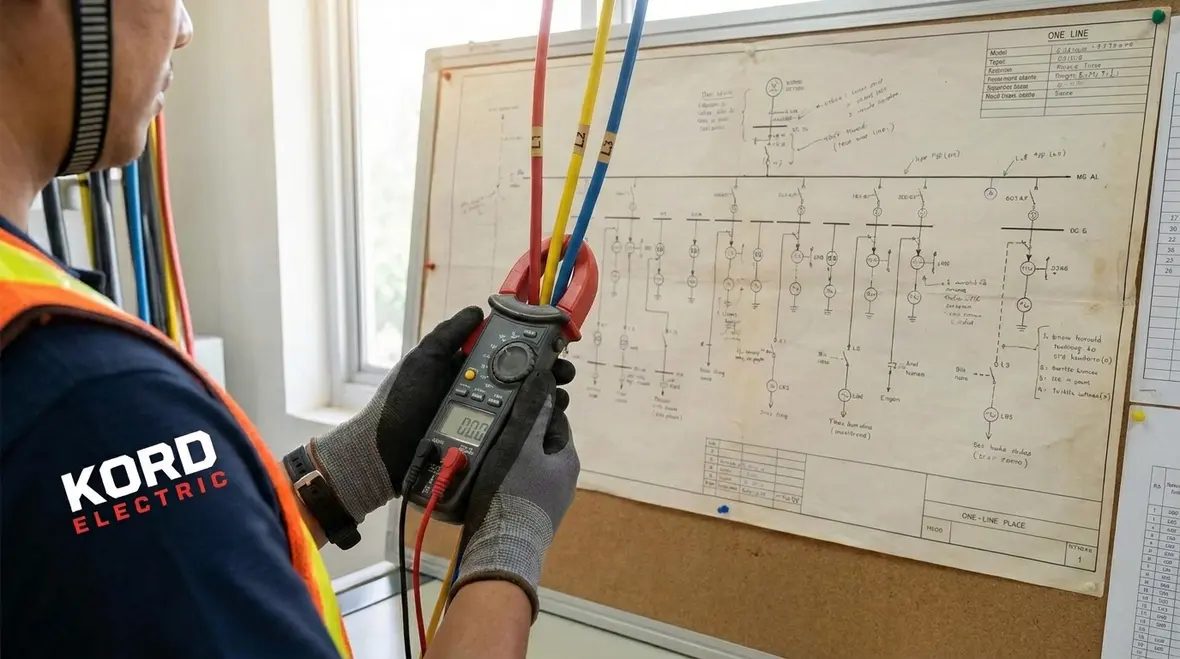
Step by step: how Kord Electric maps load, phases, and feeders
Our process stays methodical, because “eyeballing it” does not work when a building runs like a living ecosystem. First, our expert service staff collects actual load data. We look at nameplate ratings, operating schedules, and metering results. Then we confirm which loads sit on which phases and which feeders serve each panel. After that, we model how the facility behaves across the day and across seasons. Finally, we compare that behavior to what the electrical one line diagram says is happening.
Next, we examine phase balance and neutral loading. In three phase systems, uneven distribution creates higher current in one phase, which also pushes more heat into certain components. If the building includes many non linear loads such as variable speed drives, rectifiers, or power supplies, harmonic current can add another layer of stress. In those cases, balancing phases alone does not solve everything, but it still helps the foundation.
At this point, our technicians also assess protection settings and panel capacity. For example, a breaker might still trip under certain load combinations even if it has some remaining ampacity, because trip curves and nuisance conditions matter. Consequently, Electrical power load balancing strategies must align with protective coordination, not just wire rearrangement.
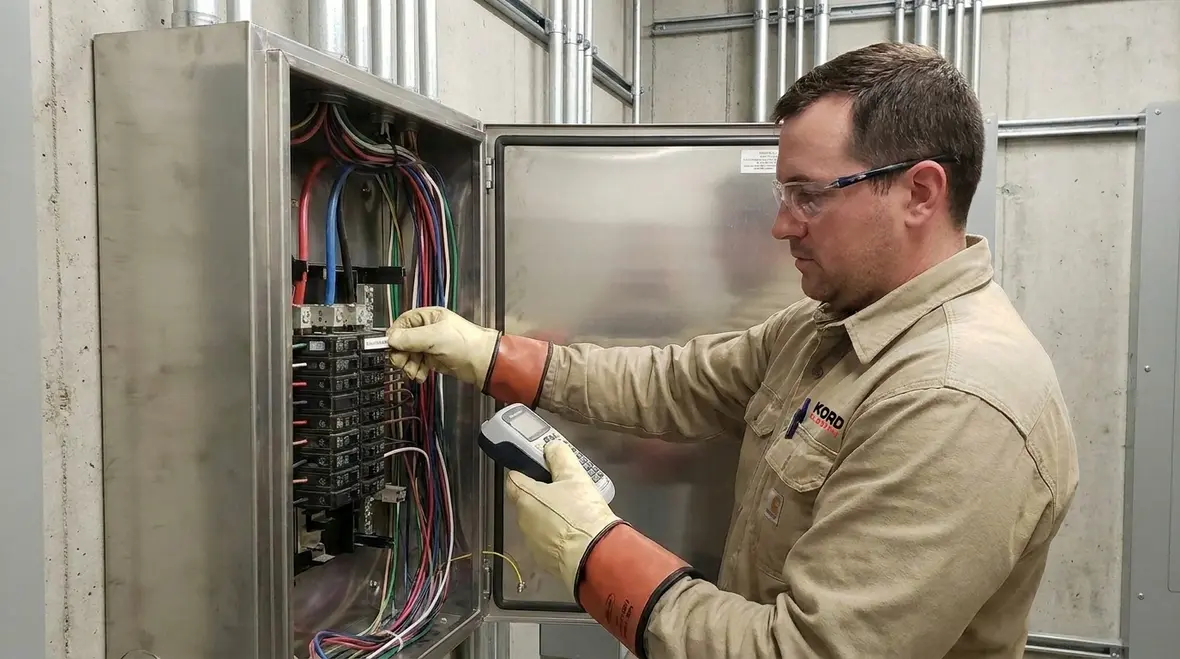
Balancing phases and panels without losing safety or code compliance
Some people think load balancing means moving a few circuits around and calling it done. In reality, major commercial and industrial facilities require control, documentation, and safe workmanship. Kord Electric approaches balancing as a system change. We do not treat panels like islands; we treat them as part of a larger network of feeders and protective devices.
When we rebalance circuits, we also check labeling, circuit identification, and load allocation for future maintenance. Also, we verify that life safety loads keep their required paths and that critical circuits do not get shifted into the wrong risk category. That matters because in high consequence areas, equipment availability can be non negotiable.
Additionally, we confirm that neutral and grounding connections remain correct, especially where modern electronics dominate. The goal is stability. As the facility changes, it should keep operating without creating new weak points. If a facility plans for tenant turnover or equipment upgrades, we design the balancing approach to adapt rather than break every time someone installs new HVAC or adds more production lines.

How energy waste and upgrade cost connect to load imbalance
Large facilities can pay for imbalance more than once. They pay through higher losses, higher operating temperatures, and more frequent service calls. Then they pay again when components wear out early. And if the building needs a main service upgrade sooner than planned, the cost climbs fast.
Kord Electric aligns load balancing with upgrade planning, including rewiring and system changes. In our rewiring cost guide for commercial electrical systems, we outline how scope drives cost and why design choices influence downtime, labor effort, and material needs. For instance, when a facility needs selective panel adjustments or feeder reroutes, costs depend on how much of the path requires opening spaces, moving conduit, or coordinating with ongoing operations. Therefore, the best strategy is not only to balance what exists today, but also to reduce the chance that the facility will reach capacity limits early.
In that same spirit, we help owners plan for staged work. Instead of shutting down entire sections, we often coordinate changes to limit disruption. And when we recommend rewiring, our expert service staff explains the steps clearly, so the project stays predictable. Because in commercial work, surprises are never fun. Unless you are at a birthday party and even then, we prefer clean wiring over cake explosions.
Managing peak demand: balancing that accounts for time, not just wiring
Load imbalance can stay hidden until peak hours arrive. That is when HVAC ramps, processes start, elevators cycle, kitchens run full tilt, and parking lot lighting flips on. Meanwhile, other loads may be idle. So the wiring arrangement matters, but timing matters too.
Kord Electric uses measured schedules and operational data to guide balancing. For example, we may shift certain loads so that high demand equipment does not all land on the same panel group at the same time. Additionally, we help coordinate demand response style thinking, where controls or set points reduce simultaneous peaks. However, we only recommend control changes when the facility can maintain comfort and production goals.
We also look at how future growth changes the balance. Tenant layouts evolve. Production lines expand. New equipment gets added because business demands it, not because the electrical system planned for it. Therefore, Electrical power load balancing strategies should include a path for future additions, such as clear rules for where new loads connect and how installers verify phase allocation.
Technician led commissioning: verifying the fix after changes
After we make changes, we do not walk away. We verify. Our technicians run test steps that confirm phase balance, check neutral loading, review protection behavior, and confirm that voltage levels stay within acceptable limits under real load. Then we document the results in plain language, so facilities managers can understand what improved.
This verification stage matters because electrical work can look perfect on paper yet still behave differently in the field. Short cable runs, aging terminations, or mixed device types can shift performance. Also, some buildings have multiple operating modes, such as normal day use and night production. So, Kord Electric technicians validate across the modes that matter.
Moreover, commissioning supports long term reliability. When another electrician comes later, our documentation helps them avoid undoing good work. In short, we treat the end result like a contract: the facility gets stability, and it stays stable.
FAQ: Electrical load balancing for commercial and industrial facilities
Call Kord Electric for a load balancing plan that fits your facility
If your large commercial or industrial facility sees hot panels, nuisance trips, or unpredictable voltage behavior, Kord Electric can build a clear load balancing plan that improves stability now and supports upgrades later. Our technicians measure, model, and verify results with careful commissioning, so the solution does not rely on luck or guesswork. Reach out today and we will review your system, explain the options in business friendly terms, and map the next steps. Your electrical system deserves less drama and more uptime. For facilities across the region, our Los Angeles County commercial and industrial electrical services team helps turn those goals into practical field work that keeps operations moving.
If you are planning broader upgrades around lighting, solar, data centers, or maintenance programs, our related service guides and checklists on the Kord Electric blog can help you connect Electrical power load balancing strategies to long term reliability. From hidden electrical risks to panel labeling, data center uptime, and commercial landscape lighting safety, our technicians and expert service staff support the same core goal: power that behaves the way your facility needs it to, every day, without drama.


