Industrial Lighting Retrofit ROI for Manufacturing
How Kord Electric estimates LED retrofit ROI for manufacturing facilities
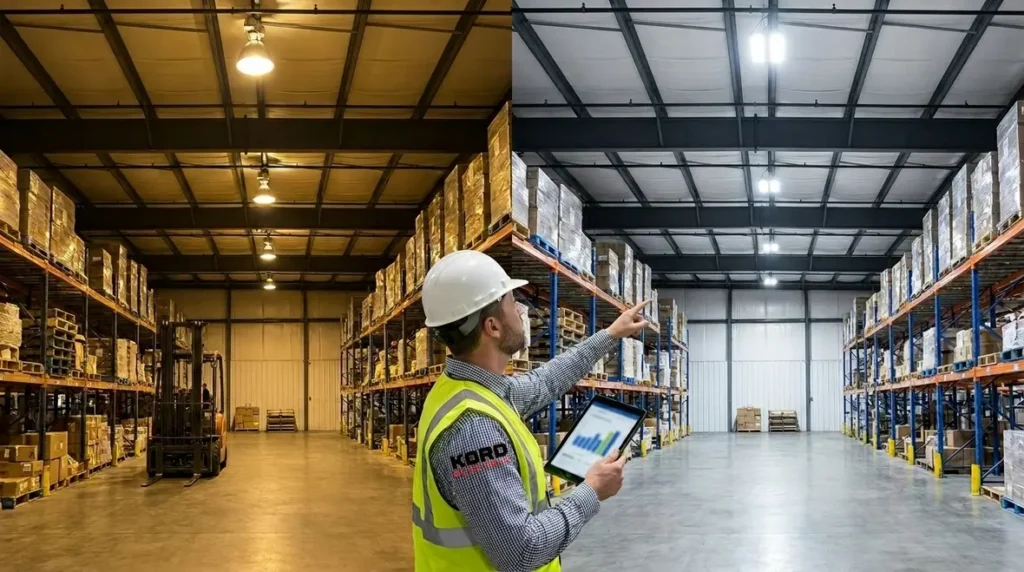
When a manufacturing facility needs brighter, steadier lighting, we look at the Industrial lighting retrofit cost benefits first, because the math usually tells the truth faster than a meeting does. Our team at Kord Electric helps operations leaders compare today’s electric bill and maintenance burden against the long term cost of LED upgrades. Then, we translate that comparison into a clear ROI story: payback period, risk level, and expected uptime improvements.
And yes, we do it without turning the process into a three ring circus. The goal is simple. Others might sell fixtures. We calculate results. With our expert service staff and our technicians on site, we make sure every assumption matches real conditions in your plant.
Step one: capture your current lighting energy and downtime
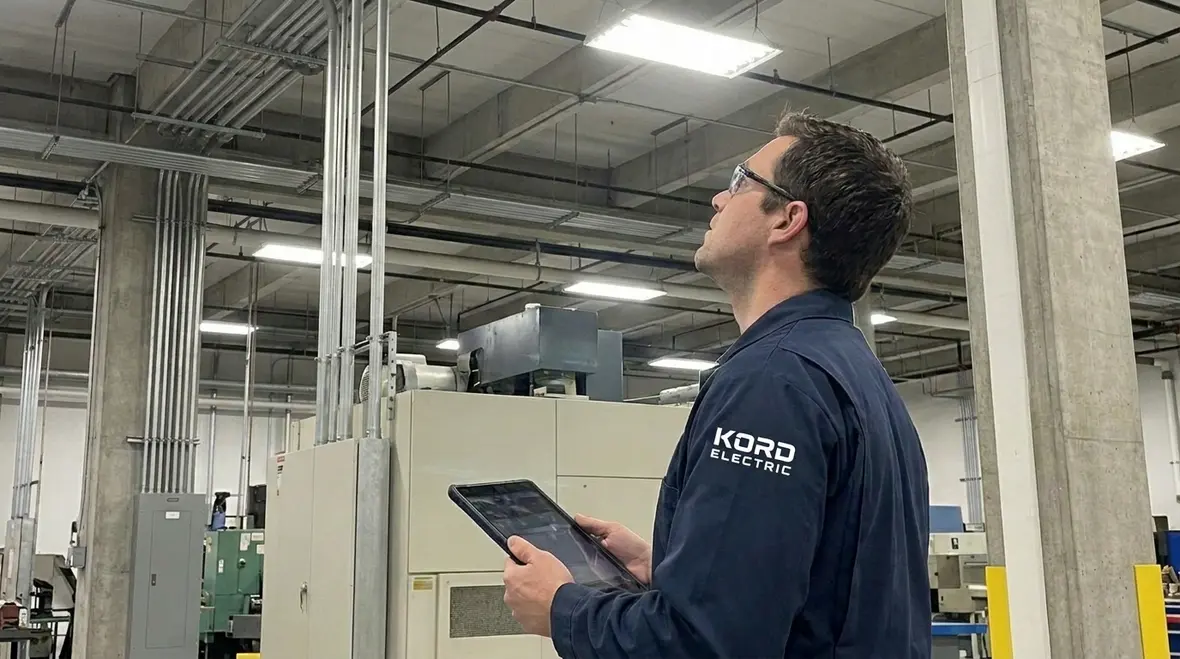
First, our technicians gather the baseline data that drives the ROI model. Because if the starting point is wrong, the entire forecast becomes a “best guess,” and nobody runs a factory on guesswork. We typically focus on:
- Fixture types, wattage, lamp count, and operating hours per zone
- Existing controls or timers, and how often teams override them
- Maintenance history such as lamp change intervals and labor hours
- Room conditions that affect light output like dust, mounting height, and reflectance
Next, we quantify the impact of lamp failures and relamping downtime. In manufacturing, a failed high bay or aisle fixture can do more than reduce visibility. It can slow movement, increase safety risk, and create emergency maintenance calls. So while energy savings matter, we also include operational friction in the ROI estimate.
Finally, our team checks whether any areas already have partial upgrades or mixed technologies. That detail changes total savings, especially when crews run different shifts or production schedules.
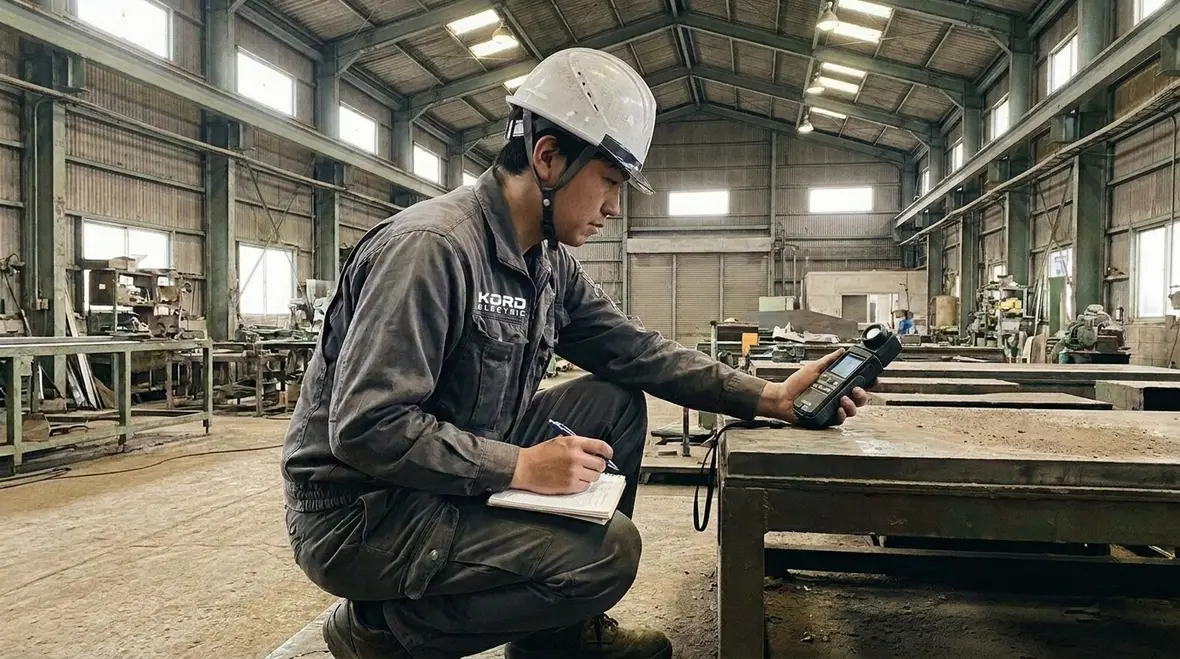
Step two: model LED energy savings with real operating patterns
Once the baseline is set, we estimate LED energy use by combining fixture efficiency, driver performance, and expected light levels. However, we do not rely on marketing specs alone. Instead, our expert service staff explains the model as we build it, so facility managers see exactly what drives the numbers.
Typically, energy savings come from three places:
- Lower wattage for the same or improved usable light
- Less need for “workarounds” like leaving lights on at full output all day
- Better control integration when facilities adopt occupancy sensors or dimming
Then we account for hours. A warehouse that runs 16 hours a day has a different ROI than a line that runs 6 hours with strict daylighting. So we map schedules by zone, not by wishful thinking. If a production team works nights, we factor in the correct operating windows, and we confirm them during walkthroughs.
To keep things simple, we often express energy savings as reduced kWh per year per area and then apply utility rate assumptions. After that, the ROI model becomes easier to review and defend in leadership meetings.
Step three: calculate payback by adding retrofit cost and maintenance value
Now we handle the cost side. For ROI, cost is not only the purchase price of fixtures. We look at what it really takes to install, protect operations, and keep lighting reliable. In other words, we include the practical elements that make projects succeed.
Our LED retrofit cost inputs commonly include:
- Material and fixture costs
- Labor and labor scheduling, including shutdown windows
- Electrical work such as ballasts removal, rewiring, or panel checks
- Controls add ons when the scope includes sensors or dimming
- Disposal and recycling where applicable
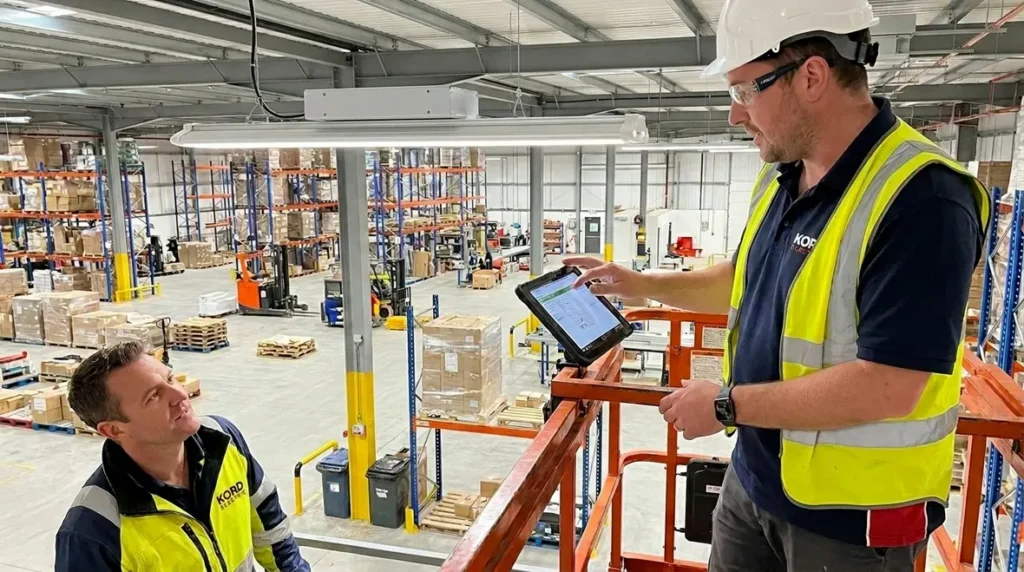
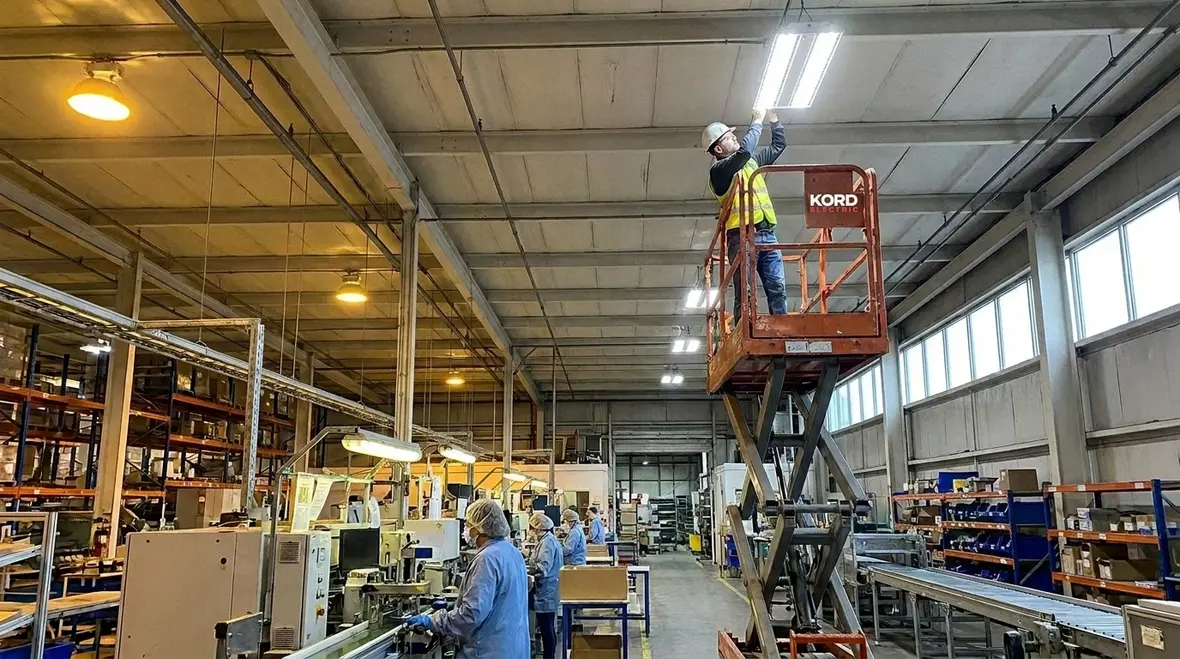
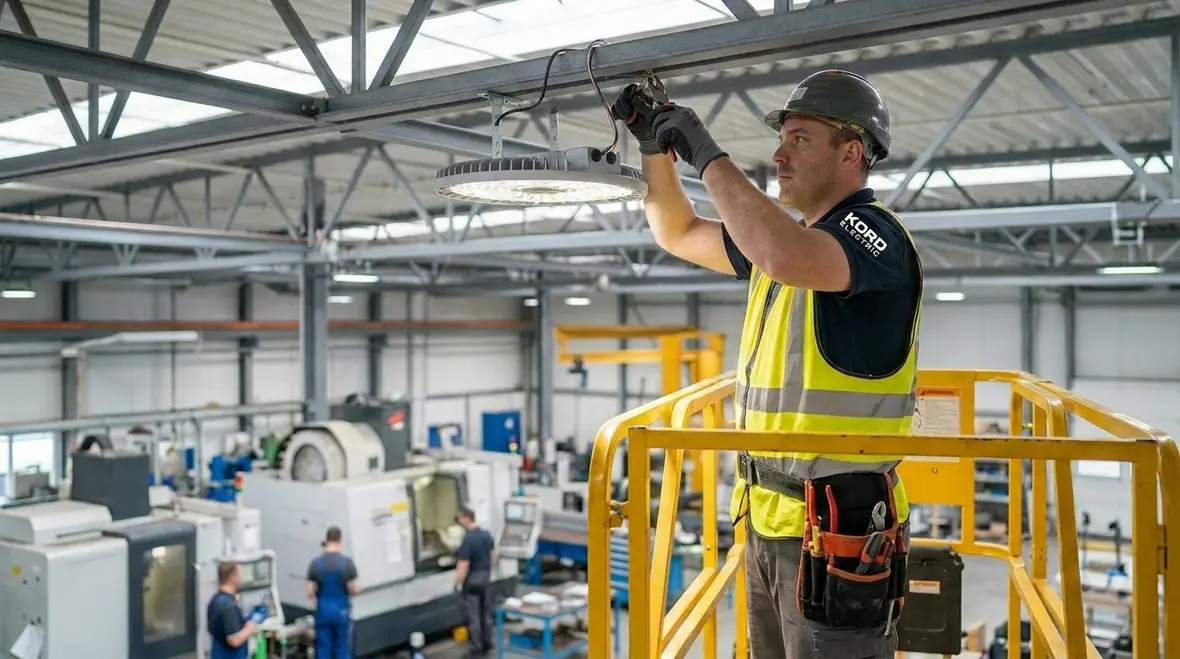
Next, we quantify maintenance savings. LED lighting typically reduces relamping frequency, and that reduction saves labor time and reduces risk when technicians climb ladders or scissor lifts. Meanwhile, fewer failures mean fewer interruptions. So, when we present Industrial lighting retrofit cost benefits, we show both energy and maintenance value, not just one half of the story.
Finally, we compute payback as a simple equation: annual savings divided by installed project cost. However, we also calculate sensitivity. If your utility rate changes, or operating hours shift, your payback period may move. We give you a range, so decisions stay grounded, not dramatic.
Step four: verify lighting performance, controls, and code safety
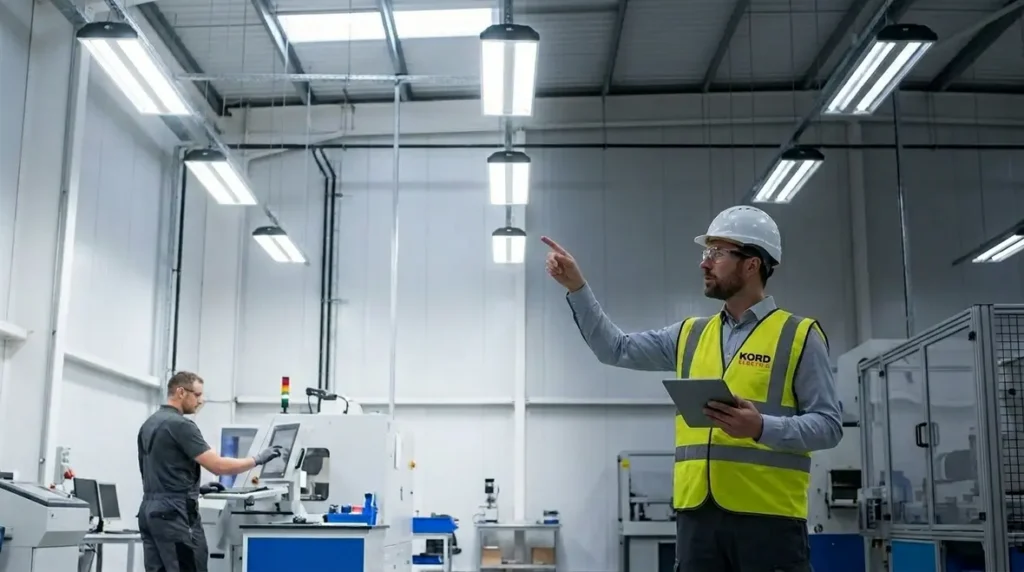
ROI fails when lighting performance fails. So we verify that the retrofit delivers target illumination and meets safety needs. That is where our technicians earn their paycheck, because we align the plan with what people actually do in your spaces.
- Recommended light levels for production tasks and aisle movement
- Uniformity so visibility does not drop in key areas
- Glare control, especially in workstations and inspection points
- Color rendering needs where material appearance matters
- Emergency lighting interaction if your site includes it
Then, we address controls. Dimming and occupancy strategies can improve ROI further, but only when installed correctly and tuned to operations. If a facility keeps lights on when production pauses, controls will deliver less savings. That is why we involve the folks who run the floor. Our expert service staff explains the control behavior so the system supports real workflow, not just a spreadsheet.
Also, in major property buildings and industrial parks, teams often coordinate multiple electrical upgrades. So we check existing electrical capacity and infrastructure to avoid surprise work later. Because nobody enjoys paying for the same electrical mistake twice. That is a tax on patience.
How site conditions change ROI in warehouses, plants, and large facilities
ROI differs by environment, and we treat each site as its own project, not a copy and paste job. For manufacturing facilities, typical ROI swing factors include:
- High ceiling dust and grime, which can reduce light output and increase the need for clean fixtures or higher initial output
- Vibration and heat, which can affect LED longevity when poorly selected
- Ceiling height and beam angle, which determine spacing and the required number of fixtures
- Existing reflectance in walls and floors, which influences how efficiently light spreads
- Shift patterns, maintenance access, and safe installation windows
In practice, we also manage installation constraints. For example, if your production line cannot shut down during a specific cycle, we plan phased work. That approach protects uptime and reduces the chance that crews feel like the lighting project is “invading” their schedule.
Meanwhile, major property buildings often include shared corridors, loading docks, and outdoor areas where lighting rules and operating hours vary. So we structure the ROI model by area, then roll up totals. When leadership reviews the final figure, it reflects the real facility layout, not an average that hides problems.
If the facility already supports electrical projects like EV charging, the conversation can connect smoothly. For instance, our work on EV charger installation shows how we think about electrical planning and safe integration in real environments. While lighting and EVs are different scopes, the careful approach to power, coordination, and install readiness stays the same.
For industrial facilities in Southern California that need broader support than lighting alone, our Los Angeles County electrical services team can connect lighting retrofit planning with panel work, preventive maintenance, and other upgrades that keep production running smoothly.
Featured ROI FAQ for industrial LED lighting retrofits
When you want ROI, you want the numbers to be defensible
At Kord Electric, we do not treat ROI like a guess. We treat it like an equipment upgrade plan that has to work in the real world, on real schedules, with real constraints. And because our technicians and expert service staff explain each assumption as we go, facility leaders can review the logic without squinting at jargon.
So if your plant or industrial facility is planning an LED retrofit, we invite your team to get a clear ROI estimate and a practical installation plan. Contact Kord Electric to schedule a site walkthrough and receive a retrofit cost and savings model you can stand behind.
If you are looking to align lighting improvements with a broader electrical strategy, Kord Electric can also coordinate your industrial lighting retrofit with other services like panel upgrades, preventive testing, and power quality checks so that your ROI does not live in isolation from the rest of your electrical system.