Commercial EV Charging Infrastructure Planning
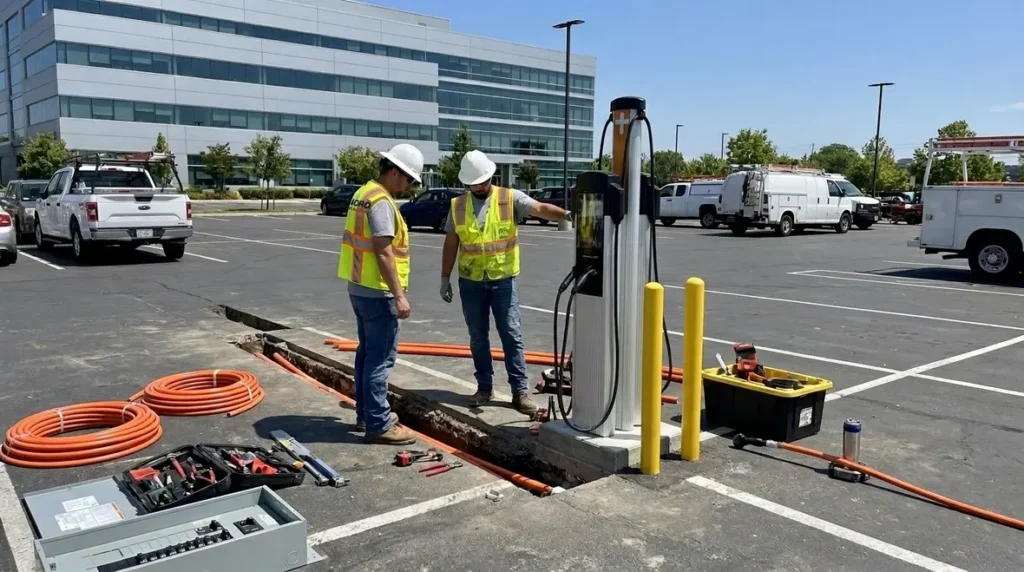
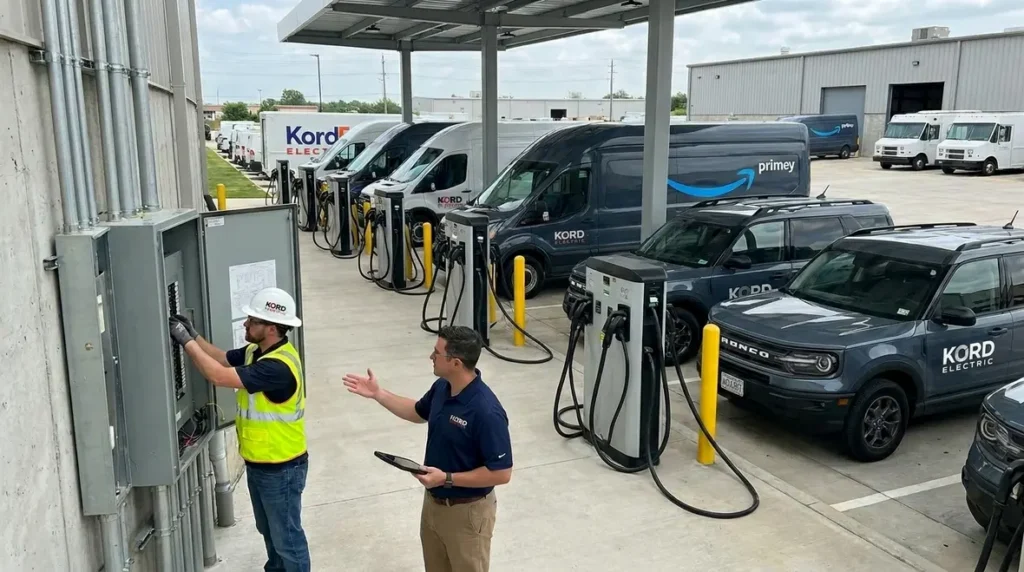
Kord Electric helps businesses build scalable EV charging infrastructure planning for commercial properties, and we do it with a calm, methodical approach that holds up when budgets, timelines, and grid constraints start “talking back.” In our experience, owners and property managers do not need vague promises, they need a clear path from today’s drivers to tomorrow’s fleets. So, we start with real site data, then we map capacity, conduit strategy, and electrical upgrades in a way that grows without turning into a costly retrofit later. After that, our experienced technicians and expert service staff explain every step in plain language, because nobody should have to decode an electrical plan like it is a spy movie.
Scalable EV charging strategy for commercial buildings that grow
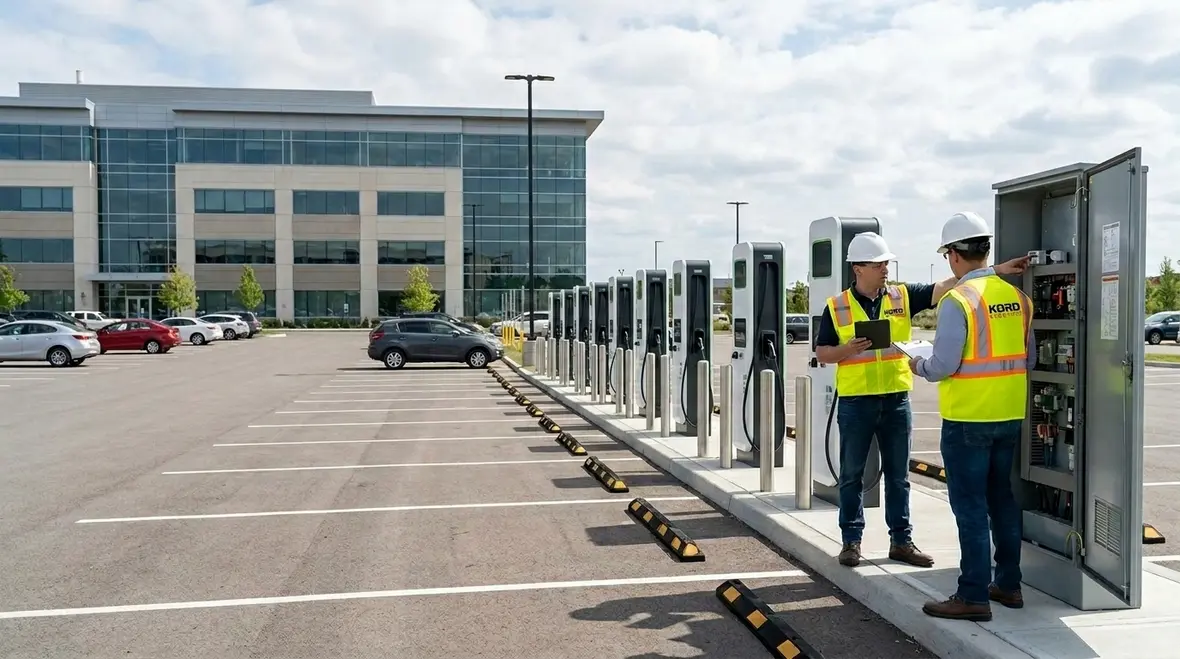
Commercial EV adoption rarely stays still. A property that gets two chargers this year often needs more by next year, and the next question is usually “Can we expand without tearing everything up?” That is where scalable design matters. We treat each project like a living system. First, we evaluate parking patterns, tenant schedules, and how vehicles actually move through the site. Then we design power distribution and routing so future chargers can plug in with minimal disruption.
In practice, we plan for staged growth. For example, we may install starter capacity now while leaving space and wiring pathways for later. This avoids the all too common scenario where everything works great until it does not, and then the solution becomes expensive. You can think of it like building a good foundation instead of putting a pool on top of sand. Fun idea, bad long term plan.
Key design steps in commercial EV charging infrastructure planning
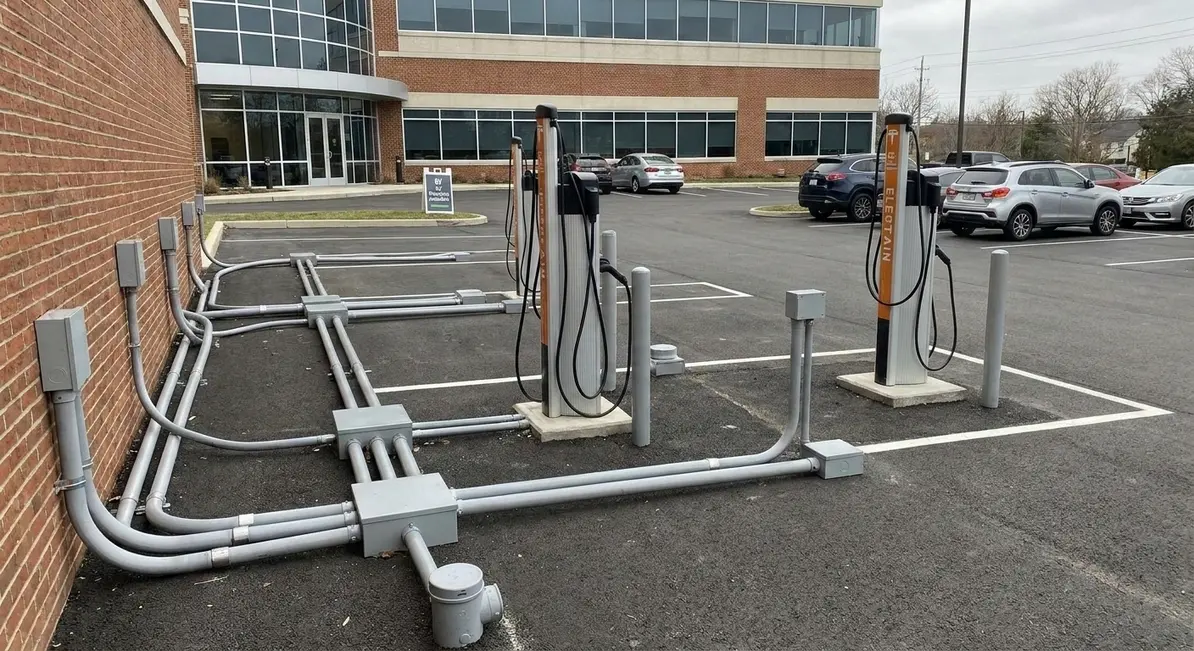
Our commercial and industrial clients usually want a plan that can withstand real life. Therefore, our Commercial EV charging infrastructure planning process begins with site specifics. We review service size, demand loads, and potential upgrades, and we also check whether the building can handle additional sustained load from chargers.
Next, we select the charger types and locations based on customer behavior. Destination charging and fleet charging often use different power needs. While some drivers prefer steady charging overnight, others need quicker turnaround during business hours. Then, we map cable runs and mounting locations so we reduce labor and keep pathways clean and safe.
Finally, we coordinate the details that matter but people often overlook. That includes labeling, conduit sizing, and space for future hardware. So, when expansion time comes, our team can extend the system efficiently, without guessing where things can safely go.
How we handle electrical load, panels, and future capacity
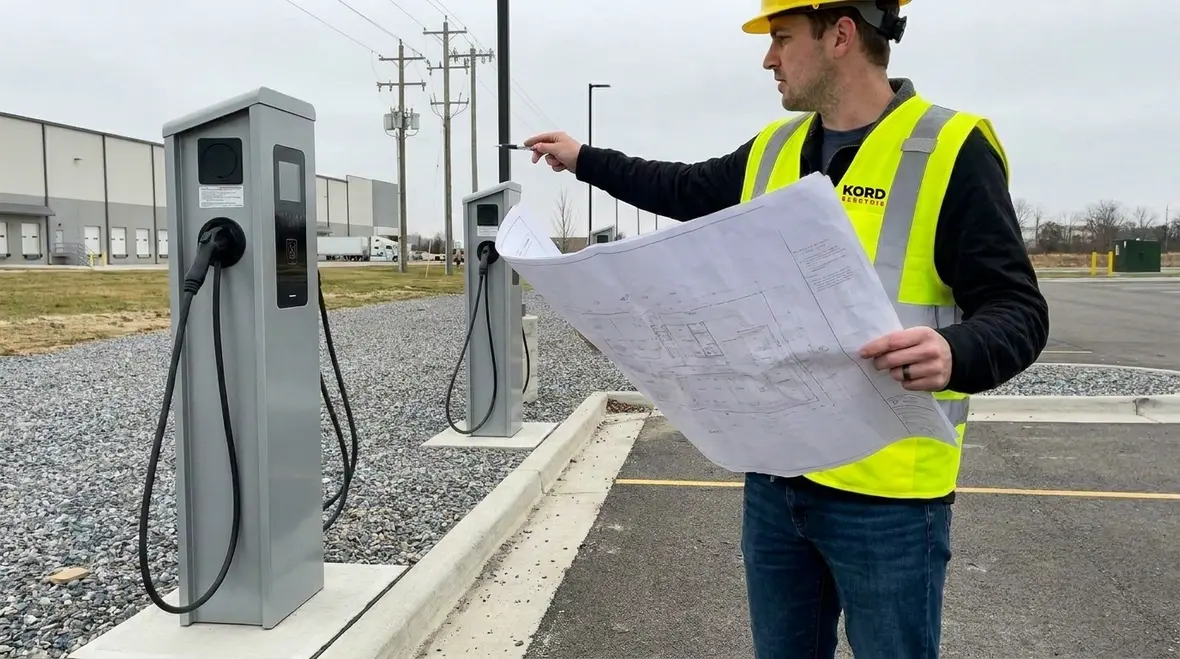
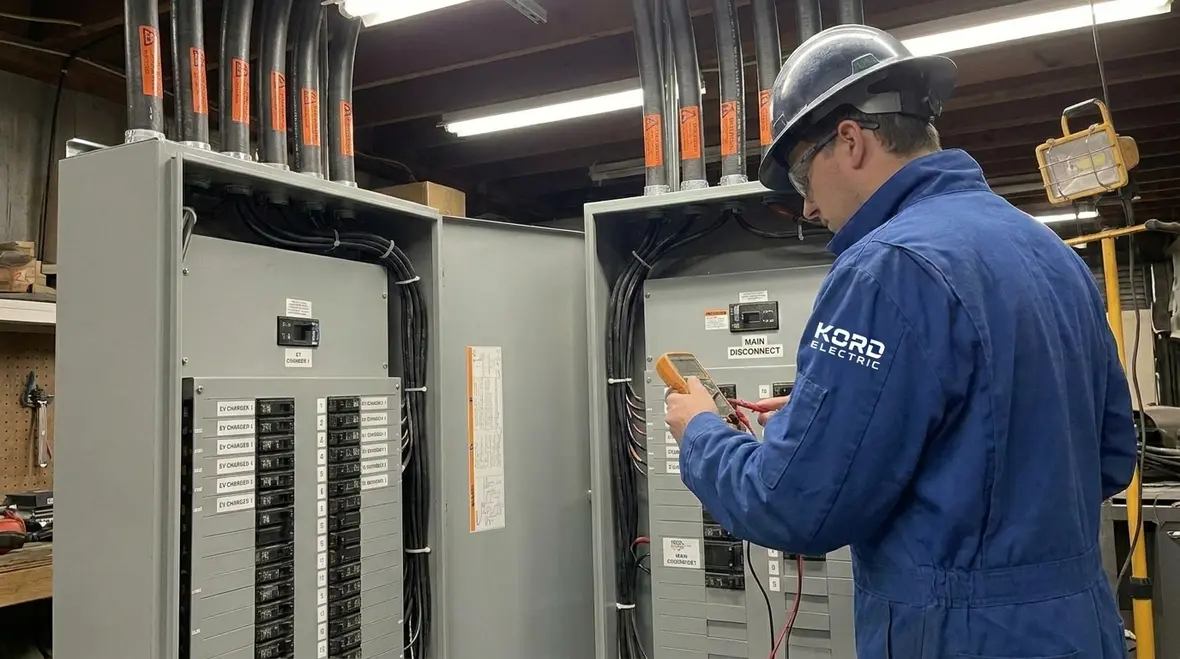
Most charging projects fail at the “power reality” stage. On paper, power exists. On site, power gets shared, limited, and sometimes delayed by upgrades that require careful coordination. We approach this with respect for the electrical system, because nobody wants a charger rollout that trips breakers or forces shutdowns.
We first calculate the load impact by considering existing mechanical equipment, lighting, kitchens, HVAC cycles, and any planned renovations. Then we design the charger distribution so it can handle peak usage. If upgrades are required, our technicians and expert service staff explain the options and sequencing, so the facility stays operational. After all, the best installation is one that does not disrupt the rest of the business.
We also plan for future growth. That can mean adding capacity now, or it can mean designing the infrastructure so additional circuits and breakers can be added later without redoing the entire electrical room. In both cases, the goal stays the same: reduce surprises, keep the system stable, and make expansion practical.
When Commercial EV charging infrastructure planning overlaps with broader upgrades, we often align the project with dedicated EV charger installation services so the design, installation, and long term performance all follow a single, coordinated roadmap instead of a patchwork of separate projects.
Site layout and user access for drivers and maintenance teams
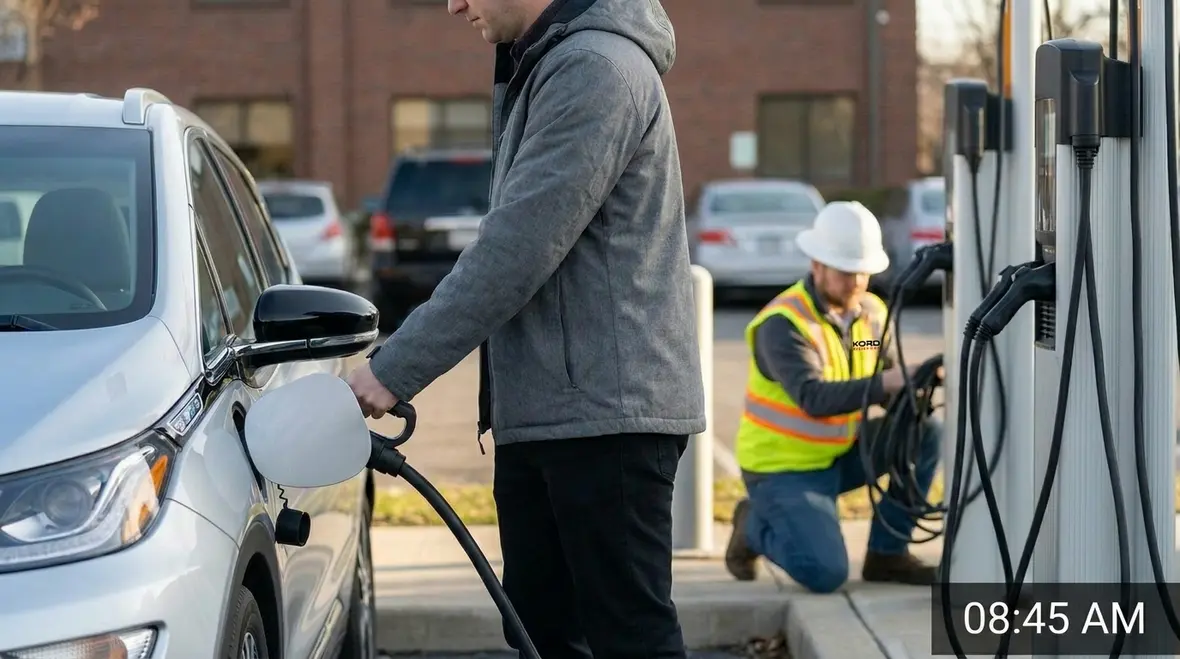
A charger can have all the right electrical specs and still underperform if it sits in the wrong place. So we map the site layout around real movement. We consider vehicle turning radii, walkway clearance, and how vehicles park during busy hours. Then we position chargers so drivers can reach them comfortably and so access remains safe for maintenance.
Additionally, we plan for cable management and protection. We design routing that resists damage from tires, carts, and everyday traffic. That keeps service calls down and helps maintain uptime. And when your maintenance staff sees a tidy, labeled system instead of an electrical mystery, everyone smiles a little more, even if nobody says it out loud.
We also consider security and accessibility. Commercial and industrial facilities require a solution that fits their rules, so we coordinate physical protection and recommended monitoring so the chargers stay functional even in harsh conditions.
Phased rollout, budgeting, and minimizing downtime
Many property owners want a rollout that delivers value quickly, while still setting up long term expansion. That is where phased deployment shines. Kord Electric commonly recommends a first phase that focuses on the highest demand spaces, then expands capacity after usage data proves the plan.
We help clients align the budget with the actual build. That means separating immediate needs from future needs and building the infrastructure in a way that avoids double work. While some teams rush to install everything at once, others treat the project like a roadmap. We prefer the roadmap approach because it keeps costs predictable and helps owners avoid the dreaded “we need it now” change orders.
We also plan schedules to reduce disruption. Before we energize anything, our technicians test, verify, and document the system. And throughout the process, our expert service staff explains what they are doing, what they are checking, and why it matters. You get fewer surprises and more confidence, which is an underrated business feature. Like a good Wi Fi signal, it just should work without drama.
For properties across Southern California, especially in high demand regions, pairing phased EV infrastructure projects with regional support such as dedicated Los Angeles County electrical services helps keep timelines realistic while making sure every step stays compliant and documented.
Dual column view of a successful commercial install workflow
This is how our workflow tends to look for major property buildings and industrial sites, with a focus on repeatable success.
What we do
Site assessment and power review
Charger layout and cable routing design
Staging and phased plan
Installation, testing, and documentation
Team explanations and handoff support
Why it matters
We confirm capacity, upgrades, and safe paths for growth
We improve driver access and reduce future labor
We deliver value now while planning expansion
We verify performance and make future service simpler
Our expert service staff ensures owners understand operations
FAQ: Commercial EV infrastructure for business and property managers
Why expert technicians matter when growth is on the horizon
When a facility scales, small mistakes get expensive fast. Therefore, we rely on experienced technicians and expert service staff who understand the real requirements of commercial and industrial installs. They do not just connect hardware. They confirm loads, verify protection, ensure proper labeling, and document the system so future service is quick and safe.
Just as importantly, they explain the “why” behind decisions. We find that clarity reduces friction between owners, electrical teams, and property managers. And when people understand the plan, they make better decisions. That means fewer last minute changes, and more confidence that the charging network will keep pace with driver demand.
Because Commercial EV charging infrastructure planning touches panels, feeders, protective devices, and long term maintenance, many facilities also tie their projects into structured programs such as ongoing electrical preventive maintenance, so the charging system and the rest of the electrical backbone receive the same level of care over time.
Ready to plan your next expansion without the headache?
Now is the time to build a charging network that can scale with your tenants, fleets, and customer flow. Kord Electric helps commercial and industrial facilities design Commercial EV charging infrastructure planning that supports future growth with fewer surprises and cleaner outcomes. If you want a strategic, step by step roadmap, contact us to schedule a site assessment. We will review power, layout, and phasing, and our expert service staff will guide you from plan to installation with clarity.
Whether you are planning a new development or upgrading an active facility, aligning your EV charging plans with broader services like regional electrical support, preventive maintenance, and emergency coverage helps keep everything working together. That way, your drivers see reliable uptime, your teams see a clean and understandable installation, and your budget sees a project that behaves itself over the long run.
If you are ready to turn Commercial EV charging infrastructure planning into a clear, actionable build sequence, Kord Electric can help you take the next step, from initial load review to commissioning and future expansion planning.