Commercial Electrical Emergency Response Plan
Kord Electric builds and helps teams use a Commercial electrical emergency response plan that is clear, repeatable, and ready for real world failures. When power drops, panels heat up, or a breaker refuses to behave, people need more than hope and flashlights. They need steps that work under stress. Our approach is practical, and our technicians explain each action so the plan does not live only on paper. First, we map the electrical system and decision points. Then, we train staff to act fast while we protect safety and reduce downtime. Because in a commercial and industrial facility, silence from the lights is never just “a minor inconvenience.” It is an outage that can quickly turn into lost money.
Why electrical failures demand a disciplined plan
In major property buildings and industrial sites, electrical failures rarely stay small. In one shift, a minor fault can grow into equipment damage, shutdowns, and unsafe conditions. Therefore, a strong response plan must do two things at once: keep people safe and restore power in a controlled way.
Here is the calming truth we tell our clients. When teams follow a good plan, uncertainty drops. And when uncertainty drops, panic drops too. Even so, reality will still show up. Someone will say, “Just reset it.” Another person will say, “The ceiling lights are flickering, so it must be nothing.” Then someone, usually the loudest, will quote a pop culture hero who “never backs down.” Meanwhile, the actual electrical system is doing exactly what it was designed to do: react to a fault, protect itself, and demand respect.
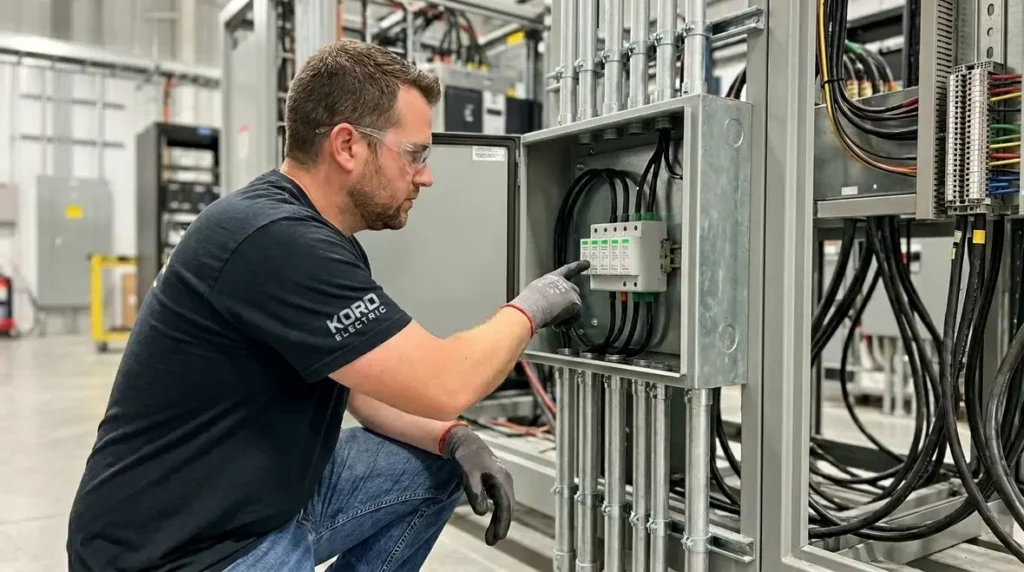
Our expert service staff approach the problem in a structured order. They identify the likely fault type, confirm what the protection devices are reporting, and decide the safest next step. They do this with a calm tone because speed matters, but unsafe speed costs more.
Know the facility, then define the response zones
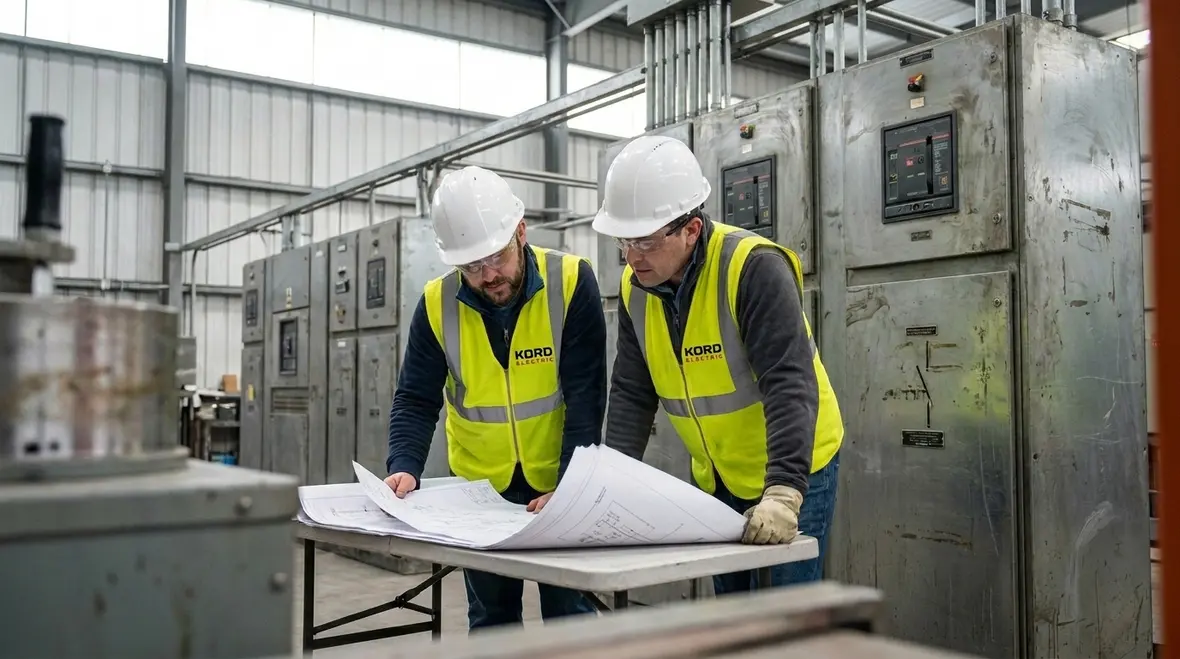
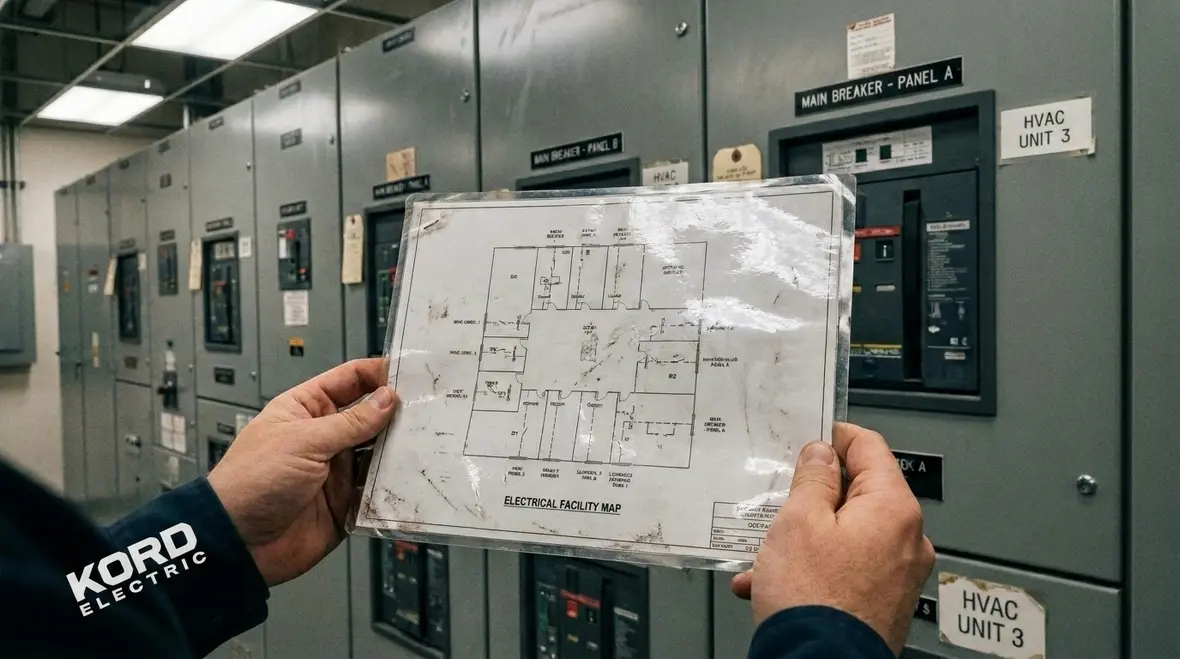
Before anyone touches a cabinet, our team builds a facility map that makes the response obvious. We do this for each commercial and industrial space, including major property buildings with multiple floors, tenants, and critical loads.
Step one involves documenting the electrical path and the equipment most likely to impact operations. We note switchgear locations, critical feeders, transfer switches, UPS and generator interfaces, grounding points, and any known weak links from past events. Next, we define response zones so staff do not wander into the wrong area during an emergency. For example, we separate normal access zones from restricted electrical work zones, especially around switchgear, bus ducts, and any energized equipment.
Then we set decision triggers. Instead of vague instructions, we state what actions staff must take when specific indicators show up. For instance, a breaker trip with odor or heat means a different response than a trip with no visible signs. This reduces guesswork. And it also keeps the plan consistent when different people are on duty.
Because equipment lives in the real world, we also build the plan around the reality of doors, layouts, staffing schedules, and access rules. After all, “locate the panel” is not a response step if nobody can find the panel during a fire alarm. For more structured mapping ideas, many facility teams also review how we handle distribution in hidden electrical risks in commercial buildings, where unseen issues often hide behind unlabeled or hard-to-find gear.
Plan roles, safety checks, and communication flow
Even a perfect diagram fails if the people do not know their roles. Therefore, Kord Electric defines responsibilities clearly for facility staff, security teams, and our technicians, so everyone moves in the right order.
Command, decision, and support roles
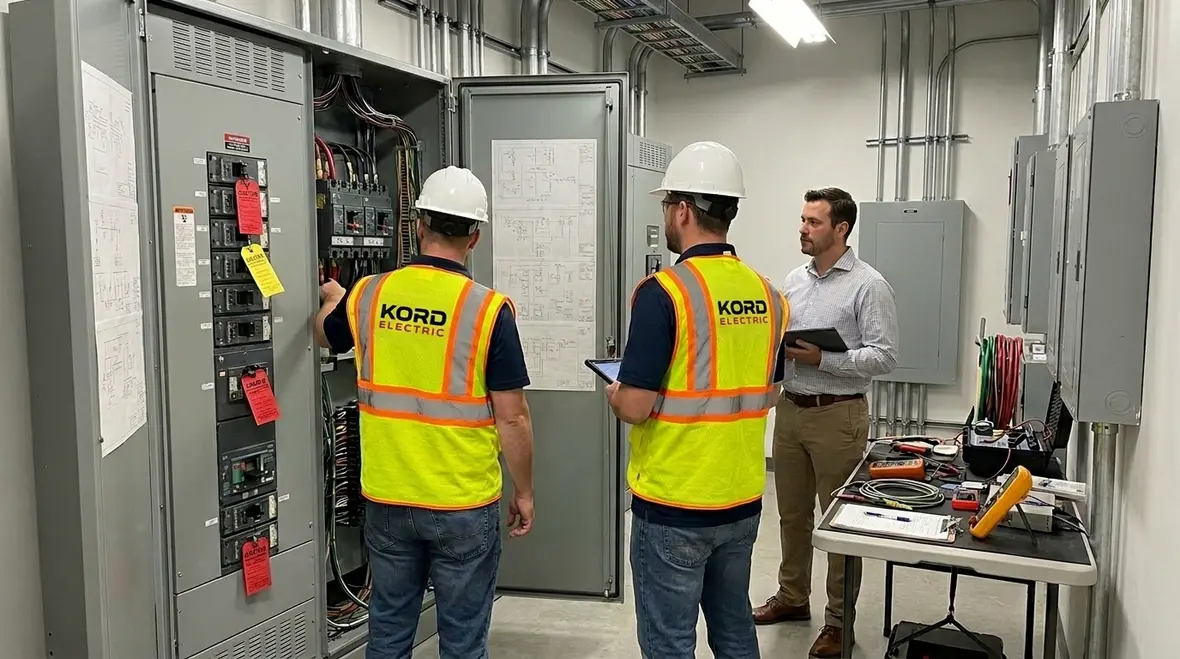
First, we assign a command lead. This person coordinates safety boundaries, confirms whether hazards exist, and directs communications. Next, we appoint an electrical decision maker, usually our expert service staff on-call or the trained site lead who can interpret alarm states and protection device messages.
Locking in safety checks before any reset
Then we lock in safety checks. We include steps for verifying shutdown conditions, confirming lockout steps when needed, and using proper testing before any re-energization. We do not treat safety like a checkbox. We treat it like the air you breathe.
Clear communication beats hallway rumors
Communication must also move with speed and clarity. In commercial and industrial environments, multiple parties often ask for updates at once: building management, operations, tenants, and possibly emergency services. So, the plan includes a short script and a priority list. For example, we state what to report immediately, what to hold for follow-up, and which details should wait until technicians confirm findings.
And yes, we include humor in training because it sticks. When someone jokes “Do not hit the big red button unless the plan says so,” the room laughs, then remembers. The button stays untouched. The plan wins.
How technicians restore power without making it worse
Diagnosing the fault before flipping anything on
Once the site team secures safety boundaries and our technicians take the lead, the restoration steps must be methodical. A common mistake is rushing to bring equipment back online without confirming root cause. That is how you end up with a repeat outage. And nobody wants the sequel.
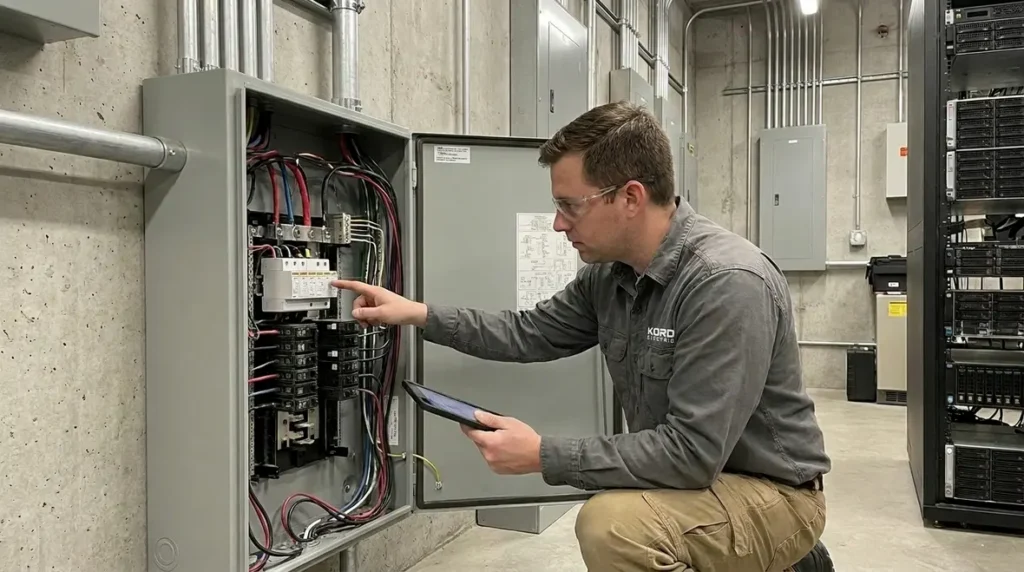
Our expert service staff start by checking protection events. They review what tripped, what alarms appeared, and whether protective relays show patterns that indicate a short, ground fault, overload, or other issue. Next, they inspect visible signs of stress such as heat damage, arcing marks, unusual smells, and abnormal sounds. After that, they verify conditions using proper testing and measurement methods.
Controlled restoration, one critical load at a time
Then comes the restoration sequence. We prioritize critical loads first, and we coordinate feeder re-energization with the intended load management strategy. If the facility has transfer logic, UPS states, or generator interlocks, we confirm the system transitions correctly. We also watch for cascading effects. For example, returning a large motor load too early can trigger another trip. So, our team re-energizes in an order that reduces stress and helps the system stabilize.
Finally, we document what happened. We log the sequence of events so the facility can update the plan and improve future response. This is how we turn emergencies into lessons, not mysteries. Many commercial properties pair this with broader strategies from our work on emergency power failures in commercial buildings, so the same event does not surprise them twice.
Emergency readiness through drills, metrics, and updates
Drills that match real facility conditions
A plan is only as strong as the practice behind it. Therefore, Kord Electric sets readiness routines that match how commercial and industrial sites actually operate.
We schedule drills that test key parts of the Commercial electrical emergency response plan, including how staff identify hazards, how they communicate, and how they coordinate with technicians. We also test realistic timelines. Who can access the switchgear door in under two minutes? Who can confirm an alarm state? Who knows which floors have critical loads?
Simple metrics, serious improvements
After each drill, we review performance using simple metrics. Did the team follow the order? Were any safety steps skipped? Did communications match the plan? Then we update the documents, diagrams, and training materials based on what we learn. If a building changed, the plan changes too. That includes new tenant spaces, added equipment, updated relays, modified bus routes, and changes to generator rooms.
Keeping the plan usable under stress
To keep the plan easy to use during stress, we place clear references where they matter. We focus on quick actions, not long reading. And we ensure that our service staff explain changes during training so people understand the “why,” not only the “what.” When people understand the reason, they follow the steps even if their adrenaline tries to take over.
Build resilience across data, power quality, and critical loads
Major property buildings often carry critical systems that can fail silently before anyone notices. That is why we connect emergency response to the overall electrical infrastructure, especially in areas like data rooms, network closets, and other high dependence spaces.
From our perspective, the electrical design for resilience includes more than backup power. It includes how power quality affects equipment, how distribution reduces risk, and how monitoring signals a problem early. Therefore, we align the emergency response steps with the infrastructure details that operators already rely on. For example, when the facility has redundancy, the response plan must state how to shift loads and how to prevent overload on the remaining path. When there are UPS systems, the plan must define what states mean and what actions staff should take while technicians investigate.
We also recommend that facilities use routine checks and trend review so alarms do not feel like surprises. When monitoring shows patterns, teams can act before a full failure. Then, when an emergency does arrive, the plan works with the same logic the systems already show during normal operation. For facilities with dense IT environments, the thinking closely aligns with what we outline in data center electrical infrastructure essentials, where uptime and clean power are non-negotiable.
Think of it like sports training. You practice plays so the game does not turn into chaos. And yes, if you wait until the loud scoreboard moment to learn the rules, you will lose. Computers do not care about your confidence. They care about clean power and proper sequencing.
Dual Column Summary
Preparedness actions and What they prevent (one place to look during training):
Electrical zone map and access rules |
Wrong area entry and delays during response |
Role based communication scripts |
Confused updates and repeated questions |
Restoration sequence for critical loads |
Cascading trips and equipment stress |
Drills and plan updates after system changes |
Outdated steps when new equipment is added |
FAQ about emergency electrical response for commercial buildings
Final call: make your response plan real before the next outage
When electrical problems hit a commercial or industrial facility, preparation decides the outcome. Kord Electric helps you build and maintain a Commercial electrical emergency response plan that keeps people safe, restores power in a controlled order, and reduces repeat failures. Our technicians and expert service staff explain each step so your team can act with confidence, not guesswork.
If your site needs a real emergency plan, we can align it with broader reliability strategies, from commercial and industrial electrical maintenance plans to voltage stability and compliance. And when an actual event happens, you will already know how to reach our 24/7 team through dedicated emergency electrical services that match your documented procedures.
For organizations operating across Southern California, a disciplined plan also pairs naturally with regional coverage like our Los Angeles County electrical services, so the same team that designs your procedures can support everything from upgrades to urgent repairs.
If your facility is ready to turn “we should really have a plan” into a documented, trained, and tested Commercial electrical emergency response plan, now is the time to build it—before the next outage chooses your schedule for you.