Electrical Panel Expansion or Upgrade Guide
Kord Electric helps commercial and industrial facilities decide between electrical panel expansion feasibility and a full panel upgrade before problems turn into downtime. In fact, our team plans this decision like it is an important safety checkpoint, not a guess. Because when equipment keeps adding new loads, one day the panel is fine, and the next day it is not. That is usually when someone says, “We should have checked sooner.” Meanwhile, our experienced technicians step in, explain what they see, and map out the best path for the building you manage. And yes, we do it calmly, even if your current panel is giving off the kind of vibe you only see in horror movies.
How commercial demand forces a decision
In commercial and industrial buildings, electrical demand rarely stays still. Occupancy changes, production ramps up, and tenant improvements add new circuits. As a result, the service and distribution system starts to feel the strain. Then the big question arrives: do you expand the existing commercial electrical panel, or do you upgrade it?
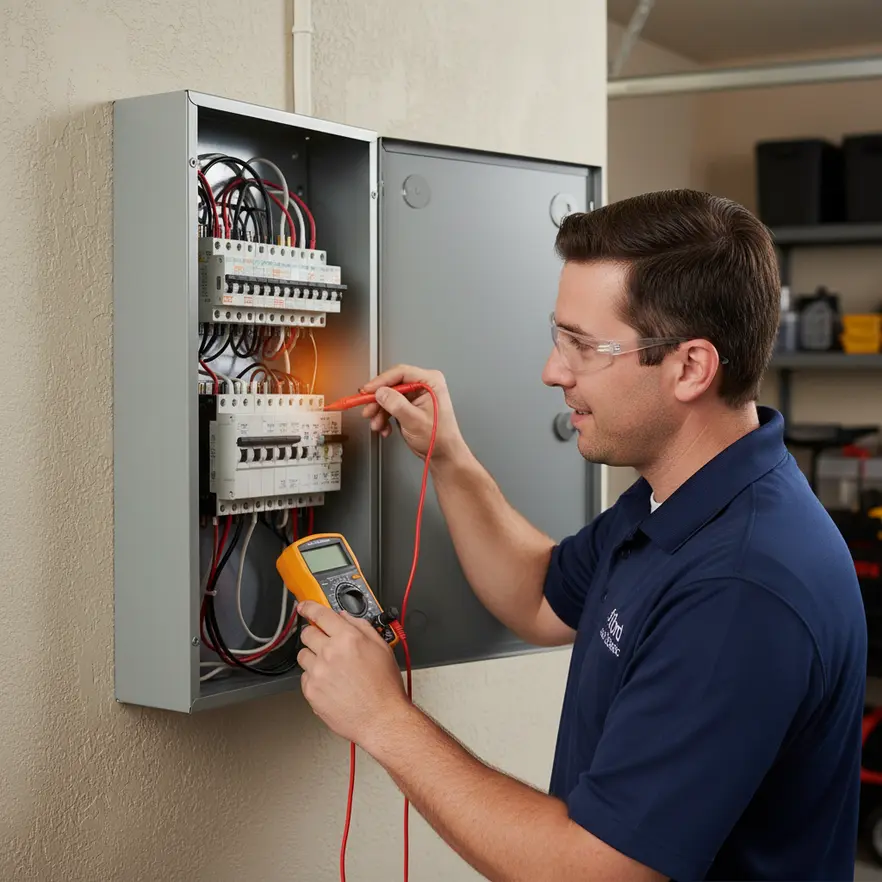
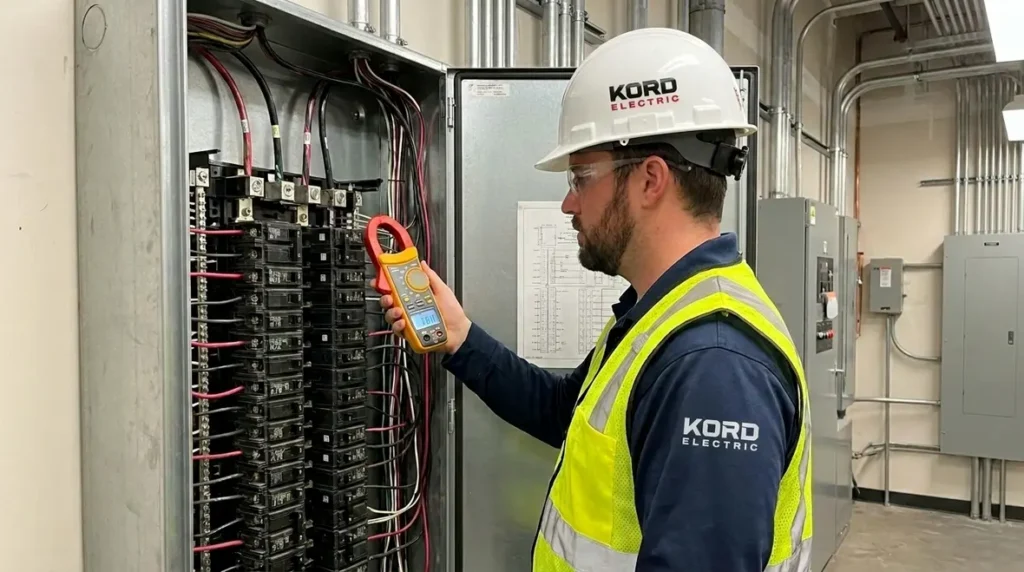
At Kord Electric, our expert service staff looks at the system as a whole. We do not just count empty breaker spaces. Instead, we evaluate available capacity, conductor and busbar limits, breaker compatibility, heat and aging signs, and whether the architecture allows safe expansion. If your building is adding loads, we often find that electrical panel expansion feasibility depends on several factors working together, not one single measurement.
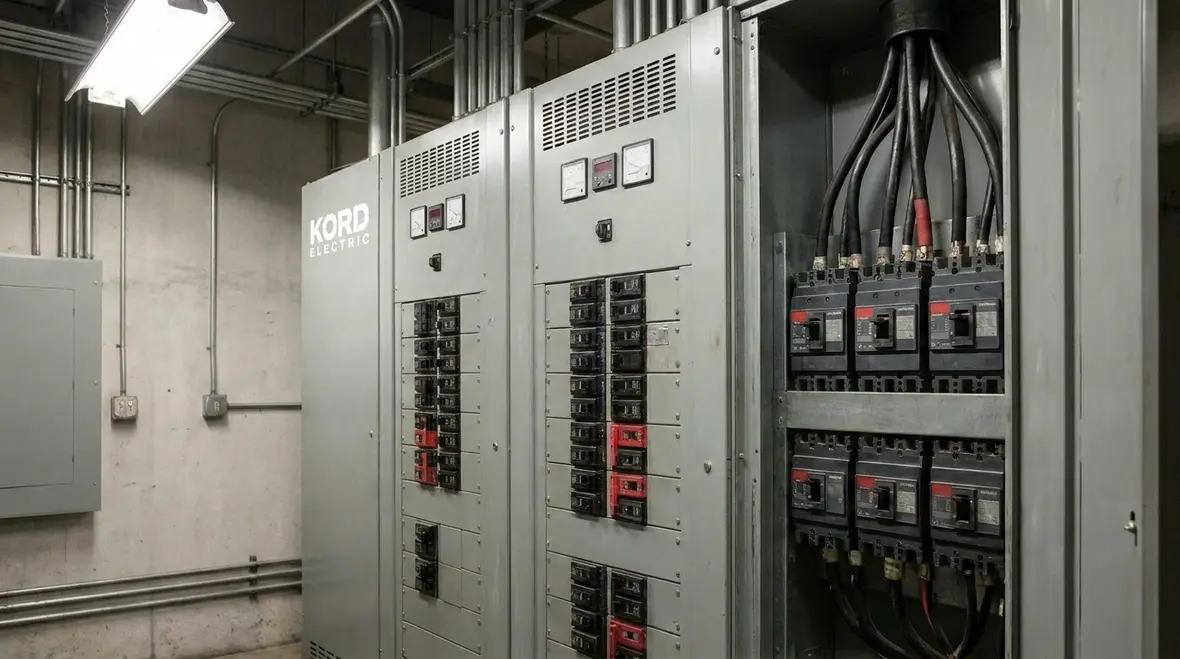
Key signs you need to expand now
Sometimes the best move is to add capacity to the existing panel. Typically, electrical panel expansion feasibility looks positive when the panel still has healthy components and only needs additional breaker positions or minor distribution adjustments. In these cases, you can often avoid a full replacement and keep operations moving.
Here are the signs we see most often in commercial and industrial facilities:
- Enough physical space inside the enclosure for additional breakers, without forcing unsafe wiring practices.
- Capacity still available based on load calculations, panel ratings, and downstream limitations.
- Good condition of busbars and terminations, with no evidence of overheating, corrosion, or brittle insulation.
- Stable service conditions, with no ongoing issues that indicate deeper system failure.
- Clear pathway for added circuits, including proper labeling, safe routing, and adequate labeling for service continuity.
And look, expansion is not always a “cheap fix,” but it can be a smart one. It often fits tenant schedules, reduces disruption, and gives you breathing room for near term growth. Still, we make sure the expansion does not create future bottlenecks. Because if you add capacity in the wrong place, you simply move the problem to a different room.

When an upgrade beats expansion
Other times, the existing panel cannot safely support new demand. Then a panel upgrade makes more sense. We lean toward upgrade when the risks outweigh the benefits of expansion, or when the system shows signs of age, stress, or design limits.
Our technicians explain it in plain terms during site walkthroughs, especially when building managers worry about cost or downtime. We tell them what we see, then we show the logic behind the recommendation. That way, decision makers understand the “why,” not just the “what.”
Upgrade is often the right call when:
- The panel is undersized for the calculated load growth, even if spaces are technically available.
- Busbars or major components show deterioration, including heat damage, discoloration, or loose connections.
- Technical incompatibility exists, such as breaker types that cannot be matched safely to the existing panel system.
- Safety concerns appear, including lack of clear labeling, poor conductor routing, or signs of past work that do not meet current standards.
- Risks linked to hidden hazards appear during inspection, which can connect to issues like loose terminations and overheating inside the panel.
If you have ever watched a sitcom where the “small problem” grows into a full disaster in twenty minutes, you already know the pattern we try to prevent. Electrical systems do the same thing, just with less laughter and more consequences.
If you want a deeper dive into the kinds of issues that quietly build up in large facilities, our article on hidden electrical risks in commercial buildings walks through how loose connections, aging components, and overloaded circuits turn into real downtime when nobody is looking.
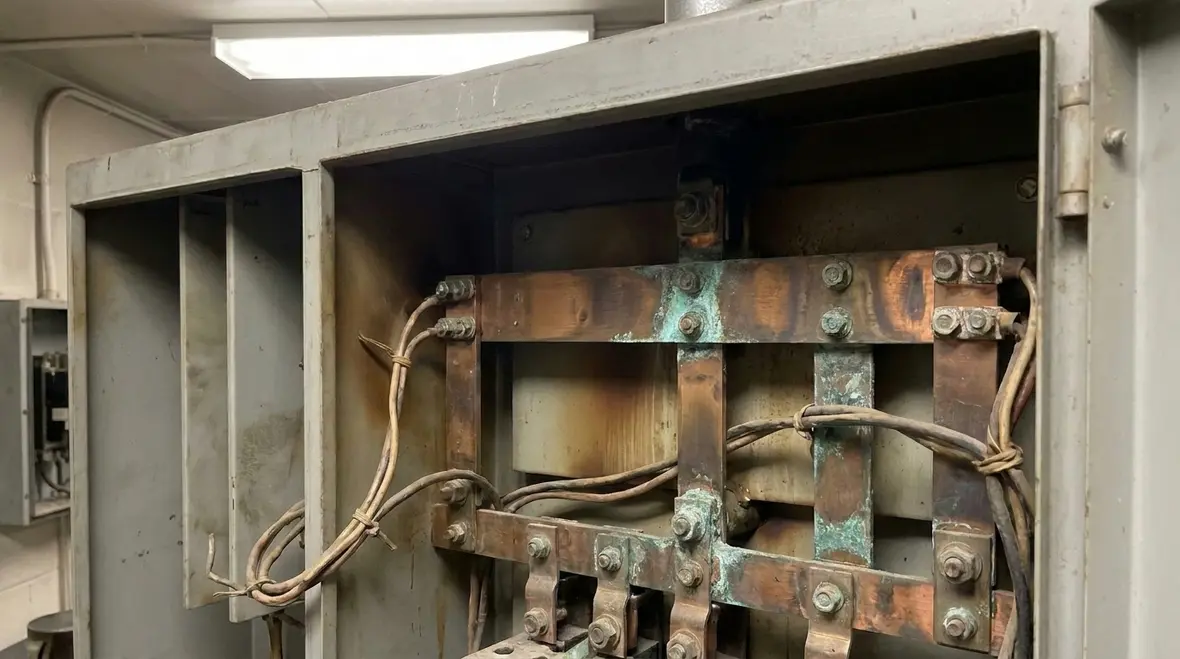
Hidden electrical risks that push the timeline earlier
In our work across commercial and industrial sites, we often find hidden electrical risks that accelerate the need for corrective action. If the panel already shows warning signs, waiting can cost more than a planned move. In other words, we do not schedule upgrades because we enjoy paperwork. We schedule them because we see what happens when heat, arcing, and loose connections go unchecked.
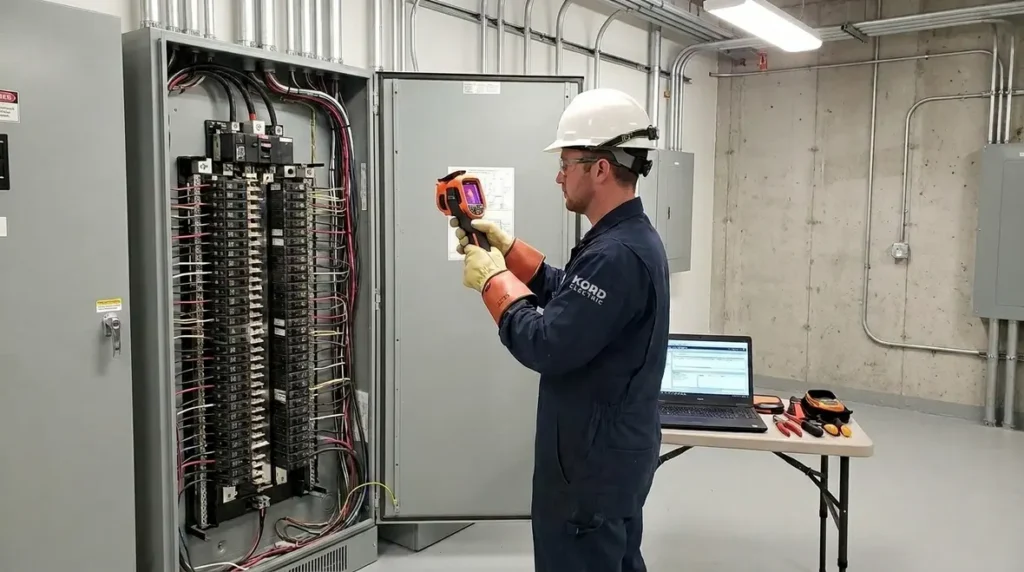
Our team has written about these hidden risks in commercial buildings, and the theme is consistent: minor issues inside the distribution system can start small and then escalate. For example, connections that loosen over time can create localized heating. Over time, heat can degrade insulation, damage terminals, and increase resistance. As resistance rises, the panel runs hotter, and the risk compounds. Eventually, the building experiences nuisance trips, voltage dips, or worse.
So when we evaluate electrical panel expansion feasibility, we also look at whether the panel is healthy enough to safely accept new circuits. Even a properly designed expansion can fail if the existing foundation is already stressed. That is why we focus on condition, not just capacity. And if we find risks like overheating evidence, we help you choose the safest timing, either by upgrading or by performing targeted corrections before adding load.
If those risks show up beyond the panel, such as inconsistent system performance or sensitive equipment reacting badly to power quality, our guidance on voltage fluctuations in commercial and industrial facilities explains how unstable power can hint at deeper distribution problems.
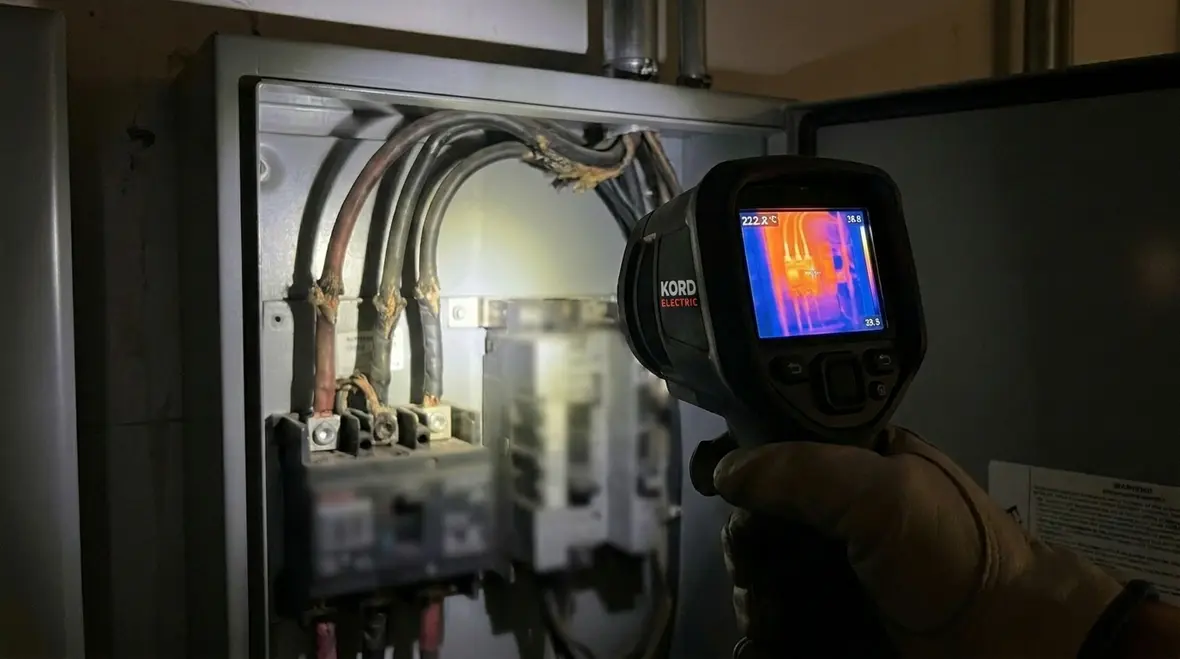
How our technicians decide, step by step
Decision making should never feel like a coin flip. At Kord Electric, we use a method that keeps your building operations in mind while still protecting safety and performance.
Here is how our technicians typically approach the choice between expanding and upgrading commercial panel systems:
- We gather current load data, including existing loads, planned growth, and the real operating profile of the facility.
- We inspect panel condition, focusing on terminations, busbar condition, and signs of thermal stress.
- We review labeling and circuit organization to ensure future maintenance stays clean and clear.
- We check compatibility, confirming that new breakers and components fit safely within the panel design.
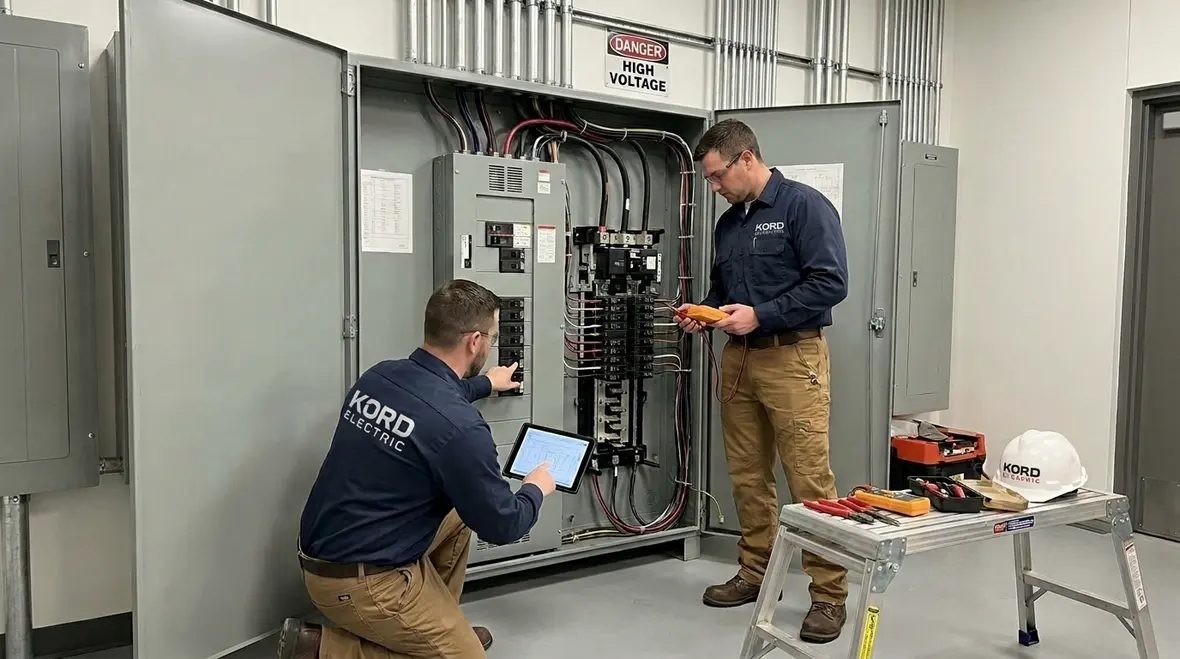
- We run feasibility analysis to confirm electrical panel expansion feasibility when appropriate, including bus capacity and downstream constraints.
- We outline the plan clearly so your team knows what happens, when it happens, and how we reduce downtime.
Then we explain it in a business casual way, the kind that helps managers make decisions without feeling like they need a degree in power distribution. If the plan is to expand, we say what we will add and what boundaries you must respect. If the plan is to upgrade, we show how the improved system reduces future risk. Either way, we make sure your facility stays ready for the next chapter of growth.
For facilities that want this decision making wrapped into a structured service strategy, our commercial and industrial electrical maintenance plans explain how ongoing inspections, documentation, and testing keep panels and distribution systems ahead of demand instead of behind it.
Budget, downtime, and safety tradeoffs that managers care about
Commercial and industrial leaders think about three things first: cost, schedule, and risk. So we address all three with honesty. Expanding can reduce upfront cost and shorten timelines. Yet sometimes expansion creates a “pay twice” outcome when the panel must be replaced soon after due to capacity limits or hidden hazards.
Meanwhile, a full upgrade can feel heavier on the budget at first glance, but it may prevent repeated work, future emergency calls, and operating disruptions. Therefore, our expert service staff helps you compare options using real site conditions, not generic spreadsheets.
To keep your downtime low, we also plan around how your building runs. We coordinate work windows, confirm whether temporary power steps are needed, and manage sequencing so critical systems stay supported. And if you are dealing with production schedules, we treat that like a real constraint, because it is.
Also, let us be clear: safety wins. If the panel shows warning signs linked to overheating or loose connections, we do not push forward with risky shortcuts. That is not “conservative.” That is smart management.
When those warning signs cross into unplanned outages or urgent hazards, our dedicated emergency electrical services support commercial and industrial facilities that cannot afford extended downtime while critical panels and equipment get brought back online safely.
Comparing expansion versus upgrade for commercial facilities
To help teams visualize decisions quickly, we use two columns on-site to compare options. This makes it easier for stakeholders to align fast.
Panel expansion
- Often works when the panel is healthy and has safe capacity limits
- Can minimize disruption for near term growth
- Requires careful feasibility checks and compatible components
- Still needs planning for future load growth
Panel upgrade
- Often the safest choice when the panel is aging or stressed
- Improves long term reliability and capacity planning
- Reduces risk from hidden electrical risks inside the system
- Can prevent repeated work when demand keeps rising
FAQ: Panel decisions for commercial and industrial properties
Ready to choose the right path for your facility
When your building adds load, you should not leave panel decisions to guesswork. Kord Electric’s technicians evaluate condition, capacity, and compatibility so you get the safest option for your schedule and your budget. If expansion fits, we show you exactly what to add and where the limits are. If upgrading is the smarter move, we explain the risks clearly and plan the work to reduce disruption. Reach out to us today for a commercial electrical panel assessment.
If your panel evaluation reveals broader issues across the system, our structured electrical preventive maintenance programs keep distribution equipment, switchgear, and connected loads on a clear, proactive path instead of waiting for the next inconvenient outage.