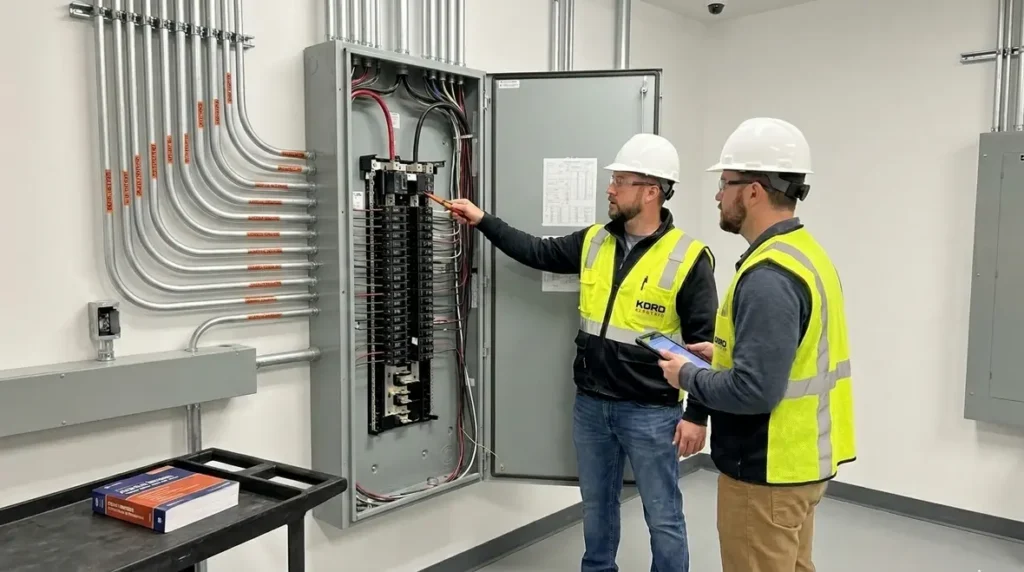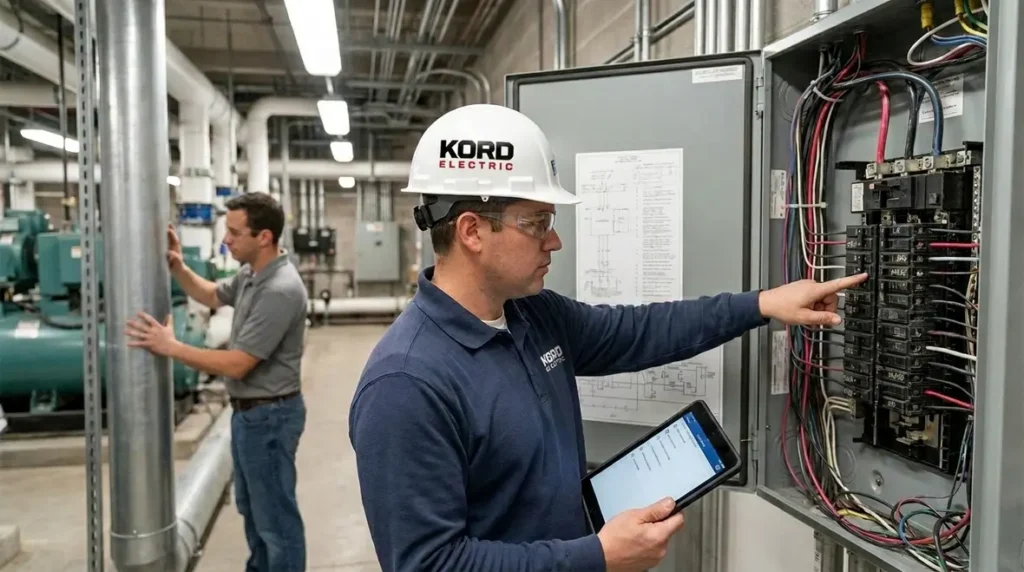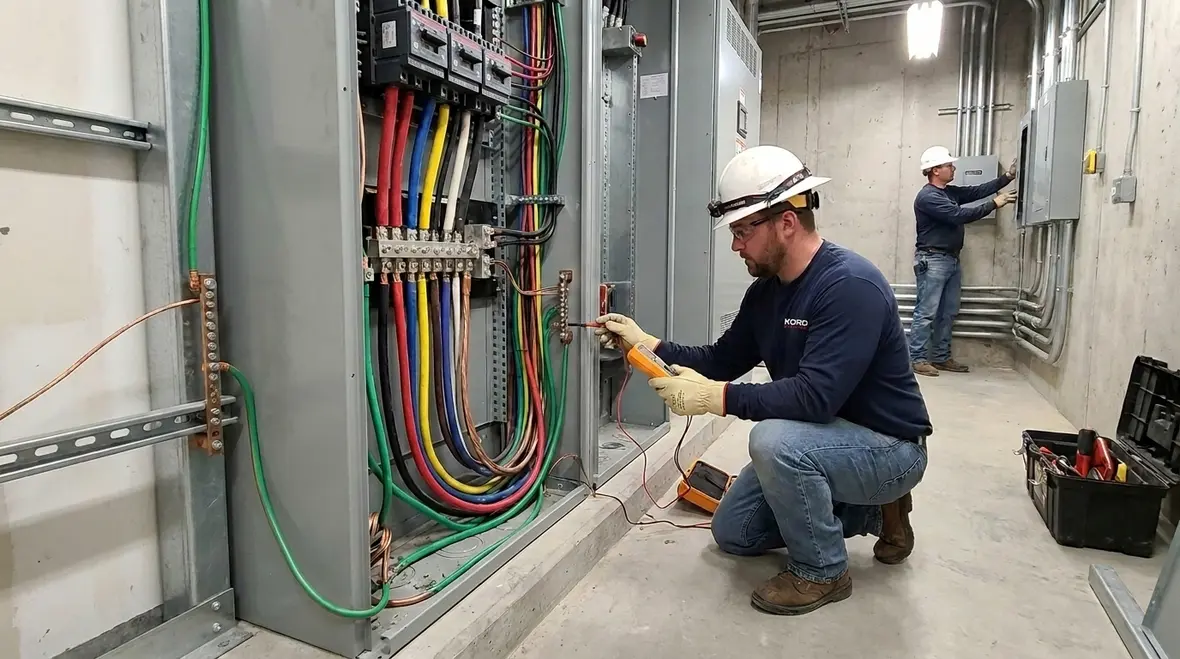
NEC Grounding and Bonding Requirements for Buildings
Kord Electric understands that safety starts below the floor, not in the marketing brochure. That is why we focus on grounding and bonding requirements under the NEC for commercial and industrial facilities and major property buildings. In simple terms, we make sure metal parts stay at safe electrical potential and that fault current travels the right path, fast. Then the protective devices do their job instead of playing a game of electrical “guess who.” Our experienced service staff and technicians explain each step in plain language, so facility managers know what we install, why we install it, and how it helps them meet NEC expectations.
What the NEC wants grounding and bonding to achieve
The NEC does not treat grounding and bonding as optional “extra credit.” Instead, it sets requirements that help reduce shock risk, limit damage during faults, and support overcurrent protection. When an electrical system has proper grounding, the equipment becomes referenced to the earth or an approved grounding method. When bonding is done correctly, conductive parts connect so they stay at nearly the same potential.
And when potential stays controlled, people get less surprised by electricity. That matters in commercial and industrial environments where forklifts, maintenance work, and dense wiring are the norm. For major property buildings, the goal is consistent safety across floors, rooms, and tenant spaces. Kord Electric builds that consistency by following the NEC’s logic and verifying field conditions, not just paperwork.
Service equipment grounding and the fault current path
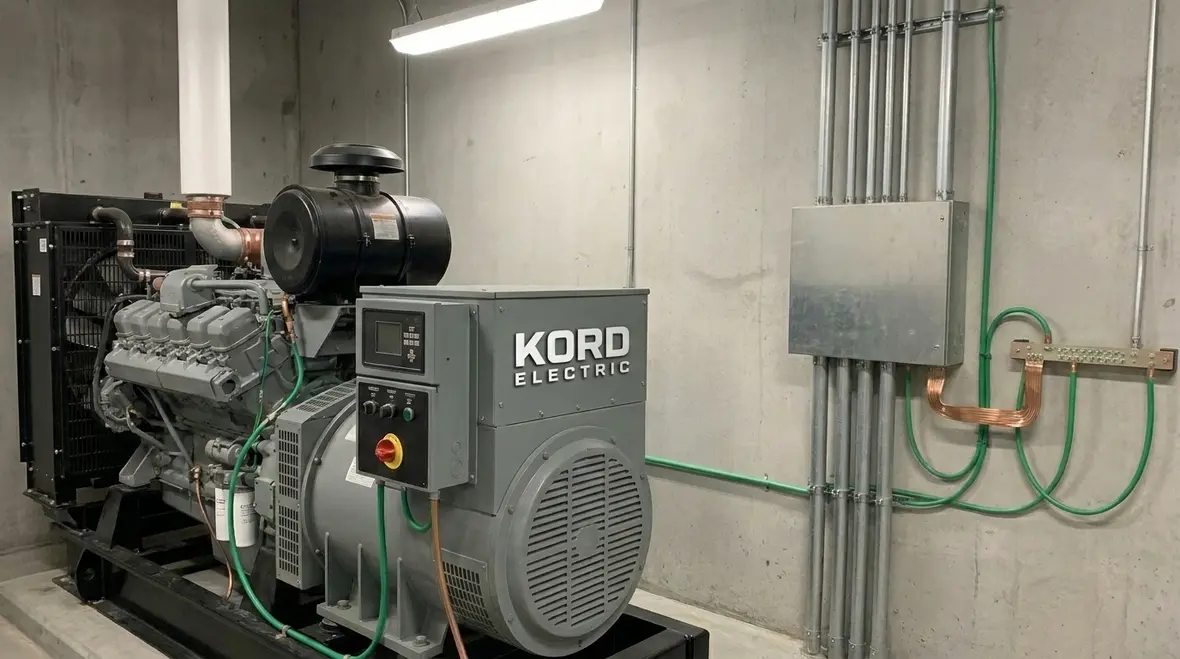
In many projects, the service equipment sets the tone for everything downstream. The grounding electrode system and the main bonding connections determine how fault current will behave when something goes wrong. Therefore, our technicians treat the service as the starting line, and then we trace the path to ensure protection devices can open quickly.
We also account for how the system is actually built, because real sites rarely look like the tidy diagram in a training manual. For instance, bonds may exist but not meet the required integrity, or conductors may be routed in ways that make future modifications harder. Then maintenance teams end up troubleshooting under pressure. So we plan the grounding and bonding requirements up front, and we confirm conductor sizing, connections, and continuity before energization.
Bonding jumpers, metal raceways, and enclosure connections
When conductors fault, metal raceways, boxes, and enclosures should not become dangerous. That is why bonding jumpers and equipment bonding receive attention. We ensure metal parts are electrically connected as the NEC requires, so fault current finds a predictable route back to the source.
Our expert service staff explain a key point to facility teams: bonding is not about “making it grounded someday.” Instead, bonding forms a low impedance connection, and that helps protective devices clear faults. If bonds are missing, loose, or made with the wrong materials, clearing times can rise. Then equipment damage increases, and safety margins shrink. We see this in older buildings where well meaning repairs created weak connections over time.
In addition, Kord Electric checks where raceways end, where boxes meet conduit, and where equipment ties into the building structure. Each junction matters. And yes, we have seen the “perfectly installed” conduit that relied on paint and corrosion to do electrical bonding. Electricity does not respect paint. It never has, and it never will.
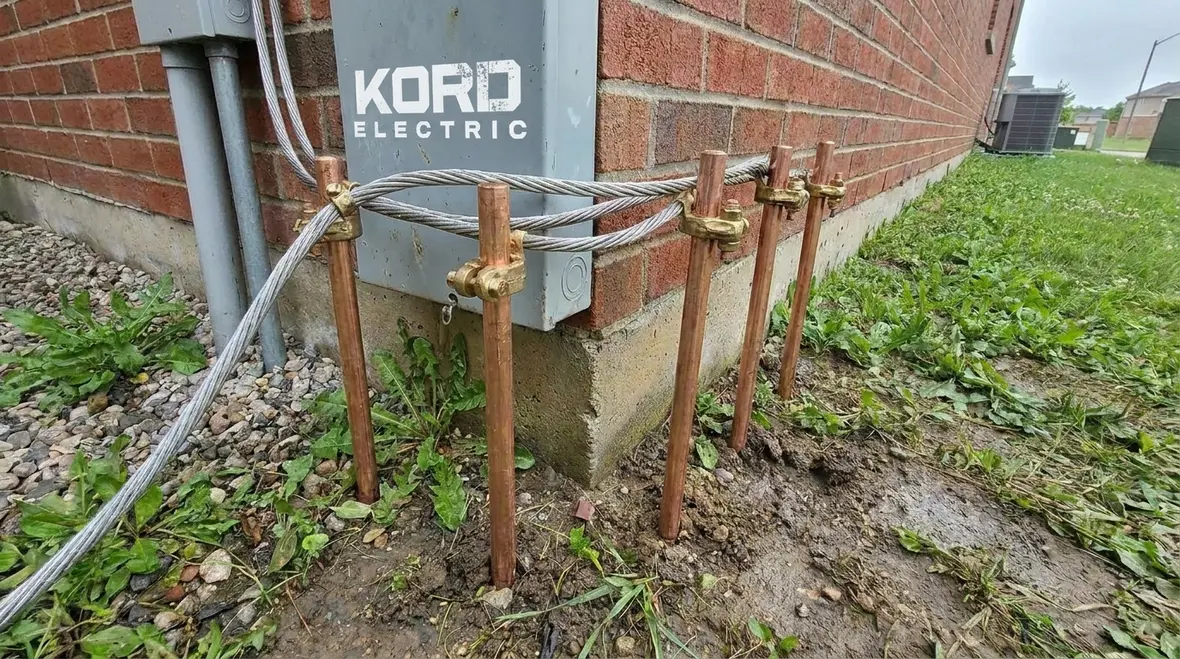
Grounding electrode systems and connection integrity
Grounding electrode systems create the earth reference and provide a stable path for fault current. Under the NEC, electrode requirements focus on proper types, correct connections, and secure bonding where electrodes connect to the grounding system. Kord Electric reviews electrode selection based on the site and verifies installation details that inspections focus on.
We also emphasize connection integrity. That means secure attachment, proper conductor material, correct terminations, and protection where conductors might suffer physical damage. Furthermore, we consider how the building will change over time. For example, new additions, cable tray expansions, and equipment relocations can affect grounding continuity if crews do not maintain bonds.
When our technicians work on major property buildings, we coordinate with mechanical and civil teams. As a result, the grounding electrode system stays coherent even when crews work in the same areas. We keep documentation clear too, because commercial operations need traceable results. Nobody enjoys an inspection that turns into a scavenger hunt.
Bonding for branch circuits, grounding conductors, and receptacles
Beyond the service, the NEC expects branch circuit grounding and bonding to support safe operation across outlets, equipment, and wiring methods. Grounding conductors help keep exposed metal parts from rising to dangerous voltages. Meanwhile, bonding ensures conductive parts connect properly so the fault current returns through the intended system.
In practical terms, we verify grounding conductor routing and connection at panels and device locations. We confirm that equipment grounding conductors remain continuous and correctly terminated. Then we check how devices like receptacles are grounded within the wiring method used at the facility.
Because commercial and industrial spaces see constant change, we also plan for maintenance access. When facilities add circuits, replace panels, or modify tenant spaces, bonding and grounding continuity can be interrupted if work is not coordinated. So Kord Electric provides field checks that focus on what crews actually did, not what a spec sheet hopes they did.
Our team also explains the “why” to facility personnel. When we talk through grounding and bonding requirements, we make it clear that good installation reduces nuisance issues and supports stable protective device performance. In other words, it helps your system behave like a grown up, not like a gremlin with a loose wire.
Separately derived systems, transfer equipment, and onsite generation
Many major property buildings use backup power, transfer switches, UPS systems, and sometimes onsite generation. These separately derived systems require careful grounding and bonding coordination, because the fault current behavior changes based on how the system is connected.
Kord Electric approaches these setups with discipline. We check how the transfer equipment connects, how the system is grounded at the appropriate points, and how bonding is applied to the conductive parts involved. We also verify that downstream equipment receives grounding support that matches the source’s intended design.
Then we align the plan with real operations. For example, a building may add load banks or swap distribution sections. Therefore, we confirm that changes do not break continuity or create unexpected potential differences. Our technicians document results and assist the facility team with what to expect during testing and commissioning.
In short, we help commercial and industrial facilities maintain safe behavior during both normal power and “oh no, the lights went out” power events. Because when power transitions happen, the grounding plan must stay solid.
For facilities adding new power sources or upgrading distribution, it often makes sense to coordinate grounding and bonding with broader upgrades covered in Kord Electric’s articles on commercial electrical systems for modern buildings and data center electrical distribution design for reliability. Those systems only perform as designed when grounding and bonding keep every path predictable.
Inspection readiness and documentation that helps you pass
Even if the installation follows NEC rules, inspection outcomes depend on clarity. Kord Electric prepares for commercial and industrial workflows where multiple trades and schedules collide. So we build documentation that aligns with what inspectors look for: conductor routing, connection methods, bonding points, equipment grounding paths, and verification of continuity.
Our technicians use checklists and field verification steps so the grounding and bonding requirements remain consistent from rough-in through close up. Additionally, we label where appropriate and keep records that facility teams can use later. That matters when a future contractor asks, “Who did this?” and the answer is, “A real team, with real notes, that made it safe.”
We also handle the practical side. For example, we coordinate with building access constraints and downtime windows. We do not treat grounding work like a “someday” project. We treat it like part of your safety program, because it is.
For large campuses and multi-building properties, pairing NEC grounding and bonding work with structured electrical preventive maintenance services and broader commercial and industrial electrical maintenance plans helps keep the entire system reliable, not just compliant on paper.
FAQ: NEC grounding and bonding for commercial and industrial facilities
Need a grounding and bonding plan built for your building?
Kord Electric helps commercial and industrial facilities and major property buildings meet grounding and bonding requirements with correct design, careful installation, and field verification. Our technicians and expert service staff explain what we do, why we do it, and how it supports safe fault clearing and inspection readiness. If your site includes panels, expansion work, or backup power, we recommend a targeted review before problems show up. Call Kord Electric today and we will map the grounding paths with you, calmly and clearly.
If your facility upgrades also include lighting, distribution, or panel work, Kord Electric can coordinate NEC grounding and bonding with complementary services such as lighting installation services and electrical preventive maintenance, so your building gets a unified, code-compliant electrical strategy instead of disconnected one-off fixes.
For campuses, manufacturing sites, and multi-tenant commercial properties, a grounded, bonded, and well-maintained system turns inspections, expansions, and future projects into planned events instead of emergency responses. That is the difference between scrambling to react and confidently building the next phase of your facility.