Electrical Panel Load Balancing for Commercial Growth
Electrical Panel Load Balancing: The Quiet Backbone of Commercial Growth
Commercial buildings do not grow quietly. They expand through new tenants, added production lines, fresh HVAC loads, and more late night equipment than anyone planned for. That is exactly why Electrical Panel Load Balancing matters. When we balance loads across the panel, we reduce hot spots, prevent nuisance trips, and keep power quality steady as demand shifts. In other words, we help a growing operation stop fighting its electrical system and start running with confidence.
At Kord Electric, our team explains this in plain language, but we also bring the field experience that matters. So, while other companies talk about “good enough,” we focus on what works when the building gets busy. Because if the electrical panel is like a group chat, you do not want one person getting all the notifications. You want a fair split.
What load imbalance does to commercial power quality
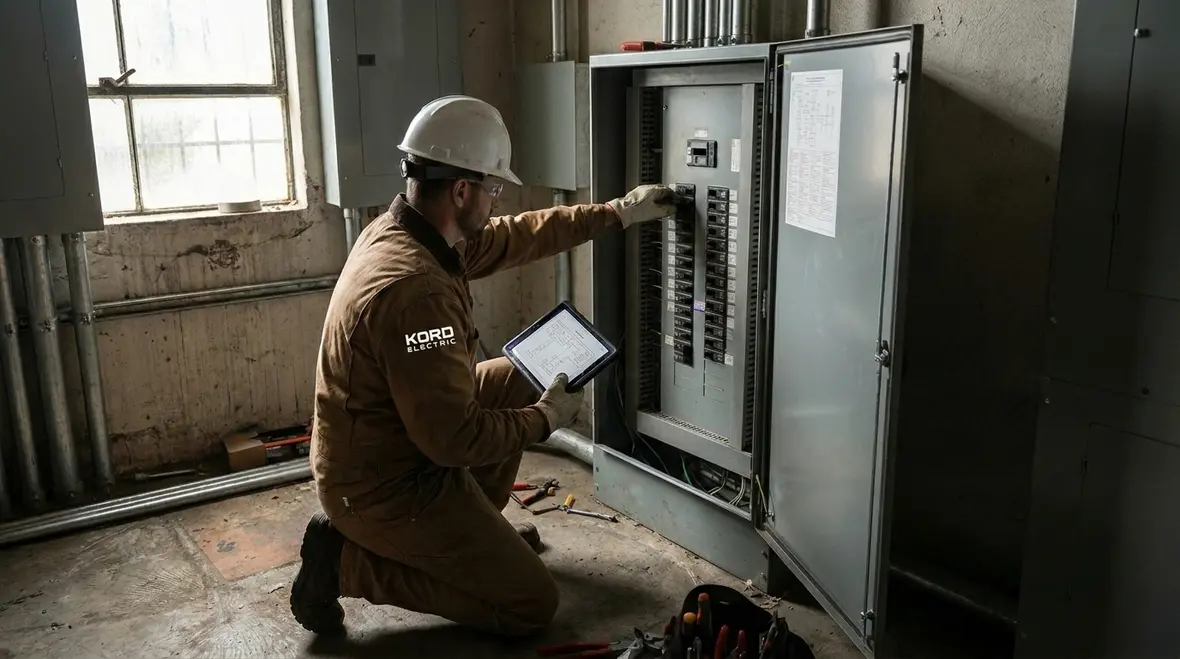
In commercial and industrial facilities, panel loads rarely stay still. Equipment cycles, schedules change, and new loads plug in faster than the planning meeting. As a result, one circuit section can become overloaded while another stays light. Then the panel begins to run hotter than it should, and that heat does not stay contained for long.
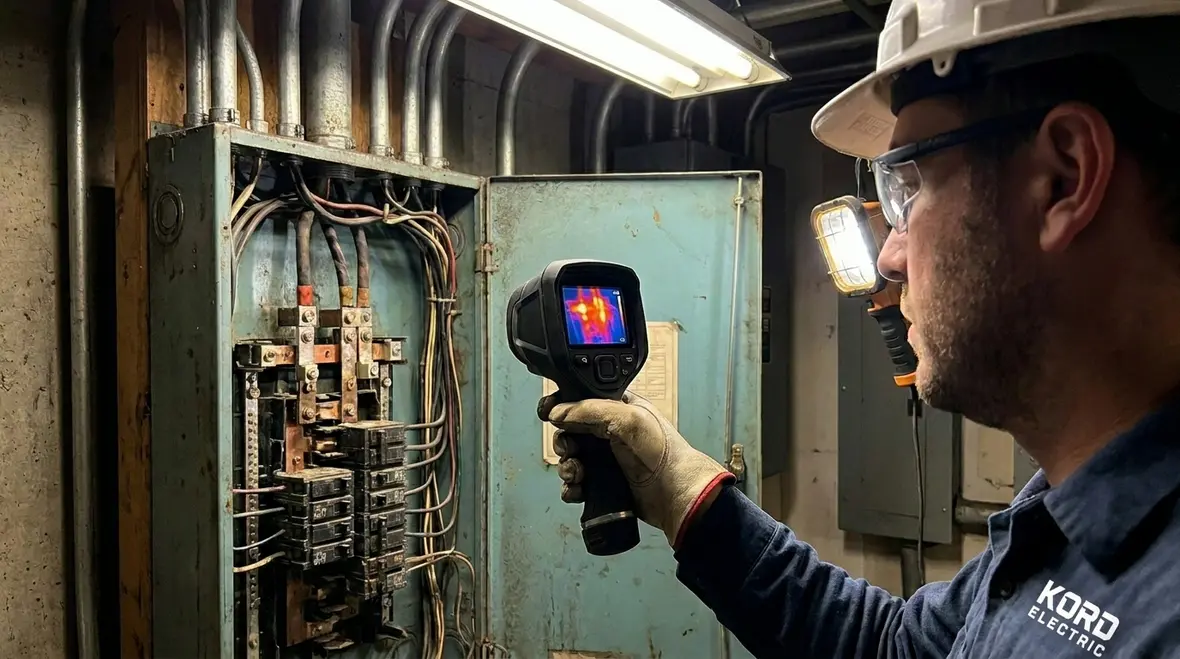
Our technicians often see the same pattern. First, there is a small sign like frequent breaker trips or a few lights that flicker. Next, thermal stress builds at terminations and bus connections. Finally, you start paying for problems that do not show up on any rent roll. Loads that concentrate on one phase raise the risk of overheating and voltage imbalance, which can harm motors, drives, and sensitive controls.
Furthermore, imbalanced loading can increase neutral current in certain wiring setups, and that matters because neutrals do not enjoy extra heat. So even when the main breaker does not trip, the panel components still age faster. In the long run, that is how a “minor” electrical issue becomes a major shutdown event.
Why growing facilities need smarter distribution, not bigger guesses
When operations expand, many teams respond with a simple plan. “Add a breaker. Add a panel. Add capacity.” It sounds practical, and sometimes it is necessary. However, we often find that the first need is not more hardware. It is better distribution across existing sections, so the new demand fits safely.
As facilities grow, load mix changes. Offices need computers and charging stations. Warehouses need forklifts, dock equipment, and lighting upgrades. Manufacturing brings compressors, pumps, conveyors, and drive loads. Each of those behaves differently, and so a one time “set it and forget it” approach no longer holds.
That is where Electrical Panel Load Balancing earns its keep. Our expert service staff uses load data and real operating patterns to keep phases in step and circuits aligned with intended capacity. In effect, we help your distribution match how your facility actually runs, not how it used to run.
And yes, sometimes management asks for a quick fix. We get it. Like adding one more chair to an already crowded conference room. It feels fast. It is rarely stable.
How we balance loads in the field, step by step
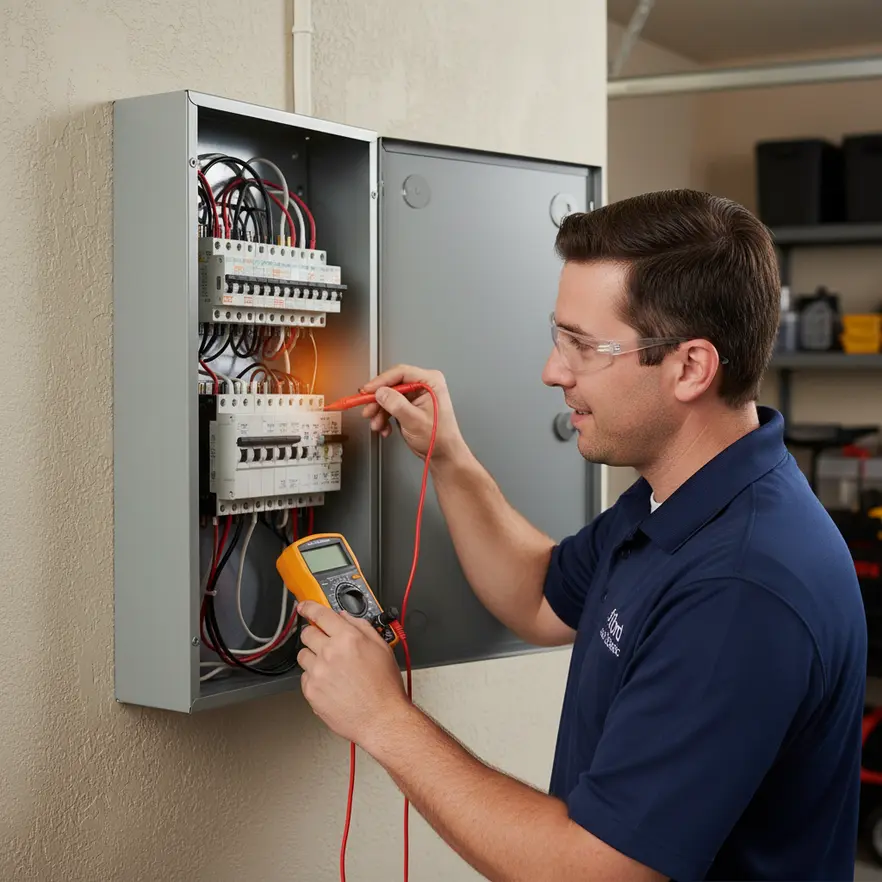
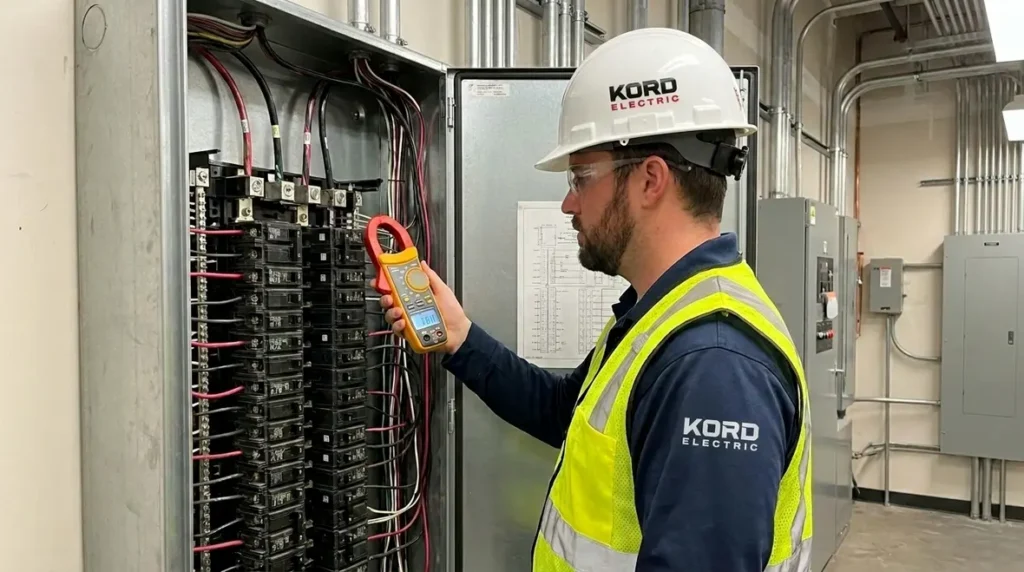
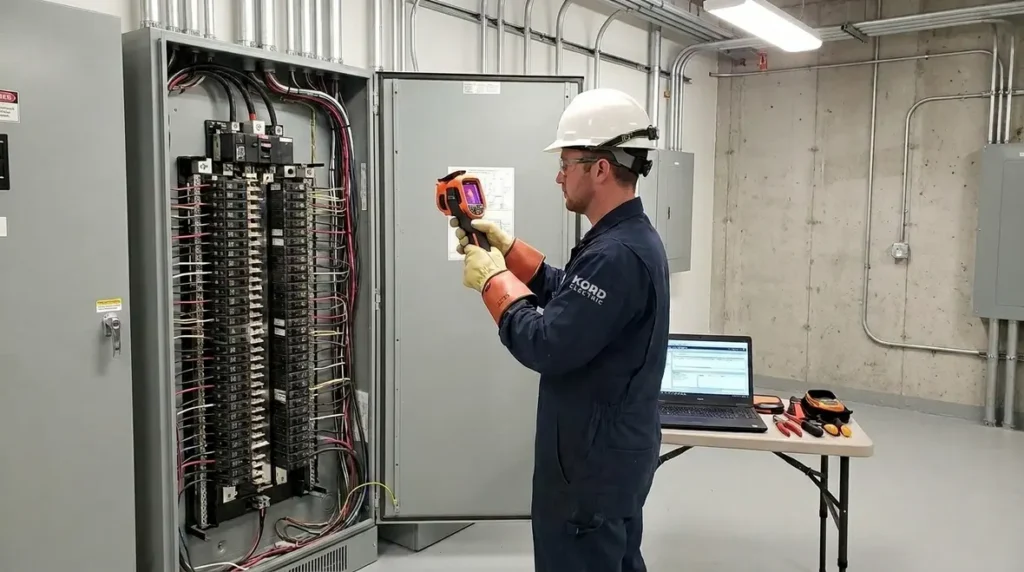
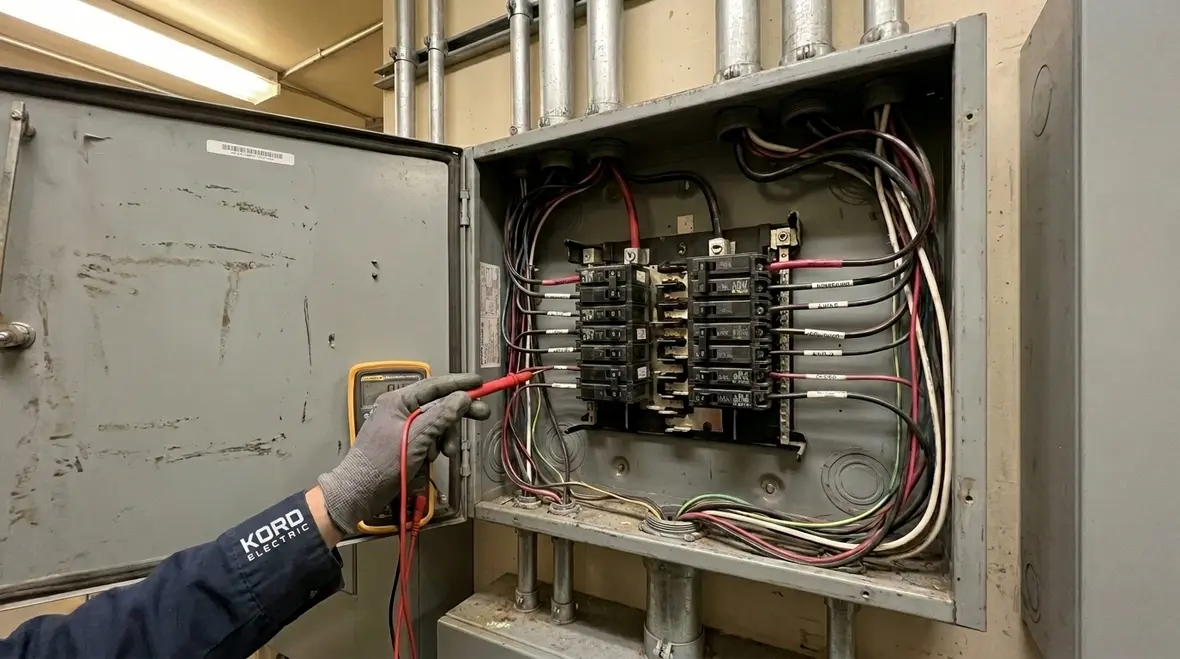
At Kord Electric, we treat load balancing as a process, not a one time adjustment. First, our team evaluates the current panel schedule and circuit assignments. Then we review any recent changes, such as new HVAC equipment, production equipment additions, or changes in tenant activity. After that, we measure or calculate actual load levels, because labels and assumptions do not always match reality.
Next, our technicians map the panel and identify where imbalance shows up. We pay close attention to phase distribution, shared neutrals, multi wire branch circuits, and any overloaded terminations. Then, we plan the circuit moves that reduce heat and improve evenness across phases.
After the rerouting plan is approved, we execute safely and methodically. We verify breaker settings, torque connections when required by code and manufacturer guidance, and confirm that conductor sizing supports the revised assignments. Finally, we document the changes so your facility operations staff can plan future upgrades without guessing.
Importantly, our expert service staff explains each step during the process. We do not just move circuits and disappear like a magician leaving the stage. We walk others through what we found, why it matters, and how the new balance supports stable operation.
Panel maintenance and load balancing work together
Even with good Electrical Panel Load Balancing, a system can drift out of compliance due to aging parts, loose connections, or ignored maintenance. That is why we tie balancing work to panel and switchgear care for commercial and industrial facilities.
If you want a practical reference for how we think about maintenance, our team points clients to our Kord Electric blog on NFPA 70B Electrical Panels and Switchgear Maintenance. That guidance supports how we approach inspection, cleaning, and monitoring, because safe performance depends on more than just the initial setup.
For example, when heat concentrates due to imbalance, connections can loosen over time. Therefore, a balancing effort paired with proper maintenance reduces the chance of recurring issues. In the same way, maintenance without load balance can still leave the panel living in the hot zone during peak hours.
So, we combine both. We help facilities keep their distribution even while also keeping components in good health. It is the difference between “we installed it” and “we keep it reliable.”
Signs a commercial building needs load rebalancing now
Sometimes the need becomes obvious. Other times, it hides in plain sight. Either way, our technicians and expert service staff see patterns that point toward Electrical Panel Load Balancing improvements.
Watch for the following signs in commercial and industrial settings
- Breakers trip during normal operations, especially during startup or peak production hours
- Hot panel covers, warm bus bars, or odors that suggest overheating
- Frequent nuisance alarms from monitoring systems tied to voltage or power quality
- Lights flicker when motors start, even when the facility “looks fine”
- Evidence of load growth in one area, like more plug loads or added HVAC capacity
- Uneven phase readings when someone checks the system after an upgrade
Then there are the quiet signs. A panel that runs hotter than before. A short production pause that people blame on “the process.” However, the electrical system does not care about your schedule. It reacts to load and heat, every time.
If you notice these issues, we recommend a careful review rather than another guess. We help facilities reduce risk before it forces an unscheduled shutdown.
Common mistakes facilities make during electrical upgrades
During renovations and expansions, teams often focus on the obvious part of the project, like new equipment and updated outlets. Meanwhile, the electrical distribution behind the scenes gets treated like background scenery. That is where problems start.
We see several recurring mistakes. First, facilities add circuits to available spaces without checking phase balance. Second, they move loads during construction but never update the panel schedule or circuit mapping. Third, they assume that breaker size equals safe capacity, without considering conductor heating and terminations.
In addition, some teams rely on “average” load estimates. Yet commercial operations rarely run at average. They spike. They ramp up. Then they ramp down. As a result, a distribution that looks acceptable on paper can fail under real conditions.
Our expert service staff helps prevent these errors by aligning new loads to existing capacity, verifying balance, and then confirming performance through inspection and testing. So instead of fixing the electrical system after the fact, we help clients build it right from the start.
And for those who think this is all overkill, consider this. Electrical failures do not send an email warning. They just show up, like a surprise plot twist in a movie you did not buy tickets for.
FAQ about Electrical Panel Load Balancing for commercial buildings
Conclusion: Let us stabilize your facility’s power before growth destabilizes it
Commercial growth should feel like momentum, not like a recurring electrical challenge. Kord Electric helps facilities improve Electrical Panel Load Balancing so power stays steady, components stay cooler, and operations avoid surprise disruptions. Our technicians and expert service staff review your real loads, rebalance circuits safely, and connect the work to strong panel and switchgear maintenance. If your building added equipment, tenants, or shifts, contact us now. We will help you keep the electrical system ready for what comes next.
If you want to connect Electrical Panel Load Balancing to a broader maintenance strategy, explore our dedicated Electrical Preventive Maintenance services. Coordinated preventive maintenance and smart load distribution work together to keep commercial and industrial facilities running with fewer surprises and more control.