Electrical Safety Checklist for New Commercial Buildings
Electrical Safety Checklist New Commercial Building: what we verify before doors open
A new commercial building is supposed to feel fresh, safe, and ready to serve the public. Yet the real work happens behind the walls long before anyone walks through the lobby. For any electrical safety checklist new commercial building project, we at Kord Electric focus on the details that help prevent shock, fire, and costly downtime.
In this guide, our seasoned electricians and expert service staff walk through the same safety steps we use for commercial and industrial facilities and major property buildings. And yes, we do it calmly. You can call it “grown up behavior,” because burned wiring is not a personality trait. Others might rush. We do not. Instead, we verify, test, document, and explain everything so building teams know what is happening and why it matters.
Start with a plan, not a hope
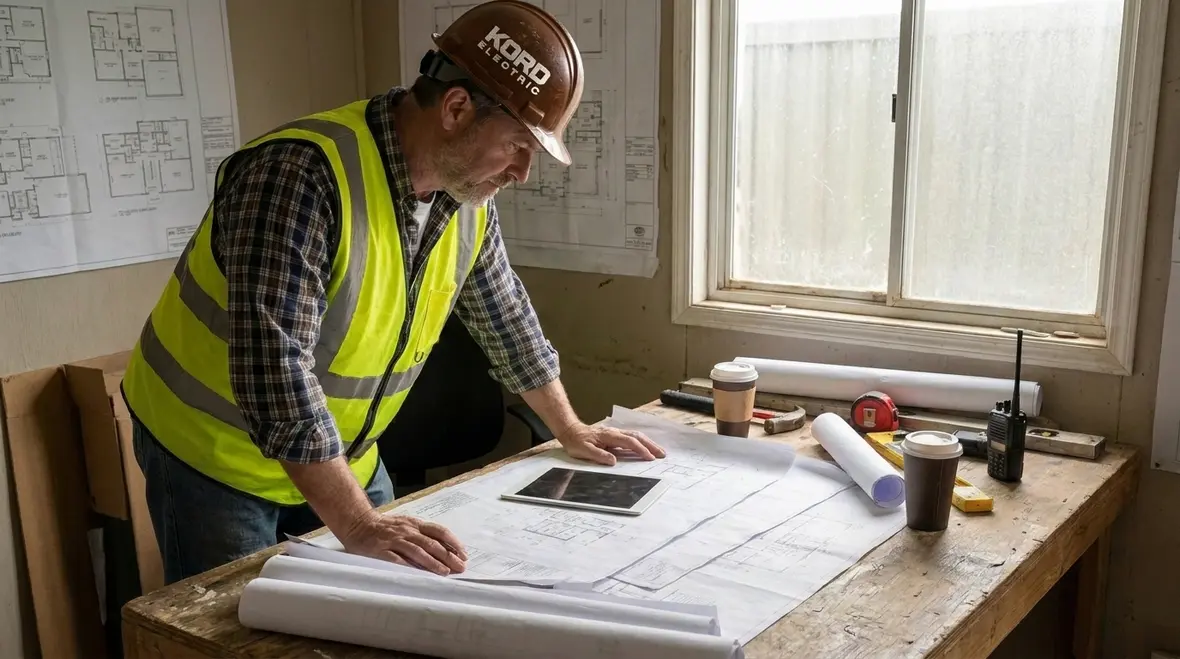
Before power gets energized, we build a clear plan that connects design intent to real site conditions. First, we review electrical drawings, equipment schedules, and any recent change orders. Then we compare them to what is installed. This is where many teams get surprised. A spec says one thing. A field adjustment says another. If we do not catch that mismatch early, it usually shows up later as a heat problem, nuisance tripping, or a shutdown that no one budgets for.
Next, we confirm who owns each part of the system. We identify responsibilities for commissioning, testing, labeling, and maintenance. After that, we define inspection milestones and hold points. In plain terms, we decide when the site is ready for the next step and when it is not.
Our technicians also verify that the building team understands the operating sequence. They explain how feeders, panels, ATS units, and life safety circuits work together. And when they explain, they do not hide behind jargon. If someone in property management asks, “What happens when the power flickers,” they get a real answer, not a shrug.

Inspect service entrance, grounding, and bonding like it is the main character
The service entrance sets the tone. If it fails, everything downstream suffers. Therefore, we check incoming conductors, terminations, and disconnects before the system goes live. We look at torque values, termination quality, and conductor routing to ensure nothing is stretched, nicked, or pinched.
Grounding and bonding deserve special attention because they shape how electricity behaves during faults. We verify grounding electrodes, bonding jumpers, and continuity paths. Also, we ensure metallic systems that require bonding are actually bonded. That includes raceways, enclosures, and relevant building metal components.
At this stage, we also confirm that protective devices match the calculated fault conditions and available fault current. If they do not, breakers may not clear quickly enough during a fault. Then the building does not just lose power. It risks overheating equipment, damaging gear, and increasing safety hazards.

Confirm panelboards, breakers, and labeling are correct
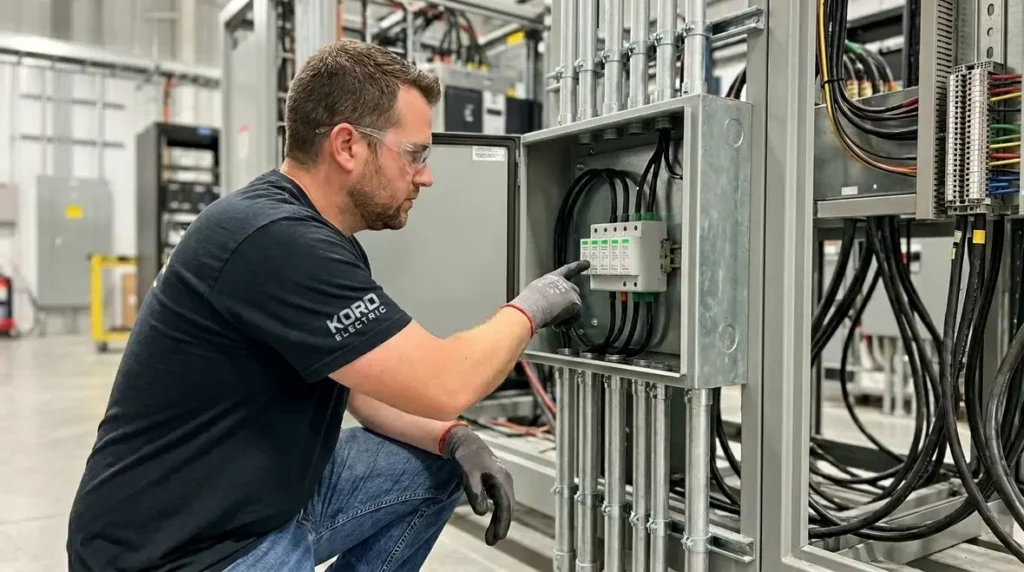
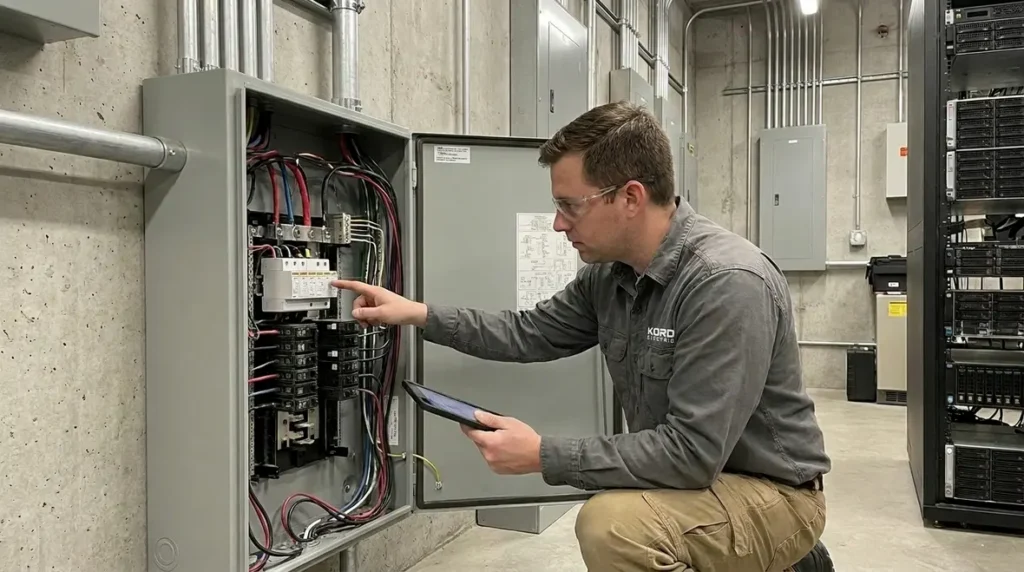
Panelboards can look tidy and still be unsafe. So we verify what matters: correct breaker positions, proper conductor connections, and intact insulation. We check that circuit directories reflect reality, and we update labels when needed.
Good labeling sounds small, but it prevents chaos during emergencies. When a fire alarm contractor or facilities team needs to isolate a circuit, they should not play “electrical roulette.” We make sure each panel schedule matches actual wiring and that critical circuits are clearly marked.
Then we verify breaker ratings and the equipment they protect. We also look for shared neutrals, overloaded conductors, and any signs of improper coupling. If anything appears off, our expert service staff explain what they found and what we recommend. That way, building owners and general contractors know the risk, not just the result.
Run tests that catch problems before they turn into outages
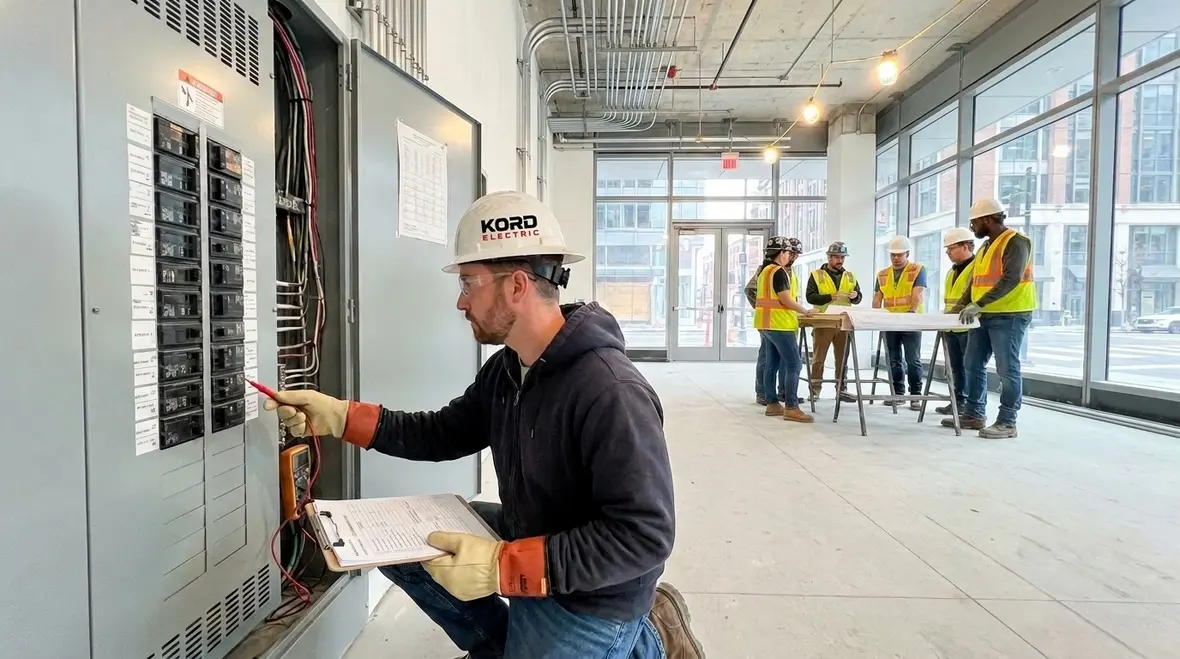
Once we confirm the physical installation, we move into electrical testing. Here, we follow structured checks designed for commercial and industrial environments. For example, we test insulation resistance, verify polarity where relevant, and confirm continuity in key paths. We also verify equipment grounding paths.
We pay attention to thermal and load related risks because many failures start quietly. A loose connection can hide for weeks, then heat up when demand rises. Therefore, we perform targeted checks that help reveal weak terminations, abnormal readings, or workmanship issues.
After that, we verify protective device performance where the project scope requires it. We check whether breakers, fuses, and any ground fault or arc fault components operate as intended. Additionally, we inspect any life safety distribution components because they serve critical loads under abnormal conditions.
During testing, our technicians take time to explain the readings. They help teams understand what “pass” means and what “review” means. And they do it without making it feel like a math class. If a facility manager needs a quick explanation for leadership, we give them clean talking points.
Prevent electrical fire risks with practical verification steps
Electrical fires do not start like fireworks. They usually start like slow leaks. Loose connections, degraded insulation, and overloaded circuits create heat. Over time, that heat becomes a problem. So, we use established fire prevention practices for commercial buildings, aligned with the principles described in our article on electrical fire prevention for commercial buildings.
Here is what we verify as part of our electrical safety approach for major property structures and industrial sites.
- Overcurrent protection: We ensure protective devices match conductor sizes and load requirements, so faults clear fast and do not linger.
- Connection quality: We verify terminations look correct and test where appropriate, because poor contact often shows up as heat.
- Conductor condition: We inspect insulation for damage and confirm cable and wire routing protects conductors from abrasion.
- Accessibility: We confirm panels, pull boxes, and disconnects remain reachable, so inspection and maintenance can actually happen.
- Moisture and environmental protection: In commercial sites, moisture and dust can change performance. We check equipment ratings for the actual conditions.
And if you are wondering, yes, we also look for the boring stuff that causes the loudest problems. In the real world, a poorly tightened lug does not care that the contractor said, “It feels solid.” Electricity does not use vibes. It uses physics.
Commission safely: coordinate, train, and document
With the system tested, the building enters commissioning. At this step, coordination matters. We work with general contractors, inspectors, and any relevant third party testing teams when schedules overlap. Then we confirm that critical loads and system sequences work correctly.
Training is the next piece. Our expert service staff explain operating basics to facilities teams, including what they should monitor and what they should not touch. They walk through shutoff locations, reset procedures, and how to respond to alarm conditions.
Finally, we document everything clearly. That includes test results, device information, labeling updates, and maintenance recommendations. Why? Because future troubleshooting is faster when documentation exists. It also helps building teams keep compliance clean during routine audits.
We keep the tone calm, but the standards are firm. Slow progress with fewer mistakes beats rushed progress that creates a fire drill later. And we do not want the only training your building team gets to be from smoke alarms.
Add an electrical safety checklist new commercial building routine after opening
An electrical safety checklist new commercial building review should not end on opening day. Once tenants move in and equipment starts running under real loads, patterns change. Breakers that never tripped during testing might start seeing inrush currents from elevators, packaged units, or data closets that were not fully populated during commissioning.
That is why we recommend a structured follow up review after the building has a few months of real operation behind it. Our team can walk the same panels, feeders, and life safety circuits with updated load information, check for early signs of wear, and adjust recommendations before “small quirks” turn into “big outages.” For multi building or campus style properties, this follow up often pairs well with broader Los Angeles County electrical services support so facilities teams are not juggling different vendors for every small issue.
In practice, that ongoing checklist focuses on load trends, any nuisance tripping, temperature changes in equipment rooms, and updates to labeling or occupancy patterns. It also gives property management a clean, repeatable process to show stakeholders how electrical safety is being managed year over year, not just at construction closeout.
Coordinate safety with your broader power strategy
A strong electrical safety checklist new commercial building process is also a chance to align with your bigger power strategy. If your site will eventually add emergency power, EV charging, or more dense tenant loads, early coordination saves money and headaches later. Our electricians routinely connect new building safety reviews with planning for backup systems and uptime priorities, applying lessons similar to what we describe in our business continuity and critical power guides on the Kord Electric blog.
Instead of treating safety as a box to check, we treat it like the foundation for expansion. That means documenting where spare capacity exists, where future equipment can tie in, and how to preserve selective coordination as loads grow. For ownership teams that plan to hold a building long term, that kind of foresight is often the difference between controlled upgrades and rushed emergency projects when something finally fails at the wrong time.
FAQ: electrical safety checklist new commercial building
Call Kord Electric for the calm, complete safety check
If your new commercial or industrial building is nearing opening day, you should not trust safety to luck. We can run a thorough safety review, coordinate commissioning steps, test key electrical paths, and help your facilities team understand what they need to monitor after handoff. Our technicians can also align that work with related services such as troubleshooting support or future upgrades, so your electrical safety checklist new commercial building plan fits the broader way your site will operate.
Contact Kord Electric today. Our technicians will explain findings with clarity, keep the process organized, and help you step into occupancy with confidence. Because the goal is simple: safe power, fewer surprises, and a building that stays reliable. If you already know you will need ongoing support beyond opening day, you can also explore our related service options through the Los Angeles County electrical services hub to keep panels, switchgear, and distribution equipment performing as designed.
Learn more about coordinated electrical services for commercial buildings across Los Angeles County