
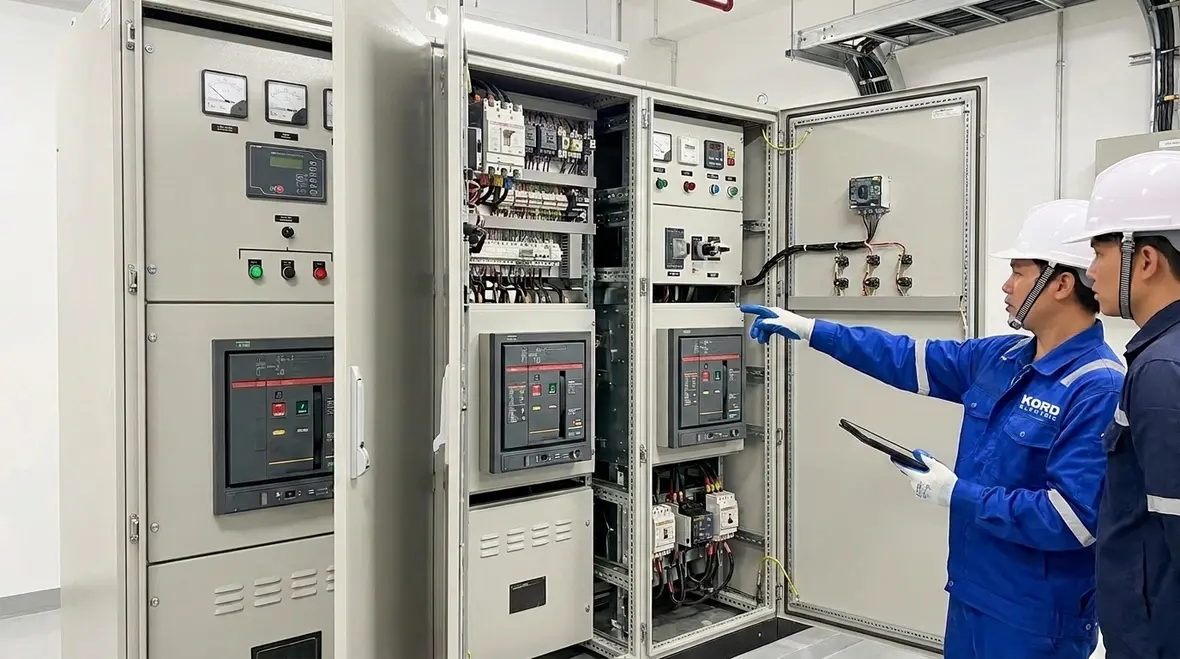
Electrical Switchgear in Commercial Buildings
In what is electrical switchgear commercial buildings, the gear sits at the center of how power moves safely, reliably, and with control. In our experience at Kord Electric, we see that many property managers treat switchgear like background equipment, the way people ignore their smoke detector until it beeps at 2 a.m. Yet when a commercial or industrial facility needs clean operation, the switchgear needs to perform, every day. That is why we explain the “why” as clearly as the “what.” Our technicians and expert service staff walk through the system so others can make better decisions for their buildings.
Below, we break down what switchgear does, where it belongs in major property power systems, and how our team helps facilities stay prepared. And yes, we will keep it business casual, not boring. Even if your last building meeting felt like a rerun of the same plot twist.
What electrical switchgear does in large facilities
Electrical switchgear is a collection of protective and control devices that manages incoming and outgoing power for distribution systems. In commercial and industrial buildings, it typically connects utility power to feeders that serve lighting, HVAC, pumps, manufacturing equipment, elevators, and more. However, its real value goes beyond “connecting wires.” It protects circuits, helps isolate faults, and supports safe operation during normal and emergency conditions.
So, how does it work in a practical sense? Switchgear monitors electrical conditions such as overcurrent and short circuits. When something abnormal happens, it helps disconnect affected sections quickly. This limits damage, reduces downtime, and protects staff and equipment. At the same time, switchgear supports proper coordination, meaning the system trips in the right order, for the right fault, at the right time.
Our technicians at Kord Electric often explain it this way: if power distribution is the highway, switchgear is the on ramp control and the traffic shutdown plan. Without it, everything “still moves,” but when trouble hits, there is no plan. And nobody wants their facility acting like a late sitcom: chaotic, loud, and hard to reset.

If you would like a deeper dive into how gear behaves in mission critical environments, you can explore how switchgear supports redundancy and uptime in our overview of data center electrical infrastructure essentials in the Kord Electric blog. That kind of context helps connect everyday building operations with the more demanding world of continuous power.
Why switchgear stays critical when equipment keeps changing
Commercial electrical systems do not stay still. Loads expand. Tenants change. Operations shift. That means the power distribution network must keep up. We help major property buildings address growth without sacrificing safety or performance.
As facilities add new motors, process equipment, or high demand HVAC, protective devices and settings may need review. Otherwise, nuisance trips can interrupt operations, and worse, protective coordination may fail to respond correctly during a fault. Meanwhile, electrical wear also accumulates over time. Heat, vibration, and thermal cycling can affect insulation and contact surfaces, which means maintenance matters.
That is why our expert service staff focus on both design intent and real world aging. They verify that the system still performs as expected, not just as it looked on paper years ago. And when someone asks if maintenance is “optional,” we usually reply with a calm smile: optional is fine, until power does not agree.
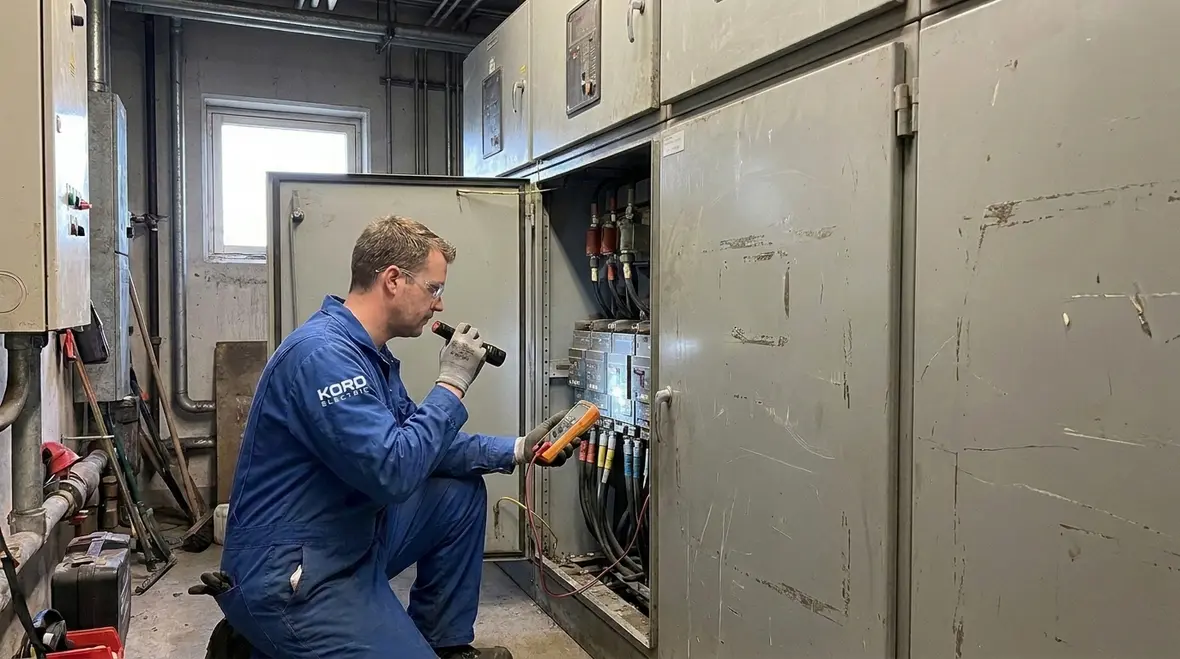
If you want to see how formal maintenance standards shape this work, our NFPA 70B electrical panels and switchgear maintenance guide in the Kord Electric blog walks through how disciplined inspection, testing, and documentation reduce surprises for commercial and industrial buildings.
Key components inside switchgear you should know
Switchgear typically includes multiple parts that work together. Even if you do not manage the electrical design, understanding these components helps you ask better questions and support better decisions for your building.
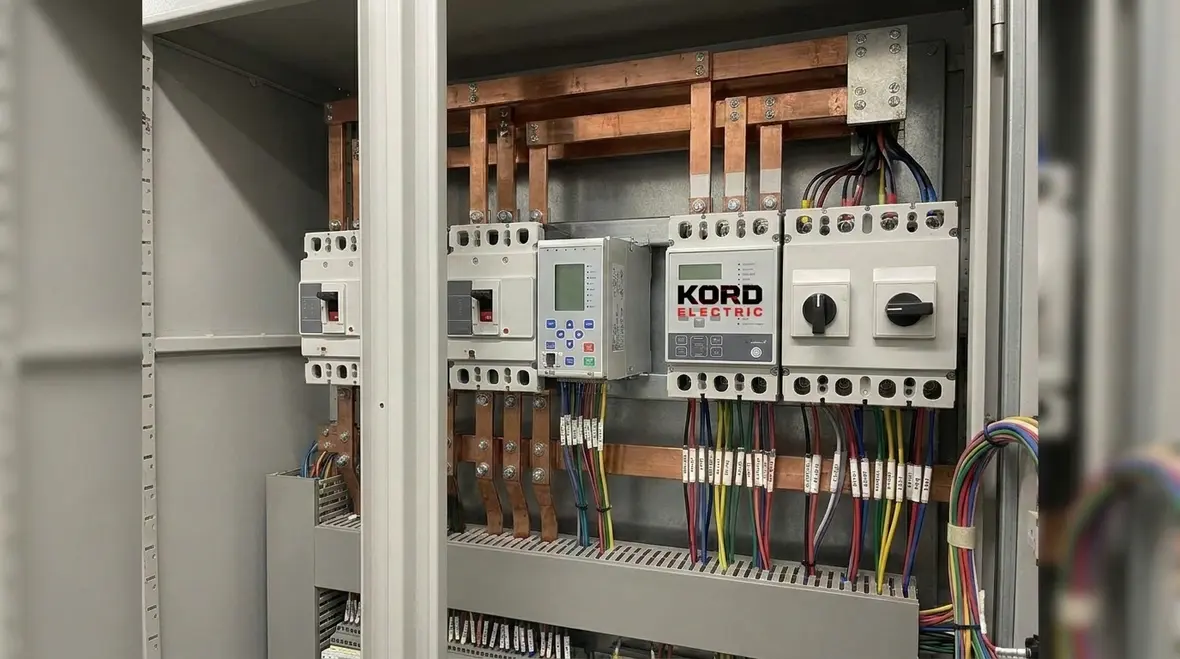
Common components include:
- Busbars: Conductors that carry power between incoming and outgoing sections.
- Circuit breakers: Devices that open or close to interrupt current during faults or switching operations.
- Protection relays: Sensors and logic that detect faults and trigger breaker operation.
- Switches and disconnects: Tools that allow safe isolation of equipment for maintenance.
- Metering and monitoring: Instruments that track power quality, current, voltage, and status.
- Control wiring: Links the protection and switching logic to the rest of the system.
In commercial and industrial environments, these parts must work as an integrated system. If one element drifts out of alignment, the whole chain can respond slower than needed, or trip in the wrong place. Therefore, we keep our service approach systematic and documented, especially for facilities where downtime has a real cost.
For facility managers who want to connect this component view to full building systems, our commercial electrical systems guide for major properties shows how switchgear, panels, feeders, and emergency power all interact across a commercial electrical systems guide style architecture.
Where switchgear fits in commercial power distribution
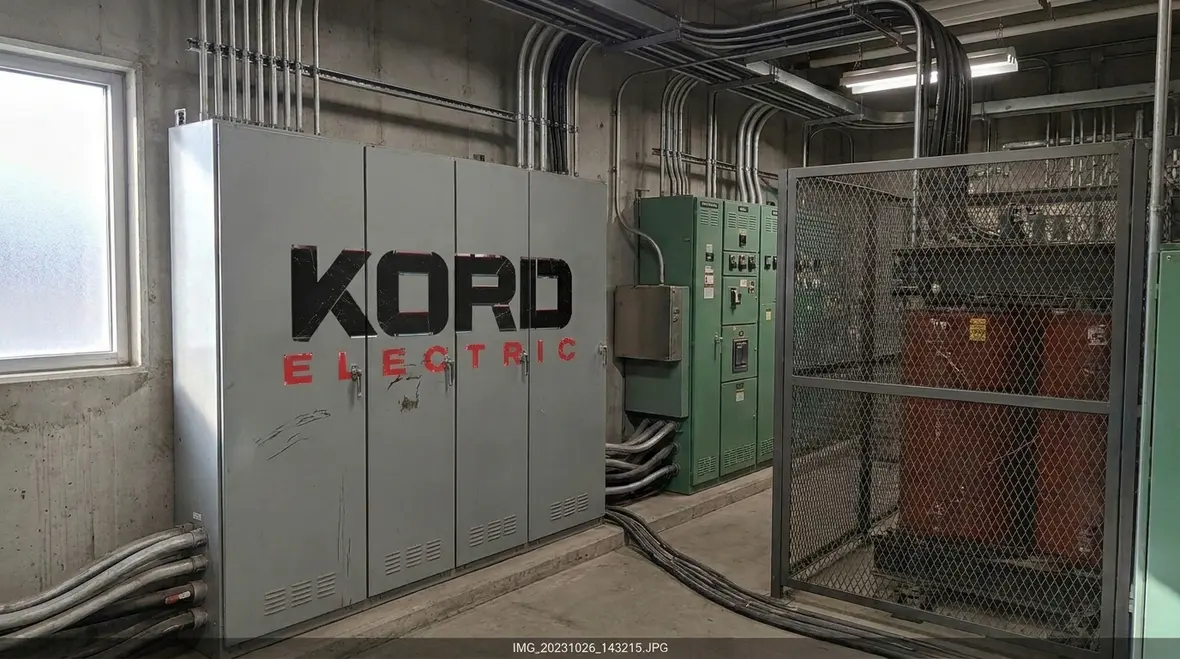
In major property electrical systems, switchgear often sits between the utility service equipment and the distribution network that serves feeders. Typically, facilities use medium voltage or low voltage distribution depending on site design and load profile. Then feeders deliver power to MCCs, panels, transformers, and other distribution points.
Even when switchgear seems like “just another cabinet,” it shapes how the facility isolates problems. For example, a fault on one feeder should not shut down the entire building. So we design and service the gear with selective coordination in mind. Selective coordination means the protective device closest to the fault clears it first, keeping other parts running.
Our team also considers future expansion. When a building owner or property manager plans tenant improvements, we evaluate whether the existing switchgear strategy supports those changes. That is how we help maintain reliable operation as the building evolves, not only at the day it was commissioned.
As part of that bigger picture, many facilities also look at how switchgear interacts with emergency power. Our emergency power for business continuity design overview in the Kord Electric blog shows how transfer schemes, generators, and gear all work together when the utility source drops.
How proper maintenance reduces risk and avoids costly downtime
Switchgear performance depends on condition, not luck. Over time, contacts can wear, insulation can degrade, and mechanical parts can lose smooth operation. Also, relays may require verification to confirm they still detect faults within the intended ranges. If you only inspect after an incident, you do not manage risk, you gamble with it.
At Kord Electric, our technicians follow a maintenance mindset that includes visual inspection, operational checks, and testing where appropriate. We also pay attention to safety procedures for switching and isolation. Our expert service staff work carefully because even “small” issues can grow in a facility environment where electrical demand keeps rising.
And because we deal with commercial and industrial buildings, we think about business continuity. We help facility teams plan maintenance windows, sequence work to limit disruption, and document results so the next decision gets easier. In other words, we treat maintenance like a scheduled tune up, not a frantic afterthought. Because nobody wants to learn what a breaker “really sounds like” during a real fault.
If you want a sense of how neglected equipment shows up in the real world, our look at hidden electrical risks in commercial buildings highlights how aging panels and switchgear quietly accumulate issues until one day the “background” gear suddenly becomes the main character.
Switchgear upgrades for modern loads and faster response
As buildings adopt new tech, the power needs evolve. Better HVAC systems, variable frequency drives, EV charging, data centers, and automation can change load profiles. Meanwhile, modern protection schemes and metering capabilities can help teams respond faster and with more accuracy.
Upgrades may include replacing aging breakers, improving protection settings, adding better monitoring, or modernizing control components. Sometimes facilities also need new sections to support additional feeders. We evaluate the existing architecture and propose improvements that fit commercial and industrial requirements, not generic “one size fits all” installs.
Our technicians explain tradeoffs clearly. They also account for safety and coordination with downstream equipment. After all, you cannot simply swap gear and hope the entire system behaves correctly. You need testing, verification, and commissioning so the building power system operates as a coordinated whole.
In many major property projects, the best upgrade is the one that reduces risk now and keeps flexibility later. That is the goal we pursue on every job site, from planning to final checks.
What to ask before selecting a switchgear partner
When others choose a service provider, they should look beyond marketing. For commercial and industrial facilities, selection should connect to safety, documentation, response planning, and experience with complex systems.
Here are practical points to discuss with a partner like Kord Electric:
- Experience with commercial and industrial switchgear: Ask what similar facilities they have supported.
- Testing and commissioning approach: Confirm they verify coordination and performance after work.
- Maintenance documentation: Request how results and recommendations are recorded.
- Parts and replacement strategy: Learn how they handle aging components and what they replace versus service.
- Safety procedures: Ask how they manage switching, isolation, and site risk.
- Downtime planning: Make sure they can sequence work to protect building operations.
Our expert service staff take these questions seriously. We also encourage facility teams to share operational priorities, because every building has different tolerance for interruption and different critical loads.
FAQ
Featured snippet style FAQ
- What is electrical switchgear? A protective control system that manages power distribution and isolates electrical faults.
- Why does it matter in commercial buildings? It helps protect equipment, supports selective coordination, and reduces downtime during faults.
- What does maintenance include? Visual inspections, operational checks, and testing for protective performance and safe switching.
- Can switchgear reduce outages? It can, because proper coordination helps isolate faults to the affected section instead of shutting down the whole facility.
For teams responsible for larger campuses or portfolios, it also helps to understand how switchgear fits into broader troubleshooting and outage response. Our electrical system troubleshooting for factories checklist and our look at emergency power failures in commercial buildings both show how breakers, panels, and gear behave when something finally does go wrong.
Final word from Kord Electric
When facility power needs to stay dependable, what is electrical switchgear commercial buildings becomes more than a definition. It becomes your foundation for safety, coordination, and smooth operations. Kord Electric supports commercial and industrial facilities with expert service staff who inspect, test, maintain, and upgrade switchgear with clear documentation. If you want fewer surprises and better control of your power distribution, reach out to us today. We will review your system, explain options in plain language, and help you move forward with confidence.
If your building sits in Los Angeles County or the surrounding region, our Los Angeles County commercial and industrial electrical services cover everything from high capacity switchgear and panels to emergency power, solar integration, and preventive maintenance for large facilities.
To go even deeper into how full building systems come together, you can also review our broader commercial electrical systems guide, which connects switchgear with panels, feeders, emergency power, and modern loads across major property buildings.
And when you are ready to talk through your own configuration, upgrades, or maintenance plan, our licensed commercial and industrial electricians are a call or click away with clear next steps.


