Industrial Switchgear Maintenance Checklist Guide
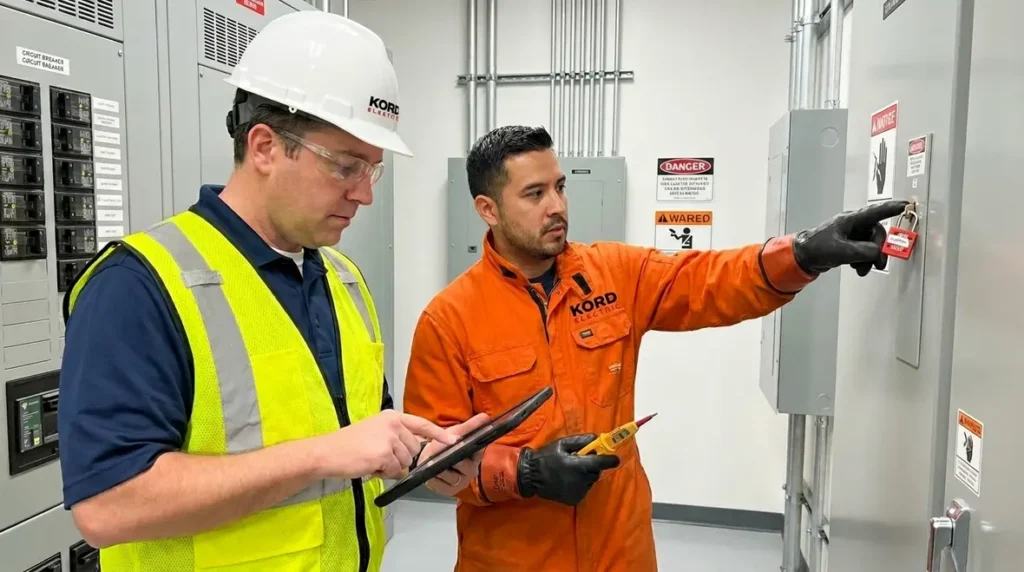
Kord Electric understands that industrial uptime is not a “nice to have,” it is the job. That is why our team starts with an industrial switchgear maintenance checklist and then walks through the rest of the plan like professionals who have seen what happens when things get ignored. First, we verify inspections, then we test key components, and finally we document findings so repairs do not feel like surprises. Our technicians and expert service staff explain each step in plain terms, because a switchgear room should not be a guessing game. And yes, we have heard the old joke about how “if it sparks a little, it means it is alive.” In reality, it means it needs attention, before it writes a very expensive comedy script on your maintenance budget.
Industrial switchgear maintenance checklist for commercial and industrial sites
For commercial and industrial facilities, switchgear reliability depends on routine work that stays consistent. Our approach uses a practical industrial switchgear maintenance checklist style routine that focuses on the pieces that fail first: insulation integrity, contact condition, thermal stress, and protective device performance. Moreover, we time the work so it fits real operations, not theory. Therefore, we coordinate outages carefully, we verify access, and we confirm that the correct gear is being serviced. When others rush, they often skip details. When we follow a structured checklist, we catch issues early, before they turn into unplanned downtime.
Next, we set up a clear maintenance rhythm. Then we conduct visual checks, mechanical checks, electrical tests, and torque verification. Finally, we confirm the protective devices respond correctly. In the switchgear world, “close enough” is never close enough.
What an industrial switchgear inspection should include
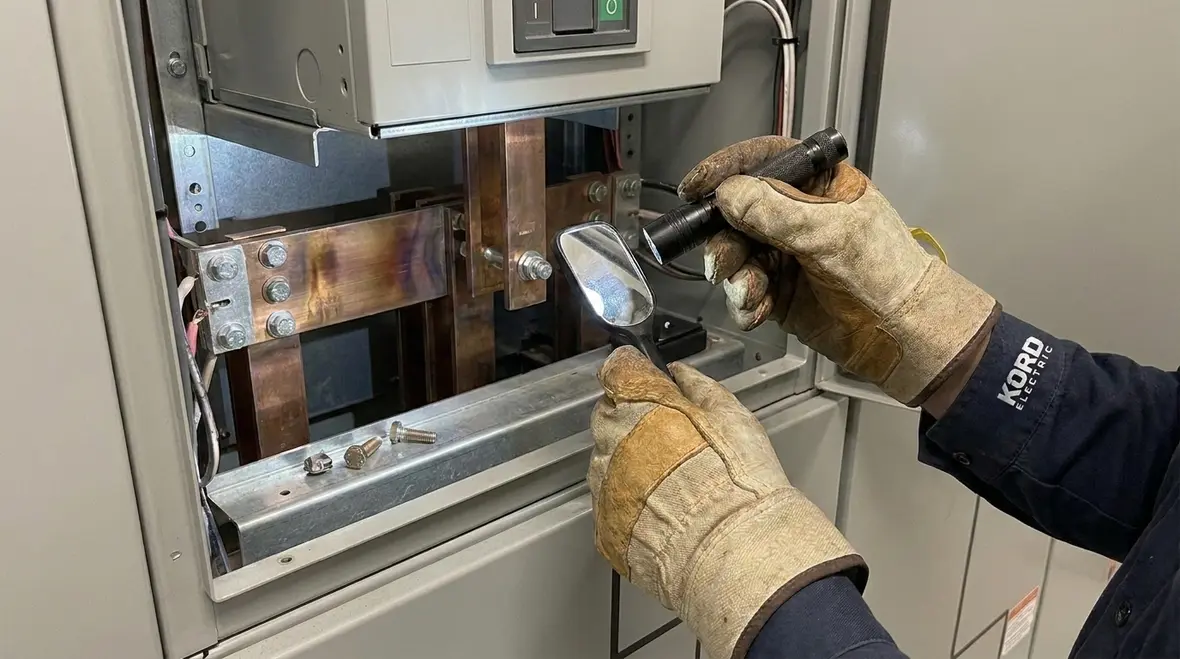
A solid inspection looks beyond the cabinet surface. First, our expert service staff looks for warning signs that the equipment is under stress. This includes signs of heat discoloration, loose hardware, moisture intrusion, and abnormal wear on contact surfaces. After that, we inspect labeling, cabinet seals, and barrier integrity because missing or damaged barriers can turn a routine event into a safety incident.
At the same time, we check interlocks and mechanical linkages. These parts control access and switching sequences, so when they fail, operators get stuck or, worse, bypass the logic. Additionally, we verify that ventilation paths remain clear, since restricted airflow raises temperatures and accelerates aging. Then we confirm that current transformers, voltage sensors, and wiring connections are secure and clean.
Finally, we record what we see. That documentation matters because it supports trends. It also helps management plan budgets with a clear map, not a vague hunch.
Switchgear preventive maintenance testing that finds problems early
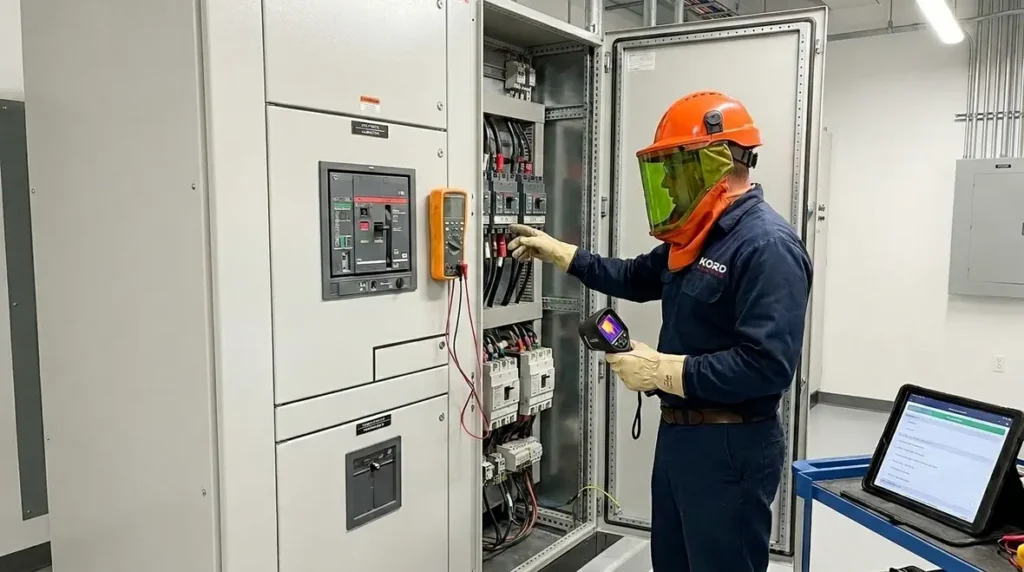
Inspection spots the obvious, but testing reveals what you cannot see. Accordingly, our maintenance work includes electrical checks designed to expose insulation weakness, contact resistance changes, and protection accuracy problems. For example, insulation resistance testing helps identify moisture or contamination effects inside components. Also, we evaluate contact and switching health based on measured resistance and condition indicators, depending on equipment type and design.
We also test protective devices. Because the switchgear is only as safe as its relays and trip mechanisms, we verify correct operation and timing where applicable. Moreover, we confirm settings and review event logs so the protection behavior matches the design intent. If a facility experiences nuisance trips or inconsistent performance, we treat it as a clue, not an annoyance.
Now, a quick joke for the field: relays do not “mature with age” the way a fine whisky does. They degrade. And they degrade quietly, until they do not. That is why testing stays on schedule.

Thermal and mechanical checks that keep equipment steady
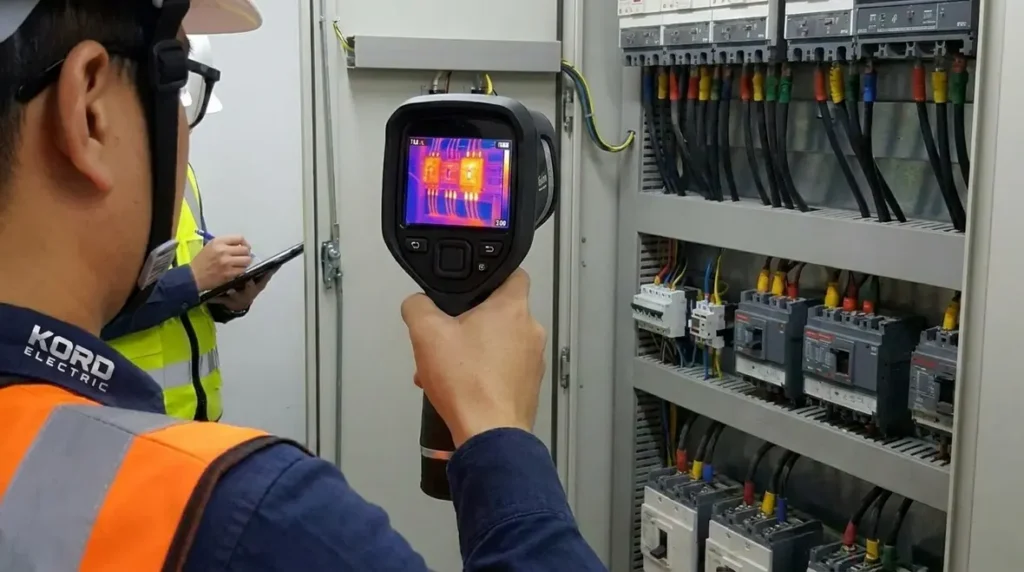
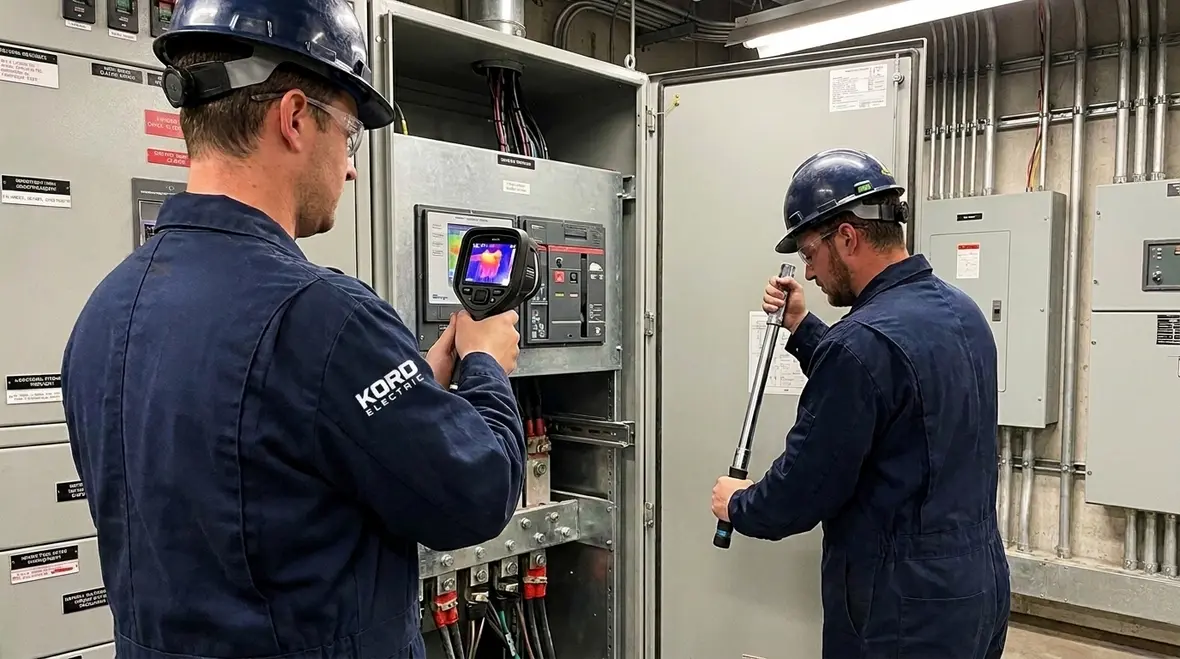
Switchgear fails from stress, and stress rarely shows up as a dramatic lightning strike in the middle of the day. Instead, stress shows up as temperature rise, vibration, loosened connections, and aging contacts. Therefore, we include thermal and mechanical checks as part of the industrial switchgear maintenance process. Thermal evaluation helps identify hot spots caused by increased resistance at terminations or uneven contact pressure. When our technicians locate a hot zone, they can trace it to the source and address it before it grows.
On the mechanical side, we verify operating mechanisms and check that the equipment moves smoothly and fully through its designed positions. Then we inspect and test mechanisms for wear, binding, and alignment issues. Additionally, we check fasteners and torque where procedures call for it because loosened connections are the classic slow-burn failure. In industrial settings, slow failures often look normal until they suddenly do not.

Maintenance records, safety documentation, and compliance readiness
Even the best work does not help if it cannot be proven. For that reason, we build maintenance records that are clear and usable. First, we log inspection results, test data, corrective actions, and recommendations in a structured format that site managers can review. Next, we tag equipment where repairs or adjustments occurred, so later teams know exactly what changed.
We also ensure safety documentation stays current. This includes procedure notes, lockout and tagout readiness, and evidence that the system condition matches the maintenance steps being performed. Our expert service staff communicates expectations with your facility team so everyone understands the process before any cabinet doors open.
Then, we provide follow-up recommendations based on risk. For example, we might prioritize immediate corrective work on components showing thermal concerns, while scheduling less urgent items for the next maintenance window. That approach keeps capital expenses controlled and reduces the risk of “maintenance sprawl.” Nobody wins when the maintenance schedule becomes an open-ended adventure.
If your facility team wants to see how switchgear care aligns with broader system reliability, you can also review Kord Electric’s structured electrical preventive maintenance programs that standardize inspections, testing, and documentation across major properties.
How Kord Electric supports major property buildings and industrial facilities
Kord Electric focuses on commercial and industrial facilities and major property buildings, and we operate with that reality in mind. In other words, we plan for real loads, real schedules, and real accountability. Our technicians arrive ready to coordinate with site operations, and our expert service staff explains what they do and why it matters, without turning the job into a classroom. Additionally, we align maintenance windows with operational needs, and we recommend system protections that fit the facility’s risk profile.
Just as importantly, we treat communication as a core service. We share findings clearly, we translate technical results into operational impact, and we document next steps. Consequently, stakeholders gain confidence, not confusion. And that confidence reduces delays when repairs are needed.
If your facility manages multiple switchgear lineups across floors or utility rooms, we can also standardize the process. Then, the maintenance history becomes consistent, which makes trend analysis faster and decision making easier.
This is especially helpful for organizations that also rely on broader support, such as Los Angeles County electrical services for commercial and industrial properties, where switchgear maintenance, panel work, and troubleshooting all tie into the same reliability and safety goals.
FAQ: Industrial switchgear maintenance and preventive care
Final call for industrial switchgear reliability
If your facility runs on electrical systems you cannot afford to gamble with, it is time to treat switchgear maintenance like a core reliability program. Kord Electric helps commercial and industrial sites use a structured approach that reduces surprises, supports safe operations, and keeps protective systems performing as intended. Our technicians and expert service staff coordinate the work, explain the results in clear language, and document next steps so your team can act fast. Contact us today to schedule a preventive maintenance review and protect your uptime.
For facilities that want to build this work into a broader reliability plan, Kord Electric also offers dedicated service programs that combine industrial switchgear maintenance checklist routines with site-wide inspections, testing, and documentation so your electrical system—from incoming service to distribution and controls—stays aligned with your safety and production goals.
You can also explore how these efforts connect with related services for commercial and industrial properties throughout the region, including coordinated panel upgrades, troubleshooting, and preventive maintenance that keep your electrical backbone steady while your operations grow.