Electrical Uptime Solutions for Commercial Power
Electrical uptime solutions that keep commercial power steady
At Kord Electric, we build Electrical Uptime Solutions for Commercial & Industrial Facilities that help major property owners and operators keep critical systems online. We focus on real-world interruptions, the ones that cost money, disrupt operations, and steal customer trust. And while we cannot promise the power will never blink, we can help your electrical system stay predictable, responsive, and ready when demand spikes.
From preventative maintenance to fast fault response, our approach reduces downtime before it starts. Moreover, our technicians and expert service staff explain what they find in plain language, so your team knows what is happening, what it means, and what comes next.
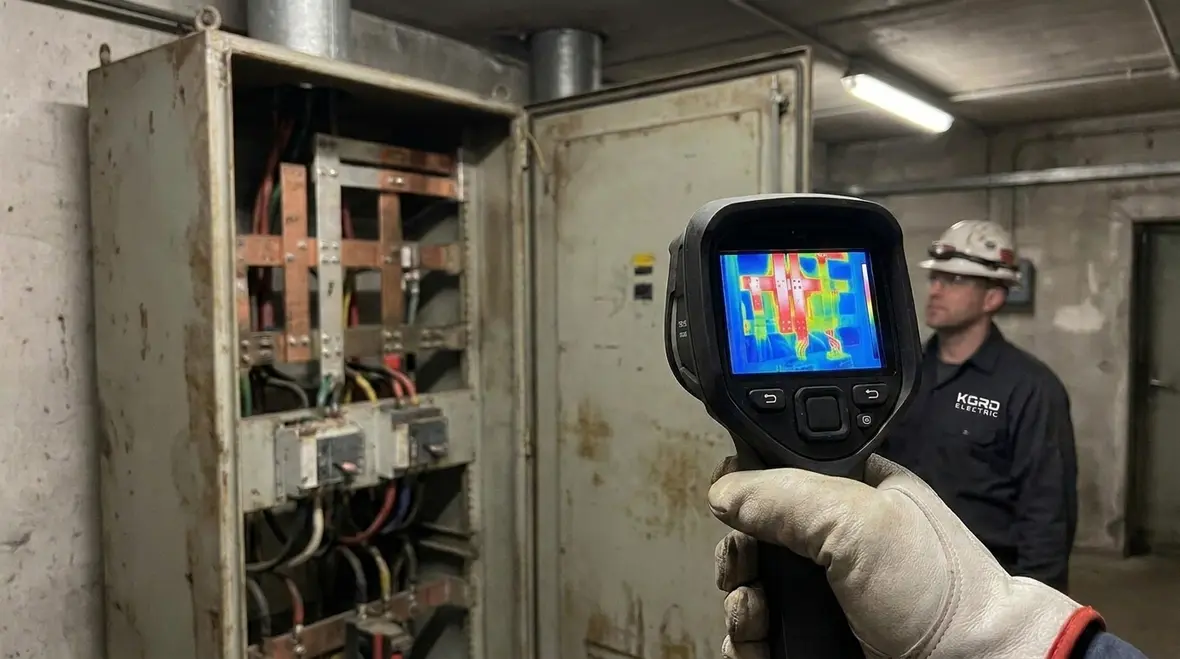
Why downtime happens in commercial and industrial buildings
In major propertie buildings, downtime rarely comes from one single cause. Instead, it often forms a chain reaction. For example, an aging breaker can weaken over time. Then a small load shift increases heat. After that, a loose connection creates arcing. Finally, a protective device trips or fails to clear the event cleanly.
Because facilities run around the clock, these issues do not announce themselves with dramatic alarms. They show up as small symptoms: nuisance trips, warm panels, intermittent faults, or a pattern of “almost incidents.” Consequently, operators may delay action because the building still functions. Yet each near miss quietly increases risk, and risk tends to compound, like a sitcom plot that never ends.
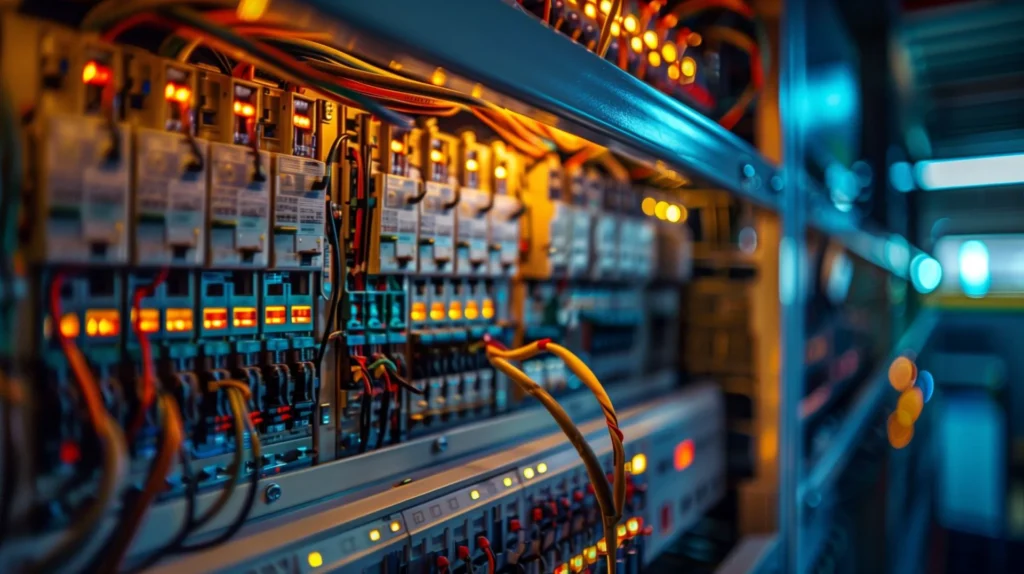
Our team examines how power flows across switchgear, transformers, feeders, panels, UPS systems, and grounding paths. Then we map how failures spread through the system. When you understand the chain, you can break it earlier.
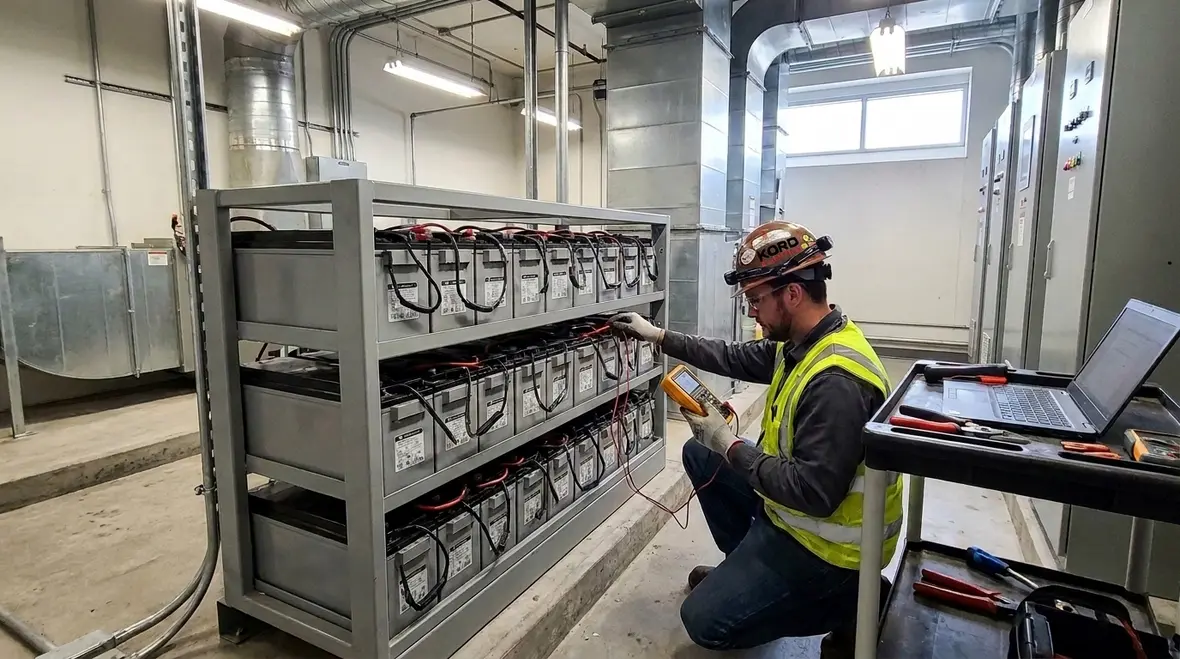
How Kord Electric prevents downtime before it starts
Kord Electric takes a proactive path. We do not wait for power loss to collect data. Instead, we build an uptime plan around your electrical environment, your operating schedule, and your critical loads.
First, we assess risk across equipment and protection systems. Next, we create maintenance tasks that match the failure modes we expect. Then we verify results with measured tests, not guesswork. Meanwhile, our expert service staff documents findings and walks your leadership team through the meaning of each reading.
To keep this practical, our technicians prioritize items that typically drive downtime in commercial and industrial settings:
Protective device readiness so breakers and relays clear faults correctly
Thermal and connection health to reduce overheating and arcing risks
Voltage stability checks to protect sensitive process and control loads
Grounding and bonding verification to support safe fault behavior
UPS and transfer path verification where uninterrupted power matters most
And yes, we explain the details with calm confidence. If your team asks, “What does this test mean?” our technicians answer. If your team asks, “What should we do next?” we give a clear plan. We do not talk down. We talk through it.
Reliability starts with targeted maintenance and smart testing
Many facilities treat maintenance like a calendar chore. However, downtime prevention requires maintenance that targets the equipment most likely to fail under your real conditions. Therefore, we plan maintenance intervals based on load profile, operating hours, historical behavior, and system design.
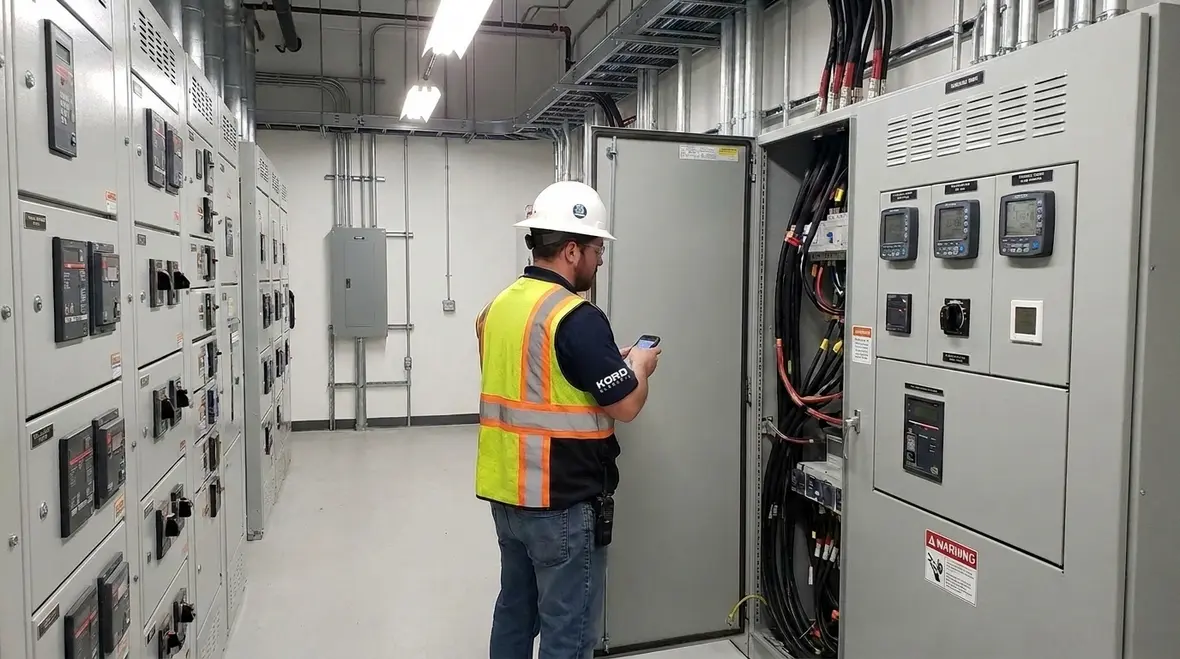
As an example, a switchgear room in a high duty cycle environment needs a different strategy than a building with light seasonal load. Even within the same site, certain feeders may carry critical loads, while others can tolerate short interruptions. So we focus on critical pathways and protection coordination.
Our testing focuses on early warning indicators that often appear before failure:
Infrared inspections to spot abnormal heat patterns in connections and bus areas
Electrical checks for insulation health where aging and moisture create risk
Load and harmonic awareness to reduce stress on transformers and power electronics
Contact and breaker performance to confirm the devices will operate as intended
Additionally, we help your team understand the difference between “normal aging” and “watch this closely.” That clarity matters because every facility wants reliability without turning every operating week into a shutdown event. In other words, we help you avoid maintenance that is busy but not useful.
Protection coordination: the difference between a blip and a blackout
When people hear “electrical uptime,” they often picture better generators or bigger batteries. Those can help, but protection coordination does the real heavy lifting. It determines whether a fault stays local or spreads. In major propertie buildings, that difference can mean a short interruption for one area instead of a full facility problem.
So we review how relays and breakers coordinate across levels. We verify that the right device operates first, the fault clears on time, and the system stabilizes quickly afterward. Moreover, we account for the way protective settings age and how power quality changes over time.
Our expert service staff also explains this in a way that executives can use. If your protective devices do not coordinate, troubleshooting becomes expensive and slow during emergencies. However, with the right coordination, the response becomes more predictable, and repairs can happen without prolonged disruption.
And because we have a sense of humor, we will say this gently: protection systems are like traffic lights. If they get out of sync, everyone arrives late. If they work together, the whole grid flows.
For teams building a broader strategy to avoid outages, pairing these Electrical Uptime Solutions for Commercial & Industrial Facilities with a structured downtime prevention playbook makes planning even easier. Kord Electric has already laid out this kind of approach in their article on downtime prevention for commercial electrical systems, which connects everyday symptoms to the root causes that threaten uptime.
Incident response and restoration planning for major buildings
Even with strong prevention, faults can still occur. The goal is to shorten time-to-recovery, limit damage, and return the building to stable operation fast. Therefore, Kord Electric develops restoration planning tied to your site reality and your critical load priorities.
We coordinate response steps ahead of time. That means we know where key equipment sits, how access works, which areas need power first, and which operating constraints apply. Then, when an incident happens, our technicians follow a structured approach that reduces confusion and speeds decision-making.
In addition, we support root cause analysis after the event. Instead of stopping at “we fixed it,” we document what failed, why it failed, and what changes will reduce the chance of recurrence. Over time, those lessons strengthen your Electrical Uptime Solutions for Commercial & Industrial Facilities, because each event becomes data for a better plan.
We also help teams manage the human side. During a failure, communication breaks down. So our service approach includes clear status updates and plain explanations of next steps. In other words, we help you regain control, not just power.
If your facility needs more than incident response and wants a framework to keep systems healthy year-round, Kord Electric’s commercial and industrial electrical maintenance plans outline how structured inspections, testing, and documentation reduce surprise failures across major properties.
How to build an uptime plan your team can manage
Commercial and industrial facilities need uptime programs that fit real operations, not ideal spreadsheets. Therefore, we start with your goals and your constraints. Next, we align tasks with your budget and your downtime tolerance. Then we set up a system for tracking findings, actions, and verification.
To make the plan easy to follow, our technicians and expert service staff organize deliverables around decision points your leadership team understands. You get priority lists. You get recommended actions. And you get clarity on what to handle now versus what to schedule later.
We also help you define success. That means you measure outcomes like fewer nuisance trips, shorter restoration windows, more stable voltages, and improved equipment health. As those results build, the uptime approach becomes less of a project and more of a dependable operating model.
If your facility tries to manage electrical reliability through memory alone, the system will eventually forget a key detail. We make sure it does not.
For organizations that operate across campuses or multiple locations, it often makes sense to connect your uptime strategy with broader Los Angeles County electrical services support. That way, your local service, upgrades, and troubleshooting efforts all follow the same uptime-first playbook.
FAQ
Call Kord Electric to improve uptime for your facility
If your commercial or industrial building depends on steady power, you cannot afford reactive maintenance alone. Kord Electric helps you reduce downtime risk with targeted testing, smarter protection coordination, and restoration planning built for major propertie buildings. We send technicians who understand the equipment, and expert service staff who explain findings clearly. If you are ready to protect your operations and strengthen electrical uptime, contact Kord Electric today. We will help you build a plan that stands up under real conditions.
To see how these Electrical Uptime Solutions for Commercial & Industrial Facilities can integrate with your broader reliability strategy, you can also explore service-focused resources such as emergency power and redundancy planning on the Kord Electric blog. Together, these approaches create a single, practical uptime model: one that keeps critical systems online and keeps surprise downtime off the agenda.
When you are ready to turn that model into action, Kord Electric’s dedicated service teams can support ongoing maintenance, targeted upgrades, and fast troubleshooting across your commercial and industrial sites.