Electrical Equipment Audits What Commercial Facilities Should Inspect
Commercial sites do not fail politely. They fail quietly, then loudly, and then everyone suddenly remembers the maintenance plan. In a real world building, the right moment to act is before the next breaker trips, before a panel runs hotter than it should, and before a missed detail turns into downtime. That is why Electrical Equipment Audits: What Commercial Facilities Should Inspect matters, because it guides what gets checked, how often, and which findings deserve attention first. At Kord Electric, our team focuses on commercial and industrial facilities and major property buildings, where power systems support people, processes, and revenue. And yes, we explain things in plain language, because “trust me” is not a power quality strategy.
What a commercial electrical audit should catch first
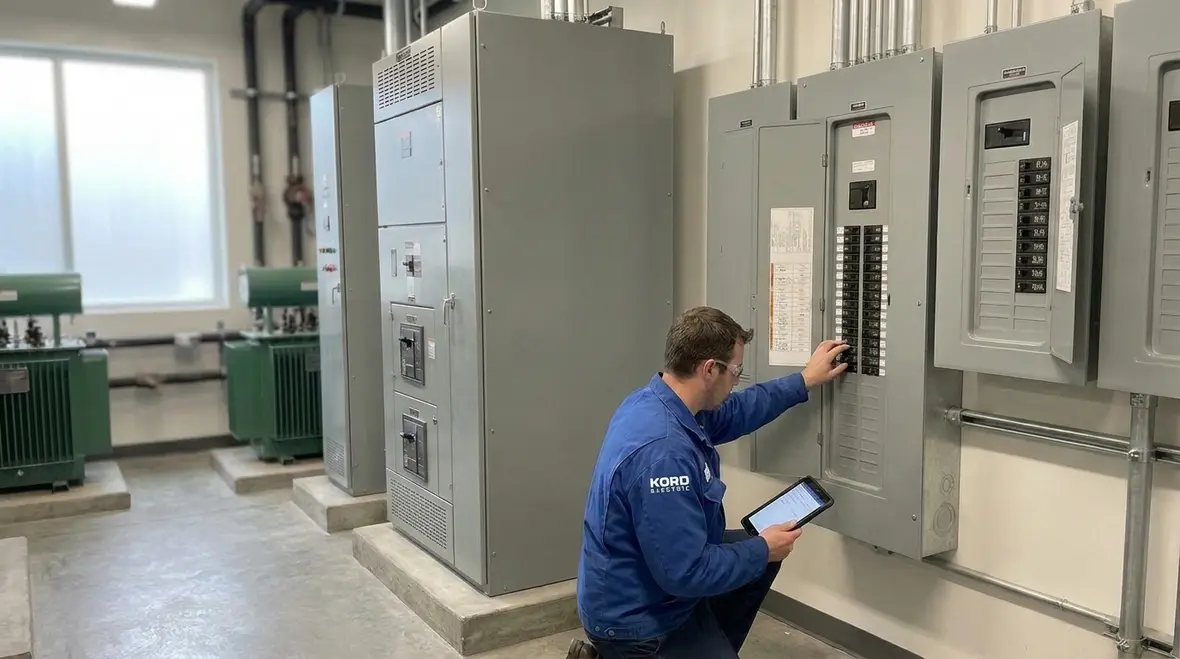
When our technicians step onto a site, they start with the reality of how power actually behaves, not how the drawings hope it behaves. First, we confirm the service entry and main distribution. Then, we move through panels, feeders, and branch circuits to find the spots that tend to drift over time. In many buildings, the “small issues” come from heat, moisture, vibration, and poor connections that slowly loosen. Eventually, those issues show up as abnormal temperatures, nuisance faults, or voltage problems that sabotage motors and sensitive loads.
To keep the audit grounded, we collect basic evidence. We review prior work, look at maintenance logs, and verify labeling. After that, we document conditions that affect safety and reliability. In other words, we do not just check equipment. We check the whole story around it.
Electrical Equipment Audits: What Commercial Facilities Should Inspect in the field
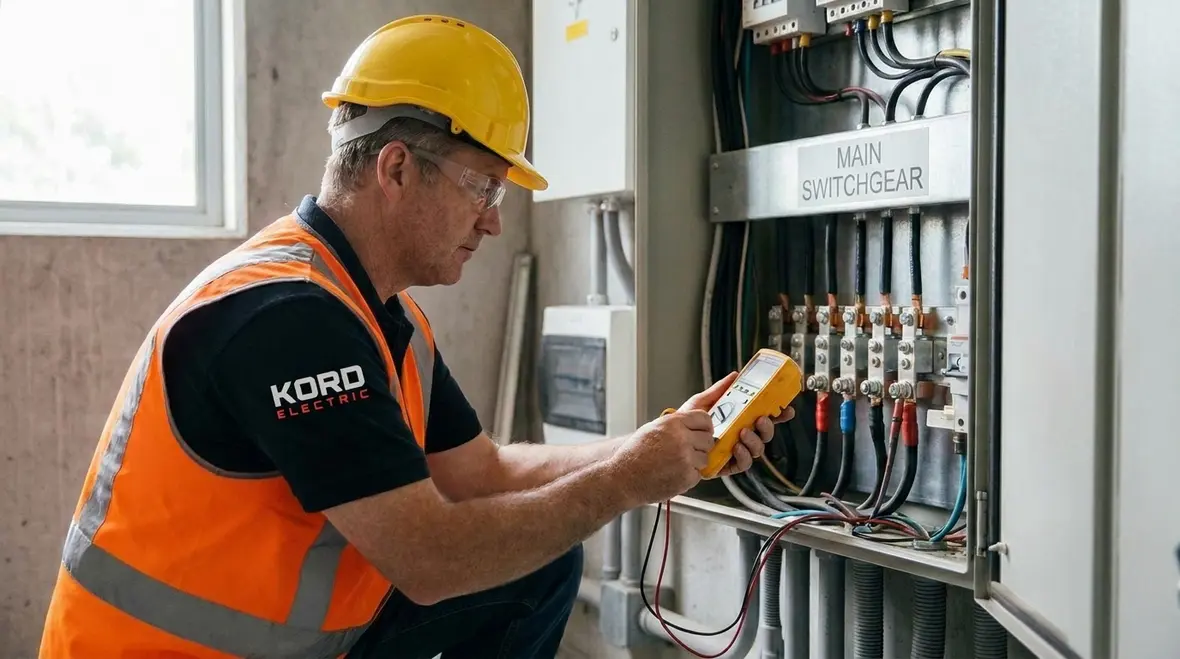
Now we get specific, because a checklist is helpful only when it matches real equipment. Our approach covers the core categories that tend to drive risk in commercial and industrial environments.
- Service entrance and switchgear: We inspect for wear, corrosion, loose terminations, and signs of overheating. Then we verify protective devices match the expected load profile.
- Transformers: We check for oil leaks, insulation condition, cooling performance, and any unusual noise. Where applicable, we verify operating readings and nameplate details.
- Distribution panels and bus systems: We look for abnormal heat patterns, degraded insulation, and connection integrity. We also confirm proper circuit identification.
- Cables, feeders, and raceways: We inspect physical routing, damage history, and entry points where moisture loves to hide.
- Motor control centers and variable loads: We examine starter cabinets, contactor condition, and signs of frequent switching. These areas often reveal power quality and control issues early.
- Grounding and bonding: We verify that grounding paths remain continuous and correct. A weak bond can cause erratic faults and create safety risk.
At Kord Electric, our expert service staff explains each finding as we go. So the building team does not leave with a mystery report and a headache. We walk through what the equipment is doing, what it might do next, and what the fix aims to prevent. Think of it like a guided tour, but with fewer uncomfortable questions and fewer haunted breakers.
Connecting audits to broader facility reliability
A focused equipment audit becomes more powerful when it fits into a broader reliability strategy. Many commercial property teams treat Electrical Equipment Audits: What Commercial Facilities Should Inspect as a companion to reliability-focused reviews that track how power distribution behaves over time and under different load conditions. When you combine condition checks with performance insights, it is easier to plan upgrades, justify budgets, and avoid projects that only solve part of the problem.
That is also where a dedicated electrical infrastructure reliability audit blends nicely with a detailed equipment audit. The reliability view highlights where the system struggles; the equipment audit shows which devices, panels, and terminations deserve attention first. Together, they help facility leaders decide whether the next dollar belongs in repair, reconfiguration, or a targeted upgrade.
How we evaluate power quality without guessing
Many facility teams hear the word “power quality” and picture a single magic test that solves everything. That is not how it works. In the field, we treat power quality as a pattern. First, we confirm the load types. Then, we check how the system responds when those loads start, stop, or ramp up. Motors, drives, welding equipment, HVAC controls, and production machinery all create their own electrical fingerprints.
Our technicians focus on practical impacts. They look for signs of voltage drop, unbalanced phases, harmonics, and transients that shorten equipment life. Then we connect those electrical realities to what operators see on the floor, like nuisance alarms, inconsistent process performance, and faster-than-expected wear on equipment.
After we gather the evidence, we prioritize findings. Because in a busy building, nobody has time to “fix everything” at once. So we point out what threatens safety, what threatens uptime, and what threatens cost the most over the next few seasons.
Linking power quality to load balancing and capacity
Power quality problems rarely show up alone. They tend to arrive with uneven loading, aging equipment, or expansions that were never matched to an updated design. When we review Electrical Equipment Audits: What Commercial Facilities Should Inspect, we also ask where load balancing or capacity upgrades might calm the system. For example, a site with chronic phase imbalance or recurring voltage dips may benefit from structured commercial electrical load balancing solutions that spread demand more evenly and reduce stress on panels, transformers, and feeders.
In other facilities, the audit exposes that the existing service has simply reached its practical limit. When nuisance trips, overloaded panels, and warm equipment keep returning, it may be time to explore upgrading commercial electrical service capacity instead of repeatedly patching symptoms. The audit does not just list defects; it provides the data needed to choose between tuning what you have and investing in a larger, more resilient backbone.
Thermal checks and connection integrity that prevent downtime
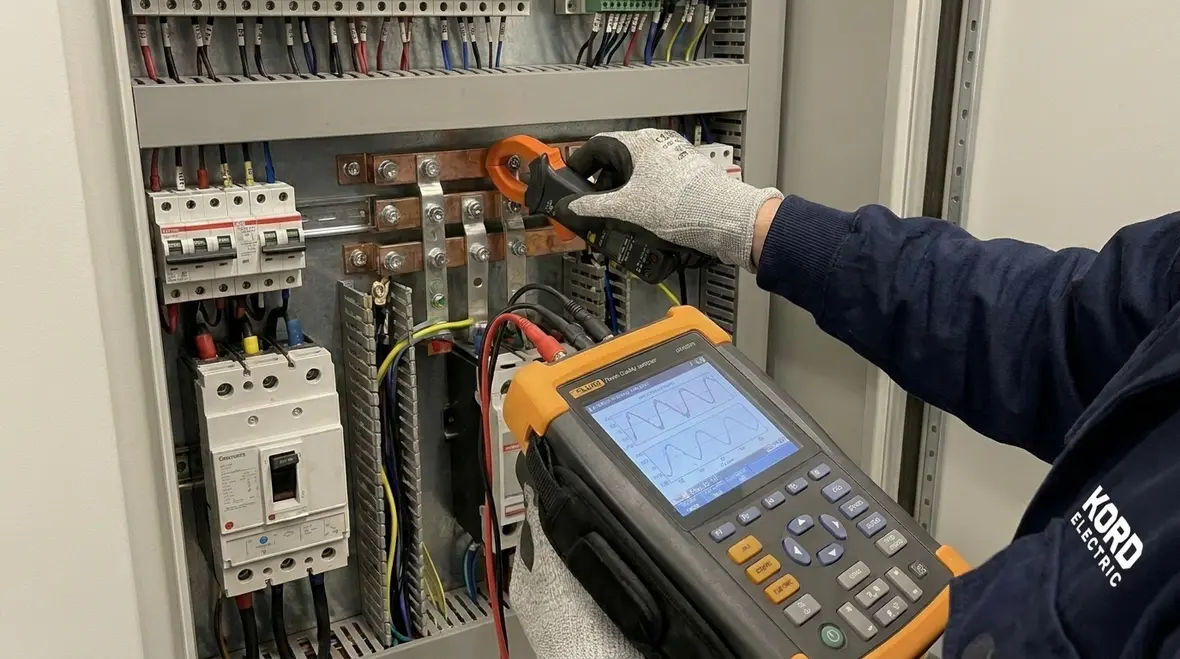
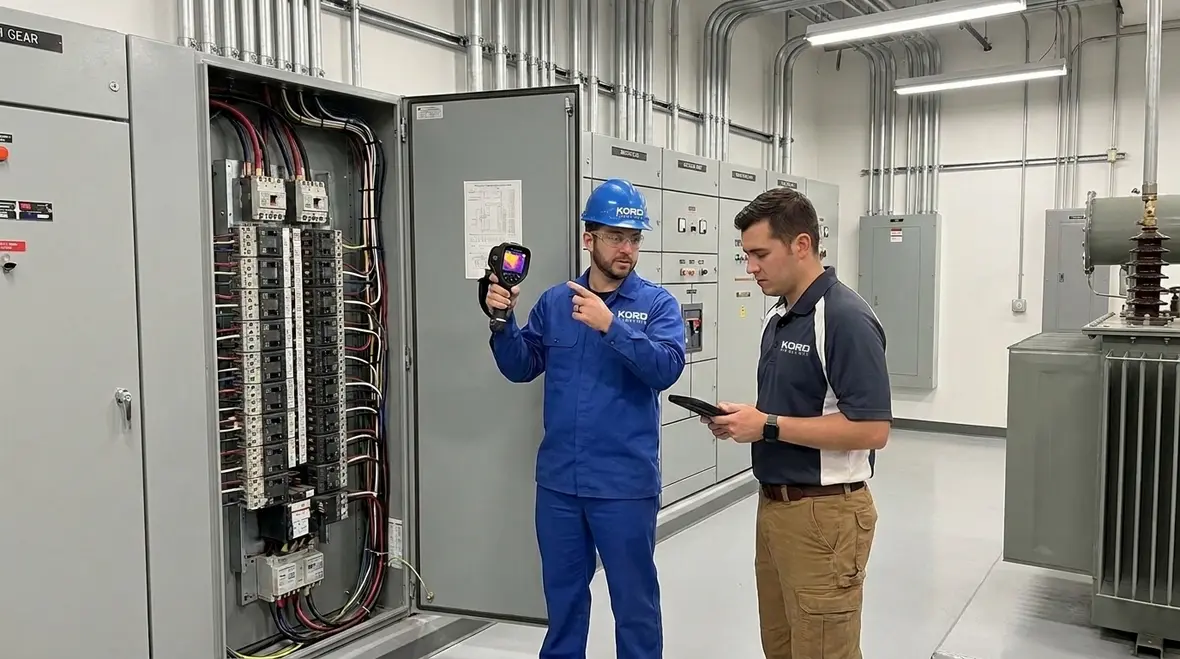
If power systems had reputations, loose connections would be the neighborhood troublemakers. They show up quietly, they heat up under load, and eventually they cause the kind of event that interrupts production. Therefore, during our Electrical Equipment Audits, we look for early thermal symptoms. We use visual inspection and targeted measurements to identify hotspots that do not match normal behavior.
Heat is not just a number. Heat changes materials. It accelerates insulation aging. It loosens parts. It creates a cycle that can end in arcing faults or failed components. As loads increase with occupancy changes and equipment upgrades, those conditions can worsen.
In commercial and industrial settings, we often find that the most valuable work is the boring kind. Tighten the right terminations. Replace damaged components. Correct labeling. Improve access so future checks happen on time. And yes, we sometimes joke that a good terminal block is like a good handshake: firm, clean, and not “we will see.” But the goal stays serious, because downtime costs more than maintenance.
Tying thermal findings into preventive maintenance
A single round of thermal checks offers a valuable snapshot, but the real value appears when those findings feed a long term plan. That is why Electrical Equipment Audits: What Commercial Facilities Should Inspect often evolve into structured commercial and industrial electrical maintenance plans. Instead of chasing the same hot spots year after year, facilities schedule targeted tightening, component replacement, and follow up scans at intervals that match their risk and load profile.
When maintenance teams know which connections ran hot last season, which panels showed progressive wear, and which feeders live in tough environments, they can focus resources where they matter most. That approach keeps inspections from becoming a box-checking exercise and turns them into a disciplined cycle of finding, fixing, and verifying.
From audit findings to a plan the team can execute
An audit should create clarity, not confusion. So after our technicians finish their on site checks, we build a set of findings that a facility manager can act on. We group items by risk and impact, and we explain each recommendation in plain language. Then we connect the dots to budget and scheduling realities.
In a typical building, some repairs can happen quickly without interrupting operations. Others require coordination, shut downs, or parts procurement. Meanwhile, certain items demand immediate attention because they affect safety or could lead to failure under normal operation. We help others understand those differences so decisions stay confident, not reactive.
And because real teams run on time, we help with next steps such as recommended follow up intervals, documentation updates, and verification steps. In short, we do not stop at “here is what we found.” We guide what happens next.
Turning audit results into phased projects
The best audits respect the way commercial buildings actually operate. Rarely does a facility shut down everything at once just to address a punch list. Instead, Electrical Equipment Audits: What Commercial Facilities Should Inspect become the roadmap for phased work: quick wins that can happen during normal hours, higher risk corrections scheduled in controlled outages, and strategic upgrades planned with design and construction partners.
For example, one phase might focus on tightening, labeling, and immediate safety corrections. A second phase might handle panel rearrangement and subpanel expansion, informed by resources like the commercial subpanel electrical services guide. Later phases could coordinate major distribution or service upgrades that align with broader renovation plans. The point is not to do everything at once; it is to do the right things in the right order.
Commercial facility power audit by Kord Electric: what the process feels like
In the commercial buildings we support, our process stays consistent. We start with review and planning, so the audit fits the site schedule. Then we conduct inspections with a clear focus on electrical equipment conditions, wiring integrity, and protective device setups. We also take the time to confirm that what is installed matches what the building team expects.
Next, we compile the results into an organized deliverable. This is where our technicians and expert service staff shine. They explain the findings, the potential impacts, and the recommended fixes with enough detail that engineers and operators can collaborate. Then, where needed, we suggest options for phased work so the building keeps running.
Finally, we support the transition from audit to action. That means we answer questions during planning and we clarify anything that could slow implementation. Like a good conductor, we keep the process moving, even when the building staff has a dozen other fires to put out.
How audits support broader energy and efficiency goals
Electrical Equipment Audits: What Commercial Facilities Should Inspect also uncover opportunities to save energy without sacrificing uptime. When an audit shows overloaded circuits, aging lighting, or equipment running harder than it should, that is a signal to review efficiency as well as reliability. Pairing a condition-focused audit with a commercial energy efficiency audit helps facilities cut waste, extend component life, and improve comfort in the spaces people actually use.
Those combined insights make it easier to justify upgrades like LED retrofits, smarter controls, or targeted distribution changes. Instead of asking leaders to invest based on theory, the audit provides hard evidence: temperature readings, power quality data, recurring breaker histories, and side-by-side comparisons of current and potential operating costs.
FAQ: Electrical equipment audits for commercial and industrial buildings
Ready to stop the next “mystery” electrical problem
If a building team waits for a failure, it often pays with downtime, repairs, and rushed decisions. Kord Electric helps commercial and industrial facilities protect uptime by running Electrical Equipment Audits: What Commercial Facilities Should Inspect with clear findings and actionable next steps. Our technicians and expert service staff explain what they see, why it matters, and how to plan fixes without chaos. If your facility needs a power system review, contact Kord Electric today to schedule an audit and get ahead of the risk.
For properties across Southern California, an audit often becomes the starting point for broader upgrades and improvements. Whether the next step is targeted lighting upgrades, panel work, or a more comprehensive electrical retrofit, having a clear picture of existing conditions makes every project smoother and safer. Facilities throughout Los Angeles and nearby communities can explore Kord Electric’s dedicated Los Angeles County electrical services to see how audit findings can feed into practical, code-conscious field work that keeps operations steady.
When your team is ready to move from “we should really look at that panel someday” to a structured plan, a commercial facility power audit is the calm way forward. With Kord Electric, you get clear communication, methodical technicians, and a process built for busy sites — not lab conditions.
Start with the equipment you already have, the loads you already run, and the problems you would rather avoid. From there, an Electrical Equipment Audits: What Commercial Facilities Should Inspect approach can grow into a long term strategy that supports reliability, safety, and efficiency year after year.