Emergency Power System Reliability Testing
Emergency Power System Reliability: how Kord Electric keeps power steady
Emergency Power System Reliability matters most when the lights go out and the clock starts ticking. At Kord Electric, we help commercial and industrial facilities, as well as major property buildings, verify that their emergency power systems will start, switch, and run when they are truly needed. We do not rely on assumptions or “it should work” logic. Instead, we follow test plans that prove performance, track results, and close the gaps before a real outage shows them to everyone. And yes, we have seen systems pass a quick test and still fail under real-world load, like a smoke alarm that only works when it feels like it.
Others might treat testing as a checkbox. We treat it as a life safety and business continuity job. Our technicians and expert service staff explain each step in plain language, because confusion is the enemy of readiness.
Start with a clear test plan for maximum reliability
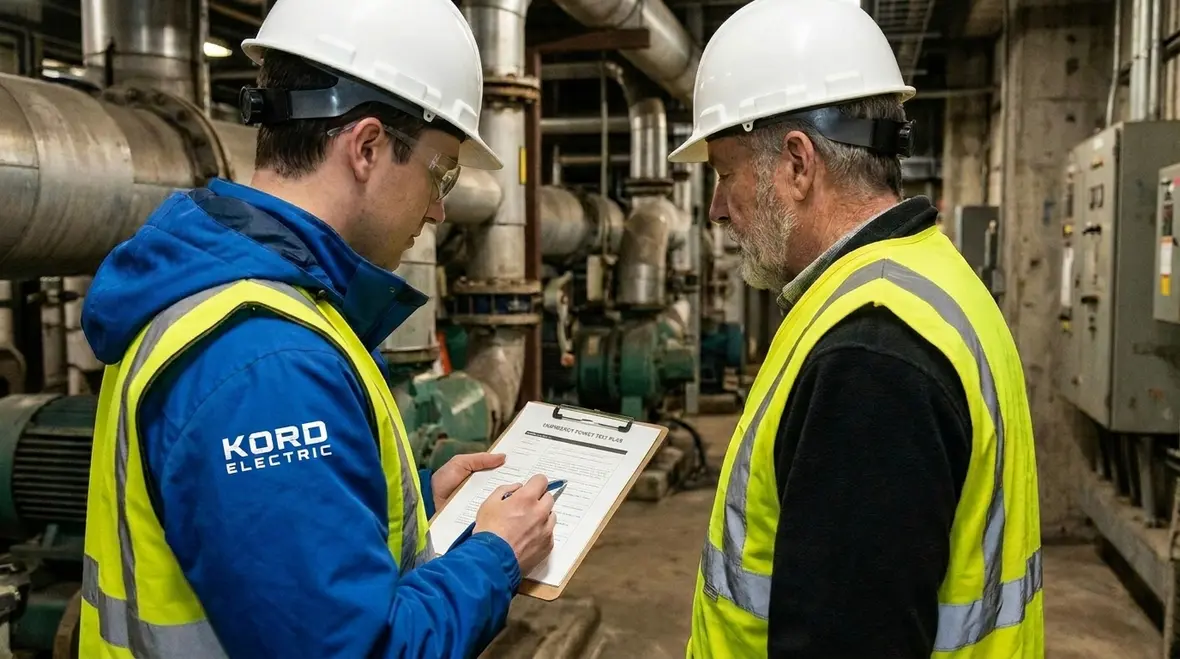
First, we confirm what the facility needs the system to do. Then we build a test plan around those real requirements. For example, a hospital wing, a warehouse with dock operations, and a high rise with life safety loads all require different priorities. We ask facility managers to review the emergency loads and the expected run duration, because emergency power is not just about starting. It is about supporting the right equipment for long enough to protect people and operations.
Next, we set the scope and the rules. We define what we will simulate, what we will measure, and what we will document. We also coordinate testing windows so the facility can keep running. If a test can disrupt critical work, we schedule it like a professional crew would, not like someone “winging it” before a big meeting. Our technicians walk the team through the plan ahead of time, so everyone knows what to expect and why.
Then we prepare the environment. We verify fuel levels, check battery condition where applicable, and inspect accessible components. After that, we confirm the transfer equipment settings and control logic match the design. Finally, we align the test frequency with the manufacturer guidance and the applicable standards that govern commercial and industrial systems.
What should be checked during the transfer and startup
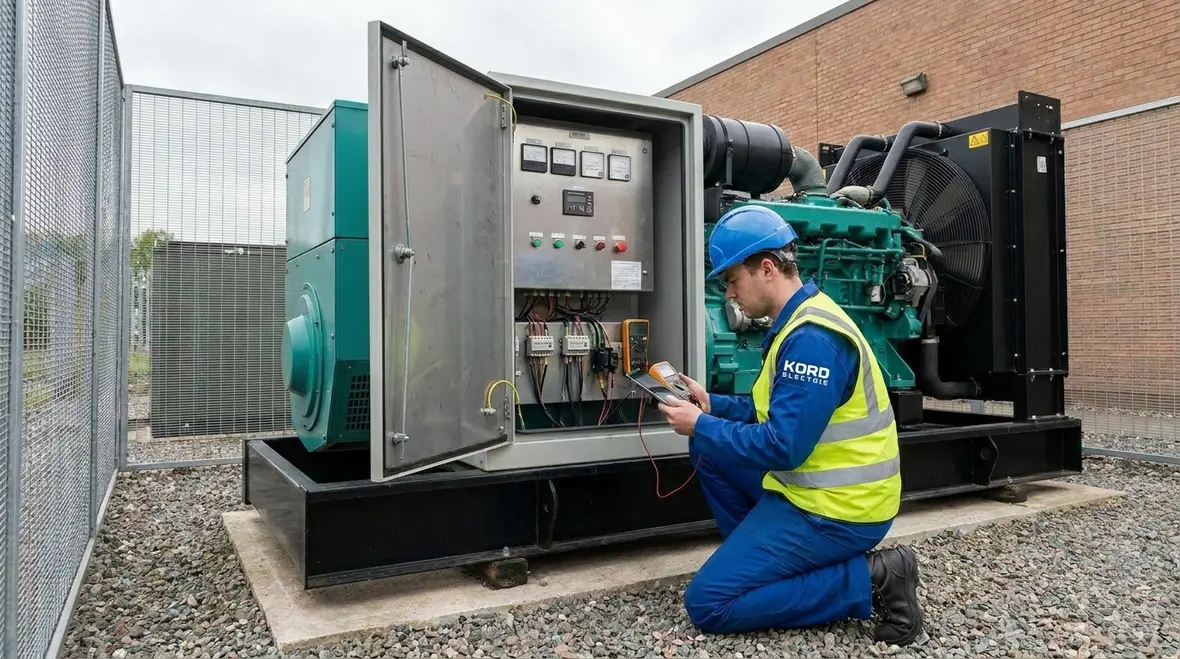
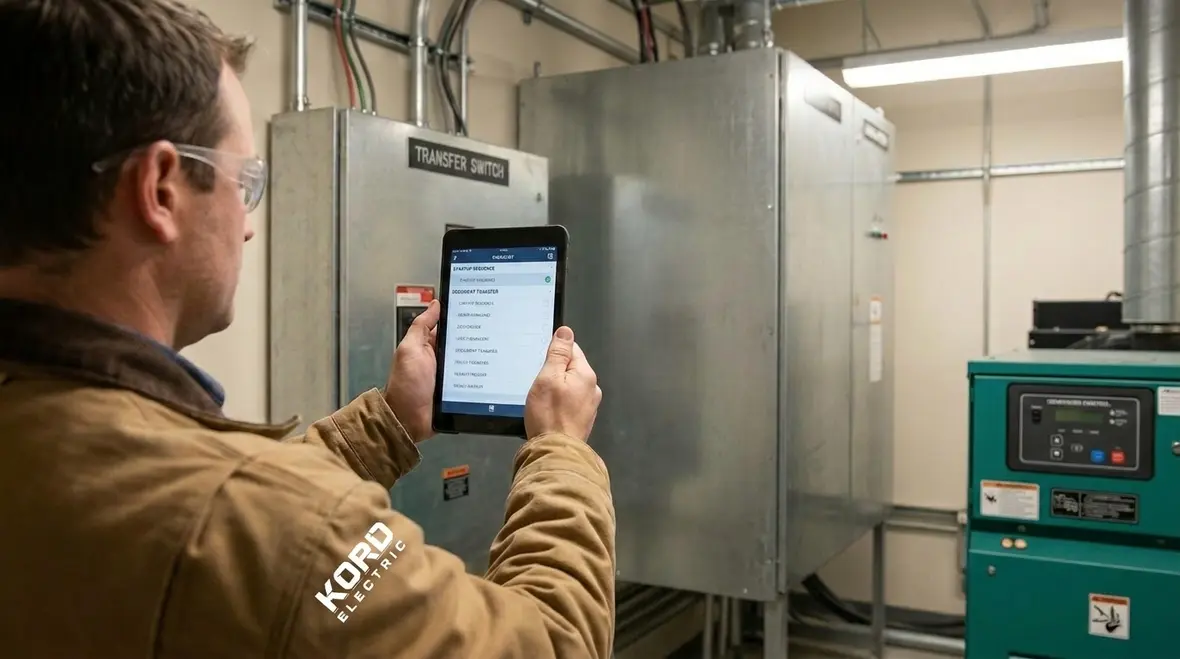
When an outage happens, the transfer and startup sequence has one job: move loads safely and quickly. Therefore, our verification focuses on the exact behavior of the system under a controlled power interruption. We check the sensing and switching operation, because a system that transfers early or late can create equipment stress or downtime.
We also monitor the start sequence. That means we test whether the engine or power source cranks with the expected timing and reaches stable output without hunting or voltage dips. Additionally, we verify that the system ramps to the required frequency and voltage levels the load expects. If the system takes too long, the result can be nuisance alarms, failing starters, or improper shutdown.
Next, we confirm that the transfer mechanism returns to normal mode cleanly after utility power stabilizes. We do not ignore return-to-normal behavior. In real outages, operators care about what happens when the power comes back, because that is when a lot of “minor” issues show up. Our expert service staff explains the startup wave behavior and the control indicators step by step, so the facility team understands not just that the test ran, but how the system performed.
And since we are talking about reality, we will say this clearly: if a system “starts on paper” but does not transfer smoothly, that is not reliability. That is a rumor with wiring.
Load testing: prove performance under real operating conditions
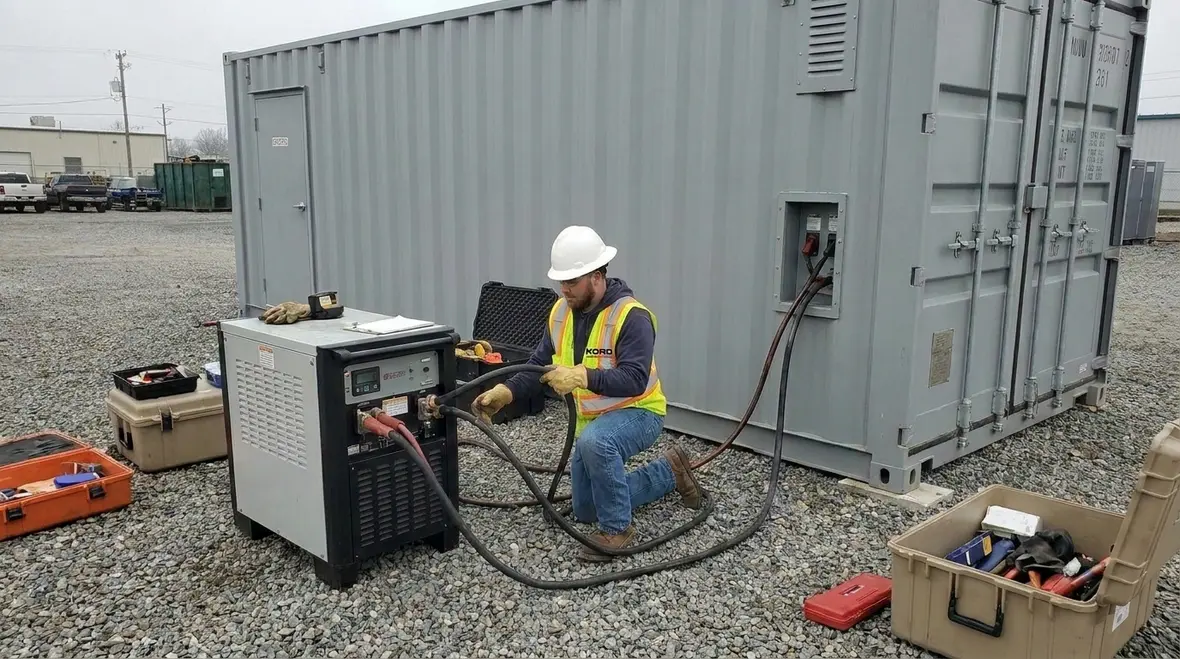
Startup is only step one. To verify Emergency Power System Reliability, we must prove the system can carry load while maintaining stable output. Load testing simulates the electrical demand the system will face during an outage. However, we do not “throw everything on” without planning. We match load to the facility’s critical circuits and operational priorities.
We begin by analyzing which loads matter most. Then, we use a method that supports safe verification, whether that involves temporary load banks, staged loading, or system-level checks aligned to the design. As we increase load, we measure key performance points such as voltage regulation, frequency stability, and output power quality. We also watch engine response, because a weak regulator or fuel issue might show up only when the load climbs.
After the system carries load, we evaluate stability during steady operation. Then we perform checks during transitions, because that is where control logic, switching timing, and protective functions meet reality. If the system shows abnormal voltage sag, frequency drift, or excessive alarms, we document what we found and recommend corrective action.
Our team also verifies protective device behavior. Breakers and monitoring relays must act as designed. We confirm that the system does not trip under expected load, and we ensure that any protective settings align with the facility’s electrical coordination. In other words, we make sure the emergency system protects the building and does not protect itself by shutting down.
How Kord Electric verifies fuel, batteries, and control health
Even the best transfer equipment cannot help if the energy sources are weak. Therefore, we test and validate the “supporting cast” that makes standby power dependable.
For fuel systems, we check fuel quality and supply readiness. We confirm that tanks have sufficient volume for the intended run time, and we inspect filters and lines where accessible. We also review storage conditions that can degrade performance. If fuel issues hide quietly, they tend to show up in load tests first, which is exactly where we prefer to find them.
For battery systems, we verify capacity and health. Batteries support starting control, transfer logic, and system supervision. We test for evidence of aging, weak cells, or charging imbalance. Additionally, we check charger operation and related indicators, because an “almost charging” battery is like a power lifter who looks strong until the weights get heavy.
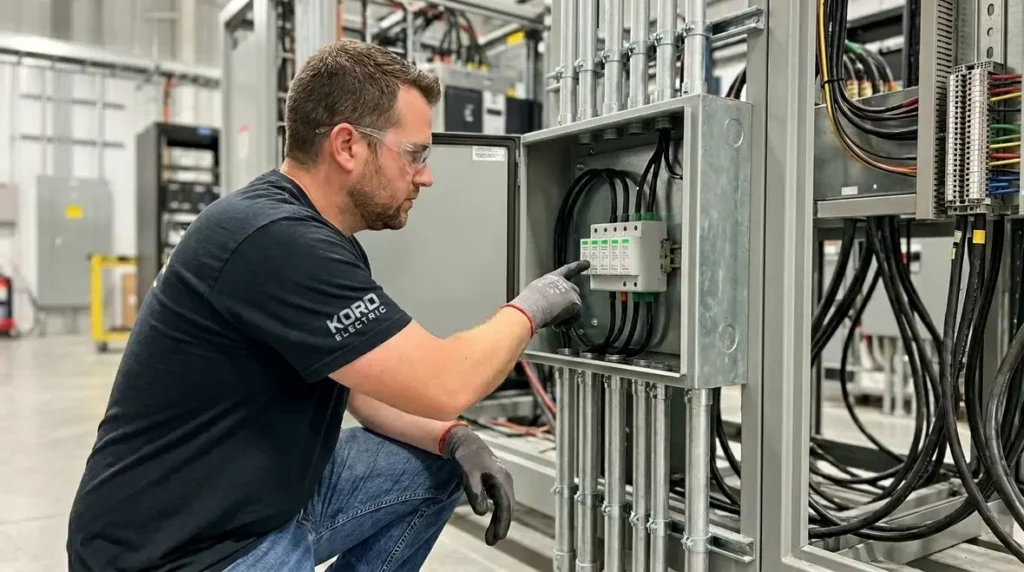
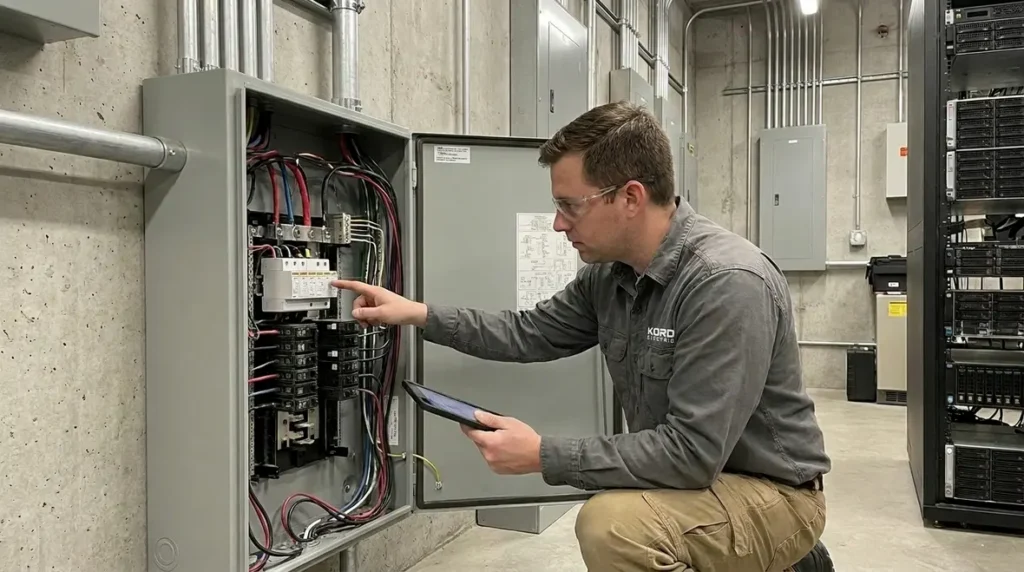
Next, we examine control panels and monitoring systems. Our technicians confirm that alarm points, status signals, and event logs function correctly. We also verify that the system communicates properly with building management interfaces where used. Then we check that the system’s protective controls respond as expected without false trips.
To keep things clear, our expert service staff explains what each reading means and how it connects to Emergency Power System Reliability. We provide results in a way facility leaders can use, not just file away.
Documentation, testing intervals, and compliance that teams can trust
Reliable testing is not complete without solid records. Therefore, we document test results, observations, and any corrective work. We track trends across test cycles, because the early signs of failure rarely announce themselves loudly. They show up as gradual changes in startup timing, voltage regulation, battery performance, and control log behavior.
We also align testing intervals with manufacturer recommendations and the schedules required for commercial and industrial installations. However, we do not treat intervals as a one-size schedule. Instead, we evaluate runtime history, seasonal factors, and how the facility uses power during outages. If a system runs more often in a certain season, we adjust our focus so the verification stays accurate.
Further, we help teams connect compliance to real outcomes. We guide facility managers on how to interpret test reports and what follow-up action makes sense. That is important because staff turnover happens, and buildings do not come with a manual taped to the wall. Our goal is to make the facility team confident in their emergency power program long after we leave the site.
In short, we help you create a testing rhythm that protects people and operations, not a paperwork rhythm that only survives audits.
Featured FAQ: quick answers about emergency power verification
Conclusion: schedule verification with Kord Electric
If you manage a commercial or industrial facility, you need emergency power verification that proves performance, not just intent. Kord Electric sends technicians and expert service staff to test transfer behavior, run load conditions, and validate fuel, batteries, and control health. We document everything so your team can act with confidence. Reach out today to schedule a reliability verification visit and build a testing plan that protects people, reduces downtime, and keeps operations steady when utility power fails.
Kord Electric specializes in commercial and industrial electrical service, including emergency generator testing, transfer switch verification, and ongoing maintenance programs that support long-term Emergency Power System Reliability for critical facilities.
Whether you operate a healthcare campus, a logistics warehouse, a high rise, or a large mixed-use property, building a structured testing plan now is the easiest way to stay ahead of the next outage. Consistent verification, clear documentation, and actionable recommendations give your facilities team the confidence that when utility power drops, your systems are ready to carry the load.
If you are ready to take the next step in strengthening your emergency power strategy, schedule a service visit with Kord Electric and put a proven testing process in place before the next storm, grid event, or unplanned interruption.