Commercial Electrical Troubleshooting for Manufacturing
Manufacturing downtime does not wait for your meeting schedule. It shows up at the worst time, usually when production is already behind, and everyone suddenly becomes an expert in blame. At Kord Electric, our Commercial Electrical Troubleshooting for Manufacturing helps industrial teams find the real cause fast, then fix it in a way that keeps lines running. In this article, we explain common electrical troubles that hit manufacturing and major commercial facilities, and we share the field habits our expert service staff uses every day. As our technicians often tell the team, “If you chase symptoms, you’ll catch fatigue. If you chase causes, you catch uptime.”
Spot the early signs of electrical trouble before the line stalls
When an electrical issue begins, it rarely announces itself with a siren. Instead, we typically see small signals first. For example, operators may notice motor torque feels inconsistent, control panels run hotter than normal, or certain stations cycle slower. Even minor changes in sound and smell can matter. If a cabinet smells like hot insulation, that is not “just how it is.” It is a warning.
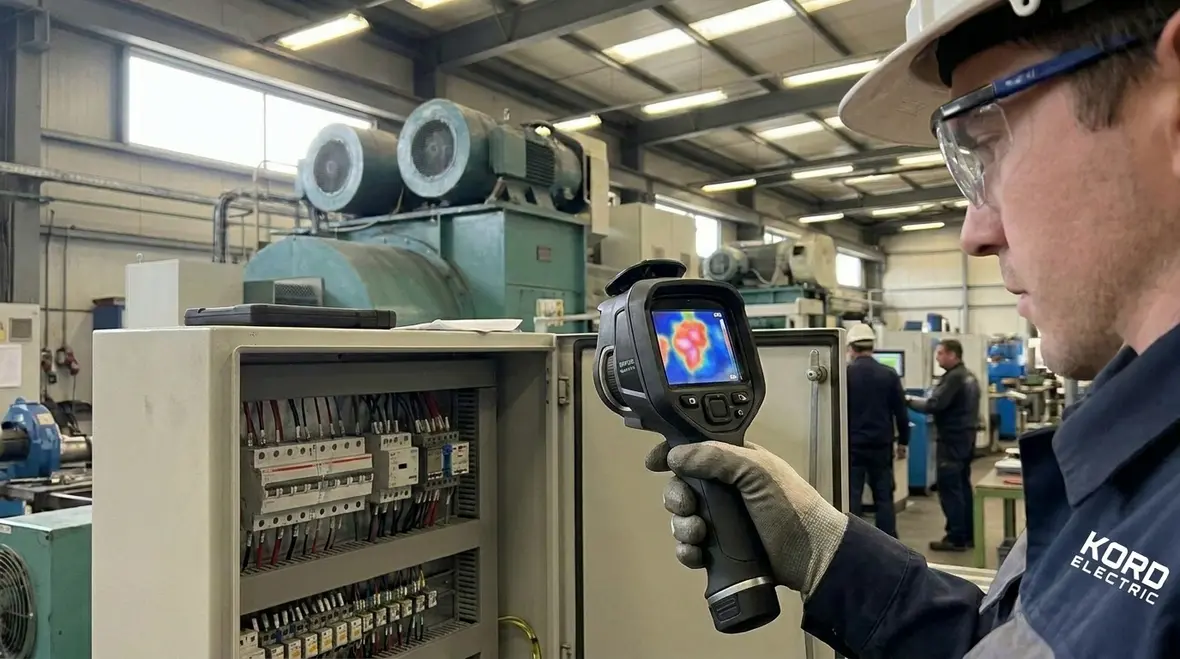
We tell our clients to pay attention to trends, not single events. Therefore, we recommend tracking a few repeat items: breaker trips that occur “sometimes,” nuisance alarms that return after maintenance, and voltage readings that drift over weeks. Meanwhile, infrared scans can reveal overheated components before they fail. And yes, we have seen it happen. A small connection that looked fine during a quick glance turned into a full outage two days later. People call that bad luck. Our technicians call it “missed heat.”
Electrical troubleshooting basics that reduce repeat failures
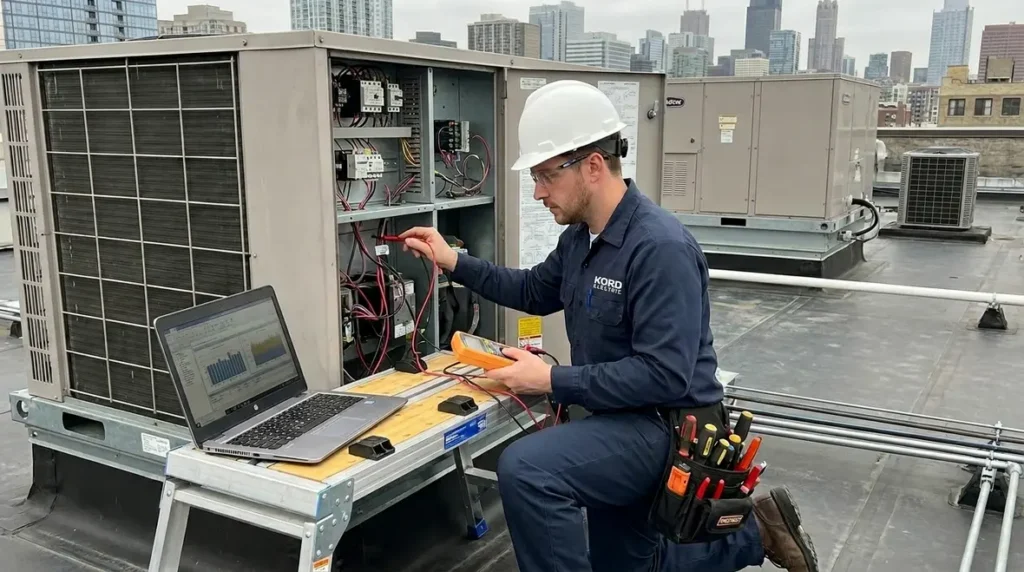
Once a shutdown happens, we move carefully. Our experienced technicians follow a structured approach so the fix does not become a new problem. First, they confirm what failed and how it failed. Next, they check the protection devices, then verify the power path from source to load. Only after that do they inspect controls and wiring.
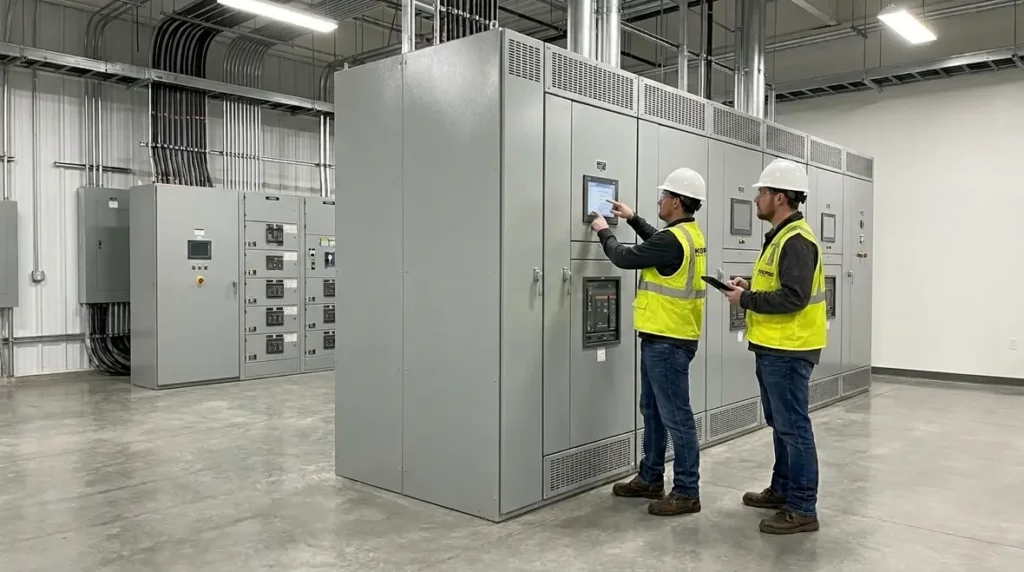
This matters because manufacturing lines often involve multiple layers of equipment: transformers, distribution gear, motor drives, PLC inputs, sensors, and control relays. If you start at the wrong layer, you waste time. Instead, we start at the evidence. For example, if a breaker trips instantly, we focus on short circuits, ground faults, or abnormal current. If it trips after a delay, we examine overload conditions, loose connections, or insulation problems. Then we test and verify before replacing anything.
Our technicians also explain the “why” as they work. That communication helps plant teams coordinate maintenance and avoid unnecessary lockout cycles. In addition, it builds confidence, because people see the checks, not just the conclusion.
For facilities building a more proactive program around their production lines, pairing targeted troubleshooting with a structured preventive strategy similar to the Electrical Preventive Maintenance services Kord Electric already provides can significantly reduce repeat failures and surprise outages over time.

How to handle motor issues without guessing
Motors drive nearly everything in a plant. So when a motor stalls, trips, or runs rough, the temptation is to replace it and move on. We do not play that game. We treat motor problems like a puzzle with an electrical border and a mechanical middle.
First, we confirm voltage, phase balance, and frequency where applicable. If voltage sag exists at the panel, the motor may run hot and then fail under load. Next, we inspect the starter or VFD output conditions. We also check for grounding issues, because a poor ground can create strange control behavior.
Then we look at wiring and connections. A loose terminal can cause arcing. And arcing can create a smell, heat, and a track in the cabinet that “mysteriously” worsens over time. After that, we test insulation resistance and verify continuity where needed. Finally, we confirm load conditions. A motor can be electrically healthy and still fail if the driven equipment binds.
Our expert service staff helps teams interpret test results in plain language, so operators understand whether the motor, the drive, or the process caused the problem. In other words, we make sure nobody treats this like a mystery novel where the ending arrives by accident.
When motor problems start to blur into wider system behavior — like nuisance trips, flickering loads, or strange resets — we often pair on-site diagnostics with insights similar to those described in Kord Electric’s blog on Voltage Fluctuations in Commercial & Industrial Facilities, so plant teams see how local motor issues can connect to broader power quality concerns.
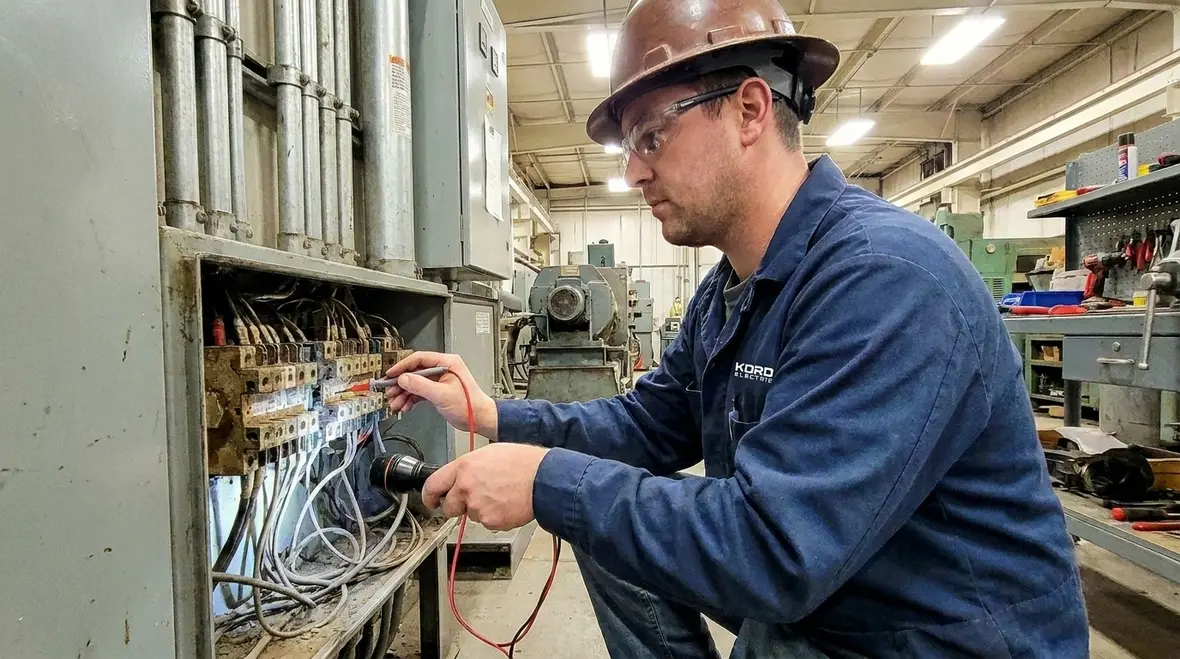
Prevent nuisance trips and power quality swings
Power issues can look like equipment problems, and equipment problems can look like power issues. That is why we examine the full electrical picture. In manufacturing, nuisance breaker trips often trace back to weak connections, aging components, or abnormal current draw. Meanwhile, power quality swings can come from switching operations, large motor starts, or equipment that does not handle harmonics well.
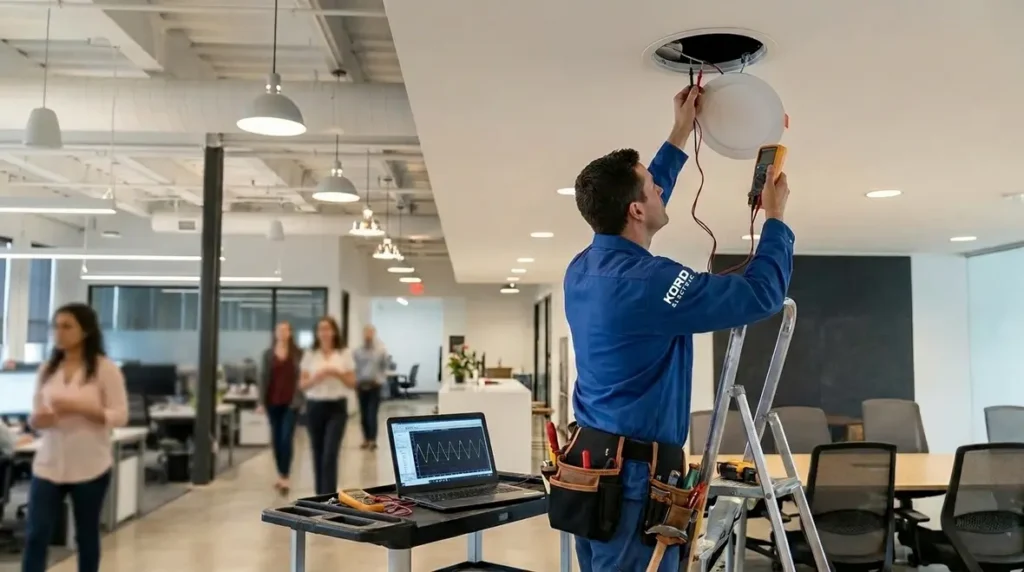
To reduce downtime, we recommend monitoring key parameters during real operation, not just during a shutdown event. We measure current profiles, check phase balance, and evaluate voltage levels at distribution points. If the plant uses drives, we pay extra attention to harmonic content and overheating risk in transformers and cables.
We also look at how protection settings match the actual equipment. If someone changed a load or upgraded a line and never updated protective coordination, the system might trip earlier than intended. Therefore, part of our Commercial Electrical Troubleshooting for Manufacturing includes verifying coordination and ensuring settings align with today’s duty cycle. That way, protective devices protect equipment instead of protecting a calendar.
For facilities that see repeated voltage dips, flickering lighting, or unexplained drive faults, our approach lines up closely with the corrective strategies outlined in Kord Electric’s dedicated service for Voltage Fluctuations in Commercial & Industrial Facilities, giving plants a unified way to tackle both immediate symptoms and long term power quality stability.

Deal with control panel and wiring faults using a methodical approach
Control cabinets often fail in ways that feel random. One day, everything works. The next day, a station will not start, and the screen shows a generic alarm. We approach this like a controlled investigation. First, we isolate the circuit area based on the symptoms and any available fault codes. Then we validate control power, check fuses and terminal blocks, and verify relay operation.
After that, we inspect wiring routes for abrasion, moisture exposure, or loose conductors. We also check for corrosion at terminations, because industrial plants constantly battle humidity, dust, and vibration. Even small movement over time can loosen a connection.
In addition, we verify sensors and input signals. Many “electrical” stoppages stem from a sensor that drifted out of spec, which makes the PLC behave like it received a real safety stop. When our technicians find this pattern, they explain it clearly to the team so the fix includes the whole chain, not just the last broken link.
For plants building broader reliability strategies, we often align control panel troubleshooting with the structured inspection routines and reporting practices described in Kord Electric’s article on Commercial and Industrial Electrical Maintenance Plans, so that every fix today becomes part of a smarter plan tomorrow.
Reduce downtime with safer maintenance habits and better documentation
Downtime does not come only from failure. It also comes from slow recovery, unclear responsibilities, and maintenance that restarts the same failure loop. We help facilities tighten the maintenance workflow by focusing on verification, not ritual.
For example, our expert service staff encourages lockout tagout discipline, but we also recommend documenting what was actually measured and what was replaced. If a connection was tightened, we note the terminal and torque approach used. If a test shows insulation weakness, we capture the readings and recommended action. That way, when the same line acts up again, the team does not start from zero.
We also support planned inspection routines for high risk items such as motor starters, contactors, VFD cabinet ventilation, and panel bus connections. Moreover, we encourage thermal checks because heat reveals problems that meters might miss until it is too late.
And yes, we have joked about it in the field. “Your breaker does not trip because it is moody. It trips because something asked it a question it could not ignore.” Then we show the data that answers that question.
These same habits integrate naturally with ongoing programs like Kord Electric’s Electrical Preventive Maintenance, giving manufacturing teams a single, consistent playbook for both emergency response and day-to-day reliability.
FAQ: Quick answers for manufacturing electrical troubleshooting
When you need uptime, call Kord Electric for fast, commercial-grade troubleshooting
Downtime costs money, but slow fixes cost even more. Kord Electric provides Commercial Electrical Troubleshooting for Manufacturing with a careful process that focuses on causes, not guesswork. Our technicians explain what they find and why it matters, so your team can act with confidence. If a line keeps stalling, breakers keep tripping, or control panels act like they are haunted, reach out. We will help you restore operation quickly and reduce the odds of the same failure returning. Contact Kord Electric today.
If your facility is ready to go beyond one-off repairs and build a long term reliability strategy, consider pairing troubleshooting support with a structured program like Kord Electric’s dedicated Electrical Preventive Maintenance service. For plants that need help right now because production is already at risk, the 24/7 response offered through our Emergency Electrical Services ensures expert technicians are available when the line will not wait.
Whether you are dealing with a single stubborn production line, recurring power quality issues, or a facility that has outgrown its original electrical design, Kord Electric is ready to help you stabilize systems, protect equipment, and keep your operations moving.