Emergency Power Systems Testing for Real Load
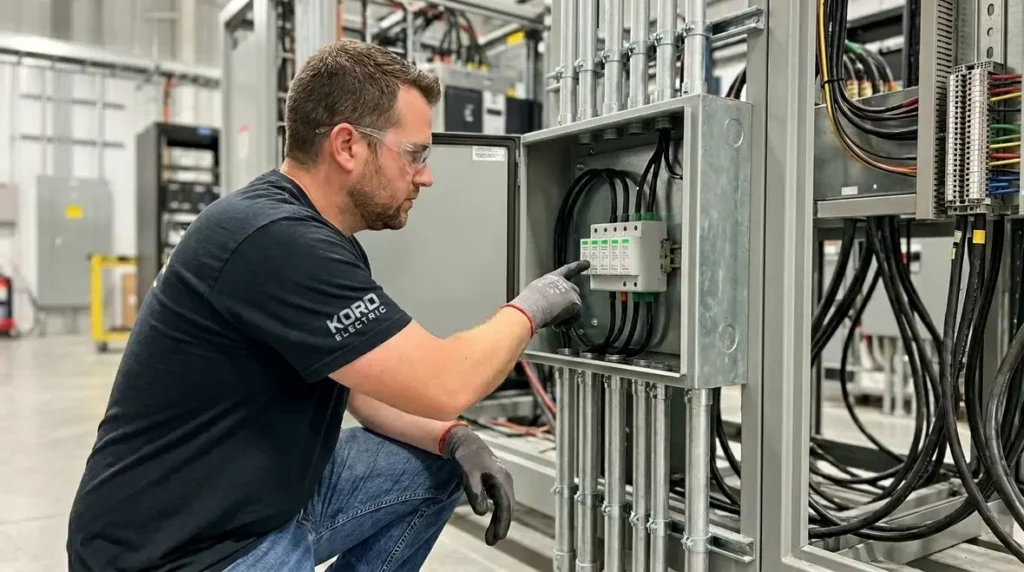
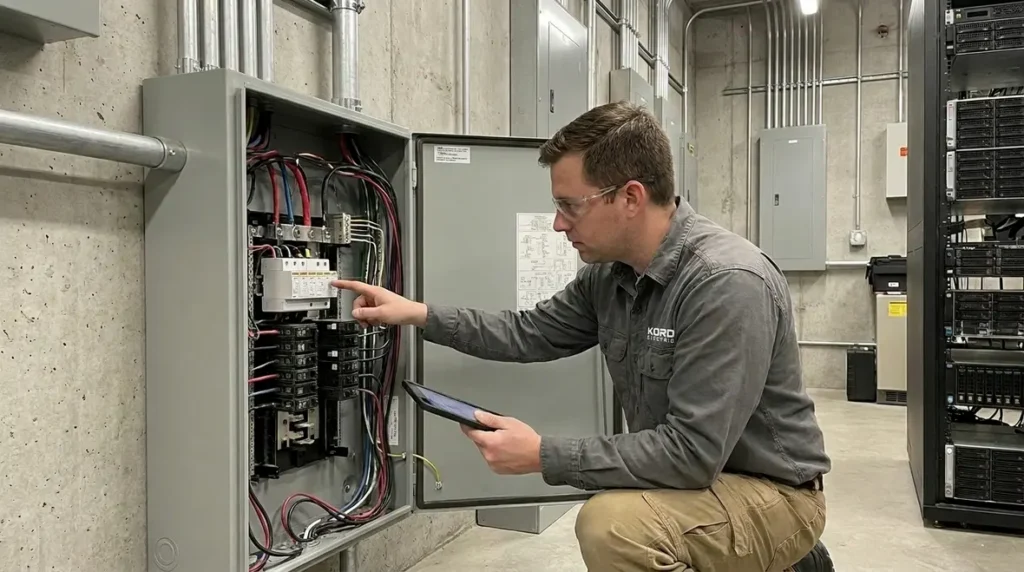
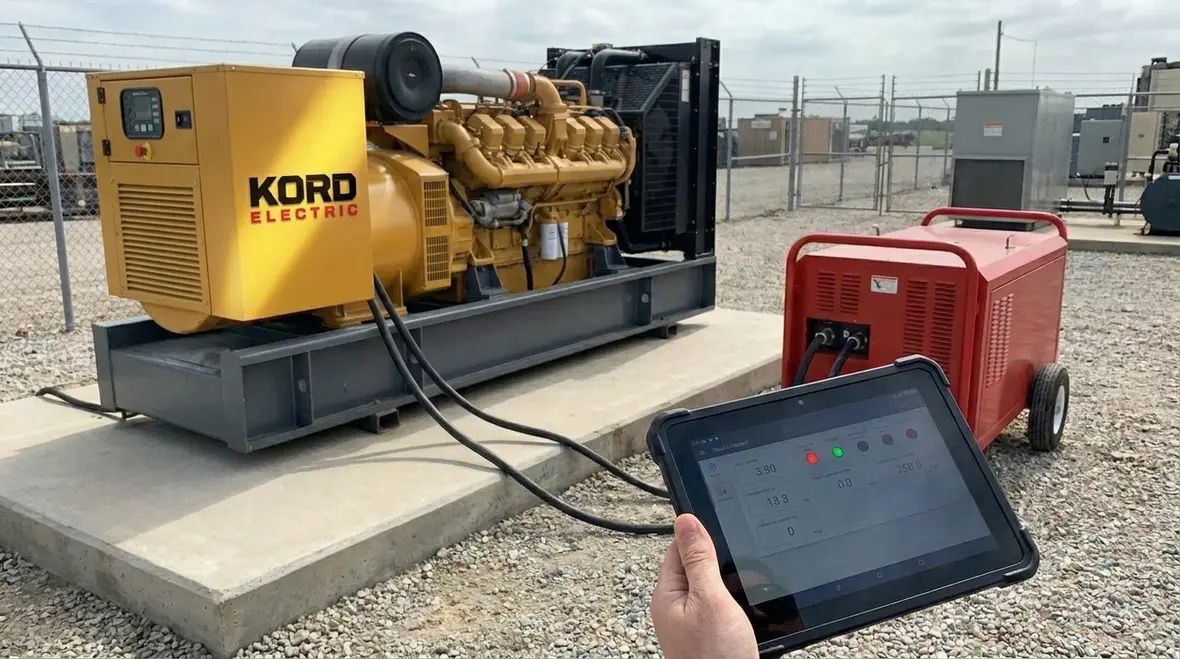
At Kord Electric, we do not stop at “the inspection looks fine.” Instead, we follow emergency power systems testing procedures early, methodically, and with real load conditions, so the backup system earns its keep during an outage. First, our technicians verify critical data, check protection settings, and confirm the transfer path. Next, they run functional checks that match how your site actually operates, and then they move into load testing that shows whether the generator, ATS, switchgear, and controls behave under stress. After that, we document results in plain language and recommend adjustments that reduce risk. In other words, we treat your backup power like a promise, not a suggestion. Because during an outage, there is no “we’ll try.”
Why backup power fails when nobody looks beyond the checklist
Many commercial and industrial facilities rely on standby power for safety systems, process equipment, refrigeration, IT, and life safety loads. However, failure often hides in the gap between a visual inspection and real performance. A controller may pass a status test while the contactor timing drifts. A generator may start reliably while fuel quality or voltage regulation slips under load. And sometimes the transfer sequence works in theory, but the timing and coordination do not match the exact loads your facility carries.
When our expert service staff explains this, they usually say the same thing: the system can be “healthy” and still not be ready for your worst minute. That worst minute loves to show up right when a project manager wants a calm day, right like a superhero movie you did not buy tickets for. Except in this story, you cannot pause it.

What we test during real emergency power systems testing procedures
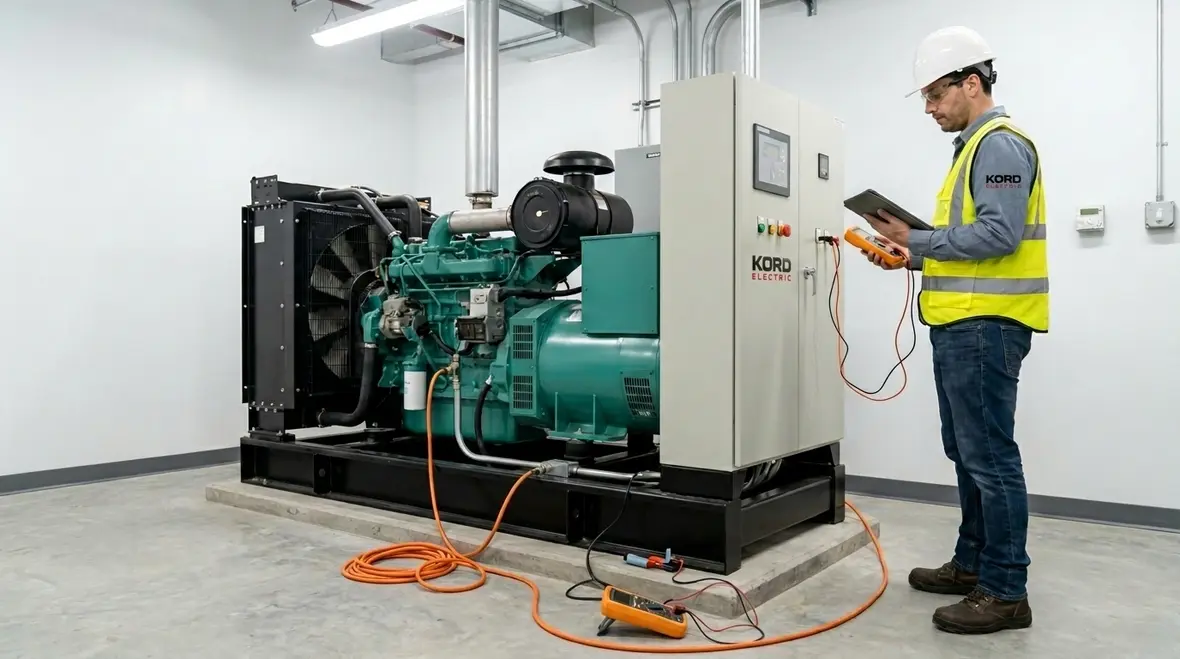
To ensure backup power actually supports operations, Kord Electric runs tests that reflect real site behavior. We begin with pre test readiness. Then we confirm electrical paths, verify interlocks, and review sequence logic so the ATS and associated gear transfer at the correct time and in the correct order. After that, we conduct generator start and stabilization checks, and we measure key performance points such as voltage stability, frequency control, and load acceptance.
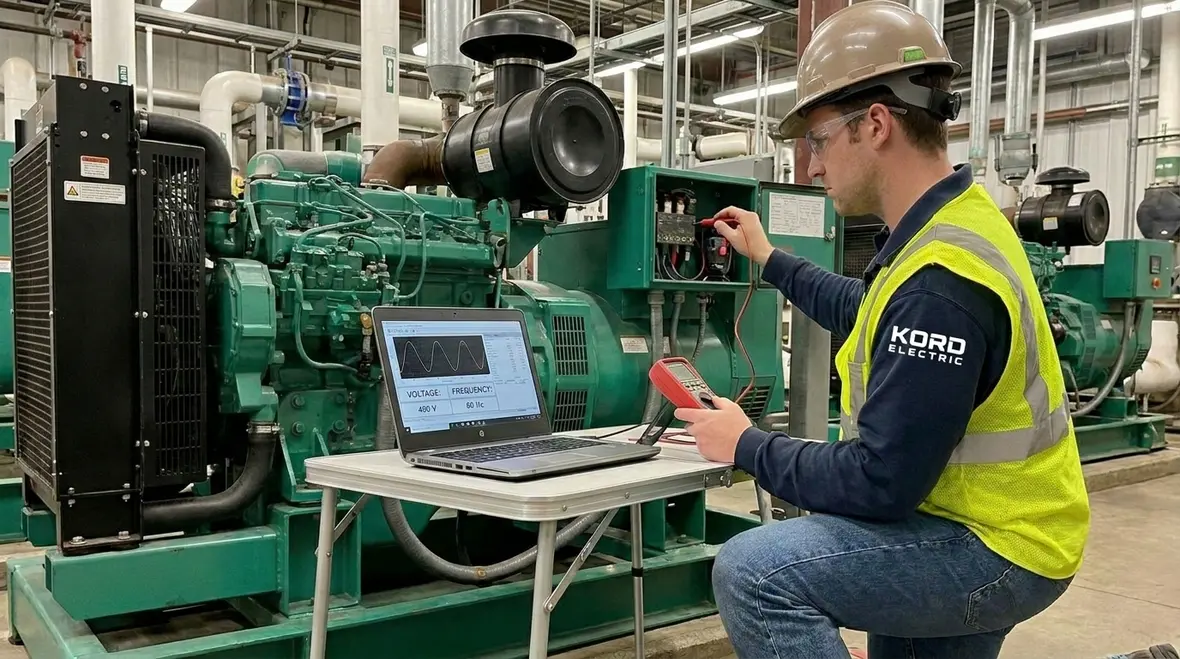
Then we move into load verification. We do not just flip switches and hope. We actively test how your facility loads pick up during an outage event. That includes evaluating step loading, monitoring harmonics, and confirming that protections clear faults without unwanted shutdowns. Finally, we repeat checks as needed, so the system does not only perform once like a good actor in a single scene.
At this stage, our technicians communicate results quickly and clearly. They explain what passed, what needs adjustment, and why the adjustment matters for a commercial or industrial environment. We also coordinate with facility leadership so the process stays safe and predictable, because nobody benefits from chaos during commissioning or maintenance.
How transfer equipment and controls can look fine and still cause trouble
Transfer equipment earns most of the blame when outages happen, but it is often a team sport. ATS logic, paralleling controls, supervisory relays, and switchgear settings all affect outcomes. Even a small timing mismatch can cause nuisance transfers, short interruptions, or repeated attempts that stress motors and sensitive drives.
For major property buildings and industrial sites, the control system must handle complex load categories. Life safety loads expect reliable behavior. Process loads expect stable power. And tenants or departments expect minimal downtime. Therefore, our expert service staff reviews coordination and sequence behavior so the transfer action matches the real electrical design of your facility.
We also confirm that settings align with current equipment. Over the years, sites evolve. HVAC upgrades happen. New production lines come online. Data rooms expand. If the transfer logic does not update, backup performance can drift out of step. In other words, your system may be running well, but it may be responding to an outdated map.

Load planning for commercial and industrial sites that cannot “shut down nicely”
Backup power is not one size fits all. A distribution center, a hospital support wing, a campus building, and a manufacturing floor each carry different risk. Some loads can tolerate brief interruptions. Others cannot. Some loads surge at start up. Others pull in steady patterns. When testing only checks the generator nameplate, facilities miss what really matters during an outage.
Our approach starts with understanding your operating reality. We identify critical loads and categorize them by priority and behavior. Then we verify how those loads will step on during transfer, and whether the generator can maintain voltage and frequency as demand ramps up. We also check that controls respond predictably to common events like motor start sequences, variable frequency drive behavior, and communications equipment needs.
Here is a practical truth: if your backup power plan relies on loads behaving “normally,” then you are borrowing luck. We build testing to reduce that gamble, so your emergency power systems testing procedures reflect what the site actually runs, not what someone assumed last year.
Fuel, start reliability, and runtime issues that inspections often miss
Even when transfer and controls perform correctly, backup power can fail from the basics. Fuel quality, storage conditions, and maintenance habits affect startup and performance. If the system has short runtime due to tank capacity or consumption rates, an outage that lasts longer than expected can leave you running on fumes, like a phone at 1% trying to stream a movie.
Our technicians verify readiness factors that connect directly to outage performance. We review fuel systems, check for contamination concerns, and confirm that the generator can start and stabilize reliably. Then we evaluate runtime assumptions by using measured consumption patterns under load, not just assumptions from paperwork.
We also look at environment impacts such as ventilation conditions and ambient temperature effects. For commercial and industrial facilities, these details matter because equipment runs closer to limits than many people expect. And when a site depends on continuity, small operational drift becomes a big business problem.
Interpreting results so leadership can act fast, not later
Testing without clear communication creates another problem: teams end up with reports they cannot use under pressure. Kord Electric focuses on turning test data into decisions. We explain results in terms of risk, impact, and next steps. Our expert service staff walks facility leaders through what happened during testing, which parameters matter most, and how recommended changes reduce outage downtime or equipment stress.
We also track trends. A system can pass today and still show early signs of drift. For example, frequency regulation might slightly worsen, or contact wear indicators might suggest future transfer issues. By addressing these items early, we help prevent the classic scenario where a team says, “It worked last time,” right before it does not.
When we document actions, we keep it practical. We outline what to fix, who should approve, and what outcome each change supports. That way, your maintenance planning stays aligned with continuity goals.
How Kord Electric builds a maintenance plan around uptime goals
Commercial and industrial customers need more than one test event. They need a plan that stays current as the facility changes. At Kord Electric, we align testing cadence with critical load seasons, equipment updates, and operational schedules. We also incorporate coordination reviews when systems expand, controls change, or new major loads come online.
In practice, that means we do the boring parts so you do not have to do them twice. We help you plan testing windows, coordinate safe operations, and verify that protective settings remain coordinated with current site conditions. Then we follow through with recommendations that improve performance without creating unnecessary work.
We treat your backup power like an asset that protects revenue and safety. And yes, sometimes that means telling clients something they do not want to hear. Not because we enjoy the drama, but because continuity is business. It is also the kind of thing that saves money and reputations when others are stuck looking for a workaround.
Dual view: inspection vs real performance
Inspection checks components and wiring conditions.
Real performance testing confirms start, transfer, load acceptance, and stability during outage behavior.
What leadership needs to know
Whether the system sustains critical loads under real demand.
Whether controls and protection stay coordinated throughout transfer.
Whether fuel and runtime support the outage duration you plan for.
How testing supports long-term electrical maintenance planning
Real load testing does more than prove your generator can carry the moment. It feeds directly into broader electrical preventive maintenance and long-term reliability planning. When test data reveals voltage stability issues, nuisance trips, or stressed equipment, those findings become a roadmap for targeted improvements instead of guesswork troubleshooting.
For facilities already investing in structured programs, integrating emergency power systems testing procedures with electrical preventive maintenance creates a closed loop. Testing highlights weak points, maintenance addresses them, and follow-up testing confirms that changes actually improved performance. Instead of chasing isolated incidents, leadership sees a clear link between maintenance dollars and reduced outage risk.
This approach is especially valuable for major properties with complex loads, aging infrastructure, or ongoing expansion. As new equipment is added and production schedules change, integrated testing and maintenance keep the emergency power system aligned with reality, not just the original as-built drawings.
Connecting emergency testing with broader power quality issues
Another advantage of real load tests is the ability to observe how your backup system interacts with broader power quality. Some facilities only discover voltage swings, harmonic distortion, or sensitive equipment issues when the generator is carrying the building. Those symptoms often mirror problems seen during normal operation, such as flickering lights, nuisance tripping, or unexplained shutdowns.
By capturing this information during emergency power systems testing procedures, our technicians can connect outage behavior with day-to-day concerns. In many cases, facilities that are already investigating voltage fluctuations in commercial and industrial facilities benefit from coordinated testing. Instead of treating backup power and utility power as separate worlds, we look at how both affect your critical loads over time.
The result is a more complete picture of risk: how your facility behaves on utility power, how it behaves on generator power, and what that means for uptime, equipment health, and long-term planning.
FAQ
Conclusion and call to action
If your facility depends on backup power, we recommend going beyond paperwork and insisting on real emergency performance. Kord Electric delivers emergency power systems testing procedures that validate transfer behavior, load acceptance, and stability under the conditions your business actually faces. Then we translate results into clear actions your team can approve fast.
For commercial and industrial leaders building long-term reliability strategies, pairing this testing with structured electrical preventive maintenance gives your continuity plan real traction. Together, they reduce surprises, protect equipment, and keep your facility ready for the day the lights flicker and everyone looks at the generator.
Contact Kord Electric today to schedule a performance focused test plan for your commercial or industrial facility, and give your continuity strategy the confidence it deserves. If you are coordinating broader capital upgrades or new projects, our team can also align emergency testing with services such as lighting installation for large-scale facilities, so critical systems are verified from day one.