
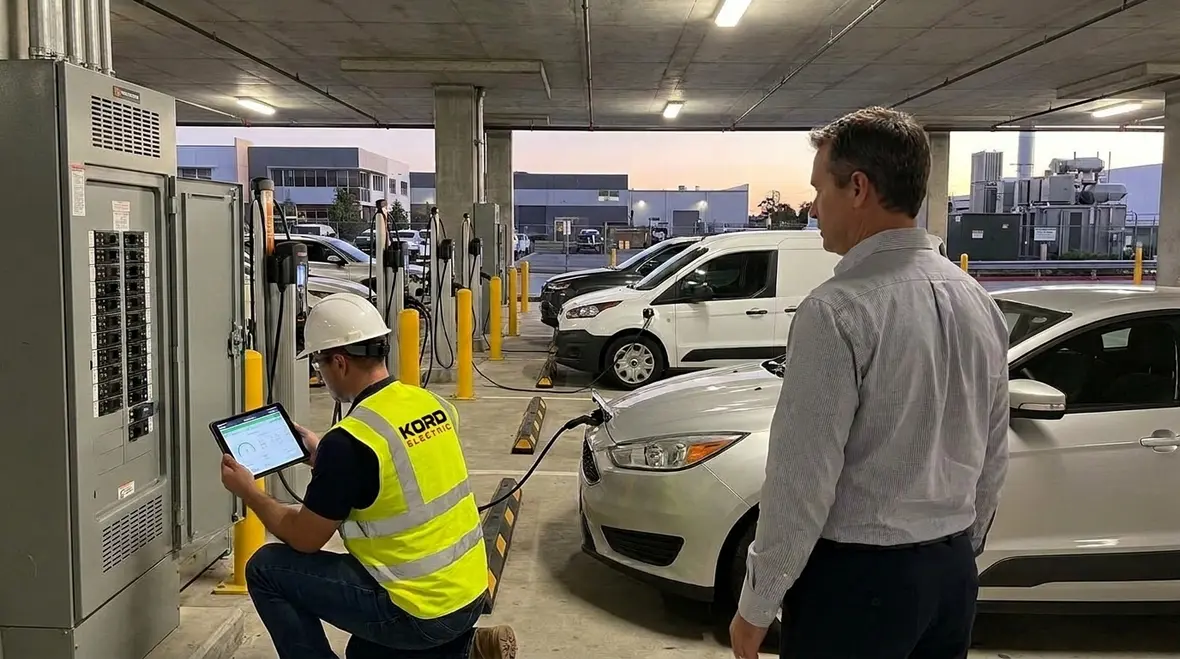
EV Charging Load Management for Commercial Properties
At Kord Electric, we help commercial owners and facility teams keep EV charging running smoothly without wrecking the rest of the electrical system. In our guide on EV Charging Load Management for Commercial Properties, we explain how load management charging works, why it matters for demand charges and grid limits, and how smart controls can spread charging power when the building needs it most. So, instead of turning every charger into a tiny electrical drama queen, we design systems that behave like a well coached team. And yes, our technicians will explain it step by step, because nobody should have to “guess and hope” when the lights, HVAC, and production equipment also need power.
Why commercial facilities need smart load management
In commercial and industrial settings, power does not behave like it does in a quiet suburb at 2 a.m. Facilities run on schedules, and those schedules rarely align with predictable EV charging patterns. When forklifts, chillers, process loads, and lighting all ramp up around the same time, the site can hit a demand limit. Then the utility can charge you more, or worse, the system can trip.
Load management charging solves this by controlling how much power each charger receives and when it receives it. Additionally, it does not treat EV charging as an isolated project. Instead, it treats EV charging as part of the site’s overall electrical plan. Therefore, our approach helps you keep operations stable, manage costs, and protect equipment.
To keep the message clear, our expert service staff often tells customers, “Think of your building like a restaurant kitchen. You cannot fire every burner at once and expect dinner to land on time.” EV charging load management works the same way, just with software and breakers instead of spatulas.
How EV Charging Load Management for Commercial Properties actually works
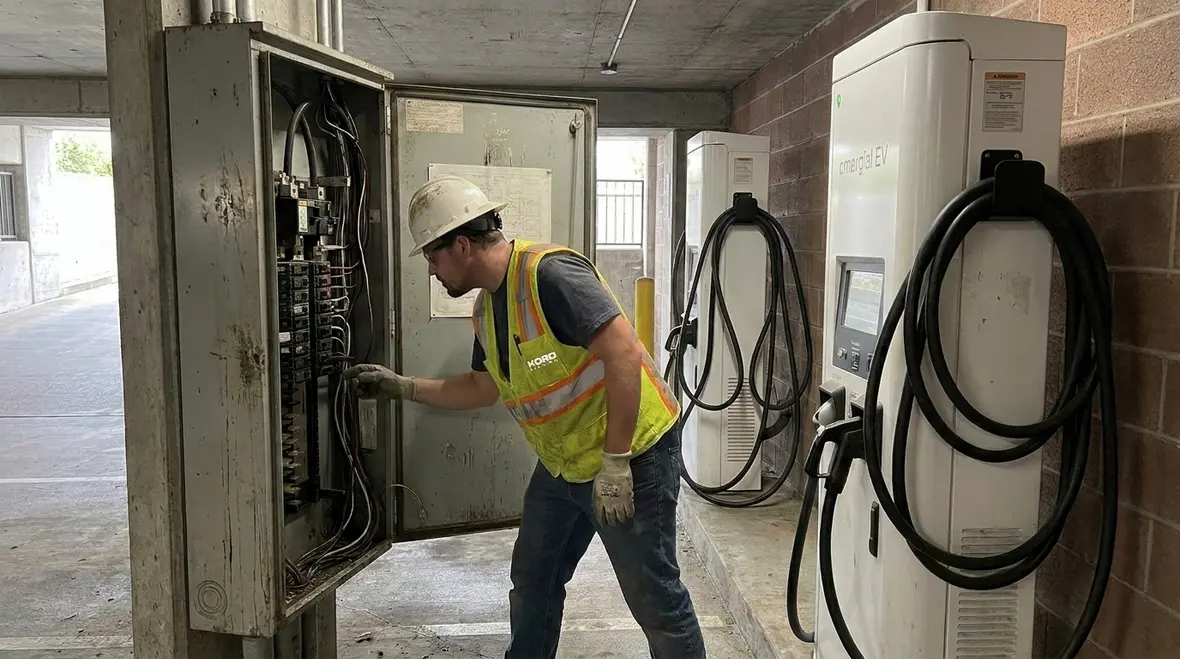
When people hear “load management,” they sometimes imagine a charger that just turns itself off. In reality, we design a coordinated system that measures power and then adjusts charging output in real time. First, the system monitors incoming power, often at the service entrance. Next, it communicates with the charging equipment. Then, it assigns charging capacity based on set priorities and available capacity.
For commercial EV charging, we commonly see two control goals. One goal focuses on staying under a utility demand threshold. The other goal focuses on protecting critical loads such as data rooms, refrigeration, and life safety systems. Meanwhile, the system can still meet typical charging needs by distributing available power across multiple vehicles instead of letting one car consume the lion’s share.
Our technicians also help customers choose the charging strategy that fits their operations. Some sites want predictable plug in behavior for employees. Others need fleet scheduling that aligns with shift changes. Either way, EV Charging Load Management for Commercial Properties helps coordinate those needs with the site’s electrical reality.
And if you are picturing the chargers “chatting” with each other like superheroes in a movie, you are not far off, just with less capes and fewer explosions.
Demand charges, peak demand, and cost control
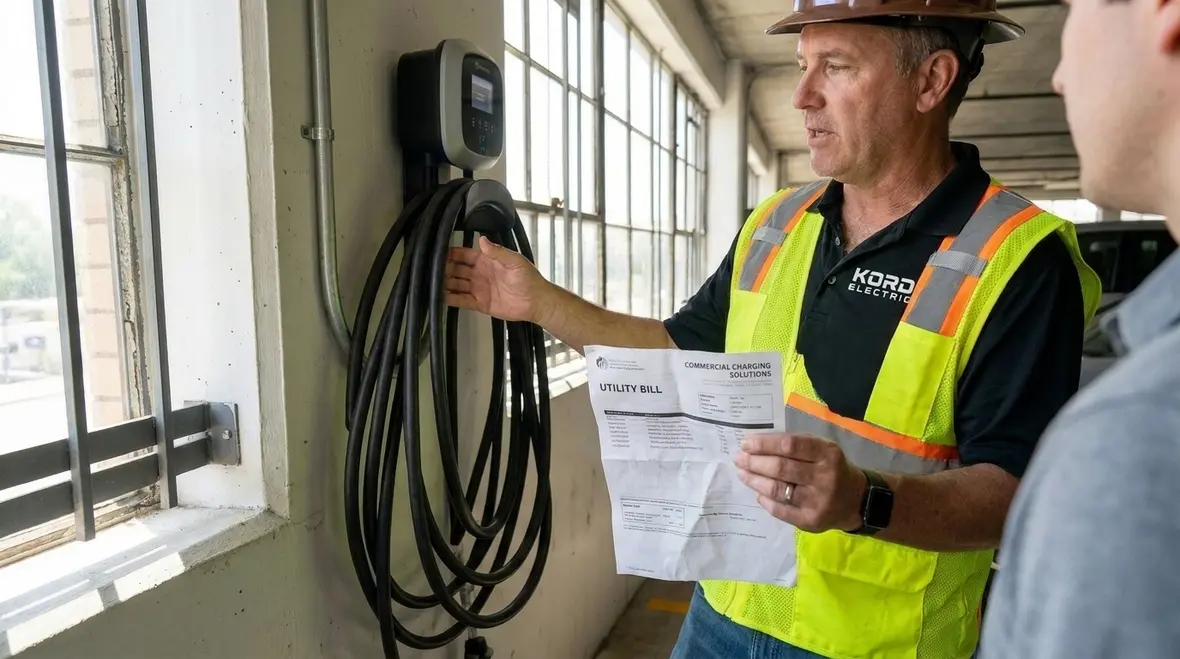
Most commercial owners care about cost, and the utility tariff plays a big role. Many rate structures include demand charges based on peak power draw during a billing period. Therefore, even if your average energy use stays reasonable, a single sharp peak can drive costs up.
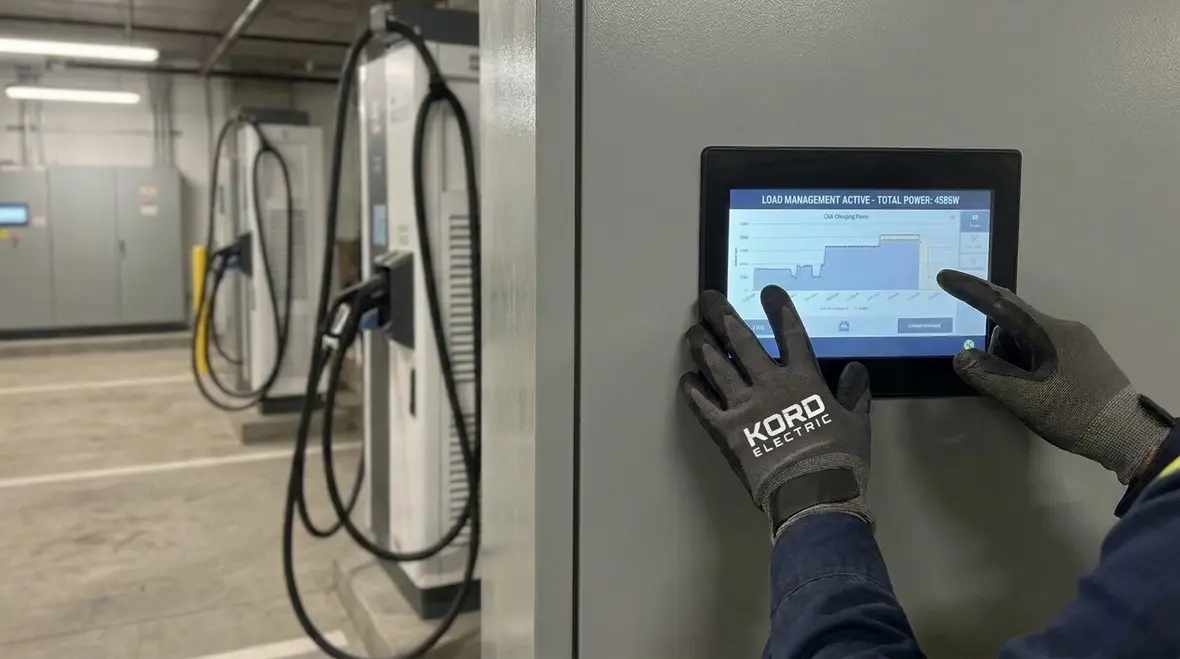
Load management charging reduces the risk of unwanted peaks. Instead of charging at full power every time a vehicle plugs in, the system limits charging to the available capacity. Consequently, the site spreads charging load over time. As a result, peak demand can remain closer to your planned operating range.
We help teams model typical patterns, such as morning plug in surges, midday equipment ramps, and evening shift change. After that, we configure priority settings so critical loads stay safe. Our technicians then verify performance after installation with practical testing, not just theory.
Here is the simple truth: utility bills can look like a mystery novel. Load management helps turn that novel into an instruction manual.
Protecting electrical infrastructure and keeping uptime
Commercial and industrial facilities run on uptime. You cannot afford nuisance trips, stressed conductors, or repeated equipment resets. When EV chargers add load, they change the electrical stress profile at the service, panels, feeders, and breakers.
With coordinated control, EV charging load is constrained so the electrical system stays within planned limits. Additionally, the system can provide settings that keep space available for other loads during peak production or HVAC cycling. That approach reduces the need for oversized electrical upgrades, which can take time and budget.
Still, the “smart” part does not replace good design. We size conductors, breakers, and electrical components based on the real site load and the charging strategy. Then we integrate the control system so it respects the design boundaries. In other words, we combine engineering discipline with smart controls, not guesswork.
Our expert service staff will also walk you through what to expect during commissioning. They explain why settings matter, how fault conditions behave, and how your team can respond if something changes on site. Because once a system is installed, it becomes part of your operations, not a separate gadget you forget until it breaks.
Designing for fleets, employees, and visitor charging
Different commercial sites charge different groups of vehicles. A campus may support employees plus a small fleet. A warehouse may focus on delivery EVs. A retail complex may host visitor charging where demand spikes on weekends.
Load management charging designs around those patterns. For employee charging, we can prioritize consistent delivery of energy while still limiting peaks. For fleets, we can align charging windows with downtime, so vehicles charge when production is quiet. For visitor charging, we can keep enough flexibility so a plugged in vehicle receives a usable rate without pushing the site beyond its planned limits.
Importantly, we also consider how vehicles arrive. Some facilities see plug in bursts at predictable shift times. Others see more random arrivals. Therefore, we set control rules that handle both steady and uneven behavior.
Our technicians often recommend starting with a clear list of “who charges when” and “how much energy they need.” After that, we translate those needs into configuration. It sounds like admin work, but it saves money and stress later. Because charging policies without electrical control are like having a traffic light with no roads. Technically cute, practically useless.
If you are planning a broader rollout, it can help to pair EV Charging Load Management for Commercial Properties with a staged infrastructure roadmap. For example, you might combine this approach with a phased build described in Kord Electric’s EV charging infrastructure planning for commercial growth, so your load management strategy and your long term construction plan move in step instead of fighting each other.
Common pitfalls we help clients avoid
Even with a strong concept, projects can fail when assumptions break. One common pitfall involves treating EV charging as a standalone load. However, the site does not operate in isolation. When the electrical system hits a peak, everything competes for power, and the chargers can become the loudest competitor.
Another pitfall comes from poor data. If the monitoring point measures the wrong area, or if the system does not reflect real site behavior, the control logic will not match reality. Then the system may be too conservative, slowing charging, or too relaxed, risking peak spikes.
We also see issues when priorities are unclear. If nobody defines which loads matter most, the system has to guess. That can lead to frustration when users think they should get full charging power but the site needs power elsewhere.
Our team fixes these problems by doing a disciplined pre design review, confirming utility service constraints, and setting practical priorities. Then we test the system under real conditions, not only in ideal lab settings. Our expert service staff explains the choices in plain language, so facilities teams can operate confidently.
If you are juggling multiple facilities or planning a larger network, it can also help to review how Kord Electric handles system scaling in their EV charging infrastructure scalability for commercial sites. That perspective lines up well with EV Charging Load Management for Commercial Properties, especially when you want one plan that covers reliability, growth, and day to day operations.
How EV charging load management ties into broader electrical strategies
On a real property, EV chargers do not live alone. They share space with lighting, HVAC, production loads, elevators, IT rooms, and whatever new tenant idea shows up next quarter. EV Charging Load Management for Commercial Properties fits best when it sits inside a broader approach to electrical planning instead of acting like a bolt-on gadget.
When our team reviews a site, we often pair load management design with a look at how power flows across the building. That can include how phases stay balanced, how panels are loaded at peak times, and how existing infrastructure will behave once new chargers arrive. In many cases, simple adjustments in circuiting and settings, combined with smart EV load management, can delay or avoid major infrastructure upgrades without sacrificing reliability.
This is also where communication and monitoring matter. A load managed charging system works even better when the facility team can see real time data, trend logs, and alarms instead of waiting for someone to report a slow charger in the parking lot. We help owners decide which dashboards they actually need and which alerts will help, not overwhelm, their staff.
EV charging policies, user expectations, and change management
Technology alone does not handle expectations. Once EV Charging Load Management for Commercial Properties goes live, drivers and facility teams need to understand what “normal” looks like. That way, when charging slows slightly during a peak window, it feels like part of the plan, not like a failure.
We often suggest that property owners publish a simple charging policy that explains:
- When charging is prioritized for fleets, employees, and visitors
- How long vehicles are expected to stay connected
- What drivers can expect during busy windows or special events
- Who to contact if they see behavior that does not match the policy
By matching the technical load management strategy with a clear human-facing policy, facilities avoid confusion and help people trust the system. It also gives managers a reference point when new departments or tenants ask for “just a few more chargers” without realizing what that means for demand and infrastructure.
If you want a broader playbook for how charging policy, phasing, and infrastructure fit together, you can also explore Kord Electric’s guide on EV charging infrastructure planning for commercial growth, which pairs neatly with the load management approach described here.
How load management supports multi-site portfolios
Many commercial owners do not manage just one building. They look after a portfolio of offices, warehouses, or mixed use properties spread across a region. EV Charging Load Management for Commercial Properties scales well in that environment, because it gives you a repeatable way to keep demand in check while still expanding charging access.
At some locations, you may lean heavily on load sharing to avoid panel upgrades. At others, you might pair a moderate upgrade with more generous charging capacity. In every case, the goal is the same: keep uptime high, keep surprise demand charges low, and keep the electrical system operating inside well understood limits.
For portfolios across fast growing regions, we also design so local facility teams can operate their systems without needing a separate specialist at every site. That includes clear labeling, documentation, and training, plus smart monitoring where it helps. When done right, adding a new location to your EV charging footprint should feel like following a playbook, not like rolling the dice on a brand new experiment.
Integrating EV charging load management into your next project
If you are already planning a renovation, a tenant improvement, or a new building, that is the perfect time to integrate EV Charging Load Management for Commercial Properties into your design. Instead of adding chargers later and hoping the existing gear can keep up, you can plan distribution, control wiring, and communication paths while walls are open and schedules are flexible.
Our team regularly coordinates with design professionals, contractors, and facility managers to align the charging strategy with panel layouts, equipment rooms, and site circulation. We also help you think ahead about how future phases of charging might plug into the same backbone, so phase two or three feels like an extension of the original plan rather than an improvisation in the parking lot.
For properties in and around Southern California, that planning often ties into a broader mix of power reliability and code requirements. Kord Electric’s Los Angeles County electrical services team supports these projects end to end, from the first walk through to final commissioning, so your EV charging and core electrical work stay in sync instead of pulling in different directions.
FAQ
Ready to balance EV charging and power demands?
If your commercial facility wants EV charging without surprise demand spikes or electrical stress, we can help. Kord Electric designs load management charging systems for commercial and industrial buildings, then supports them with expert commissioning and clear explanations from our technicians. Reach out to us for a site review, power planning, and a configuration that fits your charging goals. Let’s keep your building running steady and your chargers running smart. Contact Kord Electric today to start the plan.
Whether you are adding your first few chargers or expanding a multi site network, EV Charging Load Management for Commercial Properties gives you a practical way to grow without turning every new vehicle into a new electrical mystery. Our team designs, installs, and supports systems that respect real world operating hours, utility tariffs, and infrastructure limits, so your charging behaves like part of a calm, well managed power system instead of a last minute science experiment.
If you are already exploring broader EV infrastructure planning, you can connect this strategy with Kord Electric’s work on EV charging load management for commercial power and related commercial EV charging guides. Together, these resources give facility teams a clear roadmap from first conversation to stable, demand aware operation.


