How EV Charging Load Management Guards Commercial Power From Overload
At Kord Electric, we design EV charging systems with EV charging load management as a core principle. In the first place, it helps prevent overloaded panels in commercial buildings by coordinating how much power the chargers draw and when. Meanwhile, it protects breakers, reduces nuisance trips, and supports steady operations for tenants, staff, and customers. In other words, we keep the electrical system calm, even when the vehicles are not. And yes, in a way, it is like tuning a band so nobody solos too early and blows the whole gig. We have seen the difference a well managed load makes, and our technicians explain it clearly as we plan each installation.
1) Why overloaded panels happen in commercial settings
Commercial and industrial facilities rarely have simple electrical loads. After all, they operate with HVAC cycles, lighting schedules, elevators, kitchens, compressors, security systems, and more. Then EV charging enters the mix, often during peak hours when the building already runs hard. As a result, the panel can reach capacity faster than people expect.
In many cases, the problem is not the charger by itself. The issue is timing and total demand. If multiple chargers turn on at once, the building sees a sudden spike in current. That spike can trigger thermal stress, breaker trips, or long term wear. Furthermore, some sites have older service equipment, so there is less room for additional load without upgrades.
Our experienced team at Kord Electric looks at these realities early. We do not guess. Instead, our technicians review the facility’s electrical data, discuss the EV charging goals, and then design a system that adds charging capacity without pushing the building into the danger zone. We treat every major property building like the living electrical ecosystem it is, because it is.
2) Load management explained in plain terms by our service team
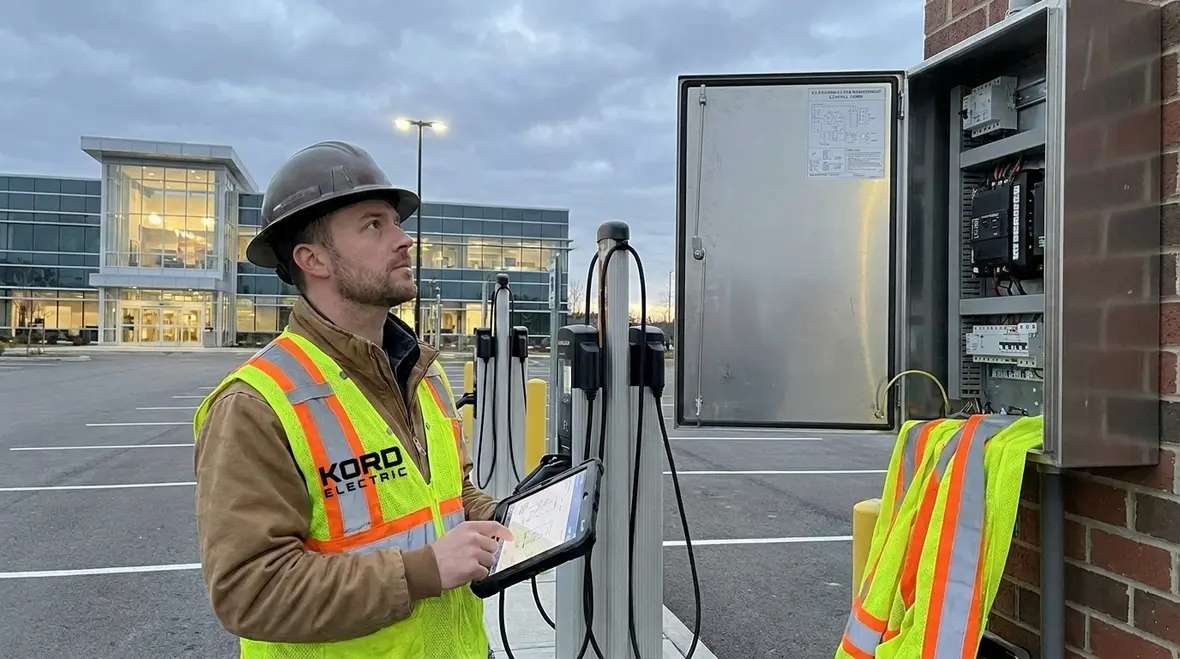
When our technicians explain EV charging load management, we keep it simple: chargers should share power intelligently, not compete like kids grabbing the last slice of pizza. Load management works by monitoring the building demand and setting charging rates so the total stays within a safe limit.
There are a few ways this can be done, but the practical outcome is consistent. The system measures available capacity and then adjusts output for each connected vehicle. If the building demand rises because the HVAC kicks on, the chargers reduce their draw. If demand drops later, the chargers ramp back up. Therefore, the facility stays within the intended electrical limits.
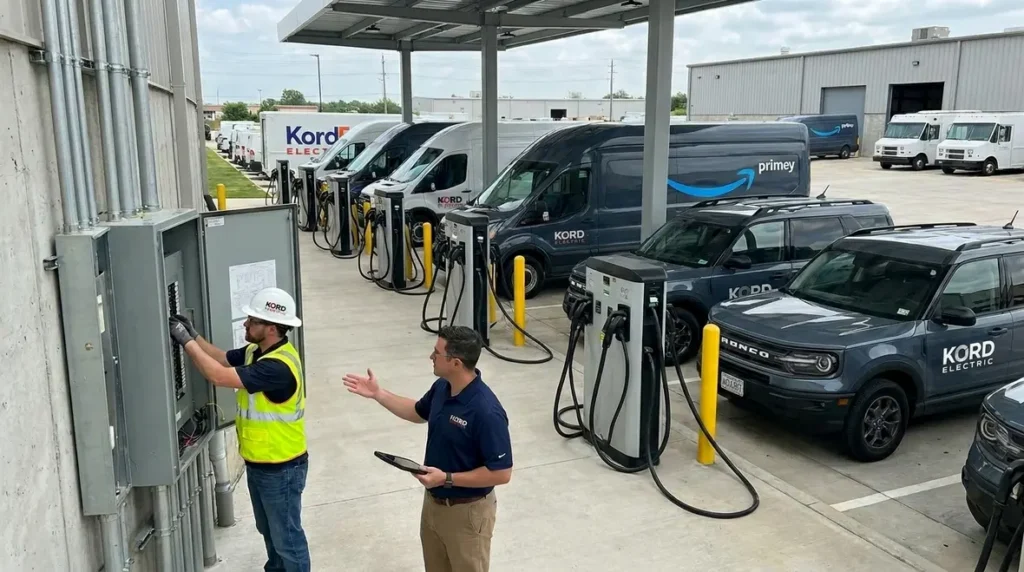
Additionally, the system can coordinate multiple chargers across a parking area or a campus layout. That matters for commercial sites because power runs and panel capacity are rarely identical everywhere. So rather than treating every charger like an island, we build the plan around the shared electrical reality.
From there, our team helps property managers and facility owners understand what will happen in day to day use. We explain how the system behaves during peak hours, during simultaneous vehicle arrivals, and during partial charger utilization. Then we set expectations that match how the building actually operates.
3) What we check before we install chargers
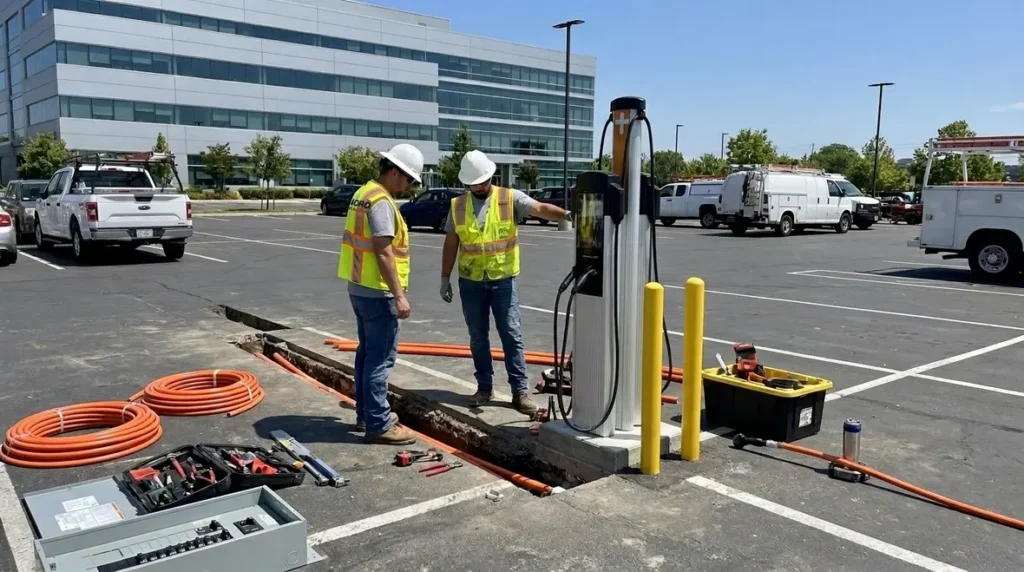
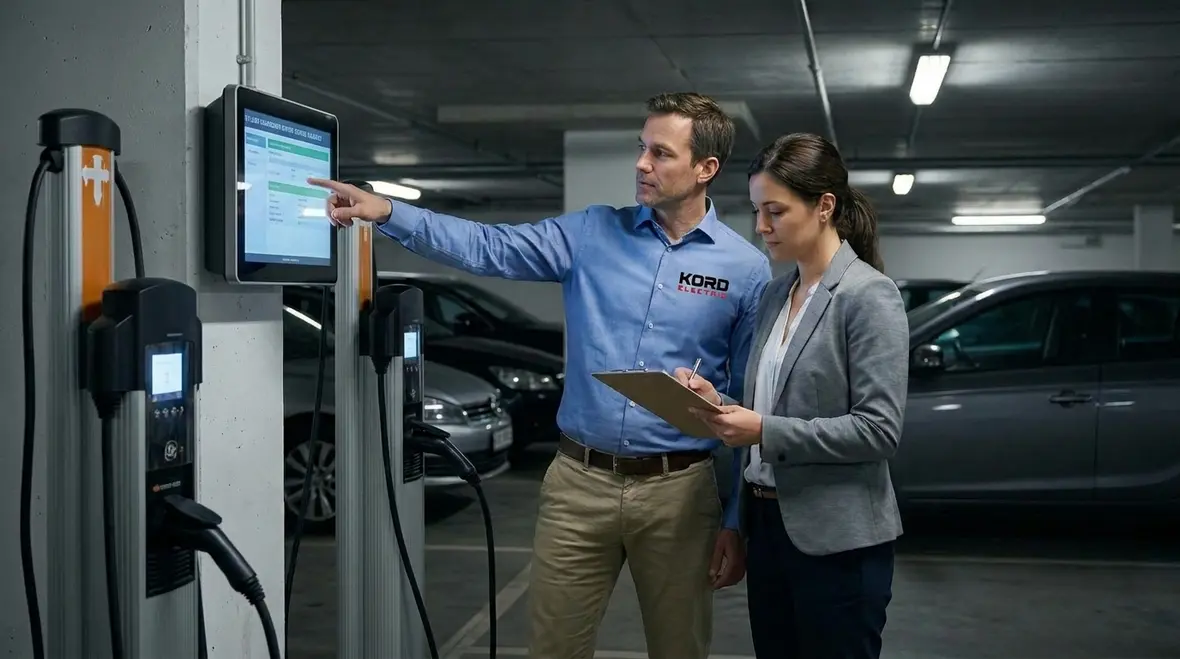
Before any conduit is pulled or any cabinet is opened, we confirm the electrical baseline. We focus on data, not vibes. First, we evaluate service size, existing panel capacity, and the available headroom for new loads. Next, we review load profiles tied to the facility schedule, including demand during business hours and evenings.
Then we verify equipment condition. A commercial panel might be rated “big,” but if it is aging, overheated in the past, or already near its comfort limit, adding load can become risky. Consequently, we consider not only the nameplate ratings, but also the real world operating behavior.
We also think about charging behavior. For example, do vehicles arrive together, or spread out? Do guests typically plug in during high demand times? Does the site support overnight charging for staff? Each answer changes the best configuration. Our technicians use this information to pick a safe approach for power sharing and charging speed.
For major property buildings, we also plan for future growth. Many owners start with a few chargers, then add more after utilization proves strong. We want the initial design to stay usable when the fleet grows, not become an upgrade project after the first busy season.
4) The role of smart hardware and controls
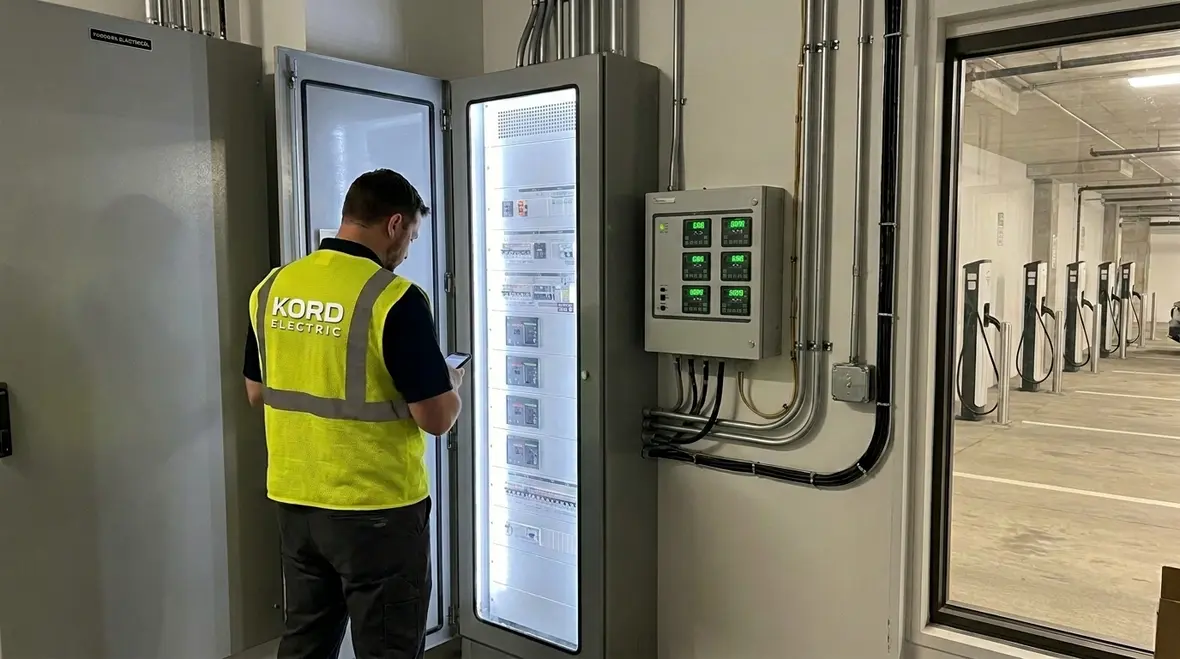
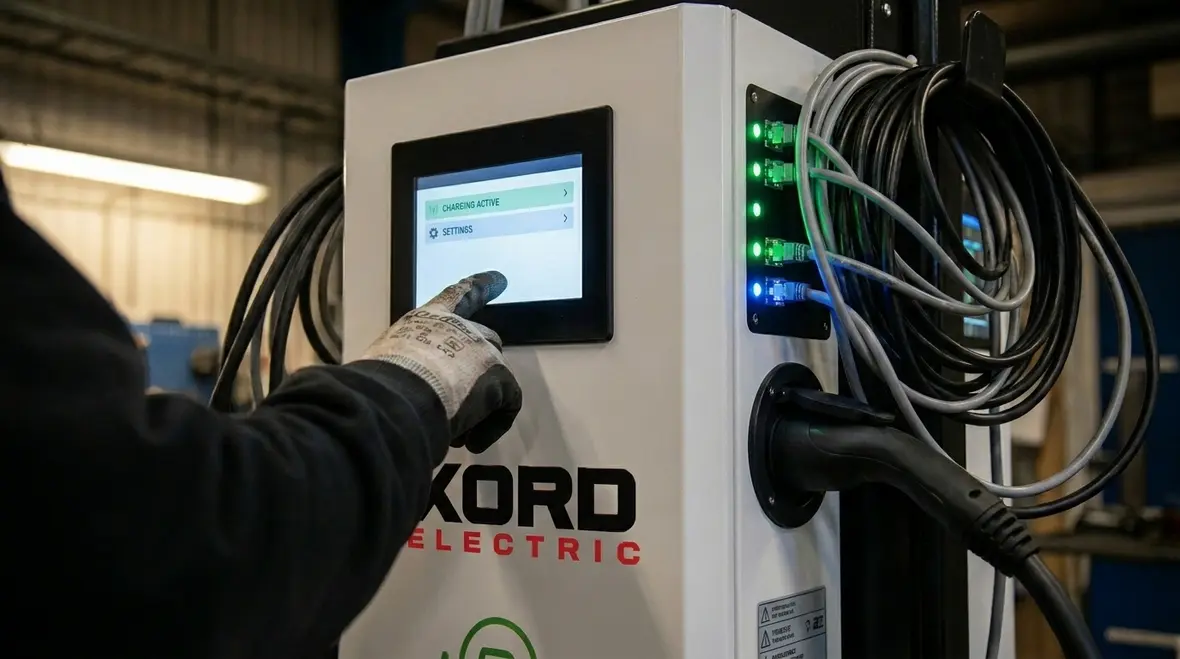
Modern charger systems rely on controls that can sense demand and respond quickly. While the charging station provides the hardware for plugging in, the control layer makes it behave responsibly. That control layer can communicate with the chargers and adjust output based on the site’s capacity.
In practice, this means a building does not have to run short of power just because several cars decide to charge at the exact same time. Instead, the system distributes available capacity, so each vehicle gets a fair amount without tripping breakers. In addition, some setups include settings for priorities, which helps property owners align charging with their rules.
For example, a commercial office might prioritize staff charging after business hours, while a retail property might handle guest charging with a different schedule. Meanwhile, an industrial facility might want predictable ramp up for shift transitions. Our technicians help tailor those settings so the operation stays smooth.
We also emphasize reliability. A load management system should not be fragile. It must keep functioning under different traffic patterns, weather events, and maintenance conditions. So, we install with correct wiring practices, safe protections, and clear documentation. Our goal is not just a working charger, but a system the building can trust.
5) How this prevents overloaded panels during peak demand
The most important outcome of EV charging load management is simple: it prevents the electrical system from exceeding safe limits. When the building demand rises, the charger output adjusts. As a result, the panel does not experience the same sudden draw that would happen with uncontrolled charging.
Consider a typical scenario in a commercial building. During the morning rush, HVAC systems start and lighting schedules shift. Then multiple employees arrive and plug in. With basic installation practices, the chargers might all pull their full rated power instantly. However, with coordinated load management, the chargers share the available capacity. Therefore, the building stays within the planned demand range.
This reduces the chance of breaker trips and helps protect the busbars and wiring from stress. It can also lower the risk of long term overheating, which is the kind of slow problem nobody wants to discover during a busy weekday.
And yes, nobody wants to explain to a property manager why the chargers stop working every time the kitchen equipment turns on. That is not a meeting anyone schedules for fun. With load management in place, we help eliminate that kind of operational drama.
6) What Kord Electric delivers for commercial and industrial facilities
Kord Electric focuses on commercial and industrial facilities and major property buildings. We do not build for warehouses of regret, and we do not treat EV charging like a weekend DIY project. Our process stays structured and focused.
First, our team performs the site evaluation and planning steps needed to determine safe limits and optimal charger placement. Second, we align charger count and power levels with the building’s capacity. Third, we install EV charging systems with attention to safety and documentation so facility teams can manage the setup confidently.
Additionally, we coordinate with the site’s operational needs. If a building must stay active during installation, we plan around access times and minimize disruption. Then we test the system to confirm it behaves as intended under realistic load conditions.
If you want a practical look at how we approach EV charging installation, you can reference the details on our page here: commercial EV charger installation services. We build with clarity and care, because in commercial settings, trust matters as much as the chargers themselves.
7) Smart planning for growth across a property
Commercial leaders rarely stop at “just a few chargers.” Over time, usage increases, tenant expectations evolve, and new vehicles arrive. Therefore, a good design anticipates expansion without forcing immediate electrical overhauls.
With proper load management strategies, owners can often add charging capacity more efficiently. Instead of assuming the building needs a full upgrade before it can add one more charger, we design the system to make room intelligently within the existing electrical limits. Meanwhile, we track and configure the system based on real charging behavior.
Our technicians also help property stakeholders understand how the system will respond as utilization changes. They explain what happens when fewer cars plug in, when usage spikes during events, and when some chargers are offline for maintenance. That kind of communication prevents surprises and supports better long term decision making.
In short, EV charging load management helps future proof the site. It turns charging from a one time installation into an operational capability.
For multi-site owners and larger portfolios, pairing EV charging strategies with broader electrical services such as Los Angeles County commercial electrical services helps keep everything aligned under one plan instead of a patchwork of disconnected upgrades.
FAQ
Ready for a charging system that won’t overload your panels?
When commercial sites add EV charging, they need more than hardware. They need a plan that protects panels, supports smooth operations, and scales as demand grows. Kord Electric designs EV charging installations for commercial and industrial facilities, using EV charging load management strategies tailored to your electrical capacity and charging patterns. If you want a calmer system, fewer nuisance trips, and clear guidance from our technicians, reach out today. We will review your site, explain your options, and build a solution that performs.
If your facility is also planning broader upgrades — from lighting and power quality improvements to structured preventive maintenance — integrating those projects with your EV charging plan keeps your electrical system working as one coordinated whole instead of a set of isolated fixes.
For property managers and operations teams across the region, partnering with a contractor who understands both EV infrastructure and core building power is what turns “add a few chargers” into a long term electrical strategy that actually supports tenants, staff, and customers.
When you are ready to map out that strategy, Kord Electric can provide EV charger installation, electrical upgrades, and ongoing service under a single, practical plan.
To explore related support for critical systems, you can also review their dedicated service offerings for commercial and industrial clients throughout the county.
From first charger to full portfolio, thoughtful planning today keeps your panels calm tomorrow.
If you want a calmer system, fewer nuisance trips, and clear guidance from our technicians, reach out today. We will review your site, explain your options, and build a solution that performs.