
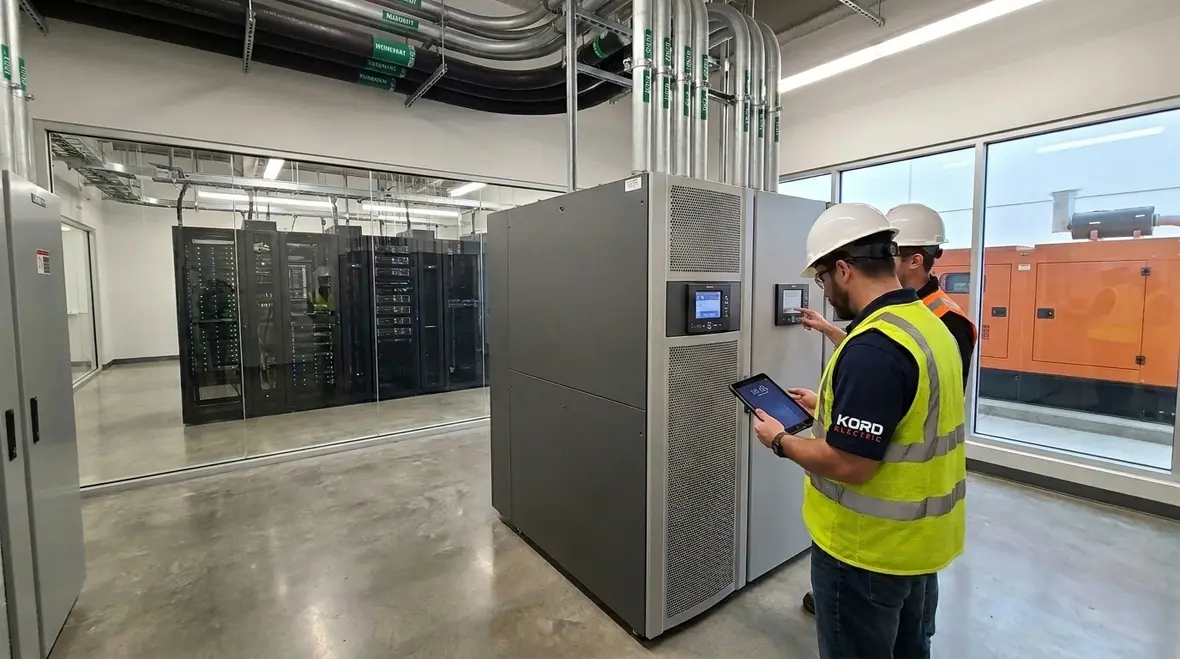
Data Center Power Redundancy Strategies Guide
Kord Electric builds Data center power redundancy strategies that help high uptime facilities stay steady when the grid, generators, or switches refuse to cooperate. First, we design layered protection so a single failure does not take the whole operation down. Next, we plan for fast transfer, clear monitoring, and safe maintenance that does not shut the lights off like a bad magic trick. Then, our technicians and expert service staff validate the plan with testing and documentation that facility teams can trust. In this article, Kord Electric explains how we approach redundancy for commercial and industrial data halls, mission critical spaces, and major property buildings where “almost running” is not an option.
Why uptime fails when power redundancy is treated like an afterthought
Most outages do not start with a dramatic thunderclap. Instead, they begin with small weaknesses. A breaker that ages faster than expected. A transfer path that works on paper but not in real timing. A control system that misses an edge case during a maintenance window. And then, suddenly, operations chase problems while the building quietly loses the ability to support critical loads.
So we take redundancy seriously from day one. Our approach builds resilience into the power path itself, not just into the idea of backup. Because when a facility team calls us after a failure, they do not need a lecture. They need a dependable system that behaves correctly under stress. And yes, we also notice when people describe redundancy as “set it and forget it.” We smile politely, then we go design it properly.
Core design principles for high uptime power paths
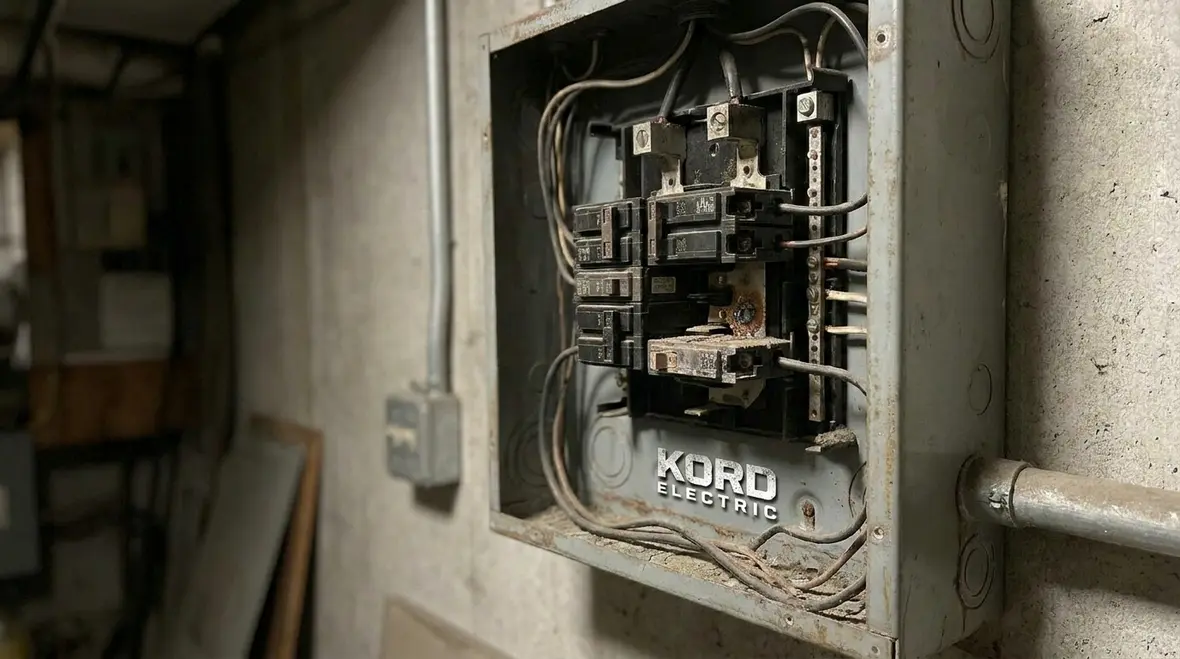
When Kord Electric designs a resilient power system, we start with load reality. We review critical equipment, runtime expectations, and the way power quality affects sensitive IT and control systems. After that, we shape the redundancy model around the facility’s risk level.
To keep uptime strong, we apply a few solid principles. First, we separate normal and backup power paths so failures do not cascade. Second, we define transfer behavior with clear timing so loads receive power without interruption beyond what the equipment can tolerate. Third, we maintain selective coordination so faults clear at the right place and do not widen across the distribution network.
Additionally, we design for maintenance. A redundancy system that cannot be safely worked on is not redundancy. It is a stress test that never ends. Our technicians explain these details in plain language during walkthroughs so building teams understand what happens during tests, bypasses, and planned outages.
How we configure N+1, dual bus, and parallel paths for resilience
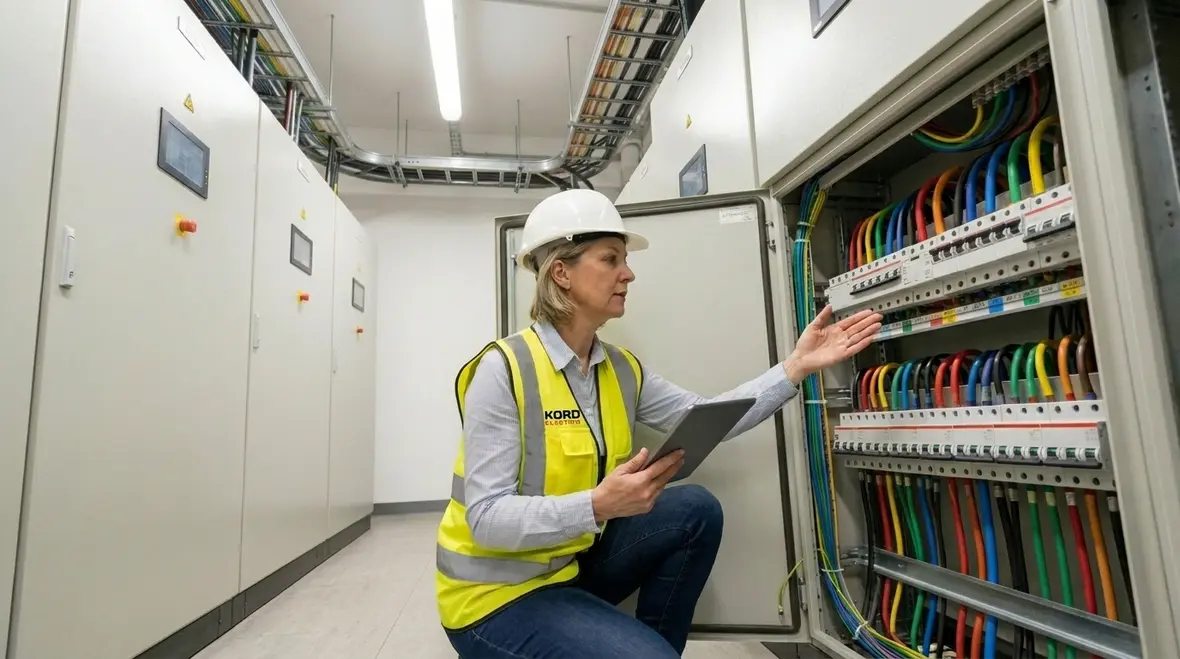
In commercial and industrial data halls, redundancy often follows a pattern such as N plus 1. That means the system supports the full load plus one extra unit, so the failure of one component does not stop service. Next, we use dual bus designs to isolate distribution and reduce the impact of equipment problems.
Where appropriate, we also plan parallel paths. This helps share load and improves stability for long term operation. However, parallel design requires discipline. If the system does not coordinate protective devices and controls, the redundancy can become confusing, and confusing is how downtime is born.
Our experts guide decisions based on electrical one line models, equipment data, and operational constraints. Then we validate the design so the facility team can expect consistent performance. And yes, we do explain it more than once. We learned long ago that “everyone nodded” does not mean everyone understood.
Transfer schemes: keeping critical loads alive during switching
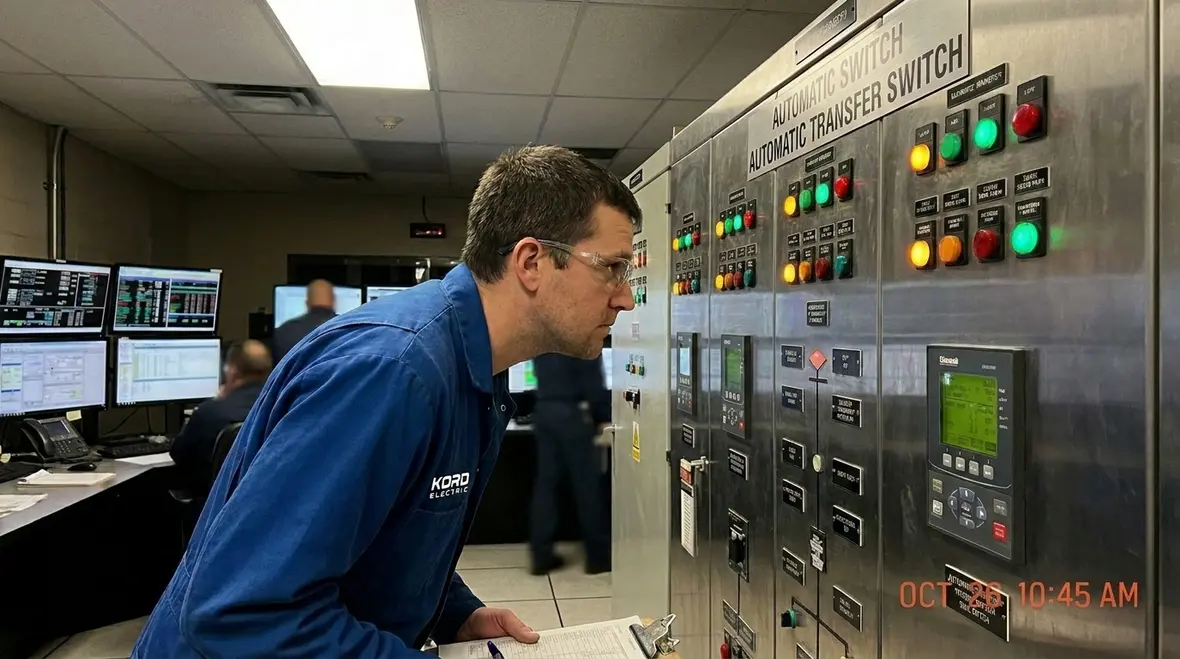
Transfer is where redundancy earns its reputation or loses it. A good design defines how power moves from utility to generator to UPS and back, depending on the scenario. We plan transfer so critical loads receive power with minimal interruption, and we also plan the order of operations so the system stays stable.
We often align transfer with the UPS strategy. If the facility uses UPS for ride through, the rest of the system must still support the UPS during runtime and load transition. Therefore, we coordinate UPS output switching, generator start time, and ATS behavior in a way that matches the actual load profile.
Then we test the sequence. Kord Electric technicians run through controlled scenarios so the transfer timing matches the design. During these sessions, we explain why certain signals must land in a particular sequence, and we point out what operators should watch for in alarms. That way, when something changes in the field, the team does not guess.
Monitoring, alarms, and service access that avoid downtime surprises
Redundancy does not end at wiring and equipment selection. It continues with monitoring and service access. When operators can see problems early, they stop trouble before it becomes a full outage.
So Kord Electric supports systems with status alarms, phase and voltage monitoring, and clear event logging where needed. We also design the layout so a technician can isolate and service equipment without creating new risk. Because nobody wants to remove a panel while the building is on a tight timeline and everyone is holding their breath like it is a seasonal tradition.
Our expert service staff reviews the full maintenance approach during handoff. They walk the facility team through routine checks, safe isolation steps, and what fault indicators mean. Also, they explain the difference between “an alarm is present” and “the system is actually degrading.” That distinction matters, and we make it easy to understand.
Field testing and commissioning that prove the plan works
Even strong designs can fail during installation if the details are not checked. That is why Kord Electric emphasizes commissioning and testing. We validate control logic, protective coordination assumptions, and transfer timing. In addition, we check that labeling and documentation match real equipment.
During commissioning, we pay attention to conditions that often get missed. For example, we verify that interlocks block unsafe actions, that control power behaves as expected, and that the system recovers correctly after a fault. We also validate load behavior so critical systems see stable power quality.
If you think this sounds like a lot, that is because it is. But it beats the alternative, which is discovering issues during an actual outage. Our team approaches testing with the seriousness of someone inspecting brakes before a long trip, but with the calm confidence that tells everyone the job is under control.
For facility leaders who want to go deeper on reliability planning, our data center electrical distribution design for reliability guide walks through how distribution choices support redundant power paths and uptime.
Learning from other electrical upgrades: EV charging installations and power planning
Facilities increasingly add loads such as EV charging, and those additions influence generator sizing, transfer behavior, and distribution capacity. While Kord Electric supports many project types, we see a clear pattern: power upgrades should not happen in isolation.
On EV charger installation projects, we plan for correct electrical layout, safe protection, and reliable commissioning so stations operate without stressing the building. Our experience carries into data center work, especially in how we treat load growth, planning for safe upgrades, and building clear service steps. If a major property wants to expand with charging while also protecting mission critical operations, our technicians coordinate power studies and practical installation paths so the facility avoids future bottlenecks.
In short, whether the load is a rack of servers or a bank of chargers, we still build the same habit into the work: we respect the power system as a living network, not a static drawing. When you are ready to plan charging that cooperates with your critical systems, explore our dedicated EV charger installation services for commercial and industrial properties.
If your data center team wants to connect these Data center power redundancy strategies with day to day inspections, our data center electrical maintenance checklist for facility managers offers a practical companion for ongoing reliability work.
FAQ: Data center redundancy and power system planning
CTA: Bring your facility power plan to Kord Electric
Kord Electric helps commercial and industrial teams design, test, and maintain resilient power for high uptime operations. Our technicians and expert service staff explain every step, then they prove performance through commissioning and field validation. If your data center, critical facility, or major property building needs a stronger plan for outages, do not wait for a real failure to learn what is missing.
For facilities across Southern California, our Los Angeles County electrical services team supports everything from new construction to complex upgrades, tying your redundancy plan into the rest of the building’s electrical strategy.
If your data center, critical facility, or major property building needs a stronger plan for outages, do not wait for a real failure to learn what is missing. Contact Kord Electric today for a power redundancy assessment and a clear path to dependable uptime.
To connect your redundancy plan with a broader service strategy, you can also explore our full Los Angeles County commercial and industrial electrical services overview, which includes emergency response, preventive maintenance, and project support for critical facilities.


