Facility Disaster Recovery Power Planning Guide
At Kord Electric, we help commercial and industrial leaders build a practical facility disaster recovery power planning approach for critical operations. We craft a disaster recovery power plan that keeps lights on, equipment running, and processes controlled when utility power fails. In this guide, we explain how our technicians and expert service staff assess risk, design resilient electrical strategies, and align your power backup with real on site needs. And yes, we do it with the calm focus you want when the rest of the building is busy panicking. Because when systems go down, people don’t search for mood music, they search for answers.
What a disaster recovery power plan actually protects
In many commercial and industrial facilities, the goal is not simply to “have a generator.” Instead, the goal is to protect functions that keep revenue and safety steady. Therefore, facility disaster recovery power planning starts with mapping what must stay alive. We work with others on your team to identify critical loads like life safety devices, process equipment, cooling and ventilation systems, servers, access control, security cameras, and key pumps.
Then we connect those loads to a realistic response timeline. After all, the first seconds after a blackout matter. A short outage can trip drives, halt conveyors, or shut down control systems. Longer outages can spoil products, break process tolerances, or stop temperature sensitive operations. Consequently, a strong plan protects both continuity and recovery. We also consider the human side, because staff will follow a plan faster when it is clear and tested.
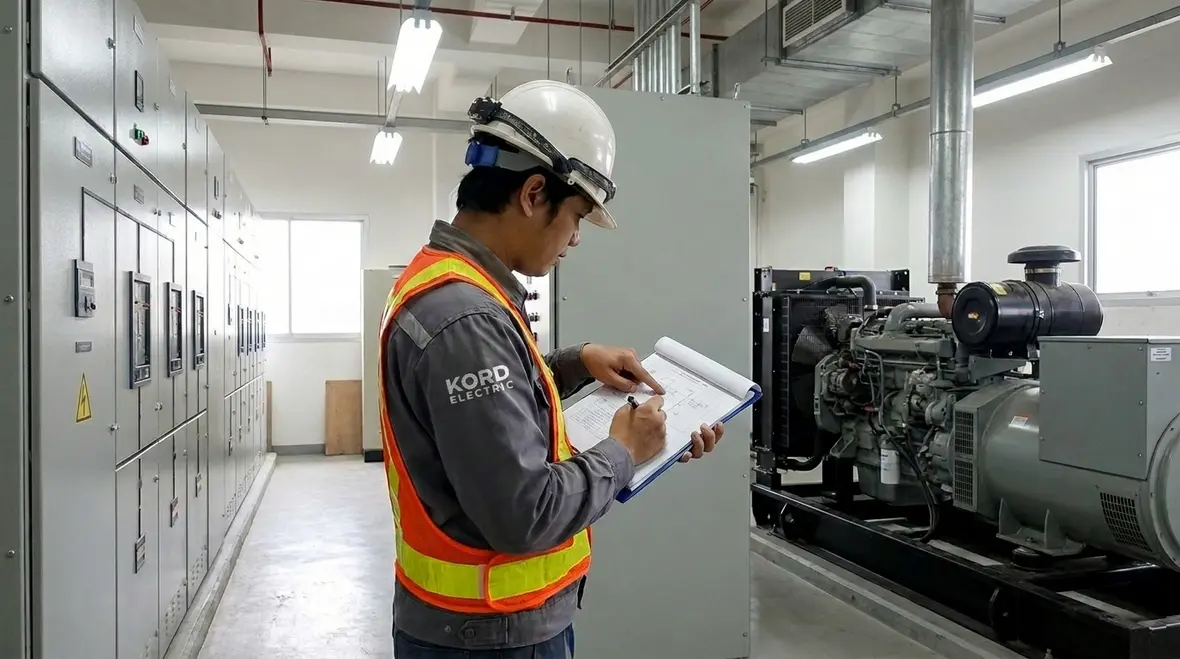
In addition to mapping loads, we review how your facility currently handles power events. Are there existing generators, UPS systems, or transfer switches? Have there been close calls or messy manual workarounds during past outages? Those stories matter. They highlight where the plan needs more structure so the next event feels routine instead of improvised.
We also help you distinguish between “nice to have” and “must not fail.” Elevators in a mid rise office, automated racking in a warehouse, or specialized lab equipment may each have different tolerances for downtime. By organizing these priorities up front, your facility disaster recovery power planning avoids overdesigning some areas while leaving truly critical systems exposed.
Step by step: how we build the power restoration path
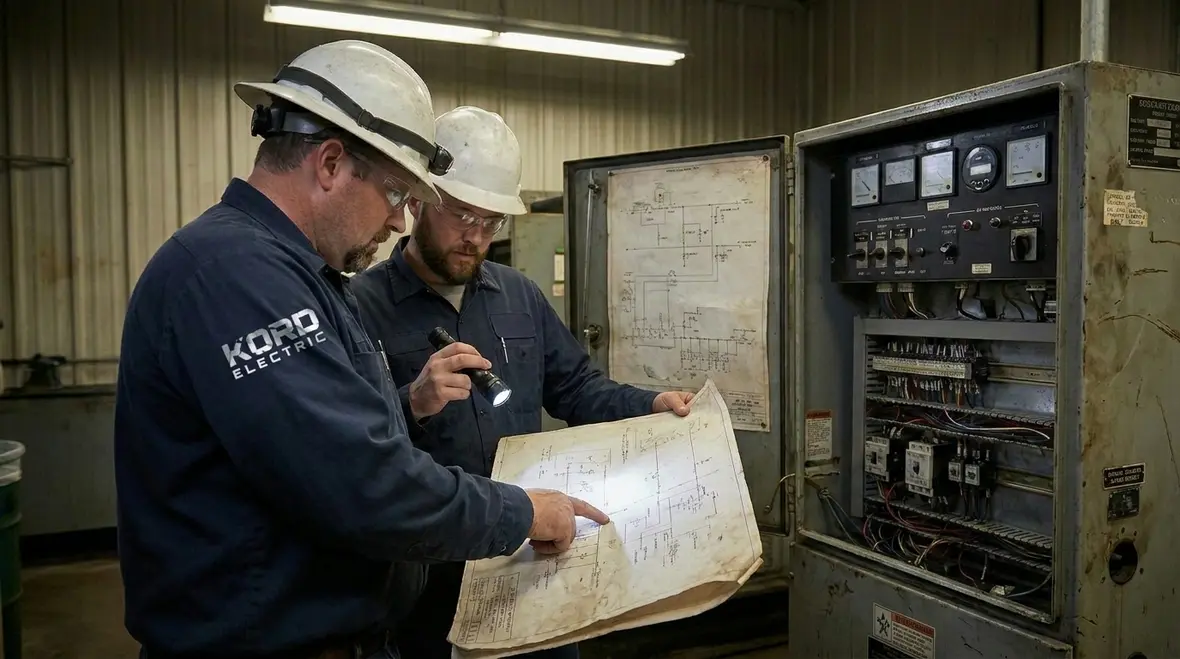
Kord Electric starts by listening, then measuring. Our technicians review one line diagrams, backup equipment, transfer schemes, and historical outage behavior. After that, we create a restoration sequence that matches how your plant operates. In other words, we plan for the order of operations, not just the presence of backup power.
First, we set priorities. Critical loads get the earliest power, while non critical loads wait. Next, we check load levels and starting currents. This matters because motors do not behave politely during an emergency. A generator that looks fine on steady state load can struggle when multiple motors start at once. Therefore, we may adjust sequencing, use load shedding, or recommend controls that delay certain starts.
Then we confirm transfer behavior. If your electrical system uses automatic transfer switches, we verify settings, interlocks, and time delays. If it uses manual transfer, we ensure the process is safe, timed, and rehearsed. Finally, we review how the facility transitions from emergency power back to utility power. That step can create stress if done poorly, so our expert service staff helps coordinate return to service procedures.
During this process, we often uncover opportunities to align restoration logic with your broader reliability strategy. For example, a plant already investing in electrical preventive maintenance can integrate testing data, breaker performance history, and switching procedures directly into the disaster recovery documentation. This keeps your restoration path grounded in how the system truly behaves, not just how it looks on paper.
Where needed, we also coordinate with your automation, IT, and mechanical teams so every department understands what “power restored” actually means. For example, conveyors may need to restart in a specific pattern, chilled water systems may need pre run time, and compressed air capacity may need to stabilize before production resumes. A well built restoration path respects these realities instead of forcing rushed manual overrides.
How we handle voltage and power quality during outages

Power failures rarely show up as a clean on off event. Often, systems experience brownouts, sags, and brief interruptions that can damage sensitive electronics or cause nuisance trips. Kord Electric tracks these realities in commercial and industrial settings, especially where equipment depends on stable voltage and consistent power quality.
For example, our team commonly addresses issues like voltage fluctuations that can strain drives, controls, and motors. When voltage dips, some gear slows or stalls, and others trip. That is why we align emergency readiness with power quality thinking, not just backup runtime. We may recommend protective strategies and monitoring, and we validate the response of connected equipment. So even if the outage begins as a disturbance, the plan still keeps critical systems stable.
Facility teams dealing with chronic instability often benefit from pairing disaster recovery work with a focused review of voltage fluctuations in commercial and industrial facilities. Identifying weak points in power quality before a storm, utility event, or internal fault means your emergency systems do not have to fight preventable problems. When the backup sequence starts, generators, UPS systems, and transfer switches can operate in a cleaner, more predictable environment.
Our approach stays practical. We do not sell fear. We reduce downtime. And we do it with the kind of detail that keeps a UPS from acting like it is haunted during a minor dip. That includes checking coordination between surge protection, grounding paths, panel layouts, and distribution so that nuisance trips do not snowball into full outages.
In many buildings, we also help decision makers decide which equipment should ride through disturbances and which can safely shut down. Not every device needs full protection during every flicker. Thoughtful segmentation keeps your investment in power quality targeted where it delivers the most stability for operations and safety.
Where redundancy matters most in major buildings
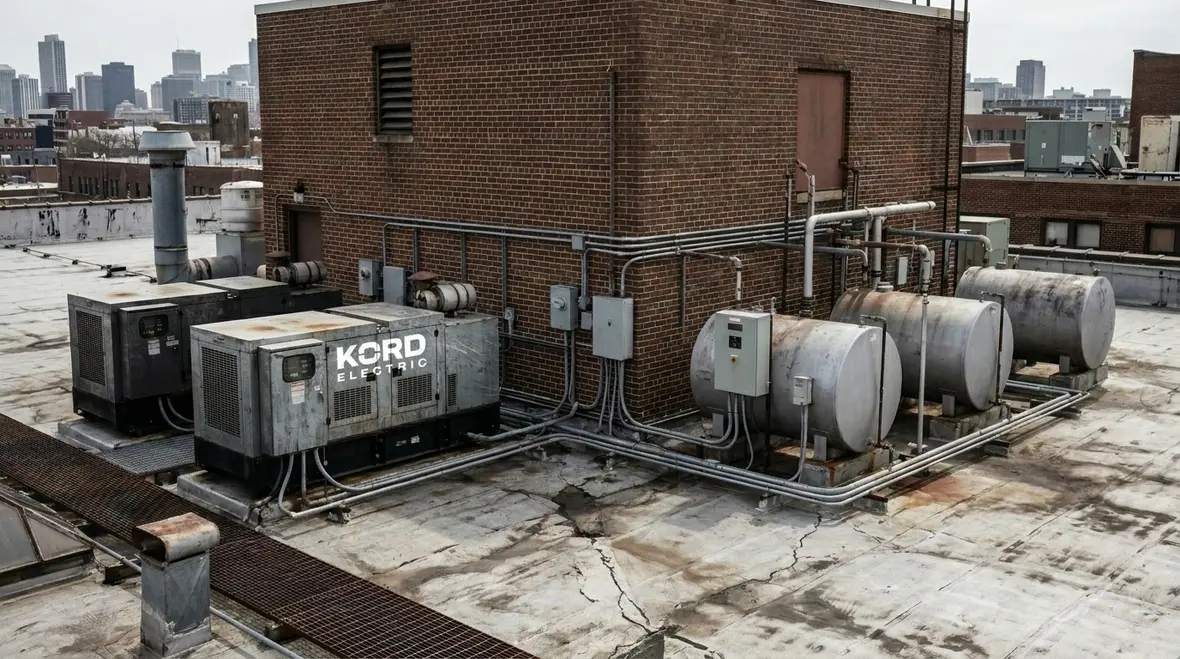
Not every critical system needs the same level of redundancy, but major property buildings often justify layered protection. We help others choose which parts need full backup, which need partial backup, and which require protection from power quality events even when utility service is present.
For instance, a distribution center may need backup for refrigeration and lighting, while certain office areas might only need safe shutdown capability. A manufacturing site may need longer runtimes and more precise motor sequencing. Hospitals and healthcare adjacent facilities require even tighter life safety coordination, and major data rooms require stable support for computing and networking.
In addition, we consider fuel logistics. Redundancy fails when fuel supply fails, and that can happen for simple reasons like delivery delays. Therefore, we review tank capacity, refill procedures, vendor coordination, and runtime assumptions. We also assess physical protection for generators, transfer equipment, and panels. If a storm hits, equipment placement and exposure can decide whether your backup performs.
And look, nobody wants their generator to become a very expensive yard ornament. We make sure that does not happen. Part of that work often includes coordinating redundancy discussions with broader services such as Los Angeles County electrical services for complex facilities, where regional code requirements, inspection schedules, and local utility behavior all shape what “good redundancy” looks like day to day.
We also talk honestly about risk tolerance. Some organizations cannot afford more than a brief flicker on production lines or life safety systems. Others can accept staged restarts over an hour or two. Matching redundancy levels to real risk, budget, and regulatory expectations prevents overbuilt systems from draining capital while still protecting the places where failure would make the front page.
Testing, documentation, and drills that staff will follow
A disaster recovery power plan only works if it is used. Therefore, we help our clients create documentation that is readable under pressure, with clear roles, call lists, and step by step procedures. Our technicians explain what the plan means in normal conditions, then again during a test. That way, people do not feel like they are learning a new language during an emergency.
We also support routine testing and seasonal checks. These tests confirm generator startup, load transfer performance, runtime expectations, and control system behavior. They also reveal surprises, like a failed battery in a control circuit or a breaker that never fully operates. Then we fix those items before they become urgent.
In many commercial and industrial facilities, we schedule testing in a way that limits downtime risk. Meanwhile, we document results and align them with your facility disaster recovery power planning goals. If a test shows a drift, we update procedures and settings. We treat testing like quality control, not like a ritual.
Thorough documentation also supports other reliability programs you may already have in place. For example, logs from generator runs, transfer switch performance, and panel inspections can feed directly into your broader maintenance efforts or formal programs like NFPA 70B based electrical maintenance. When disaster recovery testing aligns with ongoing inspection work, your team spends less time duplicating tasks and more time strengthening the whole system.
We frequently see that drills reveal more about human behavior than about equipment limits. So we structure practice events that let staff rehearse communication, role handoffs, and decision trees. The goal is simple: when a real outage happens, nobody should be flipping through a binder wondering which tab applies. They should recognize the scenario and move calmly to the next step.
Emergency readiness for control systems and connected infrastructure
Modern facilities do not run on power alone. They run on controls, data, communications, and automation. Therefore, the plan must include how control systems behave during loss of utility, transition periods, and return to normal operation.
Our expert service staff evaluates key loads like PLCs, SCADA systems, network equipment, and building management systems. Then we determine which of those loads require direct backup support and which can tolerate safe shutdown. We also consider the role of UPS systems for ride through time. UPS power can bridge the gap while generators start, reducing the chance of control system resets.
Then we validate coordination. If a UPS relies on external charging equipment, it needs a safe power path during transfer. If controls depend on sensors, we confirm that critical sensor circuits remain powered. As a result, connected infrastructure stays predictable instead of improvising.
And if you have ever watched a control system reboot in an emergency, you already know it feels like waiting for a slow sitcom character to finally take the right action. We help your facility avoid that storyline. Our team checks settings, communication links, and alarm behavior under simulated outage conditions so that when real events occur, your controls behave like a calm operator instead of a confused extra.
We also pay attention to how control system readiness intersects with other work across your facility. For example, if you are planning electrical system upgrades, lighting retrofits, or new automation projects, we help make sure those changes do not accidentally undermine the disaster recovery power plan. When systems evolve, the plan should evolve with them, not trail three projects behind.
FAQ: facility backup power for commercial and industrial sites
Request a practical plan from Kord Electric
Kord Electric helps commercial and industrial facilities build disaster recovery power readiness that works when it matters, not just on paper. We assess your critical loads, coordinate transfer and sequencing, and support testing that staff can follow. If your facility depends on uptime, schedule an evaluation with our technicians and expert service staff. Together, we will craft a facility disaster recovery power planning approach that protects your people, your equipment, and your bottom line. Call Kord Electric today to start.
Many facilities pair this planning work with focused services such as emergency electrical services for large properties or structured preventive maintenance programs. Whether you manage a distribution center, manufacturing plant, data environment, or multi tenant building, aligning day to day reliability work with long range disaster recovery power planning means your systems are not only ready for minor disturbances but also for the rare, high impact events that put every circuit to the test.
If you are responsible for uptime and safety, you do not have to choose between routine maintenance, power quality improvements, and disaster recovery preparation. A coordinated plan brings all three together. Reach out to Kord Electric and let our team help you turn backup equipment, controls, and documentation into a calm, predictable response when the utility feed does something unexpected.