Industrial Lighting Energy Efficiency Audit ROI
Industrial lighting energy efficiency audit: where the CFO starts counting
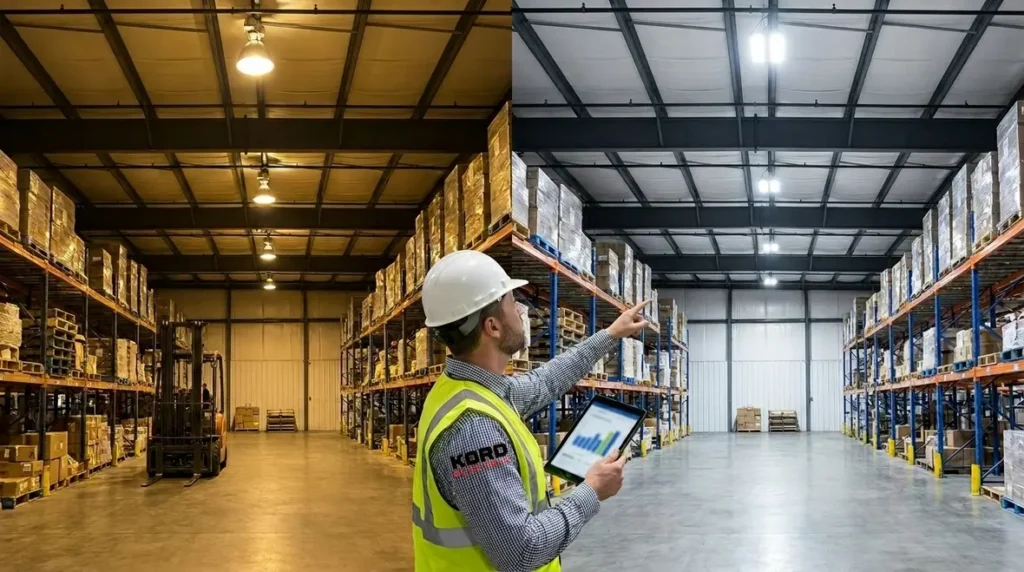
At Kord Electric, we begin every CFO sized conversation with a practical industrial lighting energy efficiency audit, and we do it the same way you would run your books. First, we measure what is real in the field, then we compare it to what the facility actually needs to stay reliable. In the first pass, our team captures lighting levels, controls behavior, fixture details, and operating schedules. After that, we quantify energy waste and estimate savings with a calm, numbers first approach. It is not magic, and it is not guesswork. It is math with a wrench.
Meanwhile, our technicians and expert service staff explain every step in plain language, because the CFO should not need a decoder ring to understand a lighting plan. So, this guide walks through how our clients calculate ROI on energy efficiency upgrades without turning a simple project into a night shift soap opera.
ROI math: savings, costs, and the timeline that matters

When an industrial lighting upgrade is on the table, others often jump straight to “new fixtures.” However, the CFO’s job is to connect upgrades to cash flow, and that means building a clean ROI model. We typically frame ROI like this: ROI equals total projected annual benefits minus annual costs, divided by total investment. Then, we watch the payback period, because many facilities cannot wait for a theoretical perfect world.
First, we estimate energy costs before and after the upgrade. Next, we include demand charges where applicable, since lighting can affect utility demand in certain systems. Then, we add maintenance and labor impacts, because efficiency changes often influence lamp life, relamping frequency, and service intervals. Finally, we consider incentives or rebates if the local utility offers them, since those can shorten payback time.
Now, a quick joke from the field: chasing ROI without reliable data is like buying a gym membership before checking if the power outlets work. You still get the invoice, but the results are… optional.
Step 1: Measure baseline reality, not nameplate promises
Energy savings do not start in a spreadsheet. They start in the electrical rooms and in the lighting itself. Therefore, we recommend the CFO require baseline measurements that reflect actual operations. Our industrial lighting energy efficiency audit collects details such as fixture type, quantity, wattage, driver specs, and control devices. Then, we map those to occupancy patterns and shift schedules.
In addition, we evaluate existing controls and dimming strategies. Some buildings turn lights on at full output and leave them that way, even when the space is half empty. Others use controls but do not commission them, so the system behaves like a fancy thermostat stuck on “mystery.”
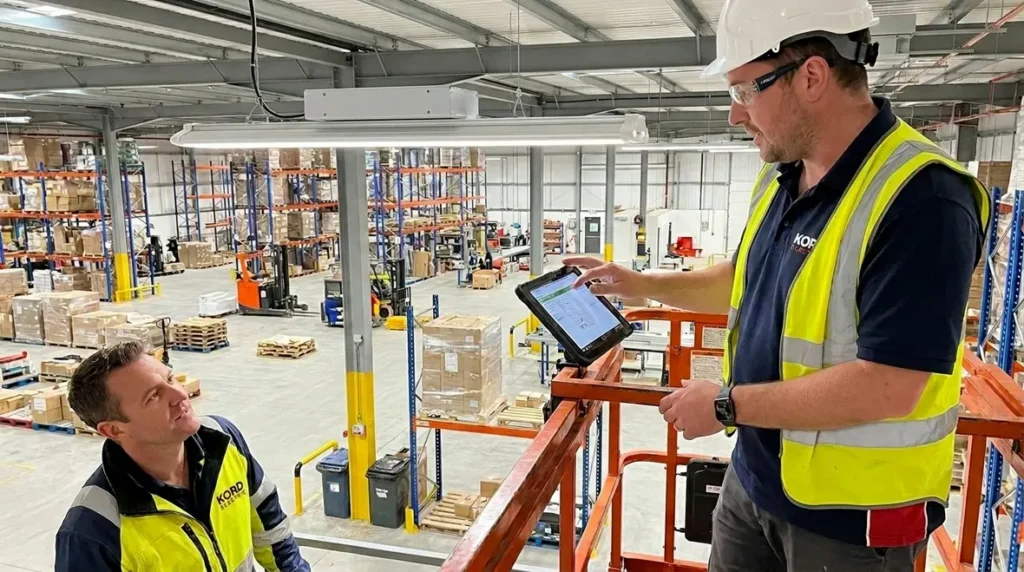
At Kord Electric, our technicians explain what they observe, and we help facility leaders understand why two “LED retrofits” can produce wildly different results. The difference usually lives in controls settings, sensor placement, and how the electrical distribution feeds lighting loads. For facilities exploring smarter upgrades, many teams also review how automated systems behave using resources like our automated lighting control benefits guide for facilities, which pairs well with an industrial lighting energy efficiency audit when evaluating controls strategy.
Step 2: Calculate energy and demand savings with facility schedules
Once baseline usage is known, we translate that into savings. We start with hours of operation by area, which matters for warehouses, manufacturing floors, and logistics corridors. Then, we apply expected reduction from improved fixtures and controls. However, the controls effect depends on how the facility uses the space. For example, daylight harvesting only works when daylight reaches the sensors and when the system is tuned correctly.
To calculate energy, we use a straightforward structure: kW reduction times operating hours times energy rate. Then, if the facility includes demand billing, we estimate potential demand reductions from reduced peak loads or better dimming schedules. Even when demand charges seem small, they can swing the numbers in a meaningful way for major property buildings.
Our expert service staff also helps leaders avoid a common trap: assuming lighting runs the same way everywhere. Instead, we segment by zone, by function, and by shift pattern. Then, we tie each zone to a realistic control strategy.
And yes, that segmentation is slower than waving a wand. Yet it also makes the CFO’s approval process faster, because nobody has to argue with the math after the install is complete. For facilities where power systems and critical loads intersect with lighting, teams sometimes go deeper using resources like our data center focused article on data center electrical infrastructure essentials, especially when lighting upgrades share feeders or distribution paths with sensitive equipment.
Step 3: Include maintenance, reliability, and downtime costs
Many ROI models focus only on energy. That approach works until the first unplanned shutdown or the first missed production window. Therefore, we advise facilities to include maintenance costs and reliability benefits as part of the investment case. Industrial lighting often runs in tough environments, and the cost of relamping or repairs can be higher than people expect, especially when equipment access requires downtime.
When upgrades use higher efficiency lighting and better components, maintenance intervals typically stretch. Also, modern controls can reduce cycling and extend equipment life. So, we estimate maintenance labor, truck rolls, parts, and the cost of work stoppage during service events.
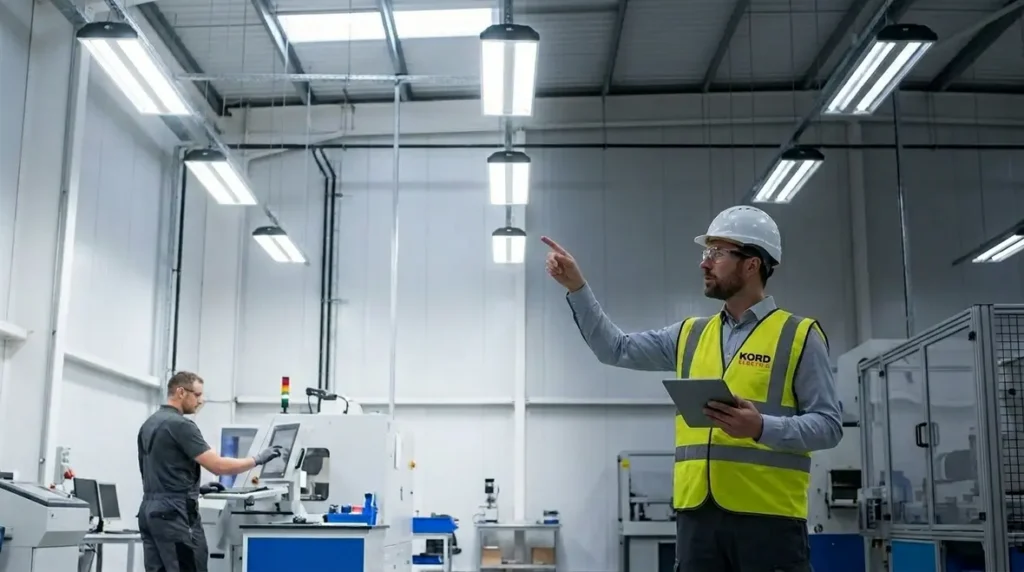
Additionally, we consider lighting uniformity and quality. If workers can see better and glare is reduced, productivity improves, and safety incidents become less likely. While it is hard to put every safety value into a spreadsheet, leaders usually understand the cost of interruptions, investigations, and rework. In short, reliability is not a “nice to have.” It is budget protection.
Our technicians explain these impacts in site terms, so the CFO sees the connection between electrical work and operational stability. For many facilities, pairing an industrial lighting energy efficiency audit with structured inspections from our broader commercial and industrial electrical maintenance plans helps align lighting reliability with the rest of the electrical system, keeping outages and surprise repairs out of the budget narrative.
Step 4: Build a CFO-ready ROI model using risk and incentives
A clean ROI model needs assumptions. Therefore, Kord Electric helps clients document inputs clearly: current fixture wattage, measured load profiles, control behavior, and projected performance. Then, we include sensitivity testing. For example, what happens if operating hours run higher than expected? What happens if controls do not get tuned on day one? In other words, we do not just present an optimistic story. We present the range that finance teams can defend.
Next, we include incentives. Utilities sometimes reward energy efficiency, and the timing of incentives can affect cash flow. Then, we apply project costs such as materials, labor, controls programming, installation, and commissioning. Also, we include any required electrical upgrades if distribution capacity or wiring practices need adjustment.
To keep the project accountable, we also recommend post install verification. After all, a CFO does not want a “trust me” promise. They want proof that savings match the plan. When we verify performance, we reduce the gap between what was sold and what the meters show.
And for a little pop culture truth: the best business plan does not live in a superhero origin story. It lives in the data and in the follow through. The meters do not care about your optimism.
How to set performance targets and avoid budget surprises
Performance targets keep everyone aligned: engineering, operations, and finance. First, we define success metrics. These might include target lighting levels by area, reduced energy consumption, and improved control response time. Second, we set commissioning requirements. Lighting upgrades without commissioning can underperform, even with excellent equipment.
Third, we lock a change management process. If operations adjust shift schedules, or if new equipment loads appear, the ROI model must update. Therefore, we recommend periodic reviews after installation, especially in facilities with dynamic occupancy or process changes.
Finally, we track risk factors that often trigger budget surprises. In industrial environments, surprises usually come from hidden wiring conditions, unexpected mounting constraints, or incomplete control integration. Our technicians help reduce these risks early by inspecting site conditions before the plan goes to procurement.
In practice, that means less rework and fewer “we did not see that coming” meetings. CFOs tend to dislike those meetings, and we do too. They waste time that could be spent on real value. For organizations managing multiple facilities across a region, coordinating lighting targets with a partner that also understands broader regional needs, such as our Los Angeles County electrical services for commercial and industrial properties, keeps standards consistent while local conditions change from site to site.
FAQ: Industrial lighting efficiency upgrades for commercial and industrial CFOs
CTA: Let us quantify your ROI with a lighting plan built for your meters
If your facility is ready to modernize industrial lighting, Kord Electric can help you calculate ROI with confidence, not hope. We start with a measured industrial lighting energy efficiency audit, then we build a CFO ready model that includes energy, controls performance, maintenance impacts, and verification planning. Contact our team to schedule a site review for your commercial or industrial facility or major property building. We will handle the technical details, and we will explain the numbers in plain language, so the approval process stays calm and predictable.
For organizations that want to connect lighting ROI to broader system reliability, we often pair audits with structured planning from our articles on topics like commercial electrical maintenance, automated lighting controls, and emergency power risks. When combined with targeted services from our regional teams, this helps keep industrial lighting performance aligned with the health of your entire electrical infrastructure, not just one line item on a bill.
Whether you manage a single industrial building or a portfolio of major properties, the goal stays simple: make every kilowatt, every fixture, and every control decision defendable in the boardroom and reliable on the production floor.