
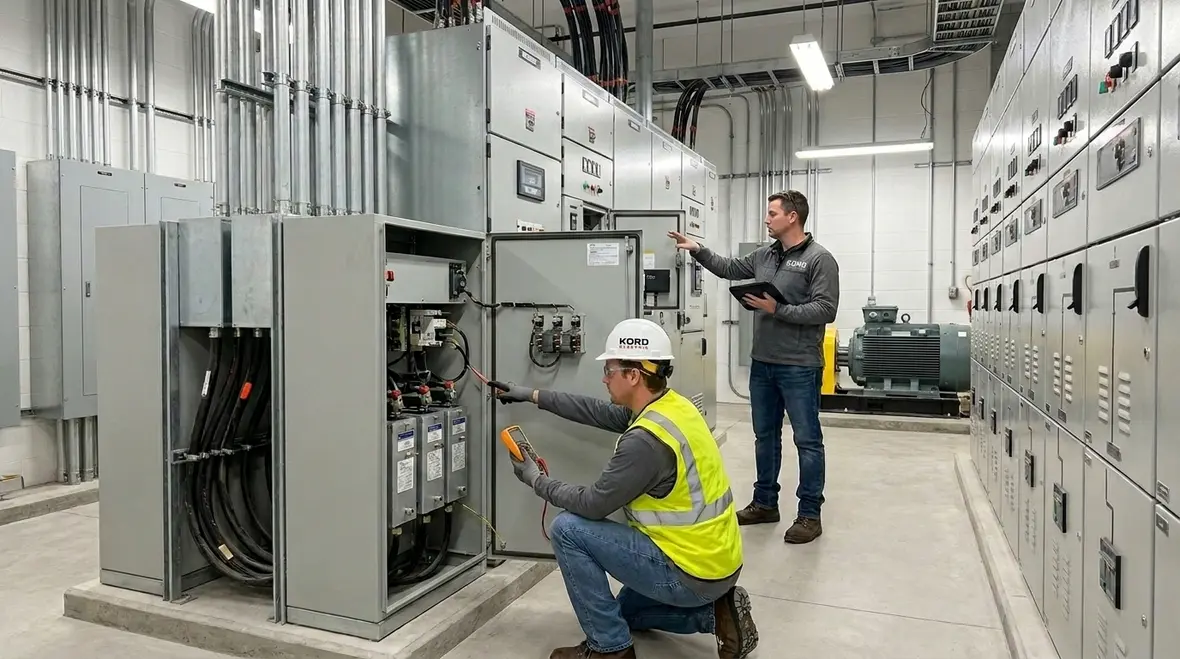
Facility Power Factor Correction for Industrial Sites
Kord Electric has seen what happens when a commercial or industrial site runs on underpowered electrical conditions. In many large facilities, facility power factor correction helps reduce waste in the system, improves voltage stability, and can prevent penalties that quietly drain budgets. That is why our team focuses on correcting reactive power, not just “patching” symptoms. In this guide, we explain the practical benefits for warehouses, data rooms, manufacturing plants, hospitals, and major property buildings. And yes, we will keep it calm and clear, because nobody needs a power systems lecture that feels like a pop quiz from 2008.
What power factor means in large electrical systems
Power factor shows how effectively electrical power converts into useful work. When loads like motors, transformers, and large HVAC systems draw current with a reactive component, the power factor drops. That reactive current does not do the useful job of moving conveyors, cooling suites, or running process equipment. Instead, it circulates through cables, switchgear, and transformers. As a result, equipment works harder, losses climb, and system capacity becomes harder to use.
In our experience at Kord Electric, the story usually starts with something that seems harmless: a growing facility, new production lines, or a new tower’s worth of mechanical upgrades. Then the metering report arrives, the utility bill looks like it grew overnight, and suddenly everyone is asking why the electrical rooms feel hotter than they should. Our technicians explain this in straightforward terms during on site reviews, because the best time to understand a problem is before maintenance turns into guesswork.
Why facility power factor correction improves efficiency and reduces losses

When we apply facility power factor correction, we target the reactive portion of current at the source. Typically, correction uses capacitors or advanced control methods to offset inductive loads. Once the reactive current drops, the electrical system carries less current for the same real power output. Therefore, losses on conductors and transformers decrease, and voltage levels stabilize under load.
Think of it like this: the facility still needs the same “useful energy,” but it wastes less of it in the wiring. Meanwhile, the transformer and busbars do not heat up as aggressively because the current is lower. That creates a chain reaction. Less heat means less wear. Less wear means fewer surprises. And fewer surprises are the kind of surprises we all want, not the kind where someone says “it was fine yesterday” and you believe them like it is a lie told by a sitcom character.
In large facilities, those savings matter because loads run for long hours. A correction plan can also help utilities see improved system behavior, which sometimes translates into fewer charges related to low power factor.
If you’re also exploring how your broader commercial electrical infrastructure supports efficiency upgrades like power factor correction, you may find it helpful to review how modern distribution, panels, and automation come together across a building. Kord Electric covers these fundamentals in their overview of commercial electrical systems for modern buildings, which pairs well with a deep dive into reactive power and capacity planning.
How correction helps utilities and protects your service capacity
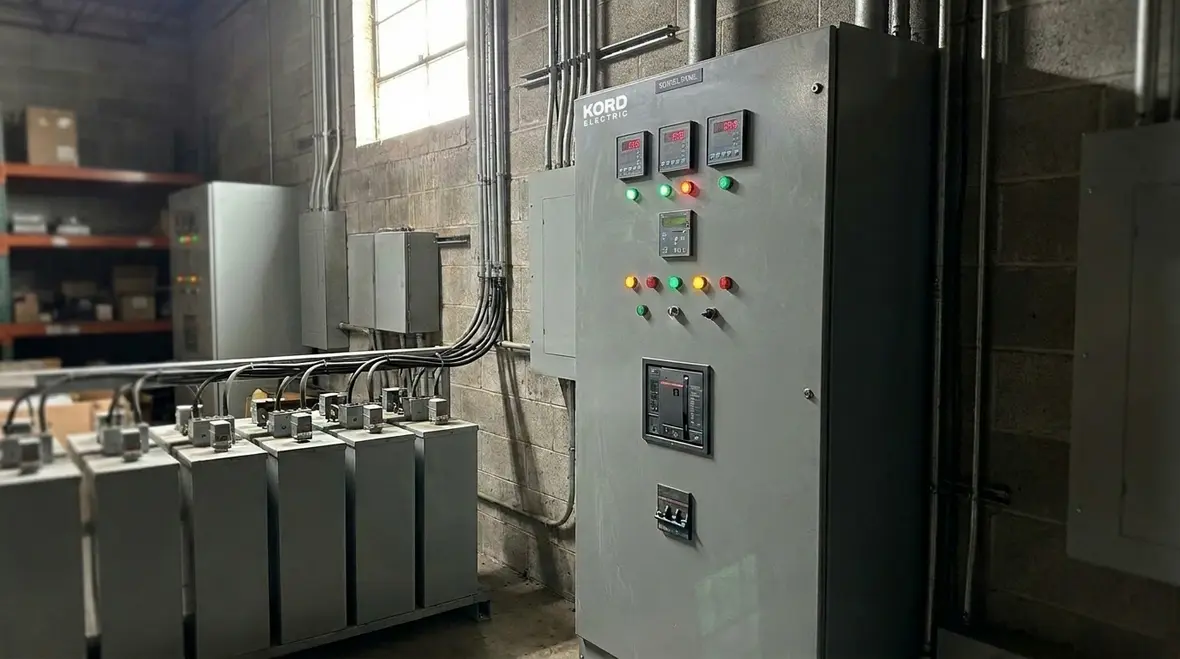
Utilities design and operate their networks based on how much current your building demands. When power factor remains low, your facility draws more current. Even if the real energy stays the same, the higher current can push equipment toward limits. Consequently, the facility may face restrictions, higher demand charges, or required upgrades sooner than planned.
Kord Electric helps major property buildings and industrial operations keep capacity under control. We evaluate demand patterns, note seasonal load swings, and analyze how motor starting, process cycles, and HVAC staging affect current draw. Then we recommend a correction approach that matches the way the facility actually operates.
This is where our experts earn their keep. Our service staff does not just install equipment and walk away like a vending machine that “works as intended.” They explain what the control logic does, how switching events should behave, and how to monitor results over time. That matters because a correction system must respond to changing loads without introducing harsh step changes.
What harmonic distortion means for your correction strategy

Not every “bad electrical condition” is the same. While reactive power is one issue, harmonics are another. Many facilities use variable frequency drives, LED lighting systems, UPS units, and modern power supplies. These devices can introduce harmonic distortion that disturbs current waveforms.
If a facility power factor correction approach ignores harmonics, the capacitors can experience stress. Over time, this can lead to overheating, premature component aging, or reduced performance. Therefore, in commercial and industrial facilities, we do not treat correction as a one size fits all task.
Our technicians typically review harmonic levels during commissioning and field checks. Then we align the correction design to the site’s electrical profile. In some cases, that means using detuned reactors or filters that reduce interaction between capacitors and harmonic content. Meanwhile, we set protection and switching parameters so the system stays stable during motor starts and process ramps.
We explain this clearly, because harmonic conversations can sound like a sci fi plot. However, the goal is simple: keep capacitors healthy and keep the whole electrical system calm when the facility changes its load like a drummer changing tempo.
Where savings show up in operations, maintenance, and downtime

Energy savings often grab the headlines. Yet in large facilities, the operational benefits can be even more valuable. When we correct reactive demand, current levels drop. That reduces thermal stress on cables, switchgear, bus ducts, and transformers. As a result, insulation life improves and maintenance intervals can become more predictable.
In industrial environments, downtime costs are not measured in minutes, they are measured in missed production, delayed shipments, and frustrated teams. Additionally, electrical rooms can become crowded with “band-aid” solutions. By improving power quality and reducing unnecessary current, correction supports a more stable distribution system and can lower the frequency of alarms and nuisance trips.
We also focus on measurement. Our approach usually includes baseline power factor, kVAR analysis, load observation, and a plan for ongoing verification. That way, the facility does not chase numbers blindly. Instead, it confirms improvement where it matters.
Some facility managers tell us they feel like they finally gained control, not just a new device. Others say the electrical room runs cooler, and they stop checking temperatures every hour like they are monitoring a baking show. Both reactions are welcome.
How Kord Electric designs and installs power factor correction for major facilities
Kord Electric serves commercial and industrial facilities and major property buildings. We treat each site like its own electrical ecosystem, not a copy paste project. First, we gather data from the main distribution system and from relevant load centers. Then we evaluate how the facility uses power throughout the day and across seasons.
Next, our expert service staff maps the correction plan to the load type. Large sites often have mixed inductive loads, and they can change quickly. Therefore, our design aims for the right level of compensation, proper switching steps, and stable operation. We also consider coordination with protective devices so fault behavior remains safe.
We build the scope around real constraints like space in the electrical room, existing equipment ratings, and the facility schedule. While we work, we plan around operational needs so your production or building services keep running.
Two part process we usually follow
1) Field assessment includes load observation, power factor review, and power quality checks to understand reactive demand and potential harmonic impact.
2) Commissioning and explanation includes control settings verification, baseline comparison, and a clear walkthrough by our technicians so your team understands the results and how to interpret monitoring data.
FAQ about power factor correction for commercial and industrial sites
Next steps to improve power quality with Kord Electric
If your facility runs large motor loads, cycles equipment throughout the day, or has rising electrical room heat and recurring power quality complaints, it is time to review the root cause. Kord Electric can assess your electrical profile, recommend a correction strategy that fits your operations, and explain the results in clear business terms your team can act on. Contact us to schedule a site evaluation and get a practical plan for improved performance, lower waste, and steadier system capacity.
When you’re ready to move from investigation to implementation, partnering with a team that already understands complex commercial infrastructure makes the process smoother. Explore Kord Electric’s capabilities in commercial electrical systems for modern buildings to see how power factor correction, distribution upgrades, and smart controls can be combined into one cohesive plan for your site.


