Thermal Imaging for Panels and Electrical Health
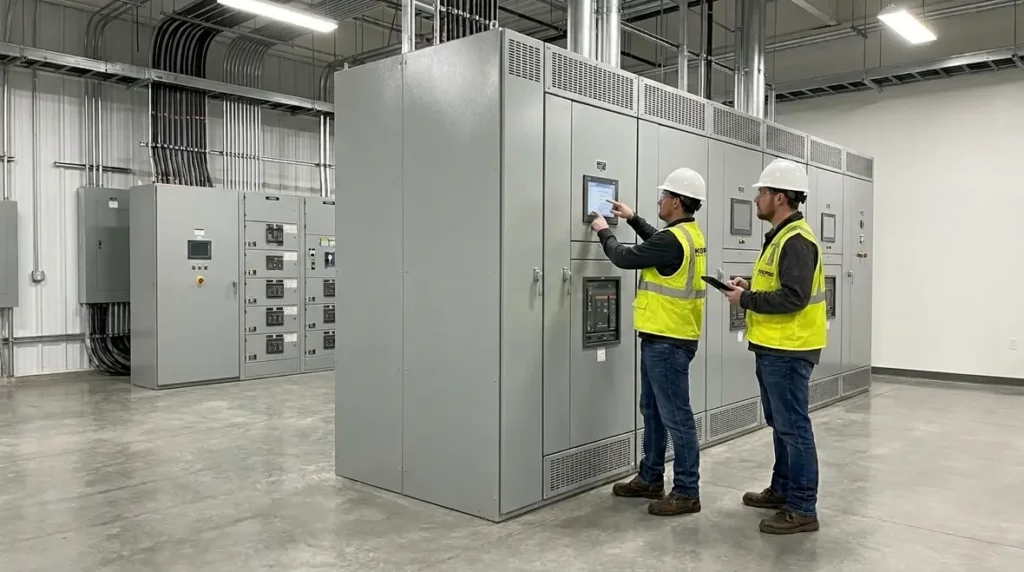
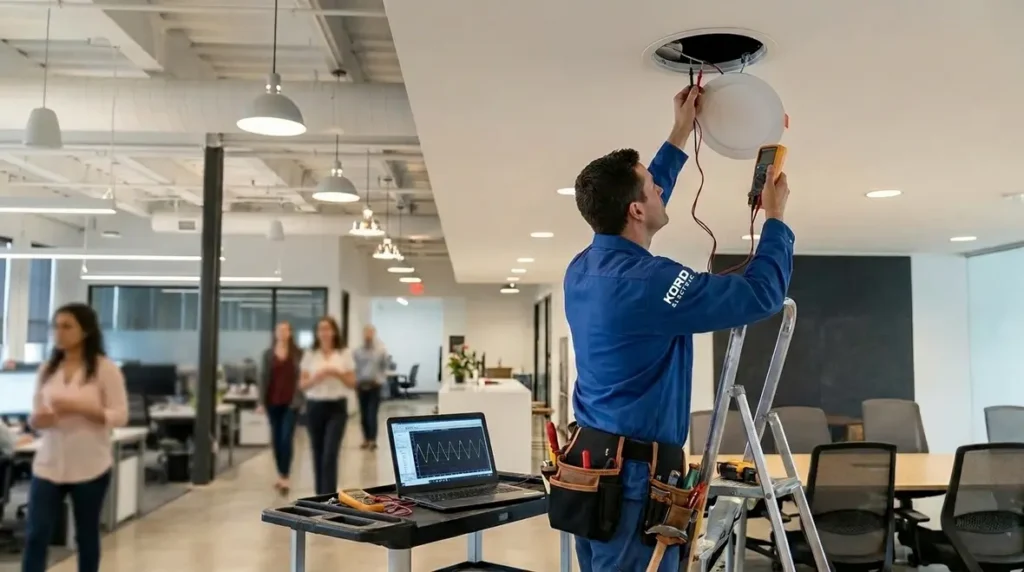
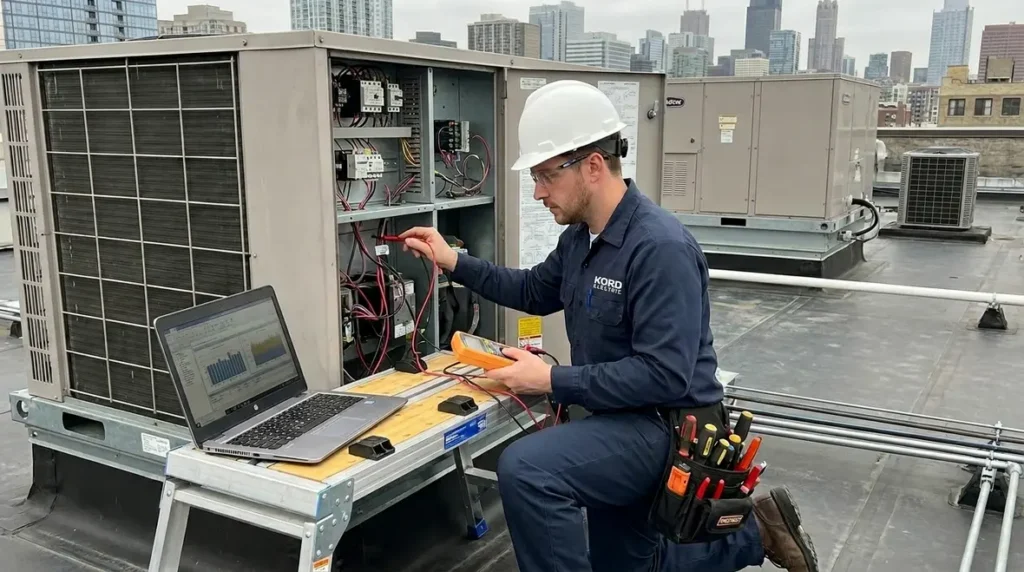
At Kord Electric, we use thermal imaging for panels as part of how we keep commercial and industrial electrical systems healthy. In the first pass, our technicians look for early heat patterns that the eye cannot catch. And because heat tells the truth, we can often spot problems before they turn into downtime, smoke, or that special smell nobody wants to explain at a meeting. Then, we document what we see and guide facility managers on the next steps. This approach is not magic, and it does not replace good engineering, but it helps us prevent small electrical issues from growing teeth. Now let’s get into why this matters for electrical panel health.
In this article, the guidance comes from our expert service staff and the daily reality of maintaining major property buildings. We treat each site like a system, not a pile of parts. So, we pay attention to hotspots, airflow, load changes, and the tiny clues that show up on an infrared scan.
Why heat is the earliest warning sign inside electrical panels
Electrical panels do not announce failures with a dramatic soundtrack. Instead, they quietly shift from “working fine” to “working hard,” and then heat starts to build. When connections loosen, components age, or insulation degrades, resistance rises. As resistance rises, heat rises too. That heat, in turn, can stress bus bars, breakers, lugs, and terminations. If that process continues, you can move from minor performance loss to arcing events.
Thermal imaging helps us confirm what is happening at the component level. We see temperature differences between similar parts, and those differences point to a specific issue. For example, one breaker may run hotter than its peers even when loads look balanced. That detail matters because electrical panels often share a common layout, so an uneven heat pattern rarely happens by accident. In other words, we do not rely on guesswork; we rely on evidence.
When our technicians explain results on site, they use plain language. They might say, “This termination runs hotter than the same type across the panel,” or “This area shows heat where the panel should stay even.” Then we connect that to what your facility actually does during the day, like production cycles, HVAC demand, or shift-based load changes.
How thermal imaging for panels helps us catch issues before downtime
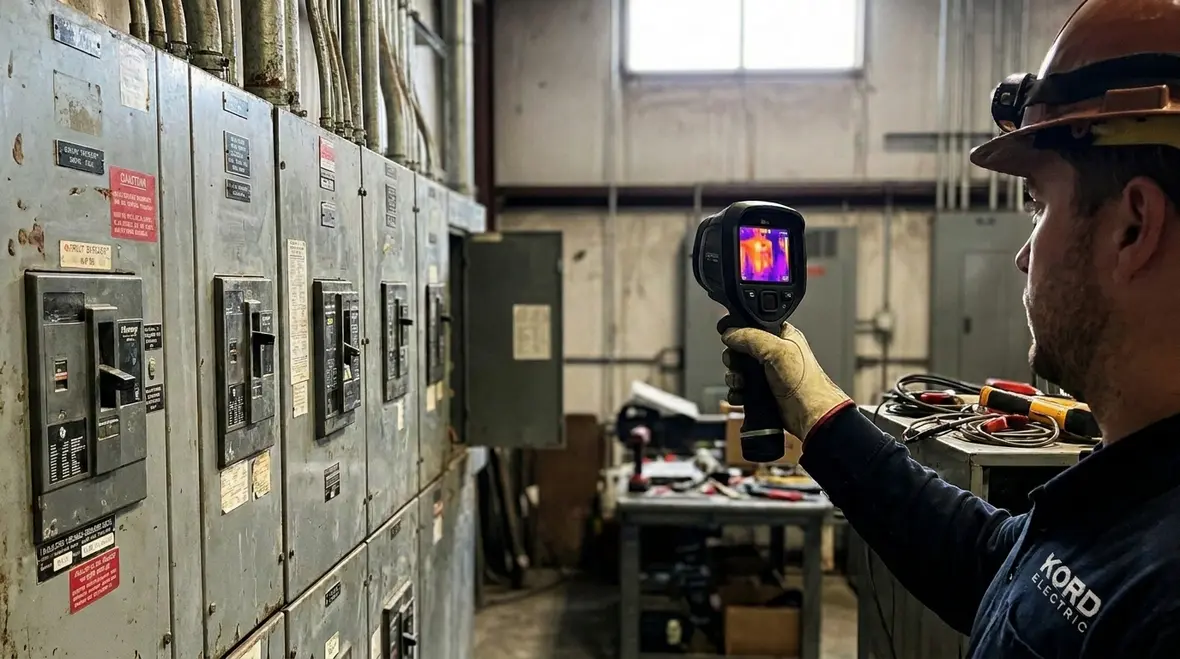
Most facilities do not lose power all at once. Usually, the early warning shows up as nuisance trips, rising maintenance calls, or minor performance complaints. However, by the time anyone notices a pattern, the electrical system may already be under stress. Our approach helps us reduce that gap between “something feels off” and “we can prove what is off.”
We schedule scanning with the operational needs of commercial and industrial buildings in mind. Then we compare thermal results across time, so we can track drift. A stable panel stays stable. A degrading panel becomes warmer in the same spots again and again. Even better, thermal images can reveal problems that do not always cause immediate failure. For instance, a loose lug can heat under specific load conditions but look normal when demand drops.
Of course, we do not pretend that thermal imaging replaces inspections or electrical testing. It supports them. Think of it like checking a stock chart and also reading the annual report. One gives you direction, the other tells you why. In the same way, we use thermal findings to target which parts deserve tightening, cleaning, torque verification, or deeper diagnostics.
What our technicians look for during infrared inspections
Our technicians do more than take pictures. They follow a repeatable process, and that process helps other experts understand the findings later. First, they verify the scan conditions. That includes panel accessibility, ambient airflow, and known operating loads. Next, they capture images that show the temperature distribution across critical components.
Then we look for patterns that matter in real life:
- Hotspots at terminations where heat suggests loose or high resistance connections
- Uneven breaker temperatures that can signal misapplied load, aging, or internal issues
- Bus bar heat concentrations that may point to corrosion, contamination, or poor contact
- Signs of blocked or reduced airflow that can elevate temperatures without a single obvious failing part
- Moisture or contamination indicators that can distort thermal patterns and increase risk
After the scan, our expert service staff explains what the temperatures suggest and how that links to panel function. And yes, we sometimes hear the classic line from a facility lead: “Can’t we just check it later?” Sure, we can. But “later” often arrives dressed as a problem ticket with a deadline. We prefer to catch the heat first.
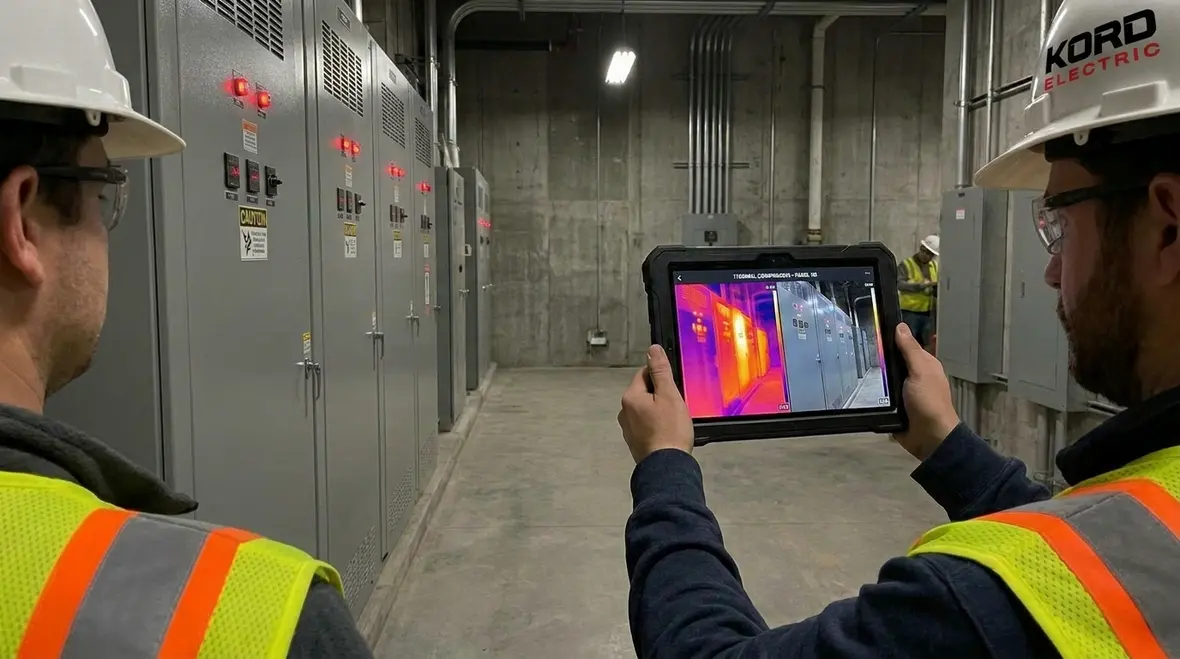
Thermal imaging for panels in real commercial and industrial environments
Commercial and industrial facilities do not run at one steady level. Loads change during the day, seasons shift, and equipment cycles behave like a living schedule. That is why we interpret thermal results in context. A panel that looks warmer during peak production may still be healthy if the temperature rise matches expected patterns. Meanwhile, a panel that shows heat spikes in a consistent spot can reveal a connection issue even when total demand stays within normal range.
We also consider building constraints that influence electrical health. In major property buildings, panels might share space with HVAC ductwork, water exposure, dust, or vibration sources. Those factors can change surface temperatures and can also affect how components age. So we treat thermal imaging as a map, not a verdict. Then we pair that map with operational notes and prior maintenance records.
In addition, many sites have strict timelines and uptime goals. Our teams work with facility schedules so we can complete scanning without disruption. And when results indicate action, we outline next steps clearly, so decision makers understand what to fix first and why.
For facilities that want a structured program, our dedicated electrical preventive maintenance services integrate infrared and thermal inspections into broader system care, helping large properties, campuses, and industrial facilities stay ahead of failures instead of reacting after the fact.
What causes panel hotspots and how we respond
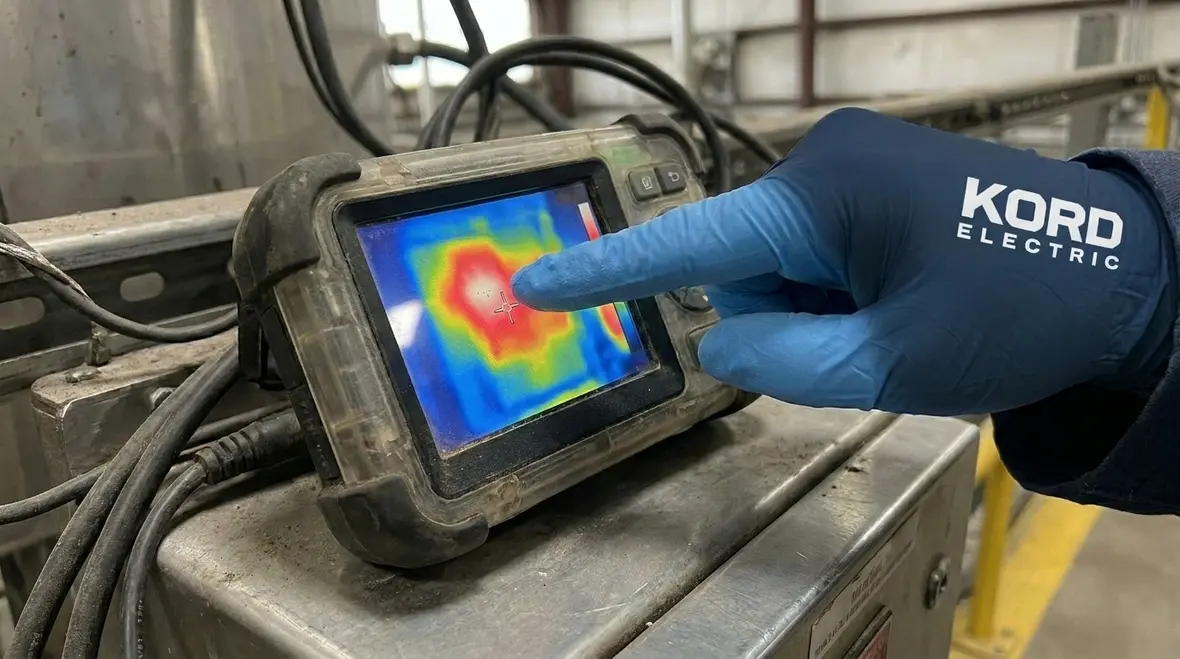
Hotspots usually come from resistance and stress. Yet the “why” varies. Our expert service staff evaluates likely causes and confirms them through targeted steps. Common drivers include:
- Loose lugs or terminations from installation variation, vibration, or repeated thermal cycling
- Corrosion and contamination that can increase resistance at the connection surface
- Component aging where breakers, bus bars, and internal contacts lose efficiency over time
- Overloading when demand rises beyond what the panel layout was designed to handle
- Uneven load distribution that pushes one phase or circuit harder than expected
- Improper torque or rework history where past maintenance left a connection vulnerable
Once we identify the likely source, we respond with practical actions. That can include tightening connections to the correct specifications, cleaning contamination, verifying torque, checking breaker fit and contact points, or coordinating further testing. We also help facilities understand how often scans should happen based on risk level and operational demands. In many cases, the goal is not constant intervention. It is smart timing, so maintenance aligns with what the system already tells us.
And if you are thinking, “That sounds like a lot,” you are right. But it beats the alternative: a surprise outage that forces an emergency scramble. In that moment, nobody wants to be the person who said, “We will look at it later.” If thermal scans ever reveal conditions that could lead to urgent failures, our teams can also coordinate with dedicated emergency electrical services so that high-risk issues are handled quickly and safely.
Best practices for using infrared scans as part of a maintenance plan
Thermal evaluation works best when it becomes part of an organized plan. We help commercial and industrial facilities build that plan so it stays consistent and useful year after year. Here is how we structure best practice:
- Establish baseline scans so you know what “normal” looks like for your specific panels
- Scan at key operational points so you capture heat under real load, not random conditions
- Track temperature trends across inspections rather than reacting to one snapshot
- Correlate findings with maintenance history so you can connect symptoms to past work
- Prioritize corrective actions based on risk and component criticality, not just what is easiest to reach
- Document results clearly so facility teams can make decisions without translating a puzzle
Additionally, we emphasize safety and sound electrical practices. Infrared scanning does not replace PPE or proper lockout procedures when crews work on energized systems. We follow safe work expectations and align our efforts with site policies.
When thermal imaging for panels becomes part of a broader preventive strategy, it pairs well with services like system evaluation, monthly or quarterly electrical PM, and emergency lighting testing. That is why many facilities roll infrared scans into a larger electrical preventive maintenance program instead of treating them as a one-time event.
FAQ: Thermal health checks for electrical panels
Ready to protect your electrical panels before heat becomes a failure
If you manage commercial or industrial electrical systems, we can help you spot risks early and keep operations stable. Our team at Kord Electric uses proven infrared methods, then we explain what we find in business friendly terms. Don’t wait for the day a panel decides to stop cooperating. Contact us to schedule an inspection and build a maintenance plan around real thermal evidence, not guesswork. Let’s keep your facility running smoothly, and let the only thing heating up be the coffee in the break room.
To take the next step, many facilities pair dedicated thermal imaging for panels with a broader electrical preventive maintenance program, turning one-time scans into an organized strategy for electrical health across panels, distribution gear, and critical loads.