Industrial Emergency Lighting Compliance Checks
At Kord Electric, we focus on industrial emergency lighting compliance for commercial and industrial facilities and major property buildings, because when power fails, people do not wait for paperwork. We have seen it too many times: a system that looks fine during daylight checks, then fails during real smoke, real crowds, real panic. In this article, third person style guides, our approach, and the guidance from our expert service staff come together to explain what needs to be checked, how often it should be checked, and what “good” really means. And yes, we will keep it calm, because emergency lighting should not feel like a haunted house walkthrough. Like the best pop songs, it should work on the first play.
Start With The Rules, Then Verify The Real Work
Before anyone touches a ladder, our technicians confirm which requirements apply to the facility. Codes and standards can vary by use, occupancy, and local adoption. However, the method stays consistent: we verify the design, then we verify performance. First, we look at the drawings and labels, then we validate the field installation. Next, we test the operation sequence under controlled conditions. After that, we document the results and flag anything that falls outside acceptable limits. This step-by-step discipline helps others avoid the classic trap, where a system passes a quick glance and fails when the lights matter.
For industrial and major property buildings, compliance is not only about having devices. It is about making sure the emergency lighting system does what it is supposed to do, in the right locations, for the right duration, and with the right battery behavior. When our expert service staff explains this on site, we keep it plain: if the system cannot deliver safe light during an outage, it does not meet industrial emergency lighting compliance needs, even if it “was installed recently.”
Inspection Checklist: Batteries, Runtime, And Controls
Proper industrial emergency lighting compliance checks begin with the components that fail first. Batteries age. Chargers drift. Contacts corrode. So we inspect and test in a logical order, and we track findings by zone. That way, others do not keep guessing which cabinet, which circuit, or which device needs attention.
Batteries and runtime
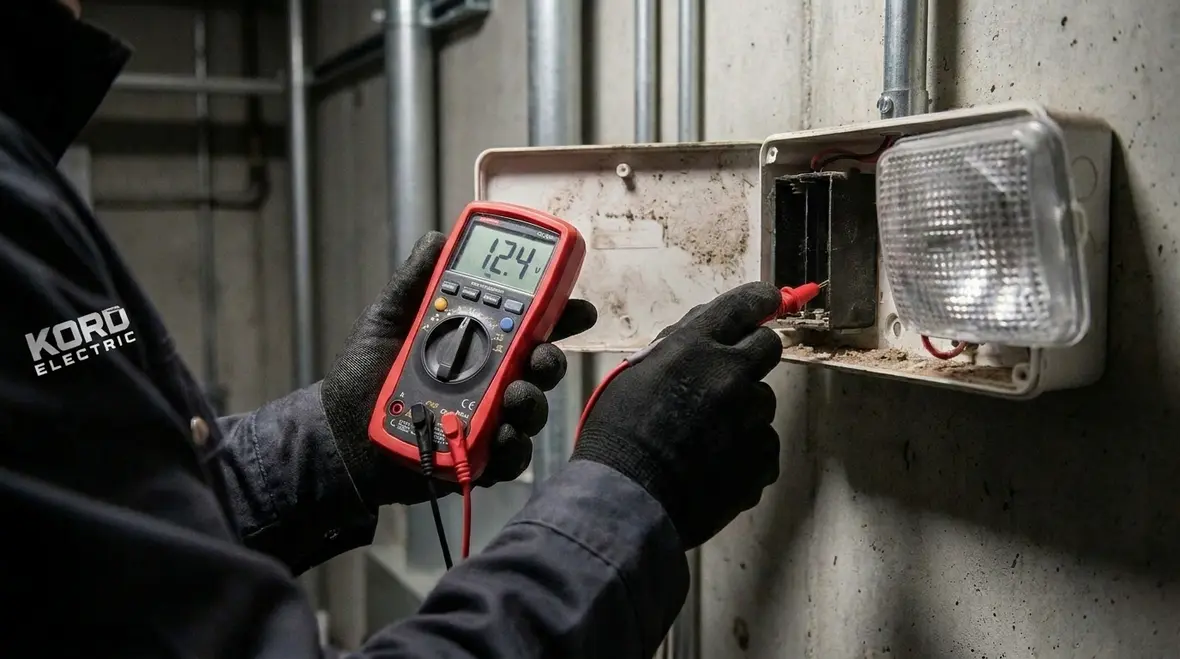
- We check battery type, age, and condition, then we verify runtime against the installed design basis.
- We test charging behavior under load, because a battery that shows voltage on paper may still perform poorly.
- We schedule replacement when performance drops, not when it becomes a full outage drama.
Test switches, transfer, and control panels
- We verify the test method used by the facility, including manual and remote testing where available.
- We confirm transfer logic for the normal to emergency power transition.
- We check status indicators so staff can see “fail” without a midnight call.
Also, our technicians do not treat these as one-and-done items. Even when a facility runs an annual test, we recommend targeted follow-ups after renovations, equipment changes, or area reconfiguration. If the building layout changes, the emergency coverage can change too, and then the “lights” might not point where people need them most.

Verify Coverage Where People Walk, Move, And Escape
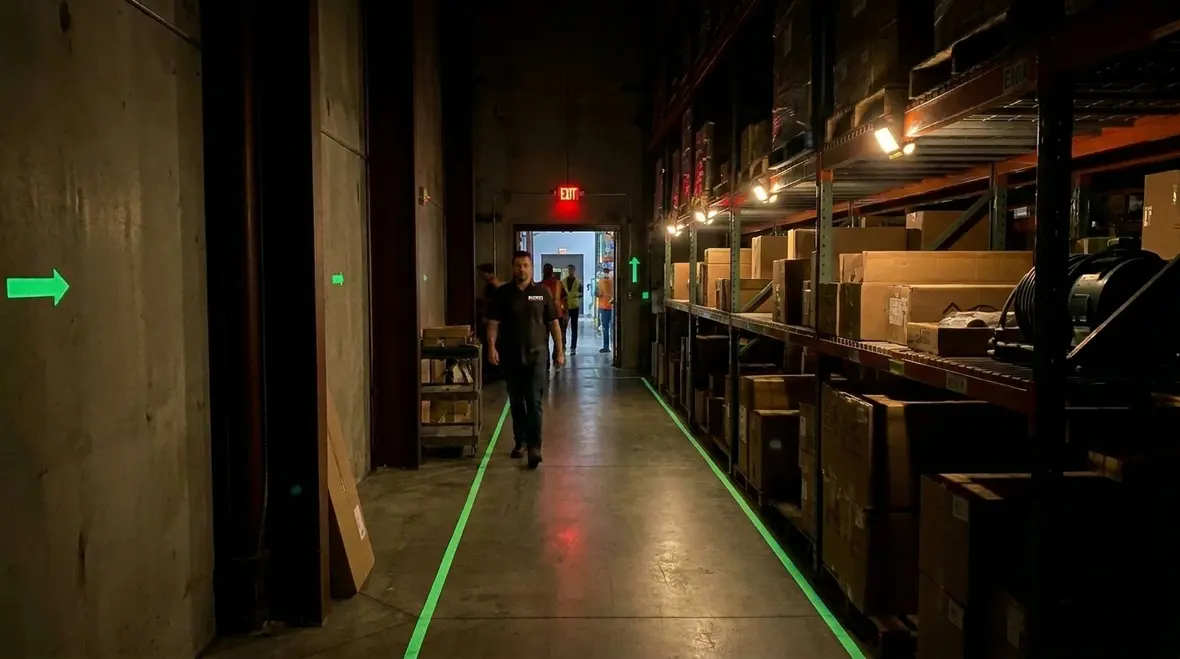
Once the system can run, the next step asks a practical question: does it light the path? In industrial environments, this matters more than many people expect. Forklifts move. Dust and smoke reduce visibility. Wet floors make glare worse. Meanwhile, exit routes may pass through corridors, loading bays, stairwells, and plant rooms that look straightforward until you test them during an outage.
We verify coverage using a method that matches the facility’s risk. That includes checking:
- Exit access routes and the full path to exits
- Stairwells and areas that connect to vertical travel
- Hazardous locations where normal lighting changes can confuse movement
- High traffic zones, entrances, and areas with poor sight lines
Then we look at spacing and placement against the system design. If a device was moved, removed, or covered by signage or equipment, coverage can fail without anyone noticing. Our expert service staff often explains it this way to the building team: you can have the correct number of fixtures and still get wrong results if the light does not land where the exit route actually runs.
And yes, sometimes the problem comes from something simple, like a “temporary” storage stack that never returned to temporary status. We have learned to ask about those too, because the best compliance program includes real site conditions, not just blueprints.
Testing Under Load: The Difference Between “On” and “Safe”
Many facilities test emergency lighting by flipping a switch and watching lights turn on. That is a start, but industrial emergency lighting compliance requires a deeper look. A system can illuminate during a short test yet still fail during a longer outage because of battery capacity limits, charger issues, or internal faults.
At Kord Electric, our technicians run tests that reflect how emergency lighting must perform in real situations. First, we check the response time and verify that the emergency output starts when it should. Next, we verify output duration and observe performance stability. Then, we document each device or circuit outcome so managers can act quickly.
We also pay attention to indicators and reporting. A panel that says “normal” while devices are not performing creates a false sense of safety. Therefore, we confirm correct status feedback and we ensure staff understands what each alarm or signal means. In business terms, we remove surprises. In safety terms, we keep people from walking into darkness with confidence and hope, which, as jokes go, is not a replacement for light.
Costs, Planning, And Avoiding Surprise Failures
Facility teams often ask about cost and planning. They want a clear approach, not a vague promise. While this article focuses on emergency coverage and testing, we still help others budget wisely. In related commercial electrical planning discussions, we share rewiring cost guidance for commercial electrical systems, because the same mindset helps here. You plan before failure, you document what you find, and you spread work so operations stay stable.
How we help industrial and major property buildings plan
- We provide a scope that separates critical fixes from improvements, so budgets match priorities.
- We schedule work to reduce downtime, especially in active production zones.
- We recommend replacement timelines based on performance, not only installation dates.
- We help building teams understand what to expect during maintenance cycles.
When it comes to compliance, planning prevents the “late scramble.” Then the team spends money after an outage, when urgency spikes and choices shrink. We prefer the calm approach: test results become a roadmap, and repairs become a controlled schedule. That is what the best industrial emergency lighting compliance programs do. They do not just pass; they protect.
And if someone in the building asks whether emergency lighting inspections are like seasonal maintenance, we tell them the truth. They are like changing the smoke detector battery, but without the “it probably still works” attitude.
Dual Column Tracking For Fast Compliance Decisions
To make outcomes easy to act on, we encourage a tracking format that separates what is found from what gets fixed. Then the facility team can assign responsibilities without confusion, and our technicians can return efficiently. Below is a simple two-column structure that helps others organize industrial and major property building emergency lighting work in a clear way.
Findings
- Devices with reduced runtime performance
- Faulted indicators or panel status mismatches
- Obstructions on exit routes affecting illumination
- Charging system inconsistency
Recommended Action
- Replace batteries or the device and retest for verified duration
- Inspect control wiring, panel function, and confirm correct reporting
- Remove obstructions or relocate fixtures, then retest coverage
- Check charger output, connections, and confirm stable emergency readiness
This approach keeps industrial emergency lighting compliance work from becoming a stack of reports no one reads. It turns documentation into decisions, and decisions into safer conditions.
FAQ: Emergency Lighting Compliance For Industrial Facilities
Compliance That Stays Real, Not Just On Paper
Industrial emergency lighting compliance only works when it stays verified. Kord Electric supports commercial and industrial facilities and major property buildings with expert service staff, hands-on testing, and practical documentation that helps others fix problems fast. If a system feels “mostly fine,” that is exactly when a deeper review matters. Contact us for an on-site assessment, a clear action plan, and a testing schedule aligned to your operations. Keep people safe, keep operations steady, and avoid the kind of darkness that no one can laugh off.
For facilities that want to roll emergency lighting into a broader reliability strategy, Kord Electric also provides structured electrical preventive maintenance programs that include emergency lighting testing, generator and ATS inspections, and ongoing compliance documentation across commercial and industrial properties.
If your teams are planning upgrades to industrial or commercial lighting along with compliance work, our dedicated lighting installation services help align new fixtures, controls, and coverage with your emergency lighting strategy so everyday visibility and emergency performance support each other instead of working at cross purposes.