Film Studio Fire Safety Requirements California
In California, film studio fire safety requirements california shape how commercial stages, backlots, warehouses, and office spaces protect people, crews, and expensive equipment. Because production schedules move fast, safety can’t be treated like a last minute prop. We at Kord Electric guide film and production operators through the electrical and life safety pieces that must work together, even when the “serious moment” gets interrupted by a stunt coordinator yelling, “Quiet on set.”
In this article, we walk through what studios typically must plan for, how inspections often look at electrical scope, and what our technicians explain on site so teams leave with clear steps. We keep things practical because we work with commercial and industrial facilities, and major property buildings where the stakes are real.
What fire safety plans mean for California film studios
Film production involves cameras, generators, craft services, large scenic builds, and sometimes hot work. Therefore, fire safety planning in a studio is not a single document and it is not only about alarms. It is a system that connects building design, electrical power, emergency notification, life safety devices, and the way the facility responds when something goes wrong.
When our service team evaluates a studio, we treat the electrical side like the heartbeat of the building. As soon as power is interrupted, emergency lighting, exit signs, fire alarm circuits, and communication systems must still perform. So, the facility must plan for reliable backup and safe distribution paths.
In practice, studios should align their fire safety approach with the building’s occupancy needs, construction features, and the local enforcement expectations. Additionally, they should document testing schedules, maintenance records, and any change that affects life safety operations. Otherwise, the plan becomes “historical fiction,” the kind that only shows up after a problem.
Because electrical scope is such a major piece of the life safety picture, studios in California often coordinate both their electrical contractor and a fire protection partner such as Kord Fire Protection to keep alarm, suppression, and power strategies aligned instead of scattered between unrelated vendors.
Electrical safety: keeping power dependable during emergencies
Even the best fire suppression strategy fails if critical electrical devices drop out at the wrong time. Because of that, commercial studios must design electrical systems so that life safety remains powered long enough for evacuation and emergency response.
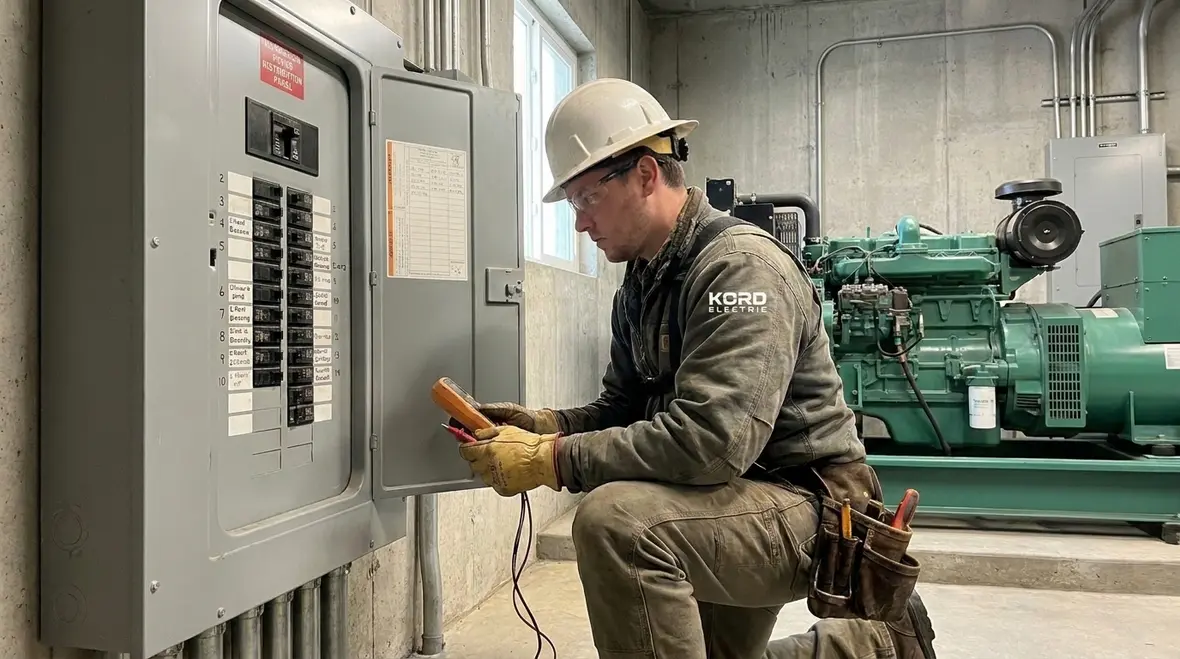
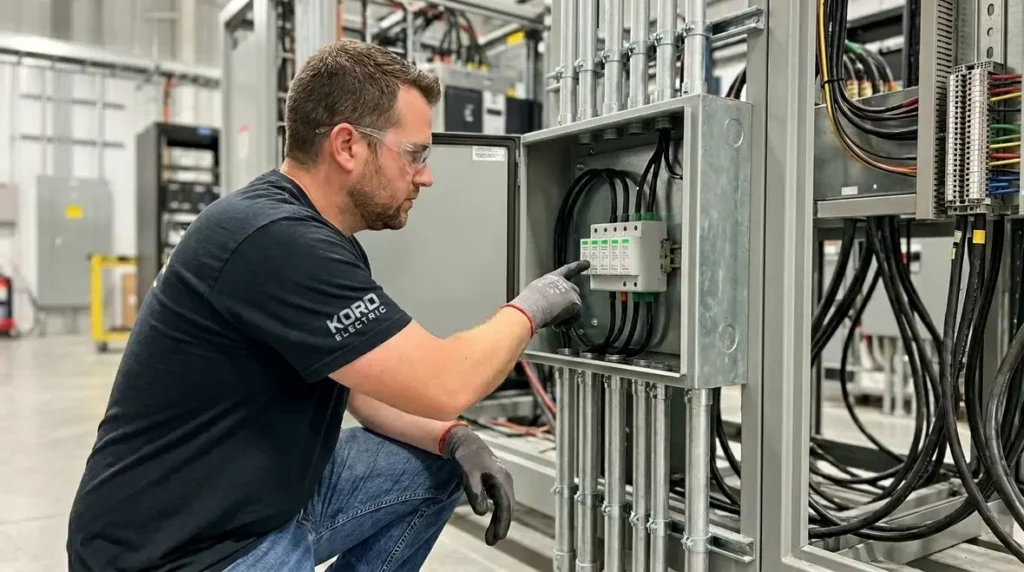
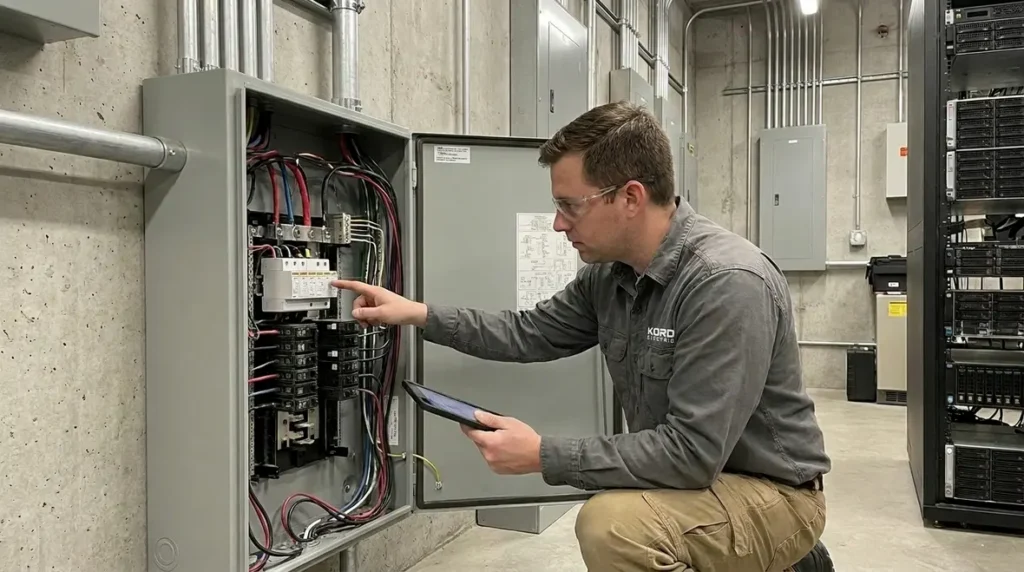
Our technicians focus on a few key areas. First, they look at how emergency power is routed to life safety loads. Then, they verify that normal and emergency sources are separated so a fire condition does not create more danger. Finally, they confirm that controls and protection devices support the intended operation, not the “whatever seems to fit” approach.
During walkthroughs, we also explain things in plain language. Our expert staff will point out why a circuit serving a non-life safety load should not be mixed into critical pathways. And they will show how improper labeling or loose documentation can turn a routine test into a stressful meeting with multiple departments.
To keep production moving, we recommend planning electrical testing around studio schedules, not against them. That way, life safety systems stay compliant while sets continue to roll. For multi-building operations and larger lots, our dedicated Los Angeles County electrical services help unify that planning so every stage, backlot, and office follows a consistent playbook instead of making it up per show.
How alarm systems, detection, and signage must work together
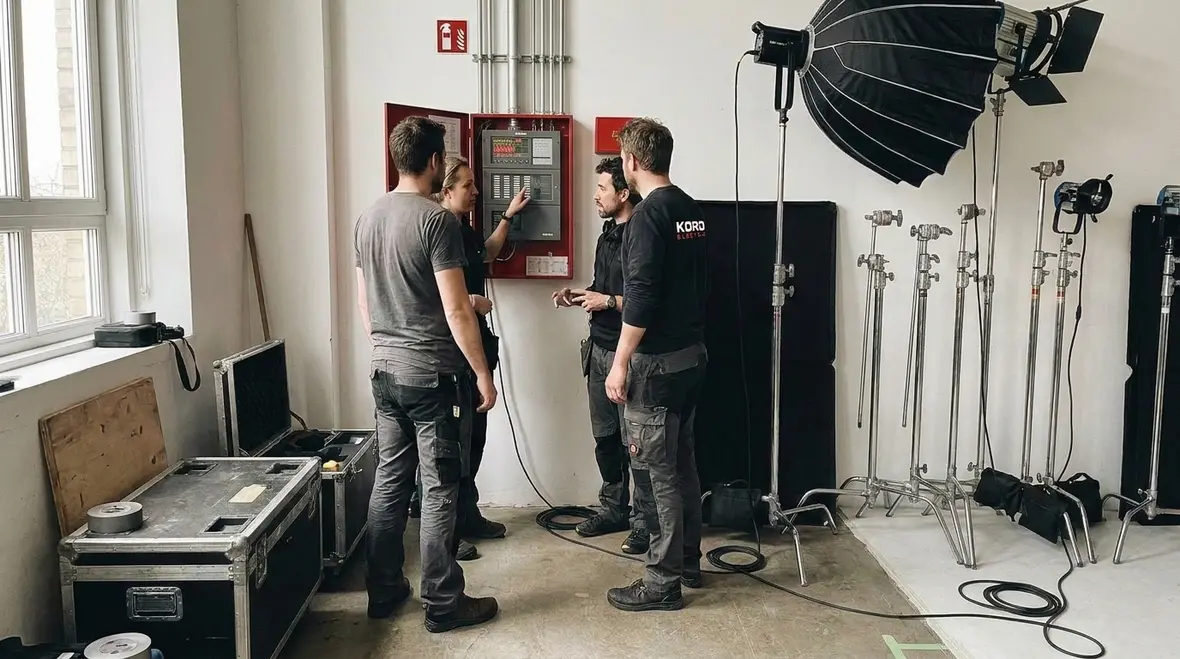
In most studio buildings, fire alarm detection and notification create the message that crews and visitors rely on. However, the system must also coordinate with evacuation routes, audible and visual signaling, and the overall layout of the property.
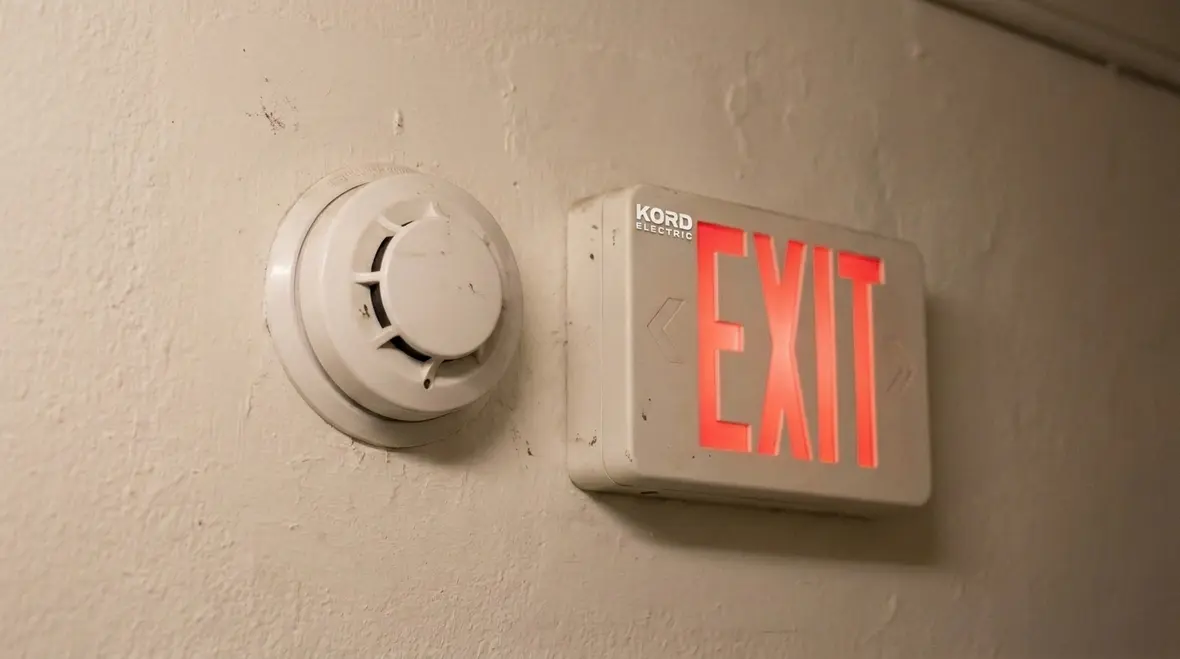
Our approach starts with understanding how people move through the facility during normal operations and during emergencies. For example, a stage area may use temporary scenic elements that change visual sight lines. Therefore, a studio should confirm that alarms and notification coverage still meet expectations after set builds and reconfigurations.
Next, we check power reliability for alarm panels and related devices. We verify that backup sources perform as intended, and we test key components according to the facility’s maintenance program.
Then, we help teams with the “human part.” Our technicians explain how to interpret system status indicators and how to respond when a panel indicates trouble conditions. Because if staff only learns what trouble means after the building already has smoke in the air, we all know how that movie ends.
On many projects, film studio fire safety requirements california also include coordination with full-service fire protection providers. Partnering with a team like Kord Fire’s comprehensive fire protection services helps studios align electrical reliability with sprinklers, suppression, and inspections so no one is guessing about which system does what during an alarm.
Emergency lighting and exit routes in production buildings
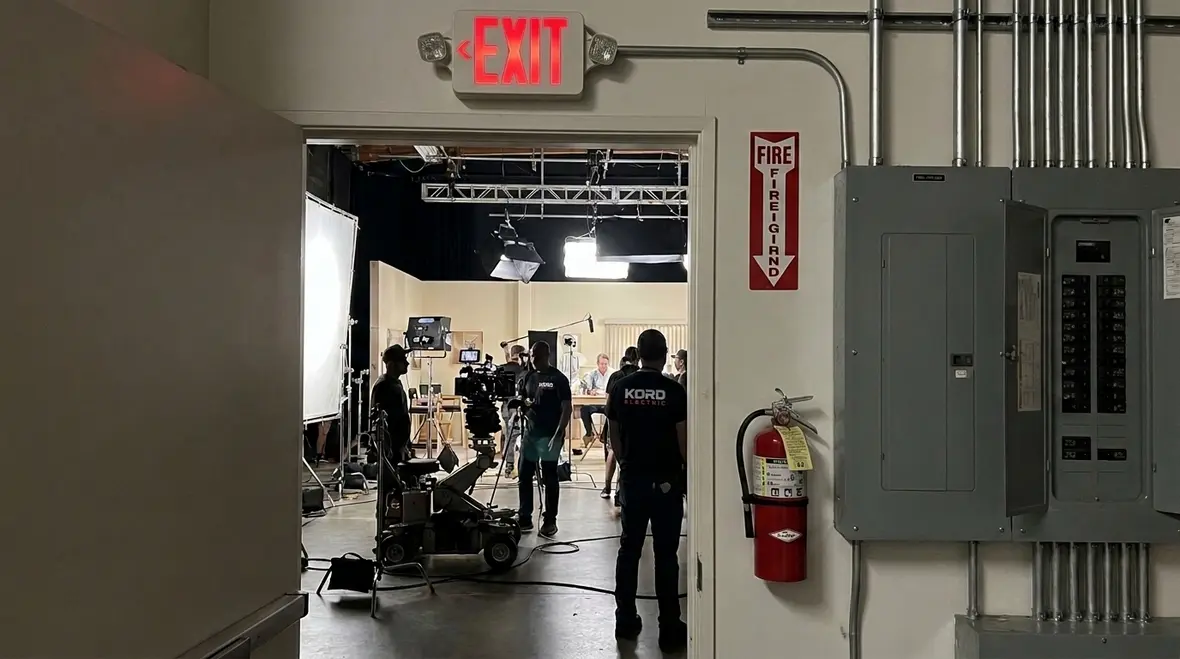
Exit routes in film studios face unique realities. Corridors may store props, temporary walls may block views, and cables can creep onto paths when crews are moving fast. As a result, film studio fire safety requirements california typically expect clear, dependable egress support that does not collapse during power loss.
Emergency lighting must illuminate exits and key areas. Exit signage must remain visible and correctly placed. Moreover, emergency systems must remain operational and maintained even when the studio is mid shoot.
In addition, facilities must keep egress pathways free of hazards and ensure that fire doors, if present, operate properly. Electrical systems play a role here too, especially when doors use power operated components, release mechanisms, or related controls.
Our expert service staff helps studios avoid common mistakes. They will review how the studio’s electrical distribution supports emergency lighting operation, and they will verify that circuit protection does not cut power too early. As always, we keep the focus on commercial and industrial facilities and major property buildings, where engineering and maintenance must stay consistent.
Studios that coordinate egress lighting with a focused fire protection provider, such as Kord Fire’s local fire protection services, usually find that inspections go smoother because both the electrical and life safety sides are speaking the same language from design through ongoing testing.
Generators, backup power, and why they fail without the right checks
Many studio properties rely on generators or other backup power methods. That is smart, and it is also where problems often start. Equipment can run perfectly during testing and still fail during a real event if the load transfer, wiring, or maintenance plan does not match the life safety needs.
Our technicians help studios verify that backup power supports the required life safety loads, such as emergency lighting, exit signage, fire alarm panels, and sometimes communications equipment. We review the system design and then confirm performance through testing aligned with the facility’s maintenance requirements.
We also recommend practical documentation improvements. When technicians, maintenance managers, and production leads share clear records, it reduces confusion during inspections. It also reduces the chances that someone will “fix” a trouble condition with a quick reset and hope for the best.
And yes, we have heard the classic line, “It was fine yesterday.” Fine is a word that breaks down under smoke and deadlines. Therefore, we emphasize scheduled testing and correct load coverage, not vibes.
Because studio operations often run late nights and weekends, pairing backup power design with a 24/7 response plan such as Kord Electric’s emergency electrical services gives production teams more confidence that, if something misbehaves, qualified help is on the way instead of another round of “try the breaker again.”
Maintenance, inspections, and change management for studio operations
Fire safety is not a one time install. It is an ongoing duty. Studio buildings change, and electrical systems often change with them. Lighting grids get modified, power panels get rearranged, temporary production loads get added, and sometimes contractors move wiring around like they are building a second studio inside the first.
To keep compliance steady, facilities need a change management method that includes life safety impacts. That means any modification that affects emergency power, alarm devices, detection zones, or egress support must be reviewed and documented.
Our service team supports that approach by helping studios understand where electrical systems connect to life safety. For example, we help teams plan how they will track devices and circuits tied to emergency operation. We also support maintenance planning so inspections do not become a scramble.
In addition, we remind staff that inspection readiness is built over time. If testing records are complete, labeling is accurate, and systems remain within maintenance windows, the facility typically moves through review with fewer surprises.
We keep the communication simple. Our technicians explain the “why” behind each check so production leaders can coordinate without slowing down the shoot.
For larger entertainment campuses and multi-site operations, our broader Los Angeles County electrical services give studio leaders a way to standardize maintenance expectations, documentation formats, and testing schedules so that every building, from sound stages to support warehouses, stays aligned with film studio fire safety requirements california instead of running on individual memory.
Featured FAQ: quick answers for studio teams
Conclusion: let us help you keep the set safe and inspection ready
Fire safety in a film studio is not luck, and it is not optional. Kord Electric helps commercial and industrial facilities in California align electrical systems with life safety needs, so emergency power, alarms, lighting, and exit support work when people need them most. Our technicians explain the details clearly, coordinate service with real production schedules, and help studios maintain documentation that inspections can trust. If you want a calmer shoot day and fewer last minute surprises, contact Kord Electric today for an electrical life safety review.
As you coordinate film studio fire safety requirements california across new builds, retrofits, or expanding lots, remember that you do not have to choose between production speed and life safety. With the right electrical planning, reliable fire protection partners, and a maintenance program that respects both code and calendar, your stages can stay bright, your exits can stay clear, and your inspection days can feel a lot less dramatic than your dailies.
For studios, production campuses, and large facilities throughout Los Angeles and Southern California, Kord Electric and Kord Fire Protection work together to keep electrical infrastructure, alarm systems, emergency lighting, and suppression equipment tuned for real world performance. When you are ready to turn “we should check that” into a practical plan, our teams are ready to help.