Fire Pump Electrical Requirements for Commercial Buildings
Fire Pump Electrical Requirements: the commercial essentials you can’t improvise
Commercial and industrial buildings cannot treat fire pump power like a “good enough” project. The fire pump electrical requirements must match the system design, code expectations, and site conditions, because a pump that loses power when it matters is about as helpful as a smoke alarm with a sense of humor. Kord Electric works with major property owners and facility managers, and we bring a clear, steady approach: we verify the electrical scope, coordinate the standby and control systems, and document everything so your inspectors and your maintenance team can trust the setup.
In this article, we explain what others often miss. We also show how our technicians and expert service staff explain the details in plain language, so decisions get made faster and with fewer surprises later.
How power reliability drives the entire design

Third person investigations usually start with reliability, because the fire pump’s electrical feed does not behave like ordinary building loads. First, the pump needs a supply that remains stable during normal operation and during emergencies. Next, the control logic depends on voltage, phase, and wiring integrity. Then, the system must transition correctly when power moves from one source to another, if your design includes it.
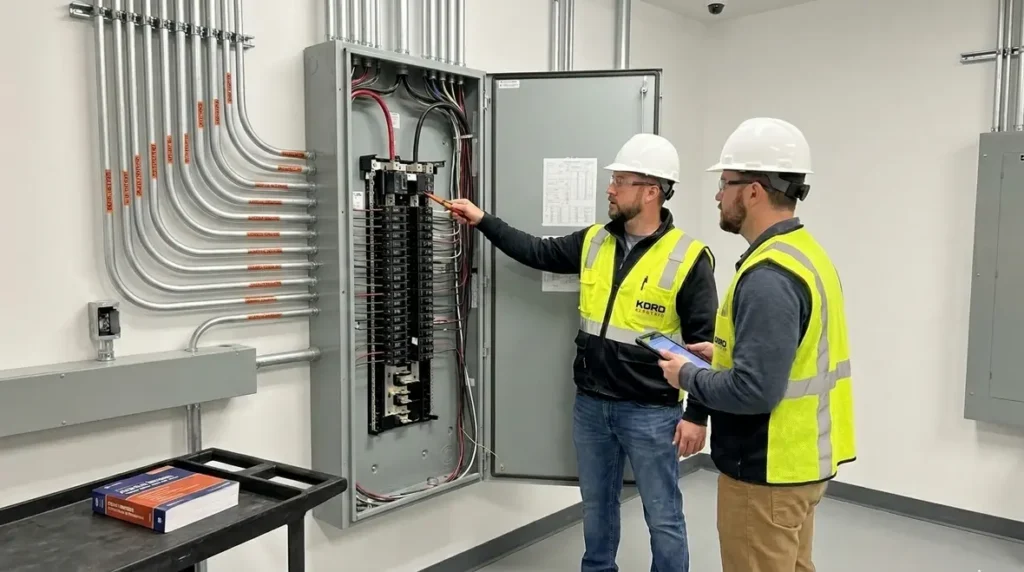
Our technicians typically review the single line diagram and the pump controller package as a starting point. They do this because many problems begin on paper, not in the field. For example, a building might have a “spare transformer” on the drawings, but the routing, disconnect arrangement, or breaker settings prevent it from performing as intended.
In other words, fire pump power is a system, not a cable. And yes, people do try to treat it like a cable sometimes. We see it, and we fix it.
Power reliability also ties directly into how the fire pump interacts with the rest of the protection system. When technicians review essential power sources, transfer equipment, and selective coordination, they confirm that the pump will have the energy it needs even when other building loads are shedding or tripping offline. That is one reason resources that focus on essential fire pump electrical requirements and design help facility teams connect the dots between utility service, on-site distribution, and pump performance.
For many large properties, the review also includes how the pump’s electrical requirements align with NFPA 20 expectations for reliability and supply arrangements. Articles that break down how NFPA 20 regulates fire pump systems give owners a clearer picture of why the electrical details matter before anyone starts pulling cable or ordering gear.
Motor power, voltage, and switching logic that inspectors expect

The electrical setup for a fire pump usually centers on the motor and the controller. Therefore, Kord Electric pays attention to motor nameplate details, controller compatibility, and the required switching sequence. We verify that the voltage and phase match the motor requirements and that the power path uses the correct protective devices.
Additionally, we confirm that the controller settings align with the pump type and the required starting method. Some installations need reduced impact on the electrical system during start. Others prioritize simplicity and fast response. Either way, our team coordinates the controller inputs, interlocks, and alarm contacts so the pump behaves the same way every time a signal arrives.
And because facility teams often ask, “Will this trip if the building gets cranky?” we answer plainly: the goal is to avoid nuisance trips while still meeting protection requirements. Our expert service staff explains this process step by step, so your electrical room is not a mystery novel.
That explanation often draws on real-world examples from troubleshooting work. When fire pump motor starter issues or controller settings are off, the symptoms can look random: motors that refuse to start, breakers that trip again and again, or controllers that behave as if they are starring in a drama. By designing the fire pump electrical requirements around clearly defined starting methods, fault responses, and monitoring points, we reduce surprises and make future diagnostics faster.
Inspectors also expect the motor and controller arrangement to reflect the critical nature of the load. That often includes dedicated feeders, locked rotor current considerations, and selective coordination that ensures upstream devices do not trip before the fire pump protection does its job. In other words, the switching logic must support continuity of operation first, and still deliver protection that keeps equipment and people safe.
Standby and emergency sources: what must happen during loss of power
When commercial buildings lose normal power, the fire pump system must maintain its readiness. Consequently, the electrical design must address source selection, transfer timing, and coordination with emergency power equipment where applicable. If a generator or alternate feed exists in the design, then the transfer arrangement and controller logic must support operation without risky delays.
Furthermore, voltage sags or phase loss can cause issues even when the “right source” is connected. For that reason, we verify monitoring and protection settings that preserve safe operation. We also confirm that the fire pump controller can recognize the emergency power conditions and allow starting when the design calls for it.
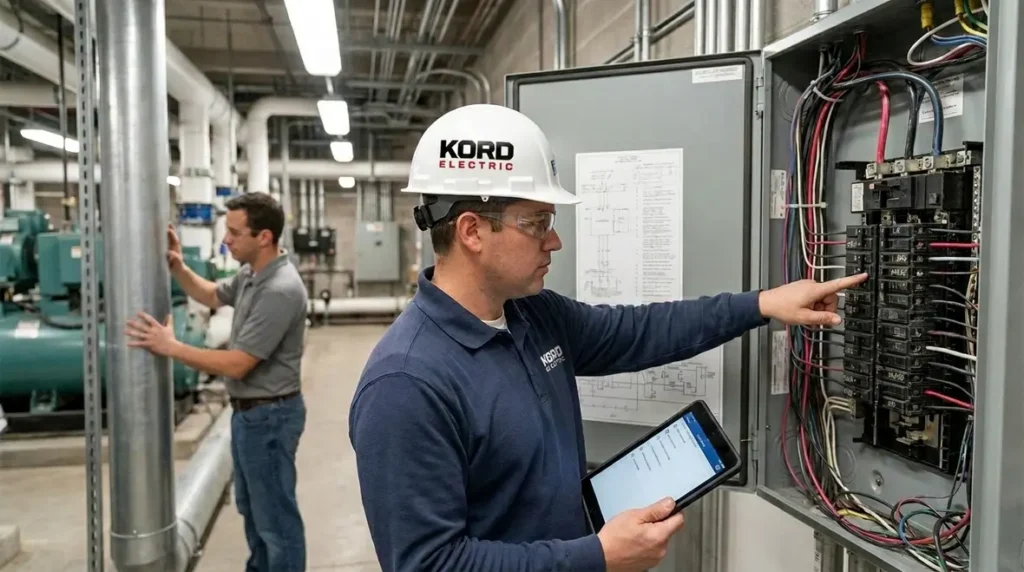
At Kord Electric, we don’t just install and leave. We test the system’s behavior based on the documented sequence and we explain the results to building teams. That includes clarifying what you should expect during a transfer event and what alarms indicate when someone is standing in the electrical room, looking worried, and asking what happened.
Emergency power planning for fire pumps also touches on broader system questions. Will the generator start quickly enough? How does the automatic transfer switch interact with the fire pump controller? Are there any upstream devices that might open before the pump even sees voltage? When our field teams walk through these questions, they connect them back to the same core idea: fire pump electrical requirements do not stop at the controller cabinet. They extend all the way back to the source and forward through every protective and switching device in the path.
For buildings that rely on electric fire pumps instead of diesel drivers, this emergency source coordination is especially important. In those cases, verifying that the generator capacity, voltage regulation, and fault clearing characteristics align with the pump’s starting current is not optional. It is how you prevent a “lights out” moment from turning into a “pump out” moment when you can least afford it.
Wiring methods, labeling, and separation for dependable fire pump operation
Good electrical design includes the wiring method, routing practices, and identification requirements that help the system stay reliable and serviceable. As a result, Kord Electric plans conductor routing to reduce exposure to damage and to support clear maintenance access. We also follow practices that support separation between different circuits as needed by the design intent.
Moreover, labeling and identification matter more than people assume. A controller that relies on specific inputs is hard to troubleshoot if wires look like spaghetti and tags are missing or inconsistent. Therefore, we label conductors and components to match the as-built drawings and to support fast diagnostics.
Our technicians also check terminations and verify workmanship quality, because loose connections and improper torque can create heat, insulation stress, and eventual failures. Nobody wants a “slow burn” in an emergency system. The building can have plenty of drama in its lobby, not in its electrical connections.
Thoughtful wiring and labeling also make future testing and calibration work far less painful. When teams perform routine fire pump inspections, they can trace circuits quickly, verify sensor inputs, and confirm that pressure and status signals go exactly where the drawings say they go. That kind of clarity pays off during annual tests, unannounced inspections, and late-night troubleshooting calls.
In many commercial and industrial buildings, separation also includes routing life safety circuits away from mundane building systems that may suffer more frequent modifications. By keeping the fire pump feeders and control wiring clean, direct, and well identified, you reduce the chances that someone “just tying into an existing conduit” accidentally turns a life safety circuit into an afterthought.
Controls, alarms, and interlocks that keep the system coordinated
The fire pump controller is more than a motor starter. It coordinates signals between the pump, the fire alarm system, and other building functions. So Kord Electric reviews how the electrical components communicate: which inputs trigger the pump, which outputs provide status, and how alarms get handled.
Transitioning from one mode to another is a common point of confusion. For instance, systems might include manual start options, automatic start sequences, supervisory signals, and fault notifications. Then, interlocks prevent unsafe operation based on conditions the system monitors.
Our expert service staff explains these interactions clearly. They walk the property team through what each status point means, and they help the team understand how to verify system health without guessing. When facility staff know what “normal” looks like, they catch issues early, before the fire pump electrical requirements become a problem in the field.
Controller logic also shows up in start sequence timing, transfer behavior, and fault recovery. Guides that focus on fire pump start sequence and operating settings help make those ideas less abstract. They show how pressure sensing, time delays, and driver responses all weave together to create a predictable, repeatable reaction whenever the system needs water.
Because controllers sit at the center of so many signals, they also tend to collect many of the system’s quirks. That is why our technicians approach fire pump controller electrical issues in a structured way, confirming power, protection, wiring, and interlocks one step at a time. In design, that same mindset leads to clear terminal assignments, well-documented input and output lists, and alarm points that mean exactly what the label says they mean.
When the controls, alarms, and interlocks all tell a consistent story, facility staff can spot deviations faster. A single unexpected alarm stands out instead of getting buried in a noisy, confusing status panel. In everyday terms, the controller becomes a reliable narrator instead of an unreliable one.
Testing, documentation, and ongoing service for major property buildings
Even a perfectly installed system needs proof. Therefore, Kord Electric provides commissioning support aligned with the project’s electrical design intent and the applicable inspection expectations. We help validate that protection devices coordinate properly, the controller responds correctly, and the system configuration matches what the drawings state.
Then we focus on documentation. For major property buildings, that often means clean as-built records, circuit identification, equipment schedules, and service notes that technicians can use months or years later. We also support ongoing maintenance practices so reliability stays consistent.
Here is the part people skip and then regret. When maintenance happens without the right checks, minor issues stack up. A loose connection. A degraded component. A misunderstood alarm. Our technicians help prevent that by performing planned service and by explaining what they find in a calm, direct way.
Routine testing and calibration also confirm that the fire pump electrical requirements still support the hydraulic performance the building depends on. Over time, components age, utility conditions shift, and operating patterns change. Field work such as fire pump calibration or inspections that focus on how pumps maintain pressure in large buildings help catch those changes before they affect real emergencies.
For owners and managers who want a single point of contact for ongoing support, dedicated fire pump service brings testing, repair, and upgrade work under one coordinated plan. That way, future projects that change loads, add generators, or reconfigure protection systems still respect the original life safety intent instead of accidentally undermining it.
FAQ
Final thoughts and next step
Commercial and industrial fire pump electrical work demands a steady plan, careful coordination, and documentation you can trust. Kord Electric supports major property buildings with expert technicians who inspect, install, and explain every key step in a way facility teams understand. If you are planning a new system, upgrading an existing setup, or preparing for inspection, contact us. We will review your project scope, map the power and control needs, and help you move forward with confidence.
Learn more from firepumps.org at https://firepumps.org/.
To connect your electrical planning with the broader fire protection picture, you can also explore in-depth resources from Kord Fire Protection on topics like NFPA 20 compliance, jockey pump requirements, and how fire pumps maintain pressure in large buildings. These guides help owners, engineers, and facility managers see how design, testing, and everyday operation all support the same life safety goals.
When you are ready to align your fire pump electrical requirements with a full service and maintenance strategy, partnering with a dedicated fire pump service provider ensures that inspections, repairs, and upgrades stay coordinated year after year.