
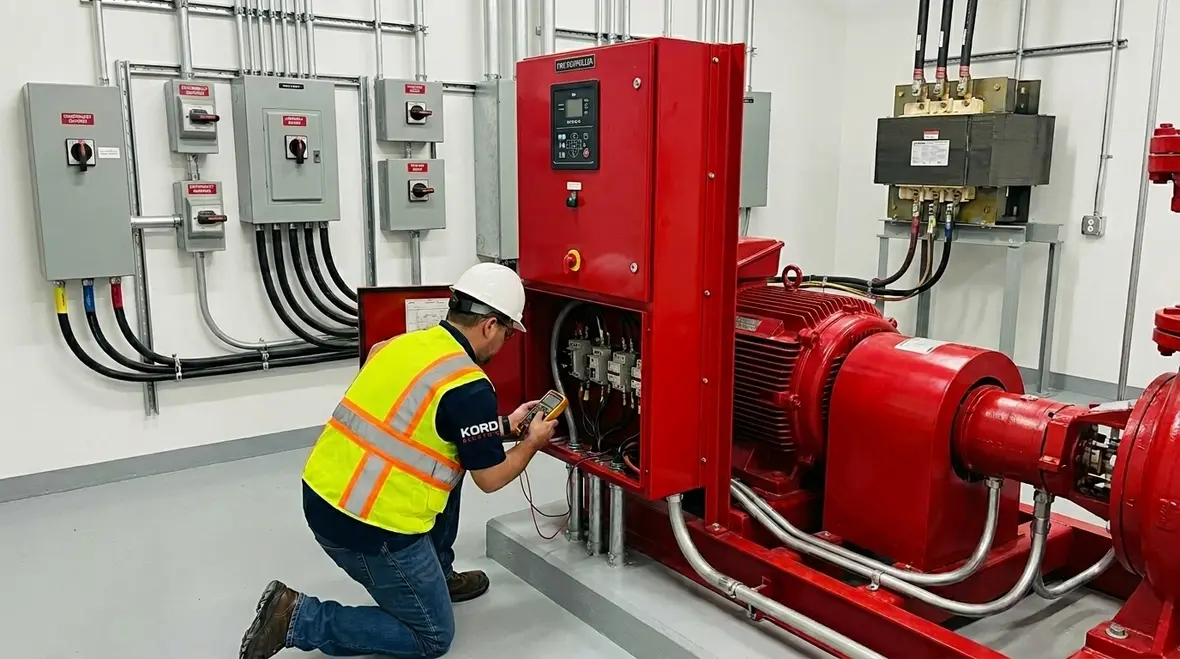
NEC Fire Pump Power Supply Code Compliance
At Kord Electric, we install and service fire pump systems with the kind of care you only notice when nothing goes wrong. And when something does happen, the fire pump power supply must perform like a pro, not like a tired understudy. That means we follow the NEC Electrical Code rules for emergency pump power, protect circuits the right way, and coordinate with AHJs so the project clears inspection on the first go. Our approach stays calm and clear, and our technicians and expert service staff explain what they are doing in plain language. After all, electrical code compliance should not feel like a mystery novel. Although, if you have ever tried to read an NEC table at midnight, you know it can start to feel like one.
NEC basics for fire pump power, without the headache
In commercial and industrial facilities, we treat fire pump electrical design as life safety work, not a routine panel swap. The NEC places strict requirements on the power source, wiring methods, protections, and supervision because the pump needs to start and run when normal power fails. Therefore, the code does not allow “close enough” solutions. We build the system so that when the alarm comes, the pump gets power with minimal delay and minimal risk.
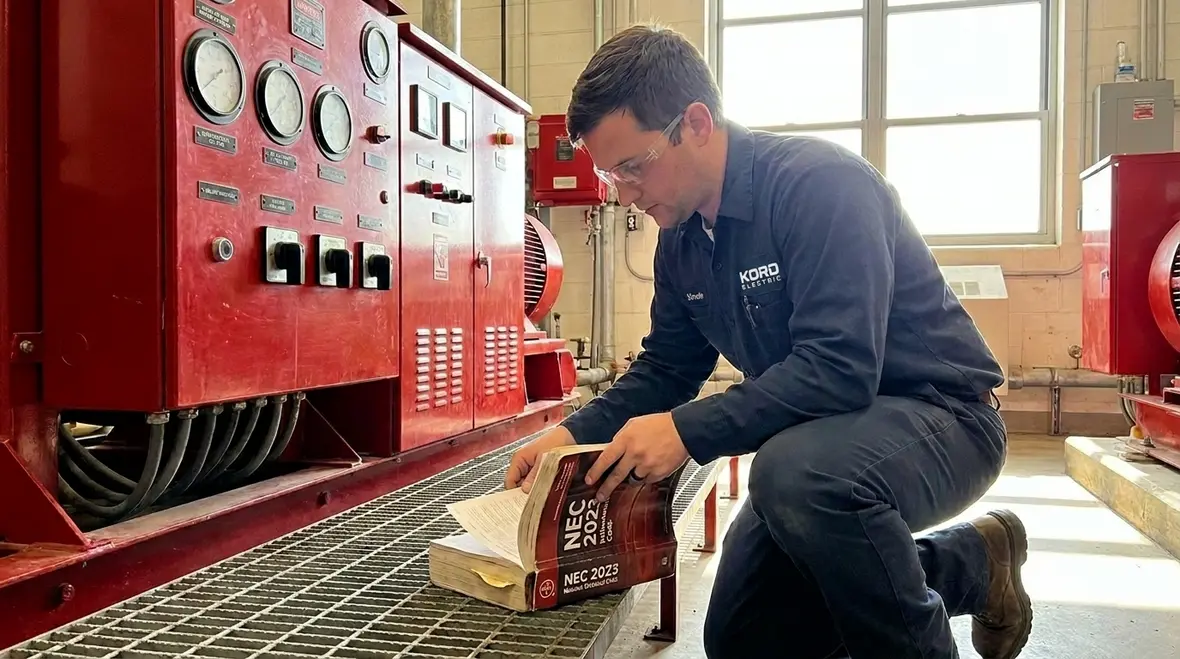
Our technicians start by confirming the project classification, pump controller type, and the required starting behavior. Then, we line up the electrical pathway: from the supply source, through disconnect and protective devices, into the controller, and on to the motor. Meanwhile, we verify what the AHJ expects for permitting and inspection. In many cases, the fire pump controller listing and manufacturer instructions shape how the electrical side must be wired, and we do not ignore those details.
And yes, we see mistakes. Someone connects a circuit thinking it will “probably” feed the controller. Then the inspector asks a question that lands like a pop quiz from a movie villain. We prevent that by doing the work right the first time.
Power source selection under NEC requirements
When we design a fire pump system, we focus on what powers it and how that power stays available. NEC rules generally require a dedicated and reliable power source for the fire pump, with clear separation from normal loads. As a result, the system avoids shared panels, avoids casual branching, and avoids anything that can interrupt the pump when other equipment draws power.
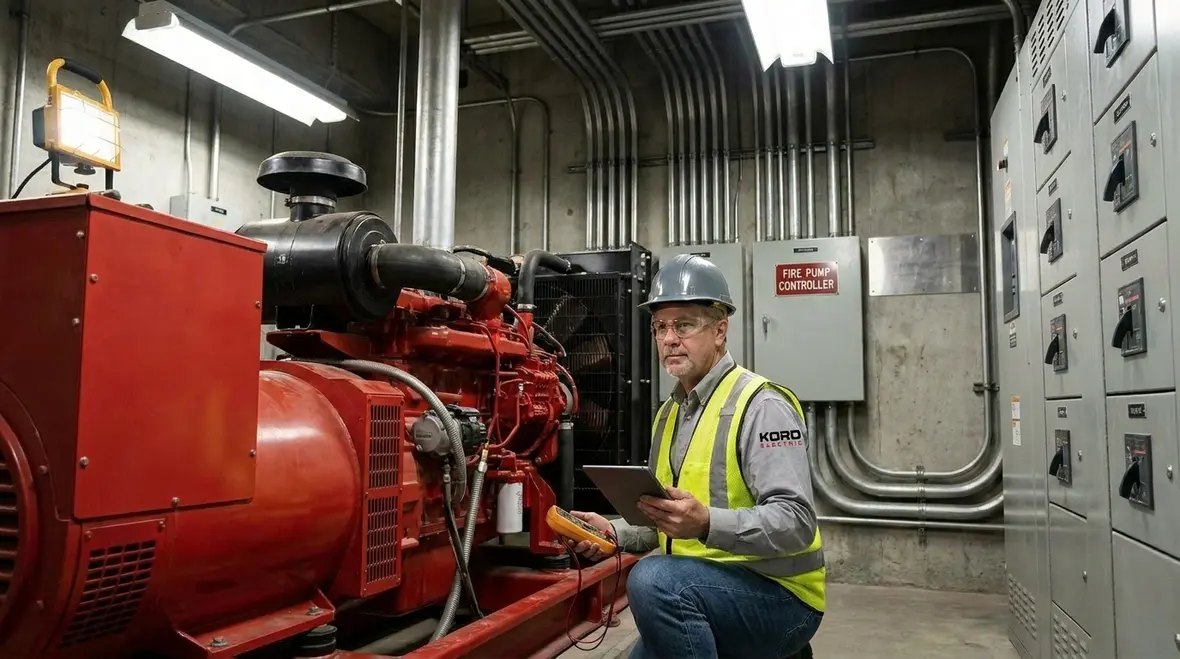
Where applicable, the NEC emergency power and standby concepts apply. That does not mean you pick the most convenient generator and call it a day. Instead, we confirm the configuration of the supply, the transfer method, the time rating, and the coordination with the fire pump control logic. If the facility has multiple feeders, we make sure the fire pump circuit and its control circuits follow the required arrangement.
Our expert service staff also explains something many owners miss: the “power source” is not just the utility feed. It includes the entire chain that maintains the pump’s ability to start and run. Therefore, we review the transformer, switchgear, transfer equipment, and any related disconnects. We also verify that any supervision or monitoring circuits work as intended, so the system reports faults early instead of waiting for a crisis.
Because the NEC for fire pump power supply ties directly into other standards, we often point owners toward deeper resources. For example, our colleagues at Kord Fire Protection maintain an NFPA 20 overview that explains how pump design, drivers, and controls interact with the electrical side of the system in actual buildings, not just diagrams. That same article connects nicely with their discussion of essential fire pump electrical requirements and design, giving facility teams a stronger sense of how code language translates into everyday decisions in the pump room.
When owners want to go even further into the technical details behind their fire pump power supply, we also mention independent resources such as firepumps.org. Those guides complement what we share on site, especially for engineers and maintenance staff who like to understand the “why” behind each code reference before signing off on a design.
Wiring methods, grounding, and coordination for reliability
Once the power source is set, we build the path with wiring methods that support dependable operation. NEC requirements for equipment grounding and conductor sizing matter because voltage drops, loose terminations, and improper grounding can cause nuisance issues or worse, failure to start under stress.
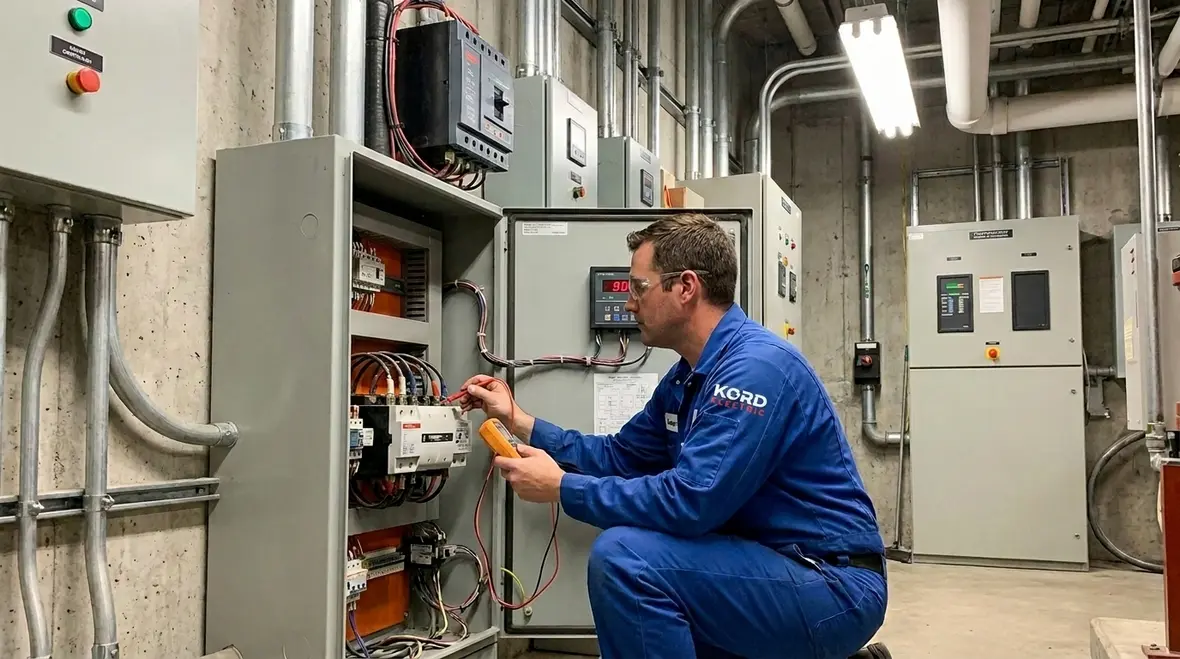
We also coordinate wiring protection devices properly. Overcurrent protection must protect conductors without interfering with the pump’s required starting current and running performance. Therefore, we follow code guidance for protective device selection and ensure the protection scheme matches the motor starter and controller arrangement. In practice, that means careful selection and field verification, not guesswork.
In many commercial and industrial sites, installers use standard wiring practices for convenience. However, fire pump wiring is not “just another circuit.” The system must survive the conditions it is designed for. So we choose installation methods that meet code expectations, we secure conductors, and we verify termination quality. We also test where required and document results for the maintenance team.
Our technicians walk the job with the owner’s team and explain the why behind each step. When people understand the purpose, they stop treating the fire pump electrical system like a “set it and forget it” feature. Because in life safety work, forgetting is not an option.
Tying wiring and grounding into broader fire pump performance
From experience on large campuses and high-rise projects, we know that electrical details directly influence pump performance. That is why we stay aligned with the kinds of electrical practices highlighted in Kord Fire Protection resources on topics such as how fire pumps maintain pressure in large buildings. While those articles focus on hydraulics and system behavior, they also underline how power quality and control reliability make the difference between “expected” and “actual” performance during an emergency.
How we handle controller start, transfer, and supervision
Fire pump systems rely on control equipment that starts the motor, supervises key circuits, and signals system status. The electrical design has to support the controller exactly. Therefore, we coordinate power and control wiring so the controller sees the correct voltage and correct conditions at the moment of demand.
NEC rules push for reliability and for supervision that can detect a problem before it becomes a failure. That means monitoring circuits, alarm outputs, and supervision signals must function as intended. We verify that control wiring is routed correctly, protected appropriately, and installed so it does not get damaged or miswired during maintenance.
We also help facilities prepare for the practical reality of operations. For example, pump testing and maintenance schedules can require procedures that touch electrical components. So we design for accessibility, labeling, and safe isolation. Meanwhile, we keep the system’s integrity by making sure any isolation methods do not disable the required safety performance when the system needs to run.
If you think this sounds like a lot of details, you are right. But we handle it the same way we handle other complex industrial electrical work: step by step, with documentation, and with technicians who have the field experience to connect code rules to actual installation realities.
For owners and facility teams who want a deeper look at how controllers behave when a system calls for water, we often recommend a companion read from Kord Fire Protection on fire pump start sequence and operating settings. That article walks through what the controller is “thinking” as it starts, which makes our electrical design choices feel a lot less abstract during commissioning and testing.
Common inspection issues we prevent in commercial buildings
Inspections can feel like the final boss of any project. We get it. Still, most fire pump electrical failures at the inspection stage come from a handful of repeat issues. And because we serve commercial and industrial facilities and major property buildings, we already know the patterns.
Here are problems we routinely prevent:
- Unclear power pathways where the route from the power source to the controller is not documented or not consistent with the approved drawings.
- Inappropriate protective devices that create coordination problems during starting, or that violate the required control of the fire pump circuit.
- Improper grounding and termination quality that can cause faults, nuisance alarms, or performance problems during a test.
- Missing or incorrect supervision wiring where monitoring circuits do not match the requirements for status and alarm reporting.
- Labeling and documentation gaps that slow down inspectors and lead to avoidable red tags.
We also coordinate early with the people who need to sign off. We review submittals, confirm equipment listings, and align with the AHJ process. During our service calls, our expert staff explains what will be checked, what documentation matters, and why an installed detail affects compliance. In other words, we help the project move forward without drama, even if the electrical code feels like it was written by someone who never met a deadline.
What our technicians check early
- Controller power wiring and disconnect arrangement
- Conductor sizing and voltage drop expectations
- Grounding continuity and termination method
What we verify before energizing
- Protection device compatibility
- Supervision circuit operation
- Labeling, routing, and installation integrity
Because inspections cover both electrical and fire protection details, we often see value in pairing our work with the kind of resources Kord Fire Protection publishes on topics like fire pump room clearance and ventilation and routine fire pump inspections. Those guides help owners understand why we care so much about spacing, access, and recurring tests when we design and maintain the fire pump power supply.
Maintenance and service that keeps the fire pump power supply ready
Compliance does not end at commissioning. For commercial and industrial facilities, ongoing maintenance protects the investment and protects life safety. We help owners build a plan that supports periodic checks of electrical connections, controller operation, and test readiness. And because fire pump performance depends on the electrical system, we include the fire pump power supply in our service scope, not just the pump itself.
Our expert service staff reviews signs of wear that most teams miss at first glance. Loose terminals can develop under vibration and heat cycles. Corrosion can appear in enclosures when environmental controls fall behind. Contactors and starters can accumulate residue that changes performance. Therefore, we check connections, verify insulation integrity where applicable, and confirm controller behavior matches the design.
We also coach facility managers on what they should watch for. If status signals change unexpectedly, alarms appear during routine operation, or tests show inconsistent behavior, we treat it as a prompt to investigate, not a “wait and see” moment. It is like hearing a weird sound from a building elevator. You do not blame your coffee maker. You fix the real system.
Finally, we keep documentation organized for the next inspection. When a service history is clear, it reduces downtime and speeds up compliance reviews.
For facilities that want to align their electrical maintenance with fire pump-focused best practices, we often suggest reviewing Kord Fire Protection content on routine fire pump inspections and their fire pump motor starter troubleshooting guide. Those resources echo what we see in the field every week: when electrical issues are caught early, fire pump systems behave predictably instead of dramatically.
FAQ about NEC rules for fire pump power supply
Ready for a code-strong fire pump electrical plan?
If you run a commercial or industrial facility, you cannot afford uncertainty around life safety equipment. Kord Electric builds and services fire pump power systems with NEC Electrical Code rules in mind, and we keep the work clear for owners, operators, and inspectors. Our technicians and expert service staff explain each step, verify supervision and coordination, and help you document compliance. Call us now to review your design, upgrade aging equipment, or support your next inspection with confidence.
Because the fire pump power supply sits at the crossroads between electrical safety and fire protection, it is worth pairing our services with the specialized fire pump expertise from our sister company. For example, Kord Fire Protection’s article on essential fire pump electrical requirements and design offers a strong companion read when you are planning upgrades. Together, these perspectives help you see both the breaker panel and the pump curve, instead of treating them like separate worlds.
If you are evaluating a broader fire protection project that goes beyond the pump room, Kord Fire Protection also provides turnkey services for systems that keep buildings safe, from sprinklers and standpipes to hydrants and water supplies. A good starting point is exploring how fire pumps support modern building protection, then coordinating your electrical and fire protection scopes so everything passes inspection together instead of in disconnected phases.


