
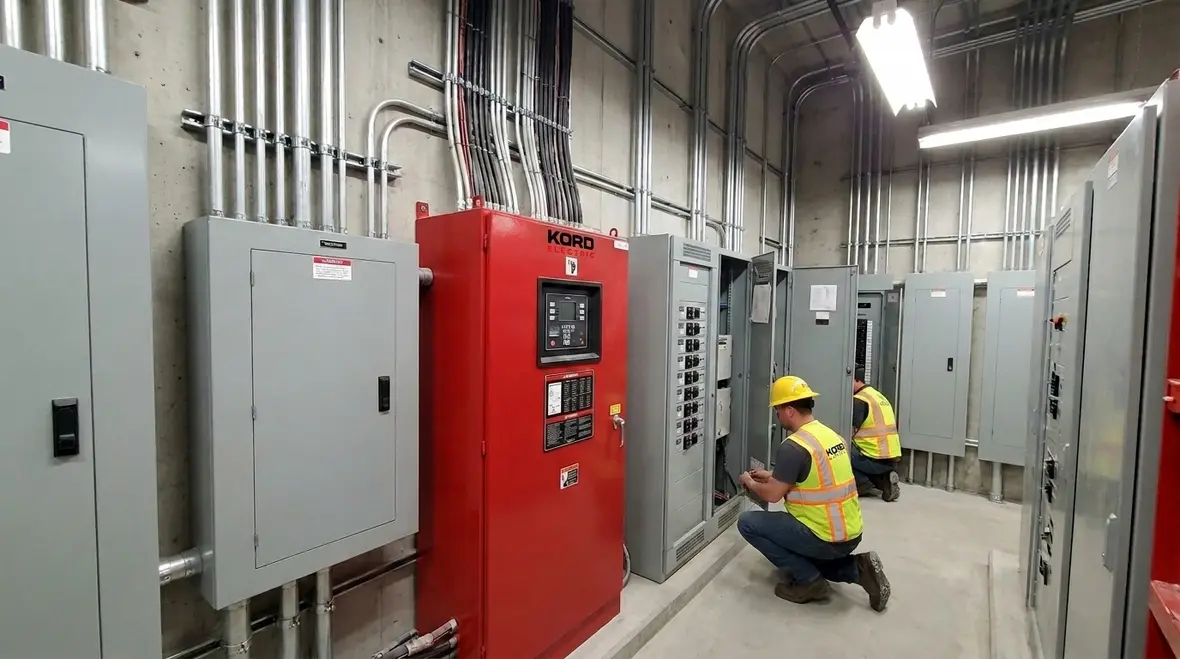
Fire Pump Electrical Systems for Reliable Power
When building owners hear the phrase fire pump electrical systems, they often picture a red box, a panel, and a prayer. At Kord Electric, we see it differently. We understand that these systems are the backbone of emergency water delivery, and that reliable power must be there when the fire alarm turns serious. Our experienced service technicians explain the details in plain language, so facility managers do not have to guess. And yes, we sometimes have to remind people that “it should work” is not a test. In the sections ahead, we break down what owners should know about design, power quality, protection, inspection, and real-world performance for commercial and industrial buildings.
What fire pump electrical systems really power during an emergency
In a real fire event, seconds matter. The electric side of the pump system must start the motor, hold stable voltage, and protect equipment from faults. Therefore, the fire pump electrical systems do not just “feed a motor.” They manage starting surges, voltage dips, and fault clearing so the pump can run when everyone else is running for the stairs.
Our expert service staff often tells owners this: the fire pump is like the “last calm voice” in a chaos movie. It has one job, and it has to do it right. If the electrical portion fails due to missing power, improper protection, or poor coordination, the pump can lose speed, trip out, or never start. Then you are stuck with water that never arrives, and that is a plot twist nobody wants.
How commercial electrical design choices affect pump reliability
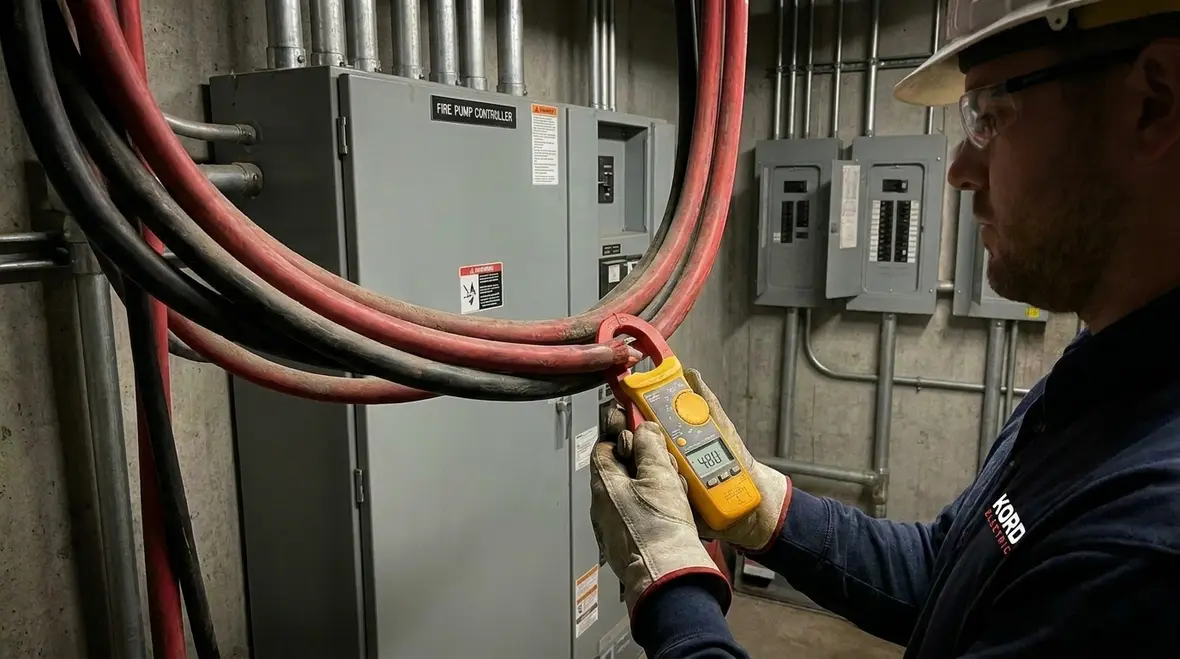
For major property buildings, design is not a one time decision. It is a chain of choices that either supports dependable operation or sets traps for the next maintenance cycle. First, the electrical service should match the pump motor requirements, including voltage and starting method. Then, the distribution route should avoid unnecessary complexity that can introduce loose connections or long run losses.
Next, owners should expect proper coordination between the fire pump controller and upstream protective devices. If breakers and fuses are not coordinated, a fault on a branch can shut down the wrong equipment, like pulling the fire alarm because the coffee machine buzzed. Our technicians review these relationships during commissioning support and ongoing service so owners can feel confident that protection happens in the right place, at the right time. For a deeper dive on how design decisions affect reliability, many teams also review guidance on essential fire pump electrical requirements and design.
Finally, the design must consider physical environment in warehouses, hospitals, data centers, and mixed use facilities. Moisture, dust, and vibration can affect terminations, contact surfaces, and control wiring. We help facilities plan inspections that match actual site conditions, not just a generic schedule.
Starting, voltage drop, and why motor behavior matters
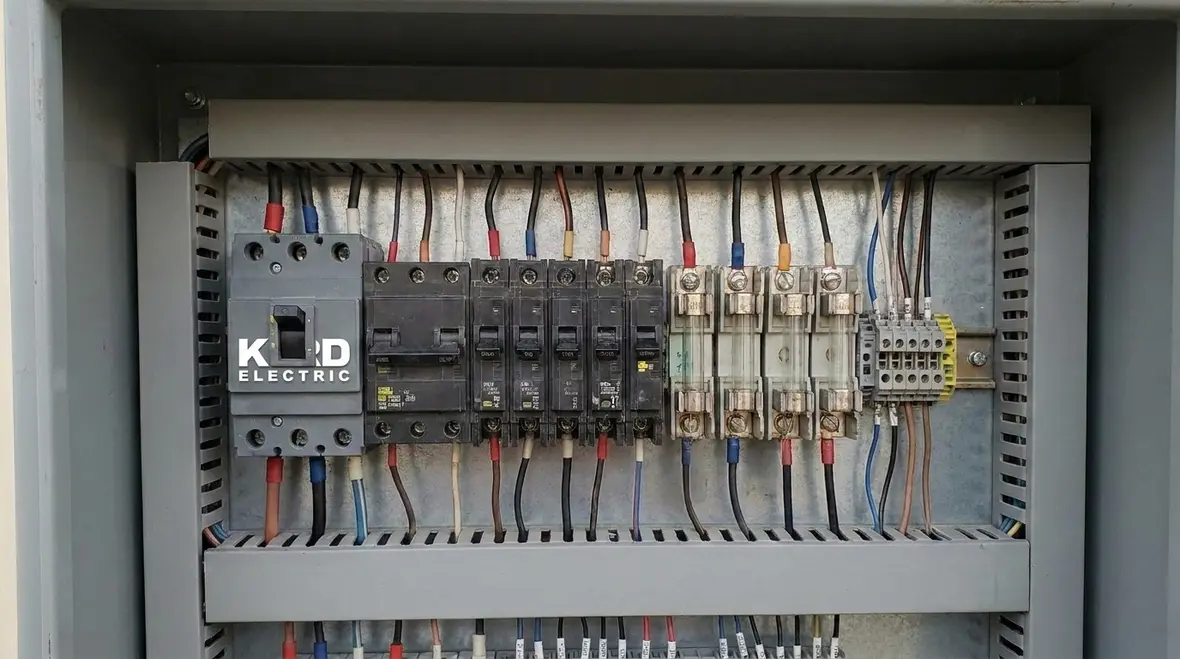
Fire pump motors typically draw higher current at start. Because of that, voltage drop becomes a critical factor. When voltage dips too much, some motors may not accelerate properly, or they may trip protective devices. Consequently, owners must ask more than “is the power on.” They should also ask whether the starting voltage at the controller and motor terminals stays within acceptable limits.
Our team explains to building owners that motor behavior under starting loads is not guesswork. It depends on conductor sizing, cable condition, connections, and the capacity of the electrical system. Over time, terminations can loosen slightly, insulation can harden with heat cycles, and contact resistance can rise. While everything looks fine on paper, the real world quietly changes the electrical characteristics.
In addition, some sites include generators and transfer switches. Therefore, the timing, voltage regulation, and transfer performance must align with pump start requirements. When these elements coordinate correctly, the pump starts cleanly and reaches operating speed without drama. Facility teams that want a closer look at how start-up behavior ties into controllers often review Kord Fire’s fire pump start sequence and operating settings guidance.
Protection devices and control circuits that prevent unwanted shutdowns
Electrical protection exists to stop damage, but it must also allow the fire pump to perform during a fire. That means protective devices should clear faults while still keeping the pump in control mode when it should run. The controller logic and switching devices must coordinate so nuisance trips do not rob the building of water delivery.
Owners should look closely at circuit protection for the controller and related control circuits. Some faults are obvious, like a blown fuse. Others are subtle, like a deteriorated terminal causing a hot spot. If a failure causes intermittent contact, the system might start, stumble, and then drop out, which is far more stressful than a simple failure.
Our expert service staff supports commercial and industrial facilities with inspection and troubleshooting that focuses on the cause, not only the symptom. We check for signs of overheating, confirm control wiring integrity, and verify that protection devices and settings align with the pump system’s requirements. For owners who want a more detailed walk-through of common controller issues, the Kord Fire guide on troubleshooting fire pump controller electrical issues offers a calm, practical reference.
Testing, inspections, and keeping compliance from feeling like homework
Testing is not a checkbox activity. It is an evidence building process that proves the system can operate as designed. For major property buildings, owners should plan a program that fits their risk level, operating schedule, and equipment age. Then they should document results in a way that helps decision making, not just record keeping.
When we service facilities, our technicians walk through what gets checked and why. We do not talk to owners like they are electrical engineers, and we do not speak in mystery language. Instead, we explain how inspections relate to reliability: controller readiness, power path condition, control circuit operation, and the overall ability to start and run. Many teams also reference Kord Fire resources like routine fire pump inspections and their importance to keep testing aligned with code intent and best practice.
Additionally, owners should pay attention to how maintenance interacts with operations. A test plan that causes extended downtime or disrupts other systems can lead to rushed decisions later. Therefore, Kord Electric helps coordinate service windows for commercial and industrial sites so the building keeps running while the electrical fire protection side stays verified.
Owner actions that keep the electrical side healthy
Review equipment age and update testing frequency when systems get older.
Track maintenance history for controllers, cables, and connections.
Confirm that service access remains clear and safe for technicians.
Schedule follow up when tests show unusual currents, trips, or delays.
What our technicians focus on during service
Verify control power paths and controller readiness.
Inspect terminations, signs of heat, and connection quality.
Check protective device coordination and safe fault clearing.
Help document findings for compliance and future planning.
Common issues in major properties and how teams catch them early
Large buildings accumulate small problems that do not announce themselves. Over time, vibrations from HVAC systems can loosen terminations. Condensation can create corrosion at control wiring points. Even minor water intrusion around enclosures can reduce insulation quality. And then, when the system is called to action, those small changes become the reason it fails when it matters most.
Another common issue involves improper labeling or undocumented modifications. A facility might add equipment, reroute cables, or swap components through a contractor who did not understand the fire pump system’s role. Therefore, owners should treat changes around the electrical room seriously. We help teams review modifications so the fire pump electrical path stays correct, traceable, and dependable. In many cases, that review includes checking how changes affect system activation and pressure, using resources such as Kord Fire’s explanation of how fire pumps maintain pressure in large buildings as a reference point.
Our expert service staff also encourages a “listen and look” approach during routine rounds. That means noting abnormal panel sounds, recurring alarms, or overheating odors. While those signs can seem like minor maintenance requests, they can point to higher risk conditions in the fire pump controller and related power circuits.
FAQ: fire pump electrical systems for building owners
Call Kord Electric when you want dependable fire pump power
Building owners should not treat fire pump electrical systems like a vague insurance policy. We help commercial and industrial facilities verify electrical reliability with experienced technicians who explain findings clearly and address the actual causes, not just the visible symptoms. If your site needs service planning, inspection support, or troubleshooting, reach out to Kord Electric. We will review your needs and map out a practical plan. Because in a fire, the only thing that should feel dramatic is the movie trailer, not your electrical system.
If you are evaluating upgrades, resolving nagging alarms, or simply want a second set of eyes on an existing installation, it can also help to review broader resources from our fire pump partners. Kord Fire’s overview of how NFPA 20 regulates fire pump systems and their dedicated fire pump service page show how electrical reliability, hydraulics, and code expectations fit together across the full life of the system.
When you are ready to turn “it should work” into “we know it works,” schedule a visit from the Kord Electric team and connect your project with specialized fire pump electrical systems expertise.


