Commercial Emergency Electrical Systems Guide
Commercial building emergency electrical systems that keep the lights on when it matters most
At Kord Electric, we design, test, and maintain emergency electrical systems for commercial and industrial facilities, along with major property buildings where downtime is not just inconvenient, it is expensive. When power fails, people look for clarity, speed, and dependable performance. Others look for their phones, a flashlight, or the nearest exit sign that actually works, because surprises are fun only in movies.
In this article, we explain the real requirements that govern emergency power, how technicians verify compliance, and what facility managers should demand before an emergency ever happens. And yes, we also explain things in plain language, because you should not need an electrical engineering degree to understand your backup plan.
Key requirements for code compliant backup power

Emergency electrical systems do not exist to be “nice to have.” They exist to meet life safety and operational needs under predictable failure conditions. For commercial and industrial buildings, requirements typically include performance during outages, installation rules for emergency circuits, and documentation for inspections and testing. We help others meet these standards by planning for the entire chain of power, not just the generator or battery that gets all the attention.
First, a building must define which systems get emergency power. Then the system must support those loads long enough to reach safe conditions or to maintain critical functions. Next, design and wiring must prevent normal power from feeding into emergency power pathways. After that, facilities must provide automatic transfer or manually controlled transfer where the design calls for it. Finally, owners must keep records that show the systems run as intended.
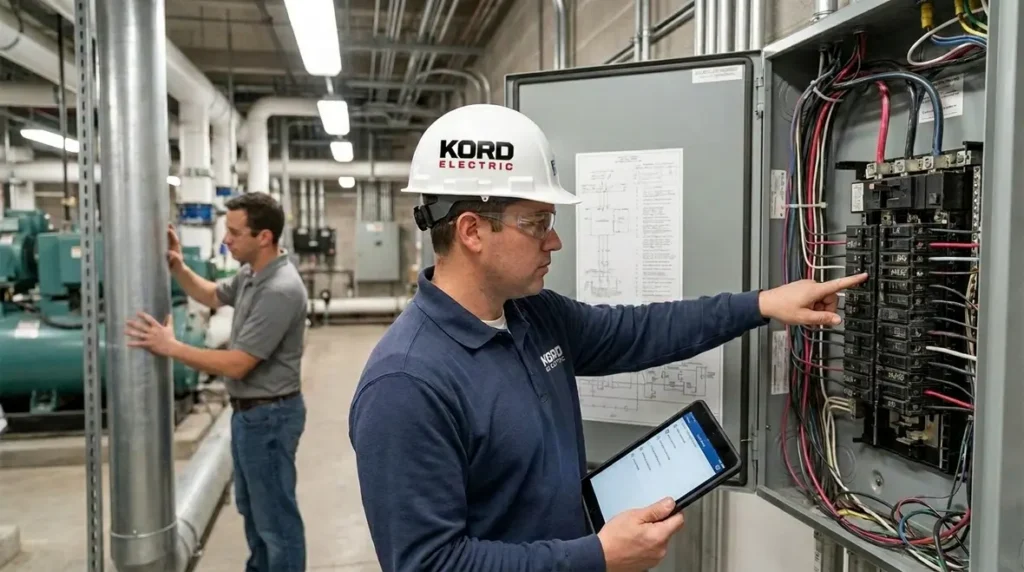
When our expert service team reviews a site, we do not just ask, “Does it have a generator?” We ask what it actually powers, how fast it transfers, and whether the emergency path remains stable under real loads. That is where compliance lives, and where many buildings get surprised, the same way people get surprised by plot twists they totally saw coming.
For facility leaders looking for a broader code-focused perspective, our guide on understanding NFPA 70 and the National Electrical Code explains how modern standards shape emergency and backup power expectations across commercial buildings.
Emergency loads that must run: life safety and business critical
Requirements vary by occupancy and building use, yet the concept stays the same. Emergency circuits support life safety and critical operations. Typically, that includes emergency lighting and exit signs, fire alarm power interfaces, and other systems needed for safe evacuation or protection. In commercial and industrial settings, some processes also need emergency coverage so the building can safely shut down or keep limited operations running.
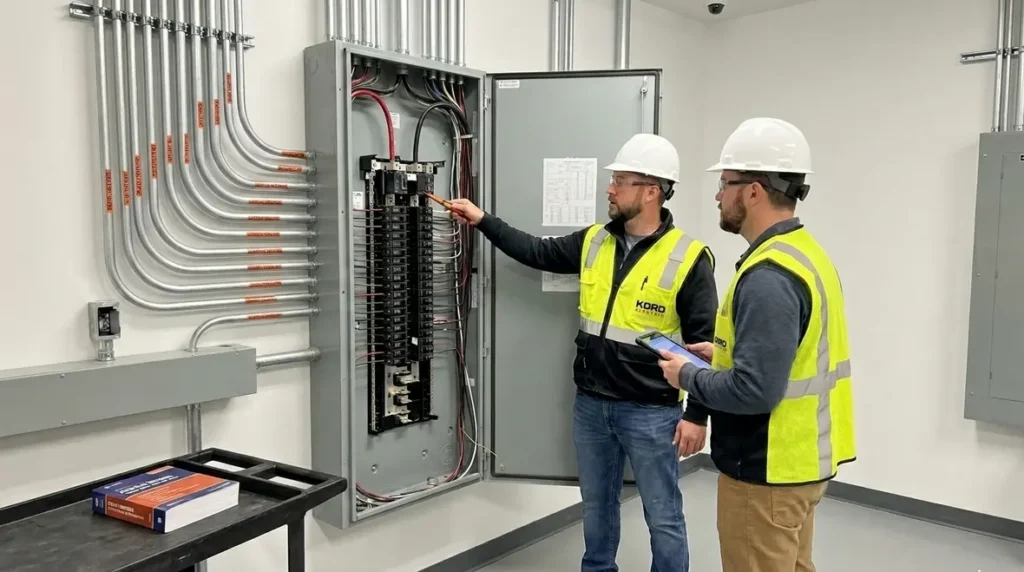
Our technicians help teams identify the actual emergency load list. They map circuits, verify ratings, and confirm that transfer equipment supports the current demands. Then they validate that emergency power does not overload under startup conditions. In other words, the system must handle the moment the power comes back, not only the calm, steady part after the event.
We also stress that you cannot select loads by guesswork. A facility manager might think a certain panel will be powered, but the truth sits behind labeling, breaker assignments, and transfer switch settings. Therefore, our team performs verification steps and provides clear, readable findings so your operation teams know what is real.
Hidden issues inside panels and feeders can also shape what your emergency system truly supports. If you want to go deeper into how unseen problems develop, our article on hidden electrical risks in commercial buildings walks through the kinds of failures that rarely announce themselves until the worst possible moment.
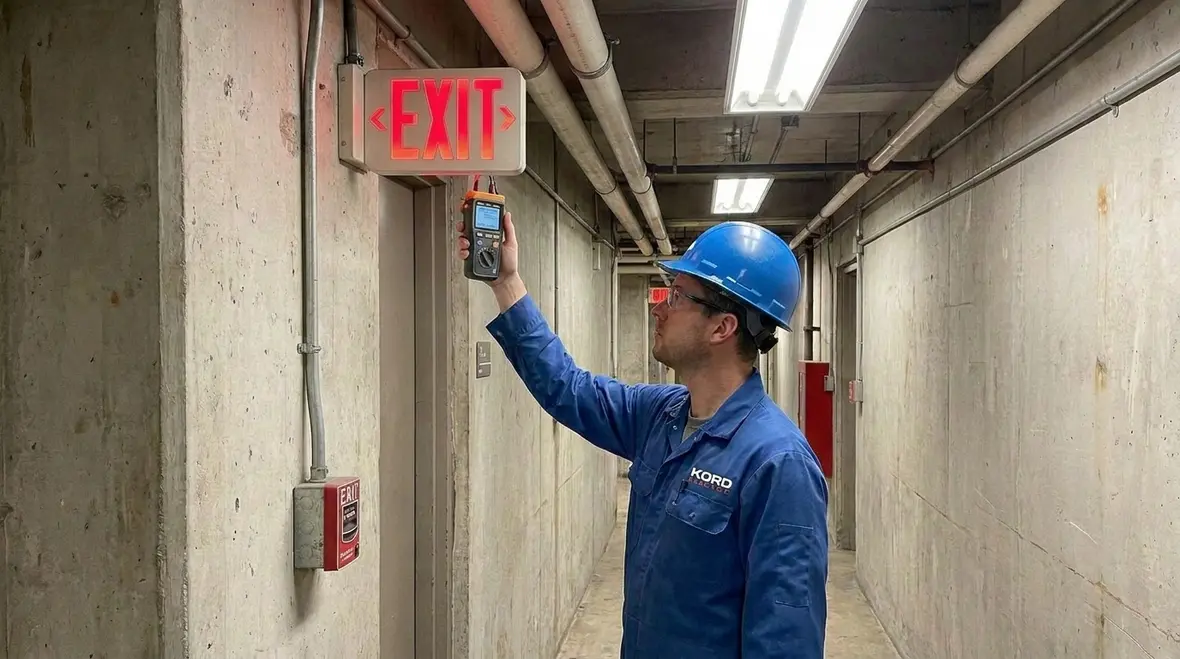
How transfer switches and power sources must behave during outages
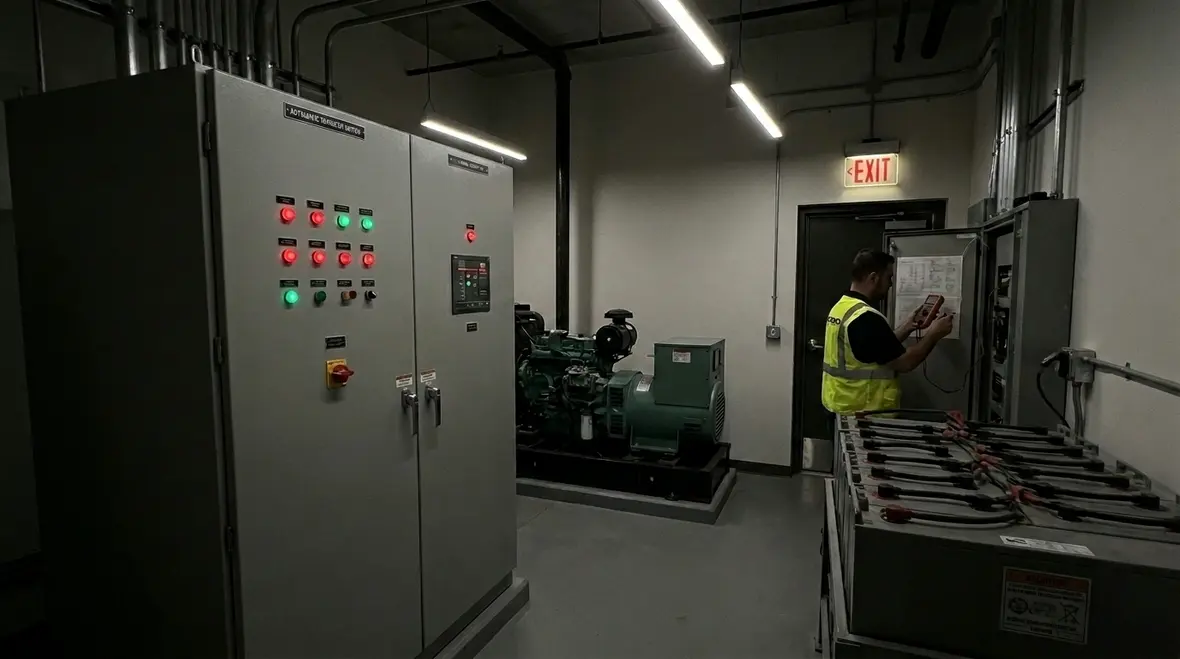
An emergency plan fails in the details. When normal utility power drops, the emergency source must start, stabilize, and transfer load quickly and safely. That is the job of transfer switches, control logic, and the power source itself, whether it is generator-based power, battery backup for certain loads, or another approved approach.
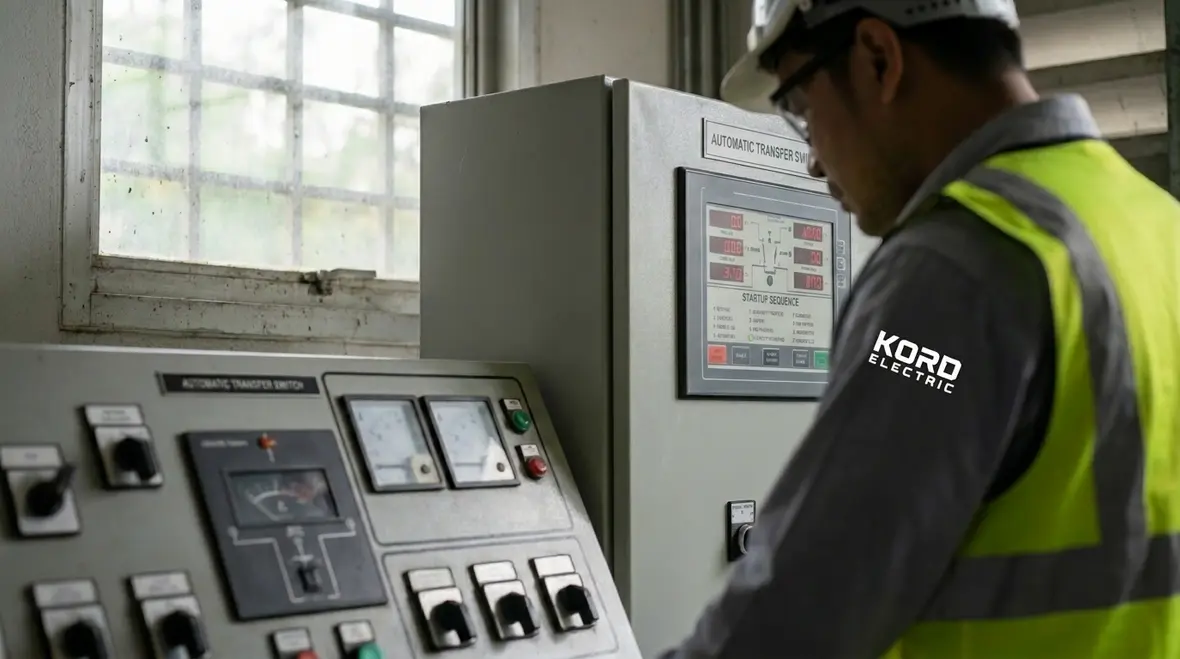
Transfer equipment must prevent backfeed. It must also execute the timing and sequence the design requires. For many commercial and industrial buildings, that means automatic transfer that keeps critical lighting and alarm systems operating without delay. In a well maintained setup, the transition feels almost invisible to occupants. In a poorly maintained system, it feels like the building just blinked and forgot how to see.
Our technicians explain the behavior of these components in a way that facility teams can use. We walk through what happens during a utility outage, what signals should appear, and what “normal” should look like after transfer. Then we show what to check so your staff can recognize trouble before it turns into an emergency.
Because these components take the brunt of sudden changes, they are also where voltage stability issues show up first. If your building has experienced dimming lights, nuisance trips, or unexplained shutdowns, our service overview on voltage fluctuations in commercial and industrial facilities outlines how targeted diagnostics can protect sensitive equipment long before the next outage hits.
Testing and documentation that protect you before the next power loss
Requirements do not end at installation. They continue through testing, inspection, and documentation. Emergency electrical systems must demonstrate reliability under conditions that simulate actual failure. For commercial and industrial properties, this means periodic checks, battery or generator performance verification, and operational tests that confirm the transfer and load response match the design.
Here is where we earn our reputation. Our expert service staff does not treat testing as a checkbox. We follow a deliberate process, because a “pass” that never gets traced back to real conditions can turn into a future incident. We evaluate system operation, verify that emergency circuits energize correctly, and confirm that equipment status signals remain consistent during and after the test.
Additionally, good records help during insurance reviews, tenant concerns, and regulatory audits. They also help maintenance teams troubleshoot faster when a problem appears. We help clients organize documentation so it stays usable, not buried like a forgotten power cord behind a server rack.
If you need a starting point for emergency service planning, our page on emergency electrical services outlines how we approach readiness and response for commercial and industrial facilities, including service considerations that help reduce downtime risk.
Many property teams also benefit from pairing emergency response with structured preventive work. Our guide to commercial and industrial electrical maintenance plans walks through how routine inspections, infrared scans, and targeted testing wrap around your backup power strategy instead of leaving it on an island.
Dual column guidance: what we verify on commercial sites
| System element | What our technicians check |
Emergency lighting and exit signage |
Correct circuit coverage, proper operation, and response during transfer tests |
Transfer equipment and controls |
Safe transfer behavior, timing sequence, and prevention of backfeed |
Power source performance |
Stability, starting response, and capacity under realistic load conditions |
Distribution pathways |
Breaker assignments, labeling accuracy, and load balance across emergency circuits |
Inspection and test records |
Documentation that shows compliance and supports faster troubleshooting |
During these visits, we also pay attention to how emergency infrastructure interacts with the rest of the building. For example, lighting retrofits and control upgrades can subtly change load behavior during transfer. If you are planning upgrades, our dedicated lighting installation services page explains how we design modern lighting with emergency circuits, code requirements, and maintenance realities in mind.
Common failure points we see in industrial and commercial buildings
Some issues show up repeatedly, like sitcom characters who always make the same mistake. First, systems receive minimal attention until a problem arises. When that happens, emergency electrical systems become “mystery equipment.” Second, labeling can drift over time. A panel change without accurate updates causes confusion, and confusion during an emergency costs time. Third, some buildings run tests but do not confirm the loads behave as expected. If the transfer happens but the emergency circuits do not energize correctly, the building loses its safety function.
Then there are the human factors. Facility teams may not know who owns the emergency maintenance schedule. Others may assume the original installer handles everything, until the contract ends. We help solve these gaps by providing service that connects technical checks with operational understanding.
Finally, performance issues can develop slowly. Batteries weaken. Connections loosen. Control components age. And because these problems do not always trigger noticeable failures during normal operation, they can stay hidden until the moment you need the system most. That is why we recommend planned testing and clear reporting that makes the status visible.
In many facilities, a thoughtful combination of rewiring, panel upgrades, and structured testing creates far fewer surprises. Our rewiring cost guide for commercial electrical systems outlines how modernization projects can reduce emergency vulnerability instead of simply replacing old gear with new labels.
Frequently asked questions about emergency power readiness
When you want calm during an outage, call Kord Electric
When the lights go out, your team deserves a plan that works, not a guess that hopes. Kord Electric supports commercial and industrial facilities with verification, testing, and expert service that keeps emergency electrical systems ready for real conditions. Our technicians explain findings in straightforward terms, so facility leaders can act with confidence. If you want a readiness check or an updated testing approach, contact Kord Electric today. We will help you protect your people, your operations, and your reputation.
If your facility is already facing urgent issues—or if you simply want a team on call before the next outage—our dedicated emergency electrical services page explains how Kord Electric responds 24/7 to stabilize systems, restore power, and keep commercial and industrial properties safe when power fails.
For properties planning broader upgrades, you can also explore our specialized lighting installation services, which integrate energy efficient design with emergency egress requirements, or pair long term maintenance with rapid response through our commercial and industrial maintenance offerings.
Whether you are preparing for the next storm season, addressing aging infrastructure, or building out a new facility from the ground up, partnering with a team that understands both everyday operations and true emergency conditions makes all the difference. Kord Electric is ready to help you build an emergency power strategy that feels calm, clear, and reliable—exactly when it matters most.