Gym Electrical Maintenance Checklist for Reliability
Gym Electrical Maintenance Checklist that We Actually Follow
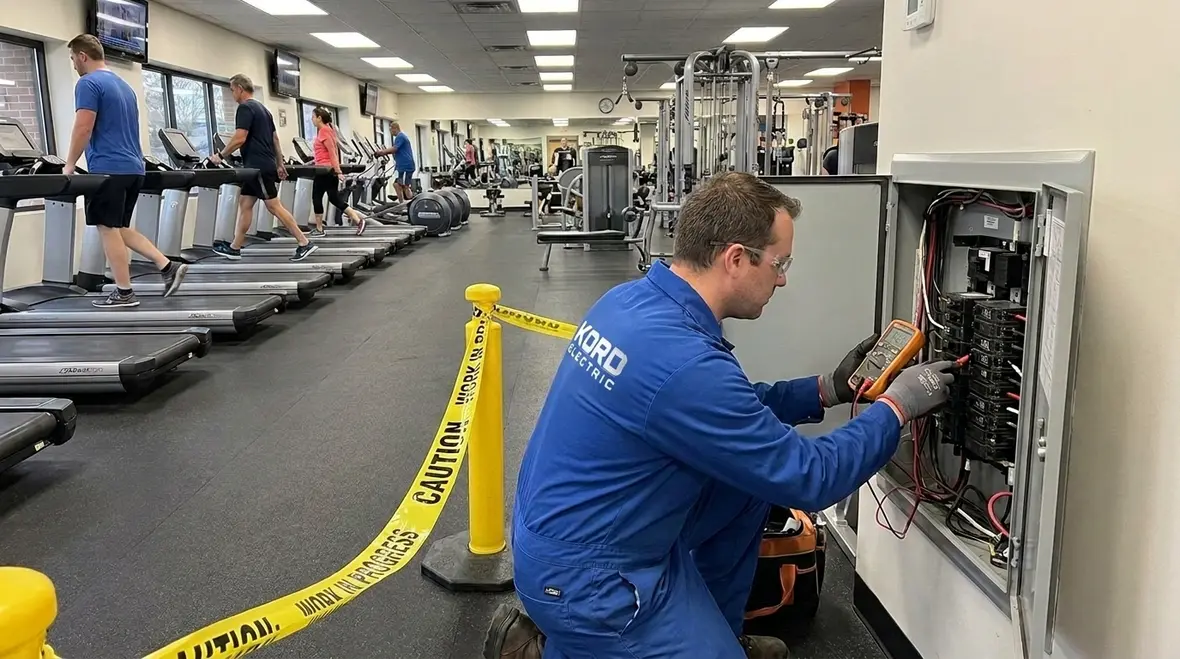
At Kord Electric, we treat every fitness center like a serious electrical system with a predictable heartbeat. That is why our approach starts with a gym electrical maintenance checklist we use during preventive service visits, including inspections of panelboards, grounding, emergency power paths, and moisture-prone areas. We also verify load balance for equipment circuits, test GFCI and AFCI where required, and confirm that ventilation and life safety systems receive clean, reliable power. Then, we document findings and schedule what needs attention before it becomes a “surprise” problem. And yes, we have heard every version of the same joke: “The gym never turns off, so why should the power?” Well, the power does not get to laugh.
In this article, our expert service staff explains the steps fitness centers need for dependable operation, safe maintenance, and fewer downtime moments. It is not glamour. It is control, clarity, and a calm plan.
Why commercial gym power breaks down in predictable ways
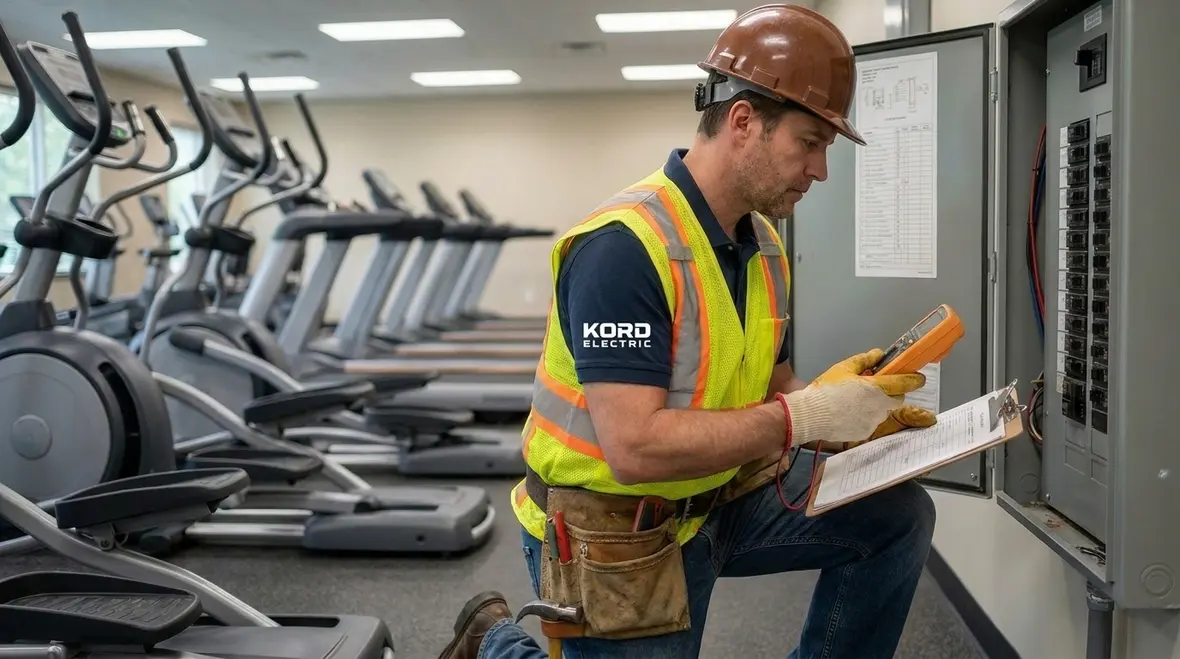
Fitness centers run on constant demand, and their electrical loads behave differently than typical offices. Treadmills and cardio equipment can create electrical noise. Meanwhile, pools of sweat, cleaning chemicals, and occasional humidity turn “minor” corrosion into a serious connection problem. In addition, maintenance crews may relocate equipment, add stations, or rearrange rooms, and the electrical layout quietly changes over time.
So, even when everything seems fine, small issues can form. Loose terminations generate heat. Heat accelerates oxidation. Oxidation increases resistance. Then, the system runs hotter, and the next failure shows up at the worst possible time, often right when a class starts. And that is when everyone becomes an amateur electrician, which is like letting everyone guess the ingredients of a chemistry lab. Fun idea. Bad results.
Our technicians look for these patterns early, because preventive maintenance beats reactive work every time. It keeps equipment powered, keeps staff safe, and protects the building’s larger electrical infrastructure, especially in commercial and industrial facilities and major property buildings.
Electrical preventive maintenance steps for fitness center reliability
We build our work around a preventive routine and we explain it in plain terms to facility managers. Our service staff uses a structured checklist that aligns with what you can expect from our electrical preventive maintenance program at Kord Electric. From there, we move through the system in a logical order, so nothing gets missed.
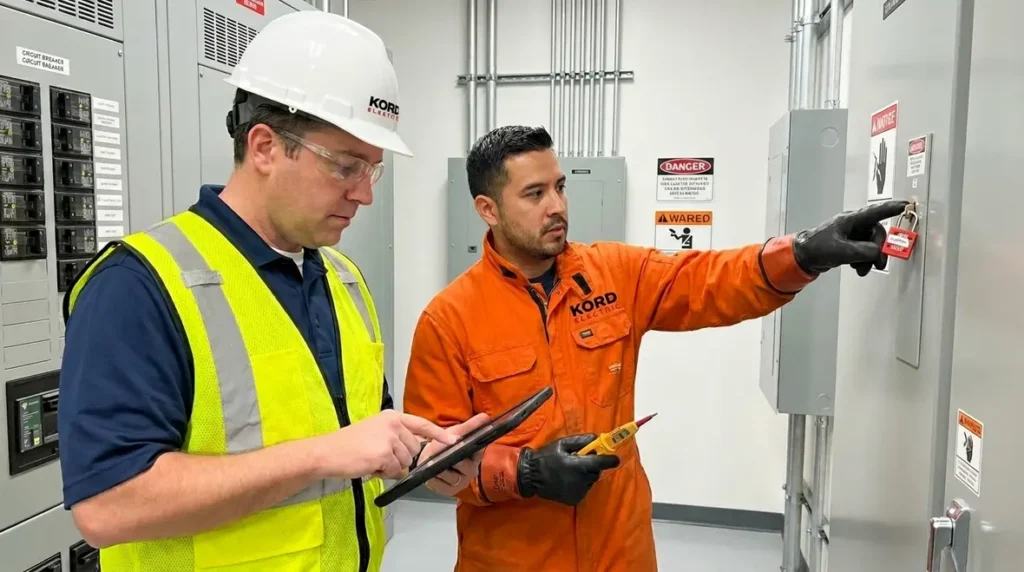
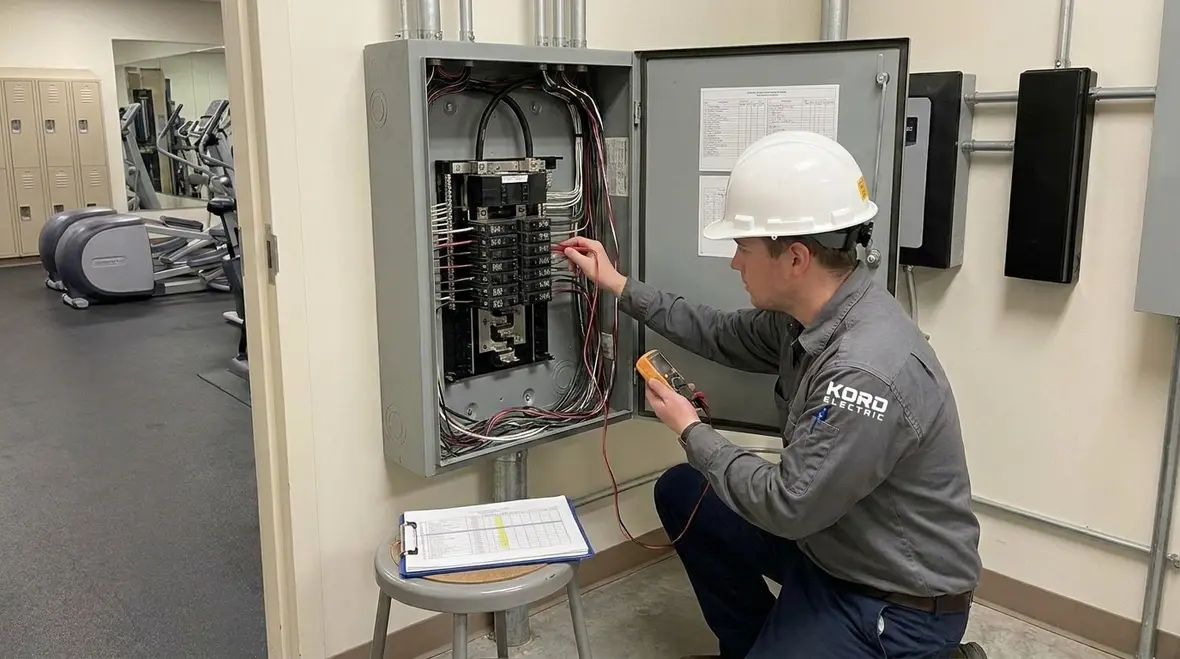
First, we inspect incoming service equipment, including switchgear and panelboards when applicable. Then we verify overcurrent devices and check breaker condition by observing indicators and testing where the facility design allows it. Next, we review distribution paths that feed equipment areas, including dedicated circuits for heavy loads like racks of cardio machines and training power stations.
After that, we focus on the safety layer. We inspect grounding and bonding, because a safe system depends on the fault path working when it must. We also review leakage and protection devices, including GFCI and AFCI components where required by the applicable design and code intent.
Finally, we document results and we recommend next steps based on risk. This matters because two gyms can have the same equipment count, yet one will experience failures sooner due to moisture, cleaning practices, or aging power components.
- Inspect and verify connections at panels and distribution equipment
- Check grounding and bonding continuity and condition
- Verify protective devices and test GFCI and AFCI where required
- Review load balance and circuit capacity for equipment areas
- Confirm labeling and circuit identification for faster troubleshooting
And yes, clear labeling helps. It also saves teams from the thrilling game of “What breaker is this?” which is basically electrical roulette with better lighting.
Moisture zones, cleaning chemicals, and the hidden hazards
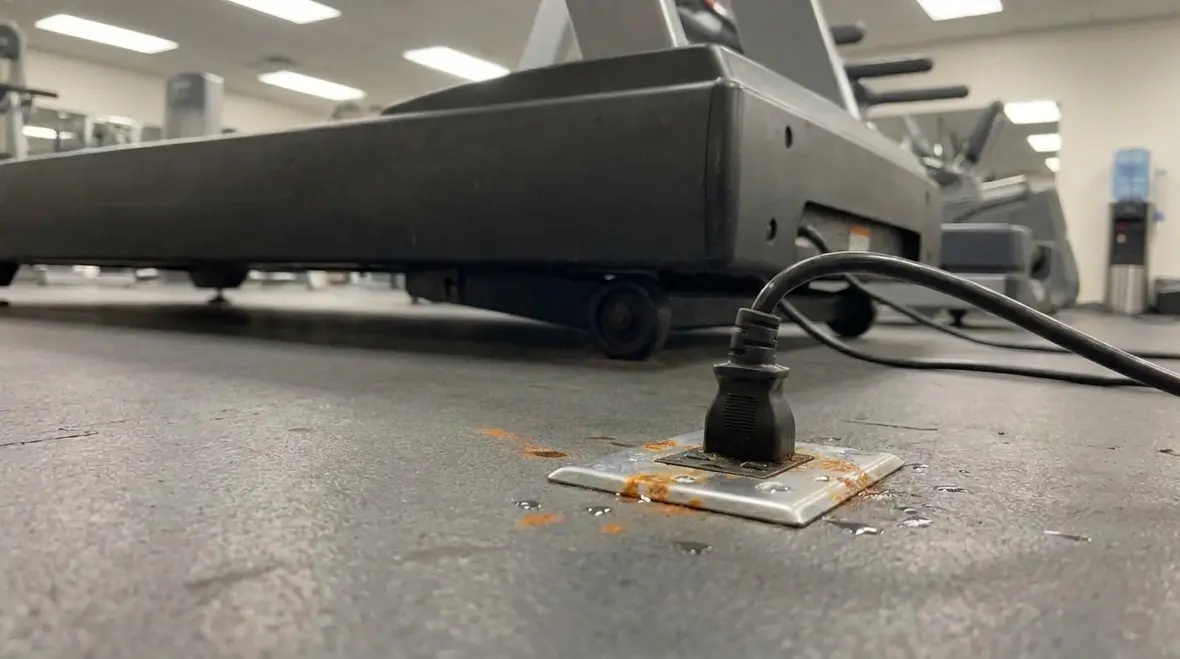
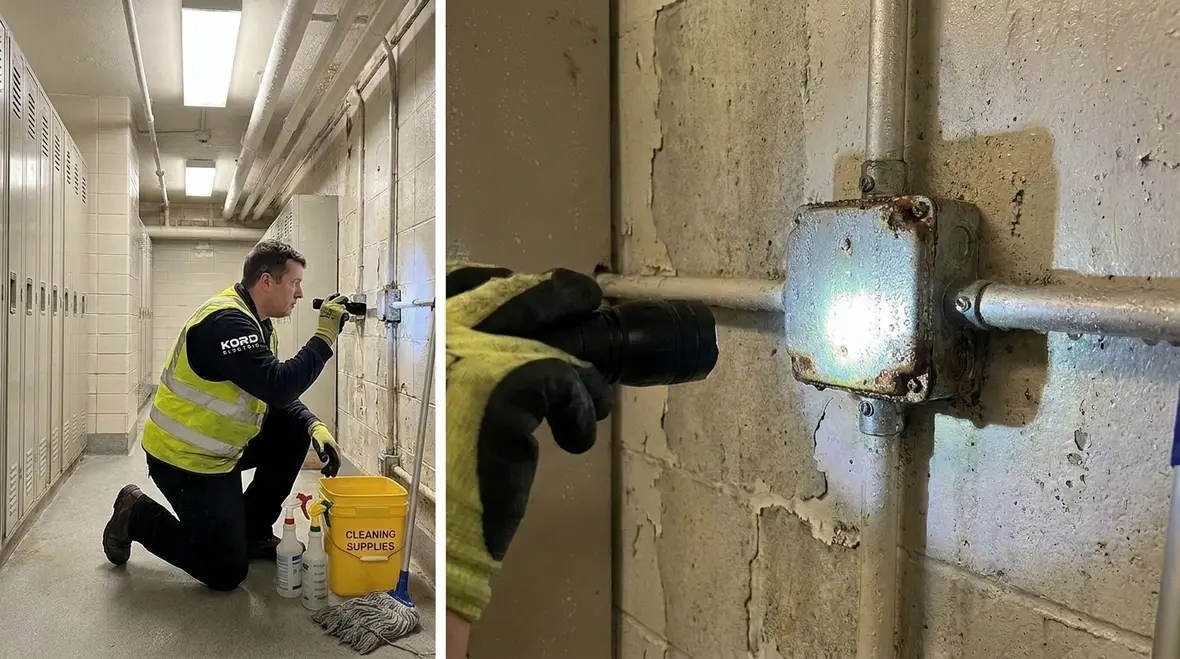
Fitness centers have repeat offenders, and they are not always the obvious ones. Humidity near locker rooms, equipment bays, and areas where mopping happens daily can seep into conduits, junction boxes, and device housings. Meanwhile, cleaning chemicals may affect cover plates, gaskets, and insulation over time. Even if the building looks clean, the electrical compartments can tell a different story.
Our technicians pay special attention to moisture zones. They inspect conduit entries, check cover integrity, look for signs of condensation, and verify that seals and fittings still do what they are supposed to do. Then, they examine the device condition for discoloration, pitting, and loose mounting. If a connection looks stressed, we treat it as a priority because moisture accelerates deterioration.
We also look at how maintenance teams handle power access. For example, extension cords should not become permanent wiring. Temporary solutions tend to last longer than anyone expected, and eventually they create the kind of risk that does not show up until it is too late.
In our process, we connect the dots for facility leaders: the electrical system ages with the environment, and preventive checks keep that aging predictable instead of chaotic.
Testing, thermal checks, and emergency power readiness
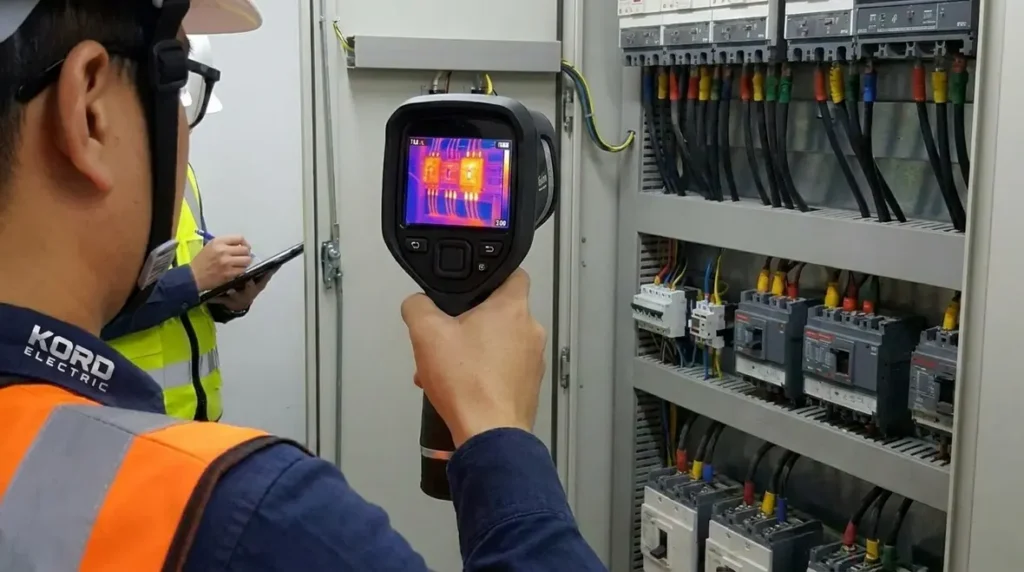
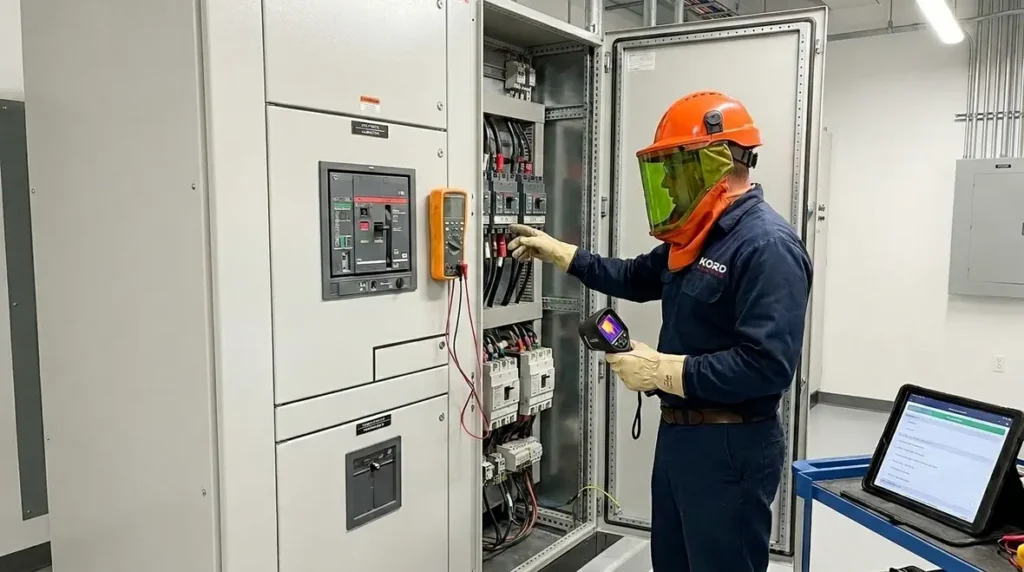
When a facility relies on uninterrupted operation, preventive maintenance must include more than a quick look. We conduct targeted testing that supports both performance and safety. For example, we use inspection and condition verification around panels and connections, and we may include thermal methods when appropriate to the site design and equipment type.
Thermal and condition checks help identify overheating that a casual visual review might miss. That matters because overheating can begin at a connection point, not at the obvious equipment. By the time something trips a breaker, the heat has already done damage.
We also ensure emergency power readiness when the facility design calls for it. That includes verification of transfer equipment and checks of the emergency path so the building can support required loads during outages. In a gym setting, emergency power supports lighting, safety signals, and critical operational needs. If emergency systems fail, people notice fast, and not in a “revenue growth” way.
Additionally, we review the way equipment loads connect to the building distribution. We check circuit assignment and load conditions to prevent nuisance trips and to reduce stress on components. In other words, we make sure the system behaves like it was planned, even as the gym evolves.
Schedules that keep downtime low and budgets steady
Many facility managers want maintenance that fits the real world, not the ideal world. So, we help teams plan visits around operating hours, equipment use patterns, and staffing. Then, we prioritize work based on risk. For example, we address safety and failure-prone items before chasing cosmetic issues, because safety first is not just a motto, it is how we build stable power.
We also explain the “why” behind timing decisions. Some checks require power-down or reduced load conditions. Others can run while areas operate, provided the procedure protects the environment and people. Our technicians coordinate with your team to keep interruptions short and planned.
And we keep the paperwork practical. Our documentation supports decision-making by showing what we found, what we recommend, and what matters most for long-term performance. This helps property teams manage budgets without gambling on the next breaker trip.
For major property buildings and commercial operations, consistent scheduling is how you avoid “surprise” electrical downtime. It keeps the gym floor running, the facility team calm, and the maintenance calendar from turning into a horror movie sequel.
| Area | What We Focus On |
| Panels and distribution | Connections, labeling, device condition, protective coverage |
| Grounding and bonding | Fault path reliability and protection effectiveness |
| Moisture-prone zones | Ingress protection, sealing condition, device housing integrity |
| Emergency power path | Transfer readiness and required life safety support |
If your facility manages multiple gyms or large commercial spaces, pairing this gym electrical maintenance checklist with a structured program like Kord Electric’s commercial and industrial electrical maintenance plans keeps your strategy consistent from site to site, not reinvented every time someone finds a warm breaker.
For property teams across the region, we often combine preventive work in gyms with broader Los Angeles County electrical services, so panel upgrades, repairs, and scheduled inspections support the same long-term reliability goals instead of competing with each other.
FAQ for fitness center electrical maintenance
Final word from Kord Electric
We help commercial and industrial facilities keep gym electrical systems steady, safe, and ready for every class, every shift, and every month that follows. When your power distribution, protective devices, and moisture-prone areas receive focused attention, downtime drops and confidence rises. Our technicians explain what they find, what they recommend, and why it matters, using clear language and solid reporting. If your facility needs preventive maintenance planning or a practical gym electrical maintenance checklist to follow, contact Kord Electric today and let us build a calm, dependable schedule for your next service cycle.
For many owners and property teams, the most effective step is pairing structured gym maintenance with a broader commercial electrical strategy. Our dedicated electrical preventive maintenance programs and related service offerings give you one coordinated plan instead of scattered, one-time fixes.
When you are ready to align your fitness center with the same level of reliability you expect from your core operations, our team is here to help you turn a checklist into a routine that your staff, your members, and your budget can all count on.